

Destination guide · Indonesia
Derawan, Maratua, Sangalaki & Kakaban Tauchen
Maratua’s walls, Sangalaki’s manta areas and Kakaban’s enclosed lake give the Derawan islands strikingly different personalities. The pleasure is in moving between those habitats, with turtles and island life adding quieter moments along the way.
Courtesy of Virgin Cocoa Resort / Extra Divers
Derawan, Maratua, Sangalaki & Kakaban im Überblick
Das Derawan-Archipel verbindet meeresschildkrötenreiche Inseln, Manta-Gebiete, Riffwände und den bemerkenswerten, vom Land umschlossenen Quallen-See von Kakaban. Derawan, Sangalaki, Kakaban und Maratua tragen jeweils ein anderes Element zu einer abgelegenen Inselhopping-Reise bei.
Transfers und Seebedingungen erfordern mehr Flexibilität als ein herkömmlicher Resorturlaub, doch gerade diese Komplexität prägt den Expeditionscharakter des Reiseziels. Manta-Rochen und andere Meerestiere bleiben unberechenbar; die anhaltende Faszination liegt in der Kombination aus ungewöhnlichen Ökosystemen, abgelegenen Landschaften und abwechslungsreichen Inseltauchgängen.
Planen Sie Ihren Aufenthalt auf den Derawan-Inseln
Wählen Sie den Inselstandort oder das Liveaboard nach den erreichbaren Gebieten und der Zeit für Transfers aus. Maratua, Sangalaki und Derawan sind unterschiedliche Orte, daher sind die Entfernungen mit dem Tagesboot wichtig. Ein Aufenthalt von sechs bis acht Nächten ermöglicht ein abwechslungsreiches Programm, ohne dass jeder Tag zu einem langen Transfer wird.

Nabucco Island Resort
Kleines, abgelegenes Insel-Tauchresort im Maratua-Atoll mit drei Unterkunftskategorien und Zugang zu Big Fish Country, Kakaban und Sangalaki.

Virgin Cocoa Resort / Extra Divers
Rückzugsort auf einer acht Hektar großen Privatinsel im Süden von Maratua mit 18 großzügigen Strandbungalows, Hausriff, Extra Divers Tauchzentrum, Pool, Yoga und gehobener Küche.

Nunukan Island Resort
Naturreiches Inselresort am südlichen Ende des Maratua-Atolls mit 22 Bungalows direkt am Strand, einem vier Kilometer langen Hausriff und besonderen Ausflügen nach Muaras, Kakaban und Big Fish Country.
Liveaboard routes for this destination
Explore the routes that visit this region. Compare ships and itineraries, then open a route to see its sailing dates, cabins and the areas it covers.
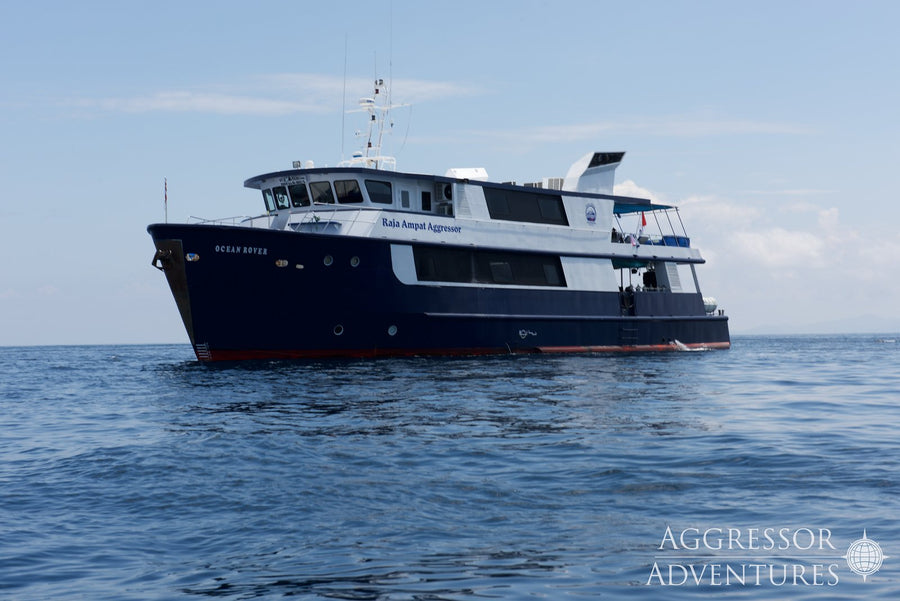
Raja Ampat Aggressor
Derawan Inseln (7 Nächte)
- Indicative duration
- 7 nights
- Einschiffung
- Berau
- Ausschiffung
- Berau
Raja Ampat Aggressor
Derawan/Nord Sulawesi/Lembeh (12 nights)
- Indicative duration
- 12 nights
- Einschiffung
- Tanjung Batu
- Ausschiffung
- Bitung
Raja Ampat Aggressor
Lembeh/Nord Sulawesi/Derawan (12 nights)
- Indicative duration
- 12 nights
- Einschiffung
- Bitung
- Ausschiffung
- Berau
No routes match this search. Try another vessel or clear your search.
Wann sollte man auf den Derawan-Inseln tauchen?
April bis Oktober ist ein guter allgemeiner Planungszeitraum. Die Seebedingungen beeinflussen die Überfahrten zwischen den Inseln und die exponierten Punkte, während Manta-Rochenbesuche weiterhin natürlichen Bedingungen unterliegen. Planen Sie für die entferntesten Ausflüge genügend Flexibilität ein und genießen Sie die lokalen Riffoptionen dazwischen.
Planungszeitraum: Am besten von März bis Oktober.
Was Sie beim Tauchen erwartet
Wählen Sie die Inseln und Tauchplätze entsprechend der Erfahrung der Gruppe.
Manta-Rochen-Plätze bei Sangalaki
Sangalaki ist das Manta-Highlight der Region. Reinigungs- und Futterverhalten hängen von Plankton, Jahreszeit und Bedingungen ab.
Quallen-See von Kakaban
Ein seltenes Schnorcheln- und Naturerlebnis mit harmlosen Quallen in einer empfindlichen Seeumgebung.
Meeresschildkröten von Derawan
Derawan ist eng mit Meeresschildkröten, Riffgebieten und Seegrashabitaten verbunden, wo Schildkrötenbegegnungen eine große Attraktion sind.
Kanal-Tauchen bei Maratua
Der Maratua-Kanal / The Pass kann für erfahrene Taucher Strömung, Barrakudas, Haie, Rochen und Schwärme von Fischen bieten.
Expeditionsgefühl auf abgelegenen Inseln
Das Reiseziel wirkt abgelegen und anders, mit längeren Transfers, Inseldörfern und einer weniger kommerziellen Atmosphäre als in anderen Teilen Indonesiens.
Manta-, Schildkröten- & Insel-Fotografie
Weitwinkel eignet sich für Manta-Rochen, Meeresschildkröten, Wände und Inselmotive; Makro kann an Stegen und Trümmerplätzen nützlich sein.
Riff-, Wände- & Boots-Tauchen
Der Tauchstil umfasst Riff-, Wände- und Manta-Plätze, Makro, Boots-Tauchen auf abgelegenen Inseln und ausgewählte anspruchsvolle Strömungsplätze.
Erweiterungen nach Borneo & Kalimantan
Die Region lässt sich gut mit Borneo-Wildtieren, Kalimantan-Erweiterungen oder Zwischenstopps über Singapur, Kuala Lumpur, Bali oder Jakarta kombinieren.
DIVE SITE GUIDE
Dive sites in Derawan, Maratua, Sangalaki & Kakaban
Explore the character of individual sites, from the setting and marine life to the diving conditions. Open a card for the full description; site access and the final profile depend on conditions and experience.
ORIENTATION MAP
Where the dive sites are
Use the map to understand how the key sites are spread around the destination. Pins are for trip-planning orientation only; entry points, moorings and the final dive plan are always confirmed by the local operator on the day.
Coordinates are planning references compiled from current dive-site sources. They are not navigation coordinates; entry points, moorings, tide windows and the final dive plan are always confirmed by the local operator on the day.
Channel · Wall · Current
Big Fish Country
Big Fish Country is Maratua’s signature current site, a channel through the atoll rim where fish stack up because the water is moving.
Tauchplatz entdecken
- Typ
- Channel · Wall · Current
- Tiefe
- 10–26 m
- Erfahrung
- Advanced
- Strömung
- Strong
Big Fish Country is Maratua’s signature current site, a channel through the atoll rim where fish stack up because the water is moving. Divers descend toward the channel edge, use the reef contour — and, where local procedures permit, a reef hook on non-living substrate — to hold position and watch the show.
Barracuda, jacks and reef sharks are the headline animals, but the density of fish across the channel is what makes the dive feel large. The site is intentionally dived when current is present, so it is not a beginner profile. A controlled negative entry, close group spacing and a disciplined exit plan are part of the experience.
Look for: Barracuda tornado potential · Strong current · Channel wall · Advanced drift skills
Ideal für: Barracuda · Jacks · Reef sharks · Hook-in diving
Slope · Deep wall
Big Fish Wall
Big Fish Wall sits next to the better-known channel and gives experienced divers a more continuous wall profile.
Tauchplatz entdecken
- Typ
- Slope · Deep wall
- Tiefe
- 15–40+ m
- Erfahrung
- Advanced
- Strömung
- Moderate
Big Fish Wall sits next to the better-known channel and gives experienced divers a more continuous wall profile. A sandy coral slope falls toward a deeper vertical section, with the wall beginning much lower than most recreational sites in the region.
The dive is therefore about planning rather than chasing the bottom: a conservative maximum depth still gives views of the wall, schooling fish and the chance of larger pelagics moving through open water. Current is normally less intense than in the channel but remains part of the site. Many dives finish toward the shallower reef near Big Fish Country, creating a natural multilevel profile if gas and current allow.
Look for: Deep wall · Pelagic potential · Moderate current · Advanced depth planning
Ideal für: Wall · Pelagics · Deep profile
Reef · Feeding / cleaning area
Sangalaki Manta Point
Sangalaki’s east side is famous for manta activity across a cluster of sites known as Manta Avenue, Manta Parade and Manta Run.
Tauchplatz entdecken
- Typ
- Reef · Feeding / cleaning area
- Tiefe
- 5–25 m
- Erfahrung
- Beginner–Intermediate
- Strömung
- Mild–Moderate
Sangalaki’s east side is famous for manta activity across a cluster of sites known as Manta Avenue, Manta Parade and Manta Run. Reef mantas can feed close to the surface or visit cleaning areas over the reef, which makes the experience accessible without a deep profile.
The most important technique is restraint: divers who stay low, avoid chasing and leave the animals a clear route are more likely to see natural behavior. Manta numbers vary with plankton, moon, tide and season, and no encounter is guaranteed. Even on a quiet day, the shallow reef and sandy ridges remain worth diving, especially for photographers and divers who prefer a slower pace.
Look for: Manta feeding area · Shallow profile · Wildlife etiquette · Sangalaki
Ideal für: Reef mantas · Shallow wildlife observation
Wall · Current point
Barracuda Point, Kakaban
Kakaban’s Barracuda Point is a current-fed wall where the site comes alive because water is moving around the island.
Tauchplatz entdecken
- Typ
- Wall · Current point
- Tiefe
- 10–25 m
- Erfahrung
- Advanced
- Strömung
- Strong
Kakaban’s Barracuda Point is a current-fed wall where the site comes alive because water is moving around the island. Schools of barracuda and jacks can gather at the point while grey and whitetip reef sharks, eagle rays and other pelagics patrol the edge.
Strong flow is normal enough that the dive is recommended for advanced divers and local operators may use a fixed line or reef-hook procedure where appropriate. The best strategy is not to chase the school but to establish a stable position, watch the current line and let the animals move around the group. Down-current potential means the briefing and exit plan matter as much as the wildlife.
Look for: Barracuda schools · Reef sharks · Eagle rays · Strong current
Ideal für: Barracuda · Sharks · Eagle rays · Current diving
Reef · Shallow coral
Turtle Traffic
Turtle Traffic is the relaxed side of Maratua.
Tauchplatz entdecken
- Typ
- Reef · Shallow coral
- Tiefe
- 5–15 m
- Erfahrung
- Beginner
- Strömung
- Mild–Moderate
Turtle Traffic is the relaxed side of Maratua. The reef stays shallow enough for Open Water divers and is known for green and hawksbill turtles resting beneath table coral or moving through the reef, particularly when the tide encourages them into the area.
The site is not about dramatic topography or depth; it is about spending a long dive watching turtle behavior and the reef life around them. Current is usually manageable but can still increase with tide. For photographers, the shallow water gives good natural light and generous bottom time, while newer divers get a memorable wildlife dive without the demands of Big Fish Country.
Look for: High turtle density · Shallow reef · Beginner friendly · Long bottom time
Ideal für: Green turtles · Hawksbills · Easy reef diving
Cave · Chimney · Deep overhead
Blue Light Cave, Kakaban
Blue Light Cave is not a normal recreational cave swim-through.
Tauchplatz entdecken
- Typ
- Cave · Chimney · Deep overhead
- Tiefe
- 2–44 m
- Erfahrung
- Expert / Cave-trained
- Strömung
- Overhead environment
Blue Light Cave is not a normal recreational cave swim-through. The entrance begins in a shallow crack, then descends through a narrow chimney to a large cavern around the low twenties before continuing toward a deep vertical exit near 44 metres. That combination creates all the classic overhead risks: no direct ascent, depth, silt-out potential and a long route through enclosed space.
The site should only be attempted by divers with appropriate cave or technical training, equipment and an operator experienced with the system. For properly qualified teams, the blue glow of the open sea seen from inside the cavern is the defining image. For everyone else, Kakaban’s outside walls are the appropriate alternative.
Look for: True overhead environment · Exit around 44 m · Cave training required · Expert site
Ideal für: Cave diving · Blue-light exit · Technical planning
House reef · Turtle reef · Macro
Derawan House Reef
Derawan House Reef provides the archipelago’s most convenient everyday dive.
Tauchplatz entdecken
- Typ
- House reef · Turtle reef · Macro
- Tiefe
- 3–25 m
- Erfahrung
- Beginner–Intermediate
- Strömung
- Usually mild
Derawan House Reef provides the archipelago’s most convenient everyday dive. Coral and sand around the island support turtles, reef fish and smaller subjects, and the easy access makes the site ideal for check dives, afternoon tanks and night diving.
The profile can stay shallow for a long time, so photographers can work individual subjects without the time pressure of a deep channel dive. Current is generally easier than around Maratua and Kakaban, although tide still matters around the island. The map pin should be treated as the broader house-reef area rather than a single permanent mooring, since different operators may use different sections around Derawan according to conditions.
Look for: Easy access · Turtles · Macro · Night-dive potential
Ideal für: Turtles · Macro · Flexible shore/jetty diving
Sand · Coral heads · Macro
Lighthouse Reef, Sangalaki
Lighthouse Reef is the macro counterpoint to Sangalaki’s manta dives.
Tauchplatz entdecken
- Typ
- Sand · Coral heads · Macro
- Tiefe
- 5–25 m
- Erfahrung
- Beginner–Intermediate
- Strömung
- Mild
Lighthouse Reef is the macro counterpoint to Sangalaki’s manta dives. Sandy bottom and coral heads create habitat for gobies, scorpionfish, nudibranchs, frogfish, ribbon eels and giant clams, while small wooden wrecks add structure and shelter.
The site rewards slow movement and a close look rather than distance covered, making it useful when divers want a quieter second dive after an open-water manta session. Conditions are generally less intimidating than the current-heavy Maratua and Kakaban sites, so mixed-experience groups can enjoy it. The exact mooring is operator-managed; the map shows the Sangalaki lighthouse reef area rather than a surveyed entry point.
Look for: Macro reef · Small wrecks · Frogfish potential · Gentler conditions
Ideal für: Frogfish · Gobies · Nudibranchs · Mandarin fish
Unterwasserfotografie
Bei Big Fish Country geben Barrakudas, Makrelen, Riffhaie und Hook-in-Tauchgänge einen Eindruck von den fotografischen Möglichkeiten. Wählen Sie die Kameraausrüstung für die geplanten Tauchplätze und nehmen Sie sich dann Zeit, die Szene zu beobachten, bevor Sie das Bild aufnehmen. Die Wiederholung eines erfolgreichen Tauchgangs bietet oft bessere Möglichkeiten als die ständige Suche nach einem anderen Ort. Nutzen Sie bei Riffmotiven die Form des Riffs und das vorhandene Licht, um dem Bild Tiefe zu verleihen. Ein Taucher in respektvollem Abstand kann Größenverhältnisse verdeutlichen, ohne das Tier einzuschränken.
Abseits des Tauchens: Die Derawan-Inseln über der Wasseroberfläche
Inselhopping ist die natürliche Art, diesen Teil Ostkalimantans zu erleben. Strände, Dörfer und flache Meereshabitate sprechen Reisegesellschaften an, die abgelegene Orte und Zeit auf dem Wasser genießen.
Der Quallen-See von Kakaban ist ein sensibles Ökosystem, und die Zugänglichkeit kann sich ändern. Behandeln Sie den Besuch als eine organisierte Naturaktivität, befolgen Sie die örtlichen Regeln und vermeiden Sie es, Tiere anzufassen. Sorgen Sie dafür, dass der gesamte Urlaub durch die Riffe und die Inselkulisse bereichernd bleibt, anstatt von der Verfügbarkeit einer einzigen Exkursion abhängig zu sein.
Anreise zu den Derawan-Inseln
Die meisten internationalen Gäste erreichen die Region mit einem Flug über Jakarta, Singapur oder indonesische Drehkreuze nach Berau oder Tarakan und fahren dann je nach endgültigem Reiseverlauf mit dem Auto und Boot weiter.
Wählen Sie Ankunfts- und Abflugzeiten so, dass sie mit dem Weitertransfer abgestimmt sind, insbesondere wenn eine Bootsüberfahrt oder eine lange Autofahrt ansteht. Planen Sie für einen entspannten letzten Tag an Land und ein angemessenes Zeitintervall zwischen dem letzten Tauchgang und dem Flug.
Fragen zum Tauchen auf den Derawan-Inseln
Was macht die Derawan-Inseln zu einem Tauchreiseziel?
Die Wände von Maratua, die Manta-Gebiete von Sangalaki und der umschlossene See von Kakaban verleihen den Derawan-Inseln jeweils eine unverwechselbare Persönlichkeit. Die Freude liegt darin, zwischen diesen Lebensräumen zu wechseln, wobei Meeresschildkröten und das Inselleben unterwegs für ruhigere Momente sorgen.
Wie sollte ich meinen Aufenthalt planen?
Wählen Sie den Inselstandort oder das Liveaboard nach den erreichbaren Gebieten und der Zeit für Transfers aus. Maratua, Sangalaki und Derawan sind unterschiedliche Orte, daher sind die Entfernungen mit dem Tagesboot wichtig. Ein Aufenthalt von sechs bis acht Nächten ermöglicht ein abwechslungsreiches Programm, ohne dass jeder Tag zu einem langen Transfer wird.
Wann ist eine gute Reisezeit?
April bis Oktober ist ein guter allgemeiner Planungszeitraum. Die Seebedingungen beeinflussen die Überfahrten zwischen den Inseln und die exponierten Punkte, während Manta-Rochenbesuche weiterhin natürlichen Bedingungen unterliegen. Planen Sie für die entferntesten Ausflüge genügend Flexibilität ein und genießen Sie die lokalen Riffoptionen dazwischen.
Gibt es genug für Reisegesellschaften ohne Tauchinteresse?
Inselhopping ist die natürliche Art, diesen Teil Ostkalimantans zu erleben. Strände, Dörfer und flache Meereshabitate sprechen Reisegesellschaften an, die abgelegene Orte und Zeit auf dem Wasser genießen.
A closer look at Derawan, Maratua, Sangalaki & Kakaban


Planen Sie Ihre Reise zu den Derawan-Inseln
Teilen Sie uns mit, welche Erlebnisse Sie am meisten wünschen, welche Termine Sie bevorzugen und wie Sie reisen möchten. Wir können das Reiseziel, die Unterkunft und die Tauchgänge zu einem stimmigen Reiseverlauf zusammenstellen.
Meine Reise planen