

Destination guide · Philippines
Camiguin Buceo
Camiguin’s volcanic character continues underwater, from dark slopes to reefs around offshore islands. A diving day can be followed by waterfalls, springs or a view of the mountains, making the island unusually rewarding for a mixed holiday.
Photo: Bo Mancao / Scuba de Oro
Camiguin de un vistazo
El carácter volcánico de Camiguin continúa bajo el agua, desde las oscuras laderas hasta los arrecifes alrededor de las islas costeras. Un día de buceo puede ser seguido por cascadas, manantiales o una vista de las montañas, lo que hace que la isla sea inusualmente gratificante para unas vacaciones mixtas.
Planificar su estancia en Camiguin
Elija una base costera que le dé acceso práctico tanto a sitios volcánicos locales como a excursiones en barco a Mantigue u otras áreas costa afuera. De cuatro a seis noches permite el buceo y la exploración de la tierra para compartir las vacaciones, en lugar de hacer de las cascadas una idea de último momento.

Balai sa Baibai & Coraya Divers Camiguin
Resort boutique de siete habitaciones frente a la playa en Mambajao, con Coraya Divers en el establecimiento, grupos pequeños con proporción de guía/buceadores de 1:4 y opciones flexibles de buceo en los arrecifes de Camig...

Scuba de Oro Camiguin
Centro de buceo independiente en Camiguin con paquetes diarios de 2 o 3 inmersiones, un amplio barco de buceo de 15 m, apoyo personalizado y acceso a Mantigue Island, arrecifes volcánicos, paredes y puntos macro.
Liveaboard routes for this destination
Explore the routes that visit this region. Compare ships and itineraries, then open a route to see its sailing dates, cabins and the areas it covers.
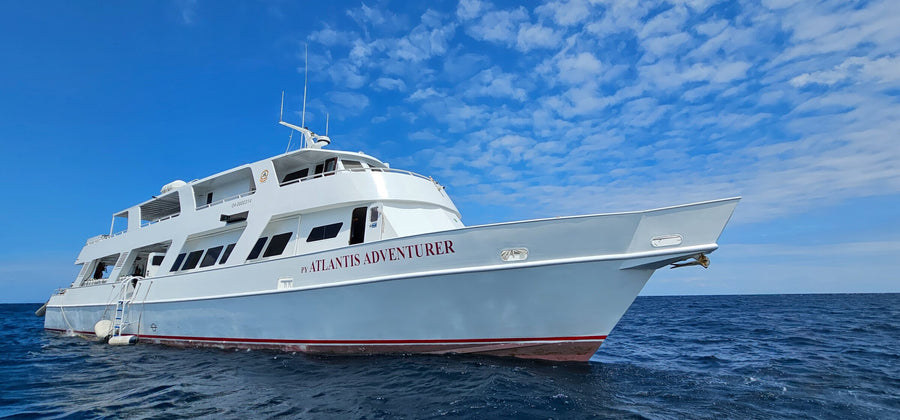
Atlantis Adventurer
safari de Camiguin
- Indicative duration
- 7 nights
- Embarque
- Atlantis Dumaguete Resort, Dauin
- Desembarque
- Atlantis Dumaguete Resort, Dauin
No routes match this search. Try another vessel or clear your search.
Cuándo bucear Camiguin
El buceo está disponible durante todo el año. La dirección del viento, las precipitaciones y el lado elegido de la isla influyen en el plan de cada día, por lo que permiten flexibilidad entre los sitios costeros protegidos y los arrecifes costa afuera. La variedad es parte de la fuerza de Camiguin.
Ventana de planificación: Buceo a través del año.
Cómo es el buceo
Elija las islas y los sitios para adaptarse a la experiencia del grupo.
Arrecifes de Isla Mantigue
Los arrecifes, las laderas de coral, las tortugas y los bancos de peces hacen de Mantigue el clásico día de buceo y snorkel de la isla.
Burias Shoal
Un arrecife sumergido con pendientes, secciones de pared y bancos de peces, que ofrece una sensación de agua azul más fuerte que muchos de los sitios costeros de Camiguin.
Paisajes submarinos volcánicos
Vieja lava, formaciones rocosas, pendientes empinadas y crecimiento de arrecifes alrededor del Viejo Volcán y el Cementerio Hundido cuentan la historia geológica de Camiguin bajo el agua.
Jardines de Coral Negro y Reef
White Island y otros sitios combinan jardines de coral, hábitat de coral negro y peces de arrecife con vistas espectaculares de Camiguin sobre la superficie.
Macro y fotografía de gran angular
Las tortugas, las escuelas y las escenas de arrecifes recompensan a los tiradores de gran angular, mientras que los nudibranquios, el pez rana, el pez escorpión, el camarón y otros sujetos más pequeños dan variedad a los fotógrafos macro.
Isla Blanca y tiempo de superficie de Mantigue
El banco de arena y el parque de la isla protegida de Camiguin agregan fuertes intervalos de superficie, snorkel y oportunidades de fotografía para buceadores e invitados que no bucean por igual.
Buceo en grupos pequeños
Camiguin se adapta a buceadores individuales, parejas y pequeñas fiestas privadas que prefieren la selección flexible del sitio y un ritmo de isla más tranquilo.
Volcanes, manantiales y cascadas
Hibok-Hibok, cascadas, aguas termales y frías y sitios patrimoniales convierten los días de descanso de buceo en parte de la expedición en lugar de simplemente tiempo fuera del agua.
DIVE SITE GUIDE
Dive sites in Camiguin
Explore the character of individual sites, from the setting and marine life to the diving conditions. Open a card for the full description; site access and the final profile depend on conditions and experience.
ORIENTATION MAP
Where the dive sites are
Use the map to understand how the key sites are spread around the destination. Pins are for trip-planning orientation only; entry points, moorings and the final dive plan are always confirmed by the local operator on the day.
Coordinates are planning references compiled from current dive-site sources. They are not navigation coordinates; entry points, moorings, tide windows and the final dive plan are always confirmed by the local operator on the day.
Reef · Wall · Offshore island
Mantigue Island
Mantigue Island is Camiguin’s best-known offshore reef and the natural choice for divers who want clear water and a more expansive reef than the nearshore volcanic sites.
Explorar este punto de buceo
- Tipo
- Reef · Wall · Offshore island
- Profundidad
- 5–35 m
- Experiencia
- Beginner–Intermediate
- Corriente
- Mild–Moderate
Mantigue Island is Camiguin’s best-known offshore reef and the natural choice for divers who want clear water and a more expansive reef than the nearshore volcanic sites. A shallow fringing reef leads into slope and wall terrain, with turtles, schooling fish and healthy coral giving the dive strong wide-angle appeal.
Depth can be adapted easily to certification, so mixed groups can stay on the upper reef while experienced divers work deeper sections. Current varies around the island and the boat normally selects the sheltered or productive side for the day. The shallow finish is especially good: after deeper scenery, divers can spend the final minutes among bright coral rather than hanging over featureless water.
Look for: Offshore island · Turtles · Coral wall/slope · Mixed-experience friendly
Ideal para: Turtles · Schooling fish · Coral reef · Wide angle
Wall · Offshore shoal
Jicdup Wall
Jicdup Wall sits on an offshore shoal where the reef drops dramatically into deep water.
Explorar este punto de buceo
- Tipo
- Wall · Offshore shoal
- Profundidad
- 8–40+ m
- Experiencia
- Advanced
- Corriente
- Moderate
Jicdup Wall sits on an offshore shoal where the reef drops dramatically into deep water. The vertical terrain gives the site a bigger, more oceanic feel than Camiguin’s protected coastal slopes, with coral and fans on the wall and room for schooling fish or passing pelagics in the blue.
Because the drop continues well beyond recreational limits, depth awareness is essential; the wall can make 30 metres feel deceptively shallow. The strongest dive is usually a controlled multilevel profile — deeper section first, then a gradual rise toward the reef top — rather than trying to follow the wall downward. It is best for experienced divers comfortable without a visible bottom reference.
Look for: Offshore wall · Deep drop-off · Wide angle · Advanced depth control
Ideal para: Deep wall · Wide angle · Pelagic potential
Slope · Soft coral · Current
Jicdup Black Forest
Jicdup Black Forest is a current-fed slope rather than a sheer wall, with soft coral and darker reef structure giving the site a distinctive look.
Explorar este punto de buceo
- Tipo
- Slope · Soft coral · Current
- Profundidad
- 5–25 m
- Experiencia
- Intermediate
- Corriente
- Moderate
Jicdup Black Forest is a current-fed slope rather than a sheer wall, with soft coral and darker reef structure giving the site a distinctive look. The moving water keeps fish active and turns the dive into a gentle drift when conditions are right, while coral heads and reef edges provide enough structure for photographers to work close to the bottom.
Stronger current can make the site more demanding, so the guide chooses entry and direction around tide. Compared with Jicdup Wall, the emphasis is less on depth and more on color and movement across the slope. It is particularly rewarding for wide-angle shooters who want soft coral and fish in the same frame.
Look for: Soft-coral slope · Drift dive · Current-fed reef · Wide angle
Ideal para: Soft coral · Drift · Reef fish · Photography
Coral garden · Reef
White Island Old Sanctuary
White Island Old Sanctuary is a shallow coral-garden dive where the attraction is time rather than depth.
Explorar este punto de buceo
- Tipo
- Coral garden · Reef
- Profundidad
- 5–16 m
- Experiencia
- Beginner
- Corriente
- Usually mild
White Island Old Sanctuary is a shallow coral-garden dive where the attraction is time rather than depth. Hard coral and reef fish fill a modest depth range, making it easy for newer divers to settle into the environment and for photographers to work with natural light.
Because most of the useful reef lies inside the first 15–16 metres, no-decompression time is rarely the limiting factor and the dive can be shaped around air consumption and interest instead. Current is usually manageable but still varies around the sandbar. It is a strong second or third dive, particularly after a deeper Jicdup profile, and a good reminder that Camiguin does not need dramatic walls to deliver healthy reef scenery.
Look for: Shallow coral garden · Beginner friendly · Natural light · Long bottom time
Ideal para: Shallow coral · Easy photography · Long bottom times
Slope · Coral · Macro + reef
White Island Black Forest
White Island Black Forest moves away from the sandbar’s shallow sanctuary into a deeper slope where coral patches, darker substrate and smaller subjects give the dive a more detailed character.
Explorar este punto de buceo
- Tipo
- Slope · Coral · Macro + reef
- Profundidad
- 8–30 m
- Experiencia
- Intermediate
- Corriente
- Mild–Moderate
White Island Black Forest moves away from the sandbar’s shallow sanctuary into a deeper slope where coral patches, darker substrate and smaller subjects give the dive a more detailed character. Divers can search the reef for nudibranchs and other macro life while still enjoying a broader coral landscape.
The profile is simple to control, with the slope providing a visible reference throughout the dive, but the deeper end can exceed the depth needed for the best subjects. A deliberate turn depth keeps the group from drifting down simply because the bottom continues. It is well suited to photographers who want a mixed reef-and-macro dive rather than a single big-animal target.
Look for: Reef slope · Macro potential · Visible bottom reference · Photography
Ideal para: Coral slope · Macro · Reef fish
Volcanic wall · Deep reef
Old Volcano
Old Volcano is Camiguin’s geology underwater: a volcanic cliff continues below the surface as a steep wall, giving the dive a dramatic vertical shape and dark-rock backdrop.
Explorar este punto de buceo
- Tipo
- Volcanic wall · Deep reef
- Profundidad
- 5–40+ m
- Experiencia
- Advanced
- Corriente
- Mild–Moderate
Old Volcano is Camiguin’s geology underwater: a volcanic cliff continues below the surface as a steep wall, giving the dive a dramatic vertical shape and dark-rock backdrop. Coral and reef life occupy ledges and sections of the face, while the open water beside the wall can bring larger fish through the scene.
The drop extends far beyond recreational limits, so the wall demands disciplined depth control even when current is mild. Divers do not need to go deep to appreciate the volcanic structure; the shallower wall offers better light and longer bottom time. For wide-angle photographers, the contrast between black volcanic rock, coral and blue water is the site’s strongest visual feature.
Look for: Volcanic wall · Deep drop-off · Wide-angle scenery · Advanced profile
Ideal para: Volcanic topography · Wall · Wide angle
Slope · Soft coral · Reef
Old Volcano Bay
Old Volcano Bay is the softer counterpart to the nearby wall.
Explorar este punto de buceo
- Tipo
- Slope · Soft coral · Reef
- Profundidad
- 2–30 m
- Experiencia
- Beginner–Intermediate
- Corriente
- Usually mild
Old Volcano Bay is the softer counterpart to the nearby wall. A gentle slope begins almost at the surface and runs through soft coral and reef habitat toward deeper water, giving divers a wide choice of depth without the psychological pull of a vertical drop.
The site is ideal for a slow photographic dive: wide-angle shooters can work soft coral and reef scenes while macro divers search the slope for smaller animals. Because useful habitat starts very shallow, the final part of the dive remains productive and there is no need for a featureless safety stop. On a calm day it suits newer divers as well as experienced photographers looking for an unhurried profile.
Look for: Gentle slope · Soft coral · Beginner accessible · Productive shallows
Ideal para: Soft coral · Relaxed reef · Photography
Historical site · Shallow reef
Sunken Cemetery
The Sunken Cemetery is one of the rare dive sites where Camiguin’s human and volcanic history is part of the underwater experience.
Explorar este punto de buceo
- Tipo
- Historical site · Shallow reef
- Profundidad
- 3–15 m
- Experiencia
- Beginner
- Corriente
- Usually mild
The Sunken Cemetery is one of the rare dive sites where Camiguin’s human and volcanic history is part of the underwater experience. Remains and submerged structures from the old coastal cemetery have become reef habitat, with coral and fish growing around features that connect the dive directly to the island’s eruptive past.
The site is shallow, so it works well for newer divers, long photo sessions and an easy final dive of the day. Visibility and marine growth vary, and the historical remains should be observed without contact or disturbance. Rather than a deep or adrenaline-heavy dive, the appeal is atmosphere: a quiet reef where cultural history and marine succession occupy the same small area.
Look for: Historical site · Shallow reef · Beginner friendly · Unique Camiguin story
Ideal para: History · Shallow coral · Photography
Fotografía submarina
En la isla de Mantigue, tortugas, bancos de peces, arrecifes de coral, gran angular dan una idea de las posibilidades fotográficas. Elija la configuración de la cámara para los sitios planificados, luego deje tiempo para observar la escena antes de hacer la imagen. Repetir una inmersión productiva a menudo crea mejores oportunidades que buscar constantemente una ubicación diferente. En las inmersiones de enfoque cercano, manténgase alejado del fondo y permita que los sujetos se comporten naturalmente. Un fondo limpio y el encuadre del paciente pueden ser más efectivos que acercarse.
Más allá del buceo: Camiguin sobre la superficie
Camiguin ofrece un programa completo de la isla: Katibawasan y Tuasan Falls, aguas termales y frías, ruinas de la iglesia vieja y el mirador del cementerio hundido añaden una perspectiva diferente sobre su paisaje volcánico. White Island y Mantigue aportan playas y vistas al mar.
Una guía Mt. La caminata Hibok-Hibok es una tarea más exigente y merece su propio día. Mantenga las actividades extenuantes o a gran altitud separadas del buceo reciente y construya la secuencia alrededor de intervalos de superficie apropiados. Una gira más fácil funciona bien para los compañeros que prefieren un ritmo más suave.
Cómo llegar a Camiguin
A Camiguin se puede llegar por aire o por un viaje por carretera y ferry a través del norte de Mindanao. Balingoan es la puerta de entrada del ferry continental; la mejor opción depende de su punto de partida, hora de llegada y planes posteriores.
Dale a la isla su propio espacio en el itinerario. Un vuelo, un largo viaje por carretera y una travesía en ferry crean diferentes días de llegada, especialmente con equipaje de buceo y cámara. Planifique el recorrido por la isla y bucee después de la llegada en lugar de confiar en una primera inmersión inmediata.
Preguntas de buceo Camiguin
¿Qué hace que Camiguin valga la pena un viaje de buceo?
El carácter volcánico de Camiguin continúa bajo el agua, desde las oscuras laderas hasta los arrecifes alrededor de las islas costeras. Un día de buceo puede ser seguido por cascadas, manantiales o una vista de las montañas, lo que hace que la isla sea inusualmente gratificante para unas vacaciones mixtas.
¿Cómo debo planificar mi estancia?
Elija una base costera que le dé acceso práctico tanto a sitios volcánicos locales como a excursiones en barco a Mantigue u otras áreas costa afuera. De cuatro a seis noches permite el buceo y la exploración de la tierra para compartir las vacaciones, en lugar de hacer de las cascadas una idea de último momento.
¿Cuándo es un momento útil para visitar?
El buceo está disponible durante todo el año. La dirección del viento, las precipitaciones y el lado elegido de la isla influyen en el plan de cada día, por lo que permiten flexibilidad entre los sitios costeros protegidos y los arrecifes costa afuera. La variedad es parte de la fuerza de Camiguin.
¿Hay suficiente para los compañeros que no bucean?
Camiguin ofrece un programa completo de la isla: Katibawasan y Tuasan Falls, aguas termales y frías, ruinas de la iglesia vieja y el mirador del cementerio hundido añaden una perspectiva diferente sobre su paisaje volcánico. White Island y Mantigue aportan playas y vistas al mar.
A closer look at Camiguin


Planifica tu viaje a Camiguin
Cuéntanos las experiencias que más te gusten, tus fechas preferidas y cómo te gusta viajar. Podemos traer el destino, alojamiento y buceo en un itinerario coherente.
Planificar mi viaje