

Destination guide · Philippines
Ciudad del Carmen & Busuanga Diving
Coron’s wrecks emerge slowly from the water: a mast, a deck, a huge structure carrying decades of marine growth. Above the surface, limestone cliffs and enclosed lagoons make the journey much more than a sequence of wreck dives.
Coron y Busuanga de un vistazo
Coron es uno de los destinos de buceo más atmosféricos del sudeste asiático. Los barcos japoneses hundidos durante la Segunda Guerra Mundial ahora forman grandes estructuras submarinas donde la historia, el crecimiento marino tropical y la luz dramática se unen.
El buceo es mejor para buzos seguros y debidamente entrenados; La penetración solo debe considerarse con la certificación adecuada y la supervisión local. Por encima del agua, acantilados de piedra caliza, lagunas, lagos y rutas que saltan por las islas hacen que Coron sea igualmente atractivo para los viajeros que desean una fuerte experiencia Palawan más allá de los naufragios.
Planificar su estancia en Coron y Busuanga
Elija la base alrededor de los naufragios que desea visitar y la cantidad de viaje en barco diario que disfruta. Cuatro a seis días de buceo permiten la progresión de exteriores menos profundos a sitios más profundos adecuados, con un día separado para lagos y lagunas. La penetración de restos es una actividad especializada, no una inclusión estándar.

Sangat Island Dive Resort
Resort de buceo en una isla privada de la bahía de Coron, con acceso directo a pecios históricos de la Segunda Guerra Mundial y arrecifes, habitaciones de estilo local, pensión completa y traslados compartidos incluidos.
Liveaboard routes for this destination
Explore the routes that visit this region. Compare ships and itineraries, then open a route to see its sailing dates, cabins and the areas it covers.
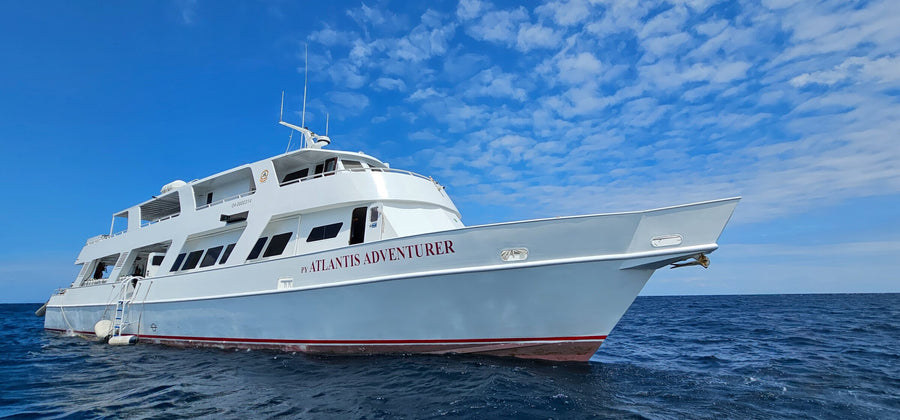
Atlantis Adventurer
Apo Reef, pecios de Coron & Dugongs
- Indicative duration
- 7 nights
- Embarque
- Sablayan or Coron — according to departure
- Desembarque
- Coron or Sablayan — according to departure
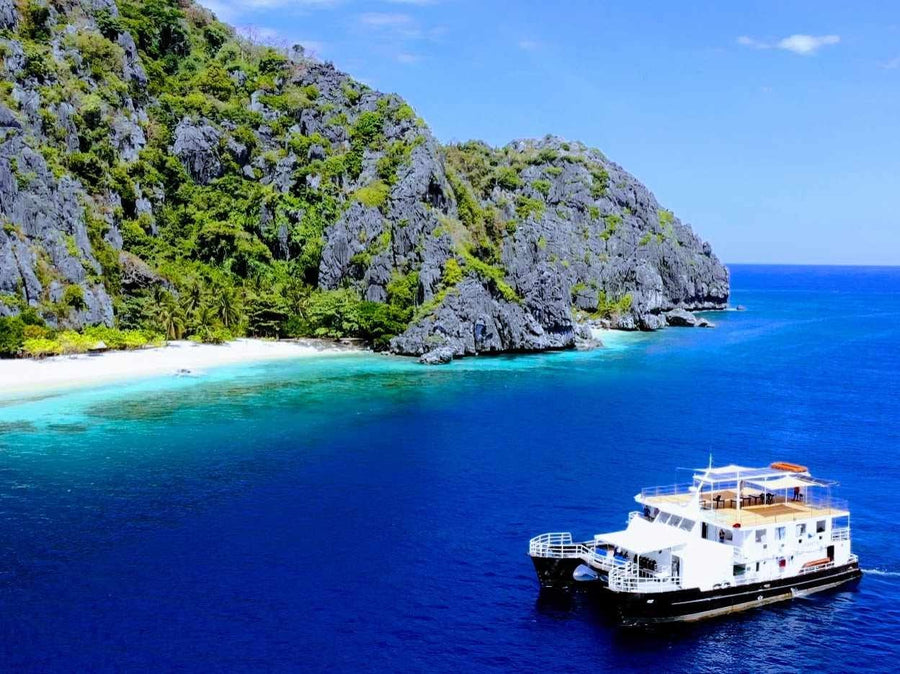
NAVIS 1
Apo Reef Safari extendido
- Indicative duration
- 6 nights
- Embarque
- Coron
- Desembarque
- Coron
NAVIS 1
Safari al arrecife de Apo
- Indicative duration
- 4 nights
- Embarque
- Coron
- Desembarque
- Coron
NAVIS 1
Safari de Coron — pecios de la Segunda Guerra Mundial, dugongos y arrecife de Apo
- Indicative duration
- 6 nights
- Embarque
- Coron
- Desembarque
- Coron
NAVIS 1
Corón a El Nido vía Linapacan
- Indicative duration
- 3 nights
- Embarque
- Coron
- Desembarque
- El Nido
NAVIS 1
El Nido a Coron vía Apo Reef
- Indicative duration
- 7 nights
- Embarque
- El Nido
- Desembarque
- Coron
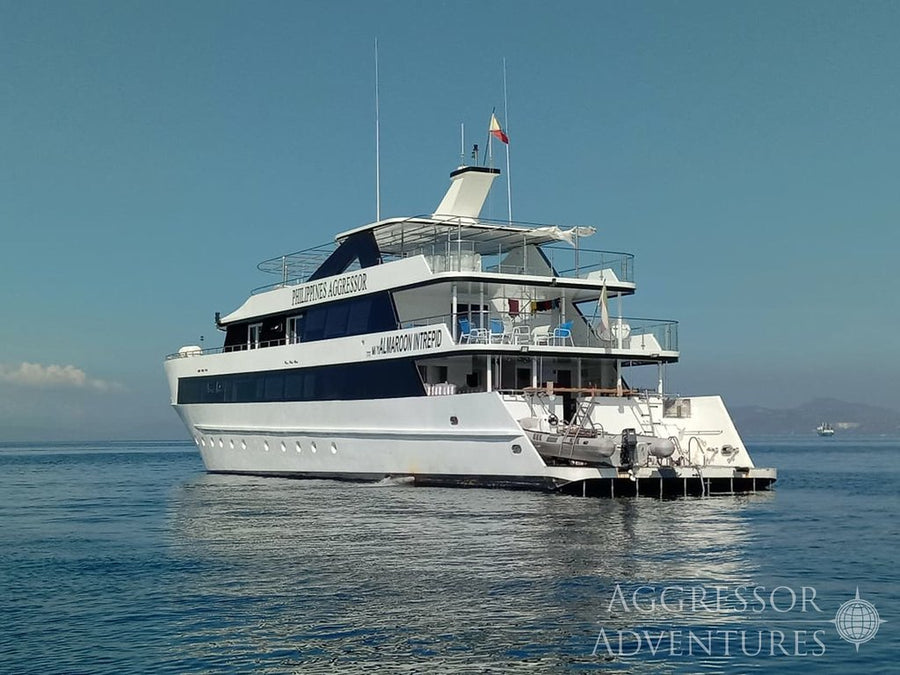
Philippines Aggressor
Batangas/Coron (10 noches)
- Indicative duration
- 10 nights
- Embarque
- Batangas
- Desembarque
- Coron
Philippines Aggressor
Coron/Batangas (10 noches)
- Indicative duration
- 10 nights
- Embarque
- Coron
- Desembarque
- Batangas
Philippines Aggressor
Coron/Coron (7 noches)
- Indicative duration
- 7 nights
- Embarque
- Coron
- Desembarque
- Coron
No routes match this search. Try another vessel or clear your search.
Cuándo bucear en Coron y Busuanga
De noviembre a mayo comúnmente ofrece condiciones de viaje más tranquilas. La visibilidad submarina es a menudo más limitada que en los arrecifes oceánicos, por lo que la atracción es la escala y la historia de las estructuras. Seleccione los perfiles de naufragio por entrenamiento, comodidad y profundidad, en lugar de tratar de completar cada nombre en una lista.
Ventana de planificación: Mejor octubre-mayo.
Cómo es el buceo
Elija las islas y los sitios para adaptarse a la experiencia del grupo.
Los restos de la Segunda Guerra Mundial japonesa
Coron es famoso por los naufragios japoneses de la Segunda Guerra Mundial transformados en arrecifes artificiales, con grandes estructuras, sombras, vida de peces y atmósfera histórica.
Barracuda Lake Thermoclines
Barracuda Lake ofrece un entorno de buceo único con termoclinas, paredes de roca y una atmósfera geológica inusual.
Acantilados y lagunas de piedra caliza
Por encima del agua, Coron es conocido por acantilados de piedra caliza, lagunas esmeraldas, lagos ocultos y paisajes cinematográficos de Palawan.
Alojamiento en Palawan
Excursiones en barco, playas, lagunas, lagos y miradores hacen de Coron uno de los destinos más fuertes para los huéspedes que no bucean y grupos mixtos.
Fotografía Atmosférica de naufragios
El gran angular es mejor para las estructuras de naufragios, mientras que las luces son útiles porque los naufragios pueden ser oscuros y la visibilidad puede variar.
Buceo avanzado centrado en naufragios
Coron es mejor para buceadores avanzados con buena flotabilidad y comodidad alrededor de naufragios, estructura y a veces menor visibilidad.
Fuerte para grupos mixtos
Coron funciona bien cuando los buzos quieren naufragios y los compañeros quieren lagunas, lagos, playas, miradores y saltos de isla.
Extensión ideal de Palawan
Coron combina bien con El Nido, Puerto Princesa, Manila, Cebu o rutas de buceo seleccionadas en Filipinas.
DIVE SITE GUIDE
Dive sites in Coron & Busuanga
Explore the character of individual sites, from the setting and marine life to the diving conditions. Open a card for the full description; site access and the final profile depend on conditions and experience.
ORIENTATION MAP
Where the dive sites are
Use the map to understand how the key sites are spread around the destination. Pins are for trip-planning orientation only; entry points, moorings and the final dive plan are always confirmed by the local operator on the day.
Wreck positions are planning references only. Penetration requires appropriate training, operator approval and a current site briefing; depth, visibility and current can vary substantially.
WWII tanker wreck
Okikawa Maru
Okikawa Maru is one of the most accessible big wrecks in Coron Bay.
Explorar este punto de buceo
- Tipo
- WWII tanker wreck
- Profundidad
- 10–26 m
- Experiencia
- Open Water exterior / Advanced penetration
- Corriente
- Moderate possible
Okikawa Maru is one of the most accessible big wrecks in Coron Bay. The tanker sits upright with much of the deck around 10–16 metres, allowing recreational divers to spend useful time on the outside without immediately running into deep no-decompression limits. The scale is impressive: at roughly 160 metres long, one dive only covers part of the ship.
Coral growth, snapper, batfish and other fish turn the wreck into a living reef, while stronger tidal flow can increase both fish activity and task loading. Penetration routes exist for trained wreck divers, but there is more than enough outside to justify the dive. For a first Coron wreck, Okikawa offers the best combination of size, light and manageable depth.
Look for: Coron’s largest wreck · Shallow main deck · Fish-rich exterior · Penetration for trained divers
Ideal para: Large wreck · Long bottom time · Fish schools · First wreck experience
WWII cargo wreck
Ekkai Maru / Morazan Maru
Ekkai Maru, often still called Morazan by local operators, is a photogenic wreck with a relatively shallow upper side and large internal cargo spaces.
Explorar este punto de buceo
- Tipo
- WWII cargo wreck
- Profundidad
- 12–25 m
- Experiencia
- Intermediate / Wreck trained for penetration
- Corriente
- Usually mild–Moderate
Ekkai Maru, often still called Morazan by local operators, is a photogenic wreck with a relatively shallow upper side and large internal cargo spaces. Hard coral grows over parts of the exposed structure, while groupers, sweetlips, scorpionfish and occasional turtles or sea snakes use the wreck as habitat.
On bright days, sunlight can penetrate holes in the hull and cargo holds, producing the cathedral-like beams that make the site especially appealing to wide-angle photographers. Certified wreck divers can follow guided routes through the holds and engine-room areas; divers without penetration training should remain outside or within clearly open, light-filled swim-throughs as directed by the operator. Its moderate depth makes it a strong step up after the shallowest Coron wrecks.
Look for: Light-filled cargo holds · Hard coral on wreck · Large boilers · Moderate depth
Ideal para: Sunbeams in cargo holds · Coral growth · Recreational wreck diving
WWII freighter wreck
Olympia Maru
Olympia Maru is a substantial Japanese freighter lying at a depth where Advanced certification makes the dive much more comfortable.
Explorar este punto de buceo
- Tipo
- WWII freighter wreck
- Profundidad
- 18–32 m
- Experiencia
- Advanced
- Corriente
- Usually mild–Moderate
Olympia Maru is a substantial Japanese freighter lying at a depth where Advanced certification makes the dive much more comfortable. The wreck is large enough that divers can focus one dive on the bow and forward holds and another on the stern, rather than rushing to see everything. Batfish, pufferfish, scorpionfish and schools of reef fish gather around the mast and structure, while the cargo spaces offer penetration opportunities for properly trained divers.
Even without entering the wreck, the exterior provides strong photography subjects and an excellent sense of scale. Because much of the useful dive sits below 18 metres, depth discipline and gas planning matter more than on Okikawa. It is a logical wreck for divers building experience in Coron before tackling deeper sites.
Look for: 122 m freighter · Cargo holds · Advanced depth · Fish-rich exterior
Ideal para: Large freighter · Cargo holds · Fish life · Wreck training
WWII construction-supply wreck
Kogyo Maru
Kogyo Maru is the wreck where the cargo tells the story.
Explorar este punto de buceo
- Tipo
- WWII construction-supply wreck
- Profundidad
- 22–35 m
- Experiencia
- Advanced / Wreck trained for penetration
- Corriente
- Usually mild–Moderate
Kogyo Maru is the wreck where the cargo tells the story. The ship carried construction material for Japanese airfield work, and the holds still contain cement bags, machinery, a small bulldozer, tractor equipment and an air compressor. She lies on her starboard side, with much of the exterior already in Advanced-depth territory and the seabed in the mid-30-metre range.
That makes no-decompression time a real part of the dive plan. Trained wreck divers can explore selected holds and machinery spaces with a guide, while non-penetration divers still have a large hull and fish-covered exterior to explore. The combination of preserved cargo and wartime context makes Kogyo feel less like a generic wreck and more like an underwater historical site.
Look for: Bulldozer in hold · Cement cargo · Engine room · Advanced depth
Ideal para: Historic cargo · Bulldozer · Engine room · Advanced wreck diving
WWII seaplane tender wreck
Akitsushima
Akitsushima is the only true warship among Coron’s major recreational wrecks and has a very different atmosphere from the cargo vessels.
Explorar este punto de buceo
- Tipo
- WWII seaplane tender wreck
- Profundidad
- 22–36 m
- Experiencia
- Advanced / Wreck trained for penetration
- Corriente
- Variable
Akitsushima is the only true warship among Coron’s major recreational wrecks and has a very different atmosphere from the cargo vessels. The 118-metre seaplane tender lies on her port side with major battle damage near the stern. Her huge crane rests beside the wreck and often gathers batfish and barracuda, while the hull still carries recognisable military structure including anti-aircraft gun mounts.
The wreck’s depth places most of the dive firmly in Advanced territory, and the internal areas are complex enough that penetration should be reserved for trained wreck divers under a guide’s plan. Outside, the crane, broken stern and scale of the ship provide excellent wide-angle subjects. For many experienced visitors, Akitsushima is the wreck that feels most distinctly like a warship.
Look for: Seaplane tender · Large crane · Military structure · Deep advanced wreck
Ideal para: Warship atmosphere · Giant crane · Advanced wreck photography
Deep WWII naval supply wreck
Irako
Irako is the serious end of Coron wreck diving.
Explorar este punto de buceo
- Tipo
- Deep WWII naval supply wreck
- Profundidad
- 28–45 m
- Experiencia
- Experienced Advanced / Technical depending profile
- Corriente
- Variable
Irako is the serious end of Coron wreck diving. The naval refrigeration and supply ship sits nearly upright in much deeper water than the beginner-friendly wrecks, with the bridge area damaged but much of the hull remaining recognisable. Local guides describe the wreck as dark and demanding, and that is the right mindset: depth, reduced ambient light, internal complexity and smaller routes increase the consequences of poor buoyancy or gas planning.
Outside, jacks, snappers, grouper and barracuda can gather around the mast and upper structure, so even a non-penetration dive can be rewarding for experienced deep divers. Any internal exploration belongs to properly trained wreck or technical divers. Irako should be earned gradually, not treated as a standard first-day Coron wreck.
Look for: Deepest major wreck · Dark interiors · Schooling jacks · For experienced divers
Ideal para: Deep wreck · Dark interiors · Experienced wreck divers
Shallow WWII wreck · Reef
East Tangat Gunboat
East Tangat Gunboat is the opposite of Irako: a small wreck that begins in only a few metres of water and can be appreciated by snorkellers as well as certified divers.
Explorar este punto de buceo
- Tipo
- Shallow WWII wreck · Reef
- Profundidad
- 3–22 m
- Experiencia
- Beginner
- Corriente
- Usually mild
East Tangat Gunboat is the opposite of Irako: a small wreck that begins in only a few metres of water and can be appreciated by snorkellers as well as certified divers. The vessel lies on a coral slope, so the dive naturally blends wreck structure with reef life and bright ambient light.
Newer divers can spend time on the outside learning how to approach metal without touching or silting it, while experienced photographers benefit from the shallow depth and long bottom time. Because the wreck is small, there is no need to rush; the best experience comes from circling slowly, watching how coral and marine life have colonised the structure. It is an ideal check dive or first Coron wreck before moving to larger ships.
Look for: Very shallow wreck · Beginner friendly · Snorkeller accessible · Long bottom time
Ideal para: Intro to wreck diving · Snorkelling · Shallow photography
Lake · Halocline · Thermocline
Barracuda Lake
Barracuda Lake is not a wreck at all, which is exactly why it belongs on a Coron itinerary.
Explorar este punto de buceo
- Tipo
- Lake · Halocline · Thermocline
- Profundidad
- 5–30 m
- Experiencia
- Open Water–Intermediate
- Corriente
- None
Barracuda Lake is not a wreck at all, which is exactly why it belongs on a Coron itinerary. Divers enter a limestone-walled lake where layers of fresh and salt water create a visible halocline and dramatic temperature changes. Passing through the thermocline can feel surreal as the water becomes much hotter at depth, while jagged limestone formations descend into an otherworldly basin.
Marine life is limited compared with the bay, so the experience is about geology, water layers and atmosphere rather than fish numbers. The lack of current makes the profile physically easy, but buoyancy can feel unusual when moving between water layers of different density. It is an excellent second or third dive that gives the body and mind a complete break from steel wrecks.
Look for: Fresh/salt-water layers · Hot thermocline · Limestone formations · No current
Ideal para: Extreme thermocline · Limestone scenery · Unique freshwater/saltwater layers
Fotografía submarina
En Okikawa Maru, naufragio grande, largo tiempo de fondo, escuelas de peces, primera experiencia naufragio dan una idea de las posibilidades fotográficas. Elija la configuración de la cámara para los sitios planificados, luego deje tiempo para observar la escena antes de hacer la imagen. Repetir una inmersión productiva a menudo crea mejores oportunidades que buscar constantemente una ubicación diferente. Para las escenas de arrecife, use la forma del arrecife y la luz disponible para dar profundidad a la imagen. Un buceador a una distancia respetuosa puede proporcionar escala sin hacinarse con un animal.
Más allá del buceo: Coron y Busuanga sobre la superficie
Permita un día completo de isla para el paisaje de piedra caliza alrededor de Coron. Kayangan Lake, Twin Lagoon y las playas se disfrutan mejor con tiempo suficiente para nadar, mirar a su alrededor y absorber el paisaje, en lugar de paradas breves entre otras citas.
Busuanga también ofrece miradores, aguas termales y excursiones costeras más tranquilas. Un grupo mixto puede compartir el paisaje de la isla incluso cuando solo algunos invitados bucean. Permanecer en la ciudad da opción de noche; una isla o base costera remota crea unas vacaciones más autónomas.
Cómo llegar a Coron y Busuanga
La mayoría de los huéspedes internacionales llegan a Coron volando a Manila o Cebu, luego toman un vuelo doméstico al aeropuerto Busuanga / Coron. Desde allí, los huéspedes se trasladarán a Coron Town o a un complejo isleño seleccionado.
Elija los horarios de llegada y salida alrededor del traslado, especialmente cuando se trata de un cruce en barco o un largo viaje por carretera. Deje espacio para un relajado día final en tierra y un intervalo apropiado entre la última inmersión y el vuelo.
Preguntas de buceo Coron & Busuanga
¿Qué hace que Coron y Busuanga valga la pena un viaje de buceo?
Los restos de Coron emergen lentamente del agua: un mástil, una cubierta, una enorme estructura que lleva décadas de crecimiento marino. Sobre la superficie, acantilados de piedra caliza y lagunas cerradas hacen que el viaje sea mucho más que una secuencia de inmersiones en naufragios.
¿Cómo debo planificar mi estancia?
Elija la base alrededor de los naufragios que desea visitar y la cantidad de viaje en barco diario que disfruta. Cuatro a seis días de buceo permiten la progresión de exteriores menos profundos a sitios más profundos adecuados, con un día separado para lagos y lagunas. La penetración de restos es una actividad especializada, no una inclusión estándar.
¿Cuándo es un momento útil para visitar?
De noviembre a mayo comúnmente ofrece condiciones de viaje más tranquilas. La visibilidad submarina es a menudo más limitada que en los arrecifes oceánicos, por lo que la atracción es la escala y la historia de las estructuras. Seleccione los perfiles de naufragio por entrenamiento, comodidad y profundidad, en lugar de tratar de completar cada nombre en una lista.
¿Hay suficiente para los compañeros que no bucean?
Permita un día completo de isla para el paisaje de piedra caliza alrededor de Coron. Kayangan Lake, Twin Lagoon y las playas se disfrutan mejor con tiempo suficiente para nadar, mirar a su alrededor y absorber el paisaje, en lugar de paradas breves entre otras citas.
A closer look at Coron & Busuanga


Planifica tu viaje a Coron y Busuanga
Cuéntanos las experiencias que más te gusten, tus fechas preferidas y cómo te gusta viajar. Podemos traer el destino, alojamiento y buceo en un itinerario coherente.
Planificar mi viaje