

Destination guide · Malaysia
Buceo en Labuan
Labuan’s appeal is structural and historical: large wrecks, marine growth and the scale of a ship revealed underwater. It suits divers who enjoy a carefully planned profile and the story behind a site as much as colourful reef scenery.
Labuan de un vistazo
Labuan es el destino especializado en buceo de naufragios de Malasia, con varios naufragios grandes que ofrecen tanto exploración exterior recreativa como perfiles técnicos más avanzados. La historia marítima y las estructuras sustanciales lo distinguen de las islas centradas en los arrecifes del país.
Los requisitos de profundidad, visibilidad y penetración varían según el naufragio, por lo que la certificación y la experiencia deben evaluarse con precisión. Labuan también trabaja como una extensión corta de Sabah o Brunei, con museos, monumentos y logística urbana directa que apoya el programa de buceo.
Planificar su estancia en Labuan
Organice las inmersiones con un programa local establecido y elija naufragios por profundidad, visibilidad y entrenamiento. De tres a cinco días de buceo pueden proporcionar una visita enfocada. La exploración exterior, la penetración y los perfiles técnicos son actividades diferentes y deben planificarse por separado.
Cuándo bucear Labuan
De marzo a octubre es la ventana de planificación existente para facilitar las condiciones del mar. La visibilidad de los restos puede cambiar considerablemente, así que permita un orden de sitio diferente y seleccione perfiles de manera conservadora. La profundidad máxima de un naufragio no es una profundidad recomendada para todos los visitantes.
Ventana de planificación: Mejor marzo-octubre.
Cómo es el buceo
Se recomiendan calificaciones avanzadas y de naufragio; La penetración requiere un entrenamiento adecuado.
Grandes naufragios
El buceo de Labuan se centra en cuatro naufragios principales que se encuentran en alta mar desde la isla: los naufragios de Cemento, Australia, Agua Azul y América. Su tamaño y profundidad hacen que el destino sea fundamentalmente diferente de unas vacaciones convencionales en los arrecifes y recompensan a los buceadores que disfrutan de la historia, la estructura y la vida marina de arrecife artificial.
Perfiles técnicos
Algunas secciones de los naufragios se encuentran lo suficientemente profundas como para que la exploración prolongada, la penetración o el tiempo inferior requieran capacitación avanzada o técnica. Los operadores deben hacer coincidir el naufragio y la ruta con la certificación, el plan de gas y la experiencia de cada buzo en lugar de asumir que los cuatro sitios son adecuados para el mismo perfil.
Exteriores de naufragios recreativos
Todavía se pueden disfrutar varios naufragios desde el exterior en perfiles recreativos estándar, donde los buceadores pueden ver el casco, la superestructura y el crecimiento marino sin entrar en entornos aéreos. La penetración debe reservarse para buceadores debidamente entrenados según los procedimientos actuales del operador.
Historia marítima
Los cuatro naufragios representan diferentes capítulos de la historia marítima de Labuan, desde pérdidas en tiempos de guerra hasta buques comerciales posteriores. Ese contexto histórico es una parte importante del atractivo del destino y hace que una sesión informativa previa a la inmersión sobre la identidad y la historia de cada naufragio valga especialmente la pena.
DIVE SITE GUIDE
Dive sites in Labuan
Explore the character of individual sites, from the setting and marine life to the diving conditions. Open a card for the full description; site access and the final profile depend on conditions and experience.
ORIENTATION MAP
Where the dive sites are
Use the map to understand how the key sites are spread around the destination. Pins are for trip-planning orientation only; entry points, moorings and the final dive plan are always confirmed by the local operator on the day.
Coordinates are planning references compiled from current dive-site sources. They are not navigation coordinates; entry points, moorings, tide windows and the final dive plan are always confirmed by the local operator on the day.
Wreck · Artificial reef
Cement Wreck
The Cement Wreck is the most approachable of Labuan’s famous Big Four.
Explorar este punto de buceo
- Tipo
- Wreck · Artificial reef
- Profundidad
- 6–32 m
- Experiencia
- Intermediate–Advanced
- Corriente
- Mild–Moderate
The Cement Wreck is the most approachable of Labuan’s famous Big Four. The large freighter lies upright and has been underwater long enough for coral, sponges and schooling fish to turn the steel structure into a living reef.
Divers can stay on the exterior and still see the bow, deck, superstructure and dense marine growth without entering overhead areas. The wreck spans a broad depth range, so newer wreck divers can work the upper structure while advanced divers explore deeper sections within their certification. Good buoyancy is essential around coral-encrusted steel, and penetration should remain within formal wreck training and the operator’s current assessment of structural safety.
Look for: Big Four wreck · Upright hull · Strong coral growth · Exterior dive works well
Ideal para: Wreck photography · Coral growth · Macro
WWII wreck · Deep wreck
Australian Wreck
The Australian Wreck is actually the former Dutch steamship De Klerk, later renamed Imabari Maru, and is one of Labuan’s deeper historical sites.
Explorar este punto de buceo
- Tipo
- WWII wreck · Deep wreck
- Profundidad
- 28–34 m
- Experiencia
- Advanced / Deep
- Corriente
- Mild
The Australian Wreck is actually the former Dutch steamship De Klerk, later renamed Imabari Maru, and is one of Labuan’s deeper historical sites. The top of the structure sits close to 28 metres and the bottom around the mid-thirties, so the entire dive demands advanced depth planning.
Broken hull sections create habitat for barracuda, grouper and batfish, while smaller reef species occupy the wreckage. Exterior exploration provides a complete dive; any penetration adds overhead complexity and should only be attempted by properly trained divers. Because bottom time is limited at this depth, the most efficient plan is a direct descent, deliberate route and slow ascent rather than trying to cover every deck.
Look for: WWII history · 28–34 m · Deep certification recommended · Barracuda & grouper
Ideal para: WWII history · Deep wreck · Fish schools
WWII wreck · War grave
American Wreck
The American Wreck is the remains of USS Salute, a US Navy minesweeper lost to a mine in 1945.
Explorar este punto de buceo
- Tipo
- WWII wreck · War grave
- Profundidad
- 22–32 m
- Experiencia
- Advanced
- Corriente
- Mild–Moderate
The American Wreck is the remains of USS Salute, a US Navy minesweeper lost to a mine in 1945. The broken wreckage lies between roughly 22 and 32 metres and carries a much stronger historical weight than an ordinary artificial reef.
Batfish, barracuda, snapper and smaller reef life use the structure, while ammunition and other wartime remnants can still be visible. Divers should treat the site as both a wreck and a memorial: avoid disturbing artifacts and do not enter confined spaces without appropriate wreck training. The moderate depth gives experienced divers enough time to explore the exterior carefully while still managing gas and no-decompression limits conservatively.
Look for: USS Salute · WWII war grave · 22–32 m · Historic wreck
Ideal para: USS Salute · WWII history · Pelagics
Wreck · Deep blue-water site
Blue Water Wreck
Blue Water Wreck is the former Philippine trawler MV Mabini Padre, resting on its port side in deeper, often clearer water than the other Labuan wrecks.
Explorar este punto de buceo
- Tipo
- Wreck · Deep blue-water site
- Profundidad
- 24–35 m
- Experiencia
- Advanced
- Corriente
- Mild–Moderate
Blue Water Wreck is the former Philippine trawler MV Mabini Padre, resting on its port side in deeper, often clearer water than the other Labuan wrecks. The highest part begins around 24 metres and the bottom reaches the mid-thirties, making it an advanced profile from the moment of descent.
Cardinalfish, sweetlips, lionfish and batfish occupy the structure, while larger snapper and grouper shelter around the hull. The clearer water is ideal for wide-angle photography, but it can also make depth feel deceptively shallow. Exterior exploration is more than enough for most divers; overhead entry should be reserved for trained wreck divers with a specific plan.
Look for: 24–35 m · Often clearer visibility · Large grouper · Advanced wreck
Ideal para: Clearer water · Grouper · Batfish · Deep wreck
Fringing reef · Coral garden
Kuraman Reef
Kuraman Reef gives Labuan divers a complete change of pace after the deep wrecks.
Explorar este punto de buceo
- Tipo
- Fringing reef · Coral garden
- Profundidad
- 3–20 m
- Experiencia
- Beginner
- Corriente
- Mild
Kuraman Reef gives Labuan divers a complete change of pace after the deep wrecks. Shallow fringing coral begins close to the island and can be explored without pushing depth or no-decompression limits.
Hard coral, reef fish and sandy patches make the site useful for newer divers, refreshers and photographers who want strong natural light. The reef is also suitable for snorkelling, which makes it practical for mixed groups. The map pin marks the island reef area rather than a fixed dive mooring; the local operator chooses the best side according to wind and visibility.
Look for: Shallow fringing reef · Beginner friendly · Snorkel-friendly · Marine park
Ideal para: Easy reef · Snorkel crossover · Coral
Fringing reef · Turtle area
Rusukan Besar Reef
Rusukan Besar’s fringing reef starts in very shallow water and is one of the marine park’s easiest natural reef dives.
Explorar este punto de buceo
- Tipo
- Fringing reef · Turtle area
- Profundidad
- 2–18 m
- Experiencia
- Beginner
- Corriente
- Mild
Rusukan Besar’s fringing reef starts in very shallow water and is one of the marine park’s easiest natural reef dives. Coral gardens and tropical reef fish dominate the experience, while turtles and occasional juvenile reef sharks are possible around the protected island waters.
The modest depth is ideal for long bottom times and gives new divers a forgiving environment after training. Because the reef circles the island, the exact dive route depends on the day’s wind and current. The map point is therefore an island-level orientation marker, not a permanent mooring.
Look for: Shallow coral · Turtles possible · Beginner friendly · Marine park reef
Ideal para: Turtles · Coral garden · Easy reef
Fringing reef · Coral slope
Rusukan Kecil Reef
Rusukan Kecil is the smallest of the three marine-park islands and is used for reef diving and snorkelling rather than wreck-style depth.
Explorar este punto de buceo
- Tipo
- Fringing reef · Coral slope
- Profundidad
- 3–20 m
- Experiencia
- Beginner–Intermediate
- Corriente
- Mild
Rusukan Kecil is the smallest of the three marine-park islands and is used for reef diving and snorkelling rather than wreck-style depth. The reef slopes gently away from the island, giving divers an easy visual reference and plenty of shallow coral to explore.
Schools of reef fish, small invertebrates and occasional turtles make the site productive without requiring current or deep water. It works well as a second or third dive after one of Labuan’s wrecks. The coordinate marks the island itself; operators select the actual entry based on the best-protected reef sector on the day.
Look for: Small-island reef · Mild current · Relaxed photography · Snorkel crossover
Ideal para: Reef fish · Coral · Relaxed photography
Shallow reef · Soft coral
Batu Agong Reef
Batu Agong is one of the shallow natural-reef options around Labuan and provides the opposite experience from a 30-metre wreck.
Explorar este punto de buceo
- Tipo
- Shallow reef · Soft coral
- Profundidad
- 5–10 m
- Experiencia
- Beginner
- Corriente
- Mild
Batu Agong is one of the shallow natural-reef options around Labuan and provides the opposite experience from a 30-metre wreck. The reef sits inside roughly 5–10 metres, with soft coral and reef fish giving divers a long, relaxed profile and excellent natural light.
It is particularly useful after deeper wreck diving because there is no reason to accumulate additional depth exposure. The exact public GPS for the dive mooring is not consistently published, so the map uses an operator-area reference rather than pretending to show a surveyed entry point.
Look for: 5–10 m · Soft coral · Very easy profile · Good after wreck dives
Ideal para: Soft coral · Long bottom time · Easy third dive
Fotografía submarina
En Cement Wreck, la fotografía de naufragios, Coral growth, Macro da una idea de las posibilidades fotográficas. Elija la configuración de la cámara para los sitios planificados, luego deje tiempo para observar la escena antes de hacer la imagen. Repetir una inmersión productiva a menudo crea mejores oportunidades que buscar constantemente una ubicación diferente. Para las escenas de arrecife, use la forma del arrecife y la luz disponible para dar profundidad a la imagen. Un buceador a una distancia respetuosa puede proporcionar escala sin hacinarse con un animal.
Más allá del buceo: Labuan sobre la superficie
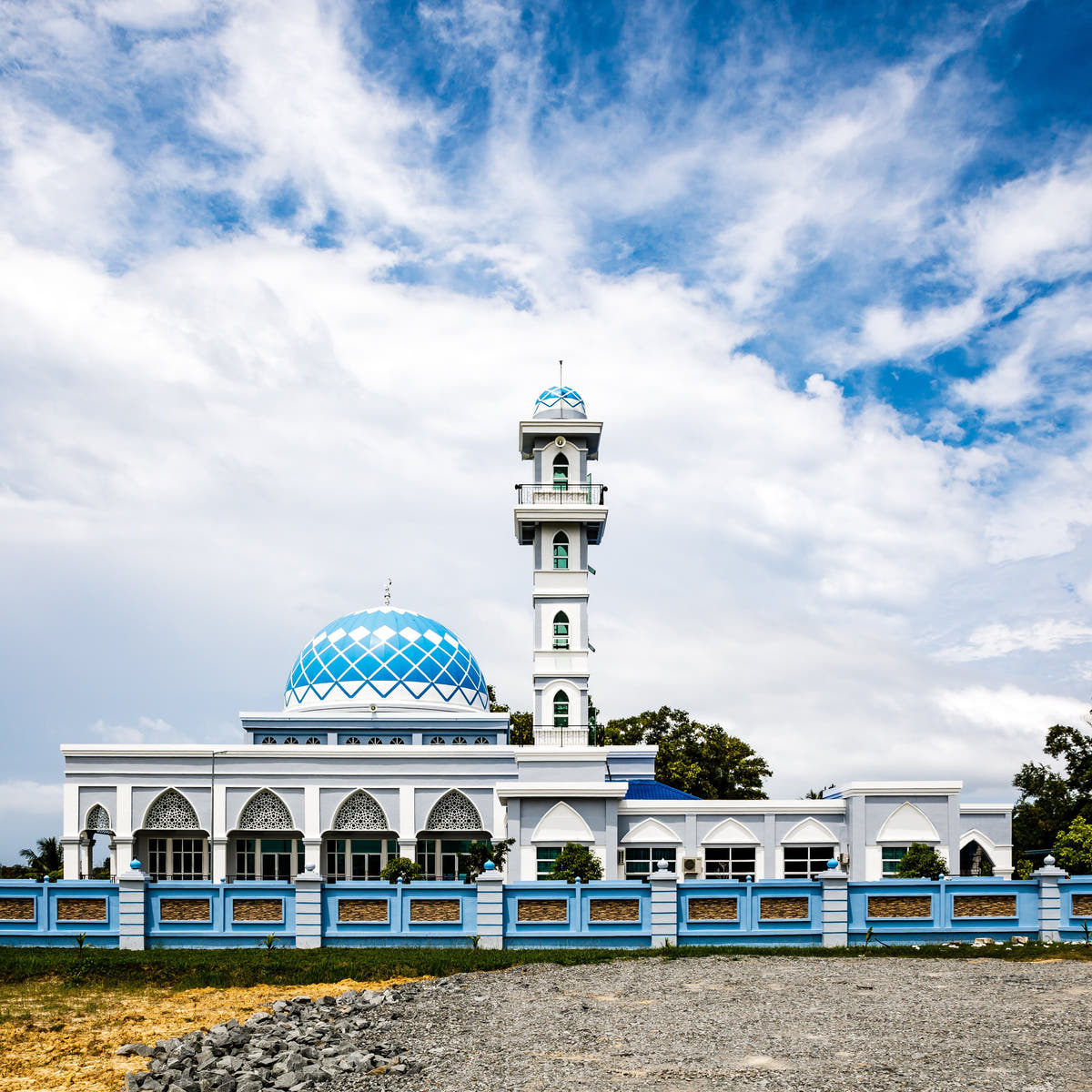
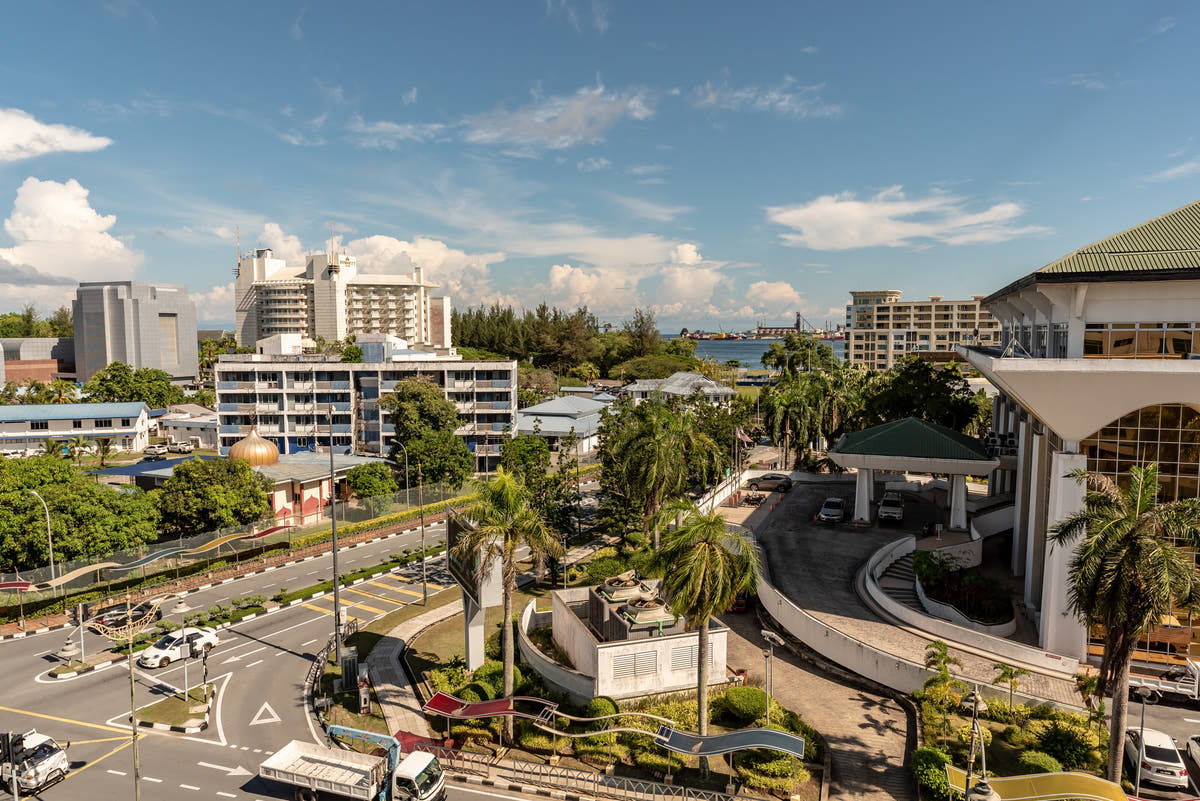
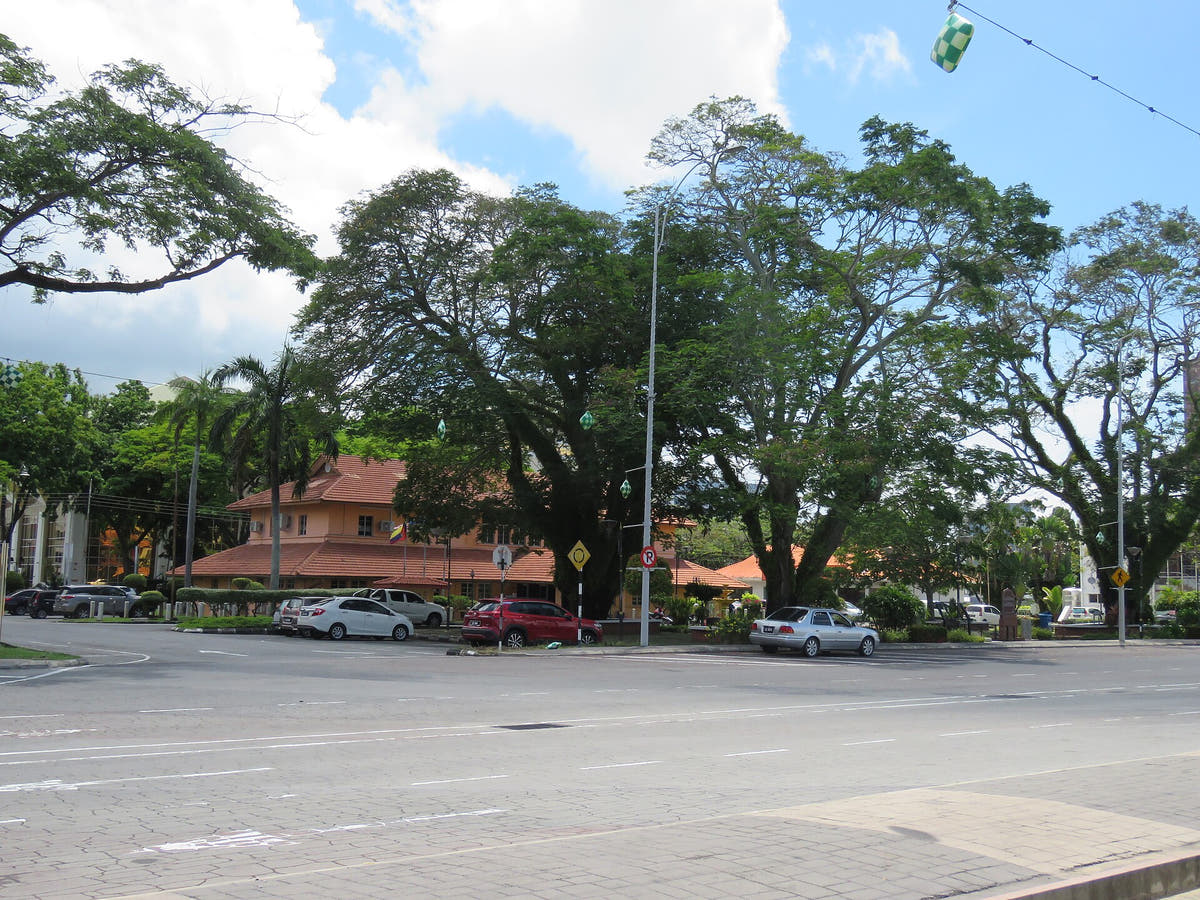
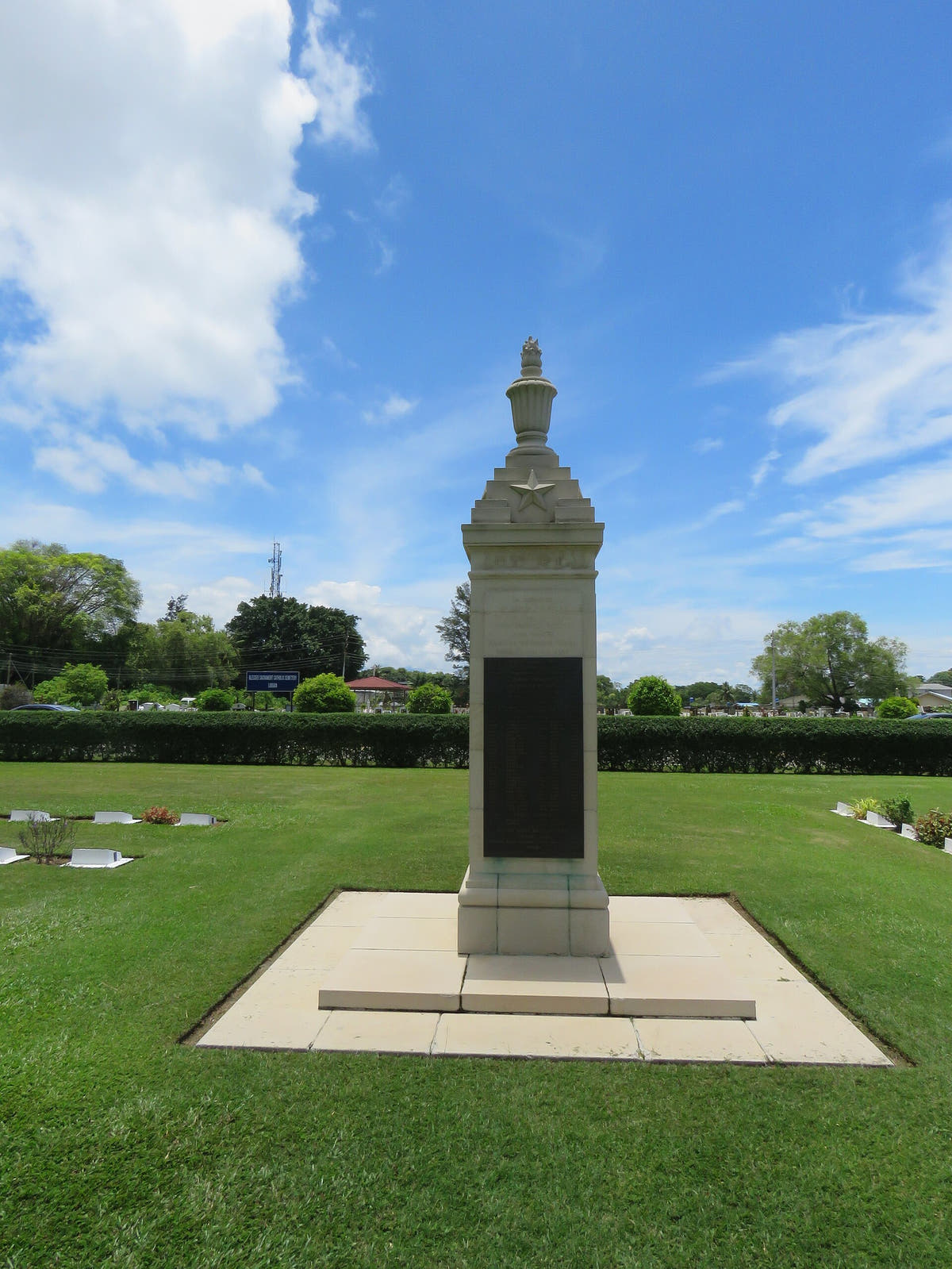
Los museos y monumentos conmemorativos de guerra añaden contexto a la historia submarina. La ciudad de la isla, las playas y el acceso directo por carretera hacen posible construir un programa de tierra corto alrededor de los días de buceo.
Labuan también puede caber en un viaje más amplio de Sabah o Brunei, siempre que funcionen las conexiones de transporte. Es una opción particularmente buena cuando el grupo comparte un interés en la historia; compañeros que buscan una experiencia remota de playa-resort pueden preferir otra parte de Borneo.
Cómo llegar a Labuan
Vuele a Labuan o conéctese en ferry desde Sabah y Brunei.
Elija los horarios de llegada y salida alrededor del traslado, especialmente cuando se trata de un cruce en barco o un largo viaje por carretera. Deje espacio para un relajado día final en tierra y un intervalo apropiado entre la última inmersión y el vuelo.
Preguntas de buceo en Labuan
¿Qué hace que Labuan valga la pena un viaje de buceo?
El atractivo de Labuan es estructural e histórico: grandes naufragios, crecimiento marino y la escala de un barco revelado bajo el agua. Se adapta a los buceadores que disfrutan de un perfil cuidadosamente planificado y la historia detrás de un sitio tanto como coloridos paisajes de arrecifes.
¿Cómo debo planificar mi estancia?
Organice las inmersiones con un programa local establecido y elija naufragios por profundidad, visibilidad y entrenamiento. De tres a cinco días de buceo pueden proporcionar una visita enfocada. La exploración exterior, la penetración y los perfiles técnicos son actividades diferentes y deben planificarse por separado.
¿Cuándo es un momento útil para visitar?
De marzo a octubre es la ventana de planificación existente para facilitar las condiciones del mar. La visibilidad de los restos puede cambiar considerablemente, así que permita un orden de sitio diferente y seleccione perfiles de manera conservadora. La profundidad máxima de un naufragio no es una profundidad recomendada para todos los visitantes.
¿Hay suficiente para los compañeros que no bucean?
Los museos y monumentos conmemorativos de guerra añaden contexto a la historia submarina. La ciudad de la isla, las playas y el acceso directo por carretera hacen posible construir un programa de tierra corto alrededor de los días de buceo.
A closer look at Labuan
Planifica tu viaje a Labuan
Cuéntanos las experiencias que más te gusten, tus fechas preferidas y cómo te gusta viajar. Podemos traer el destino, alojamiento y buceo en un itinerario coherente.
Planificar mi viajeCréditos fotográficos
Las imágenes se redimensionan para su visualización y pueden recortarse para adaptarse al diseño de la página.
- Palmera junto a una playa de arena en la isla de Labuan, Malasia: Beach 01 (Labuan).jpg — pantera negra. CC BY 2.0. Imagen de tamaño web suministrada por Wikimedia Commons; ninguna edición de escena.
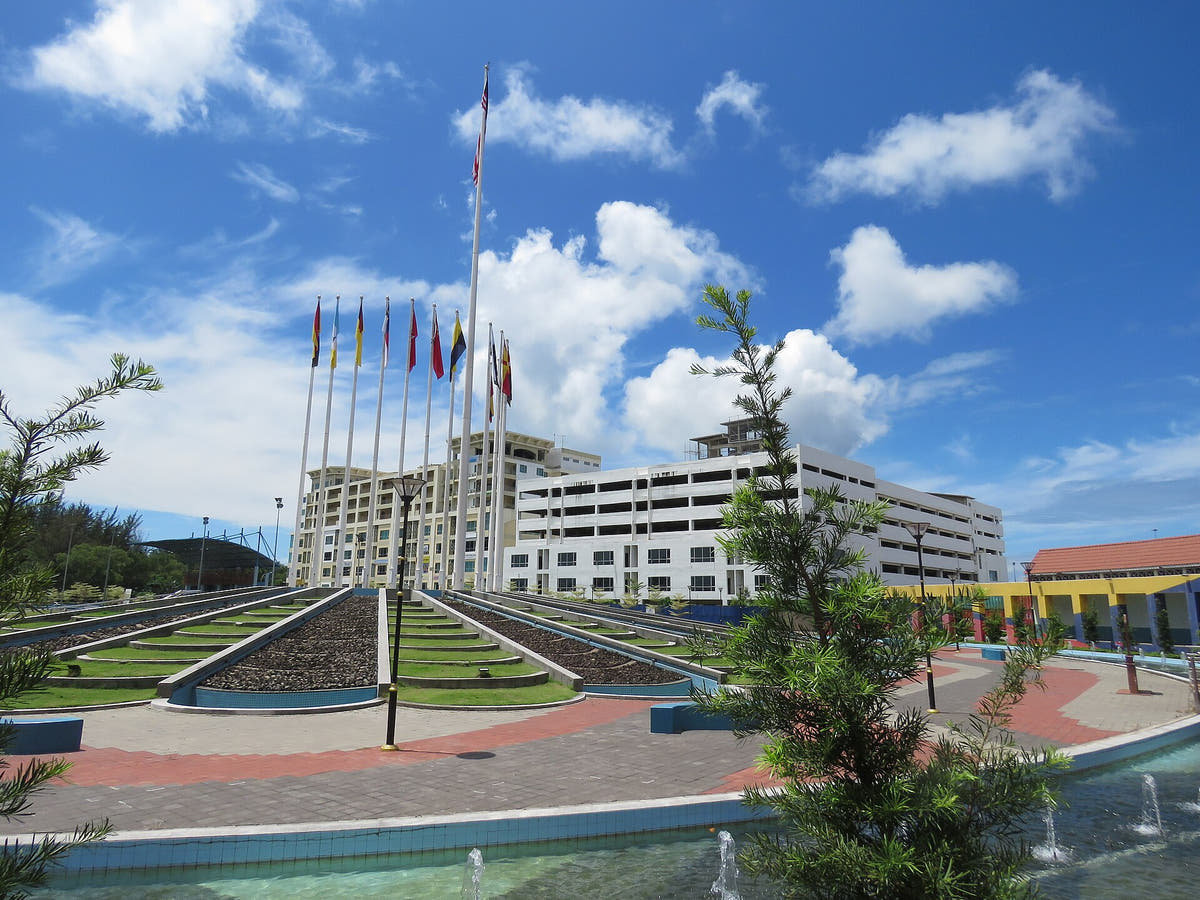
- Banderas y edificios frente al mar en Labuan Square, Malasia: Labuan Square (Dataran Labuan), April 2025 02.jpg — Calistemon. CC BY-SA 4.0. Imagen de tamaño web suministrada por Wikimedia Commons; ninguna edición de escena.
- Museo de Labuan debajo de árboles maduros en el centro de la ciudad de la isla: Labuan Museum, April 2025 01.jpg — Calistemon. CC BY-SA 4.0. Imagen de tamaño web suministrada por Wikimedia Commons; ninguna edición de escena.
- Monumento y jardines en el cementerio de guerra de Labuan: Labuan War Cemetery, April 2025 03.jpg — Calistemon. CC BY-SA 4.0. Imagen de tamaño web suministrada por Wikimedia Commons; ninguna edición de escena.


