

Destination guide · Palau
Palau Buceo
Palau’s channels and reef corners are shaped by tide: fish gather, sharks patrol and a wall can suddenly fill with movement. Caverns, wrecks and the Rock Islands make the destination much broader than one celebrated drift dive.
Palau de un vistazo
Palau es un destino de buceo en el Pacífico de alta energía construido alrededor de canales de marea, paredes empinadas, mesetas de coral y bordes de arrecifes excepcionalmente ricos en peces. Blue Corner, German Channel y Ulong Channel ofrecen una expresión diferente del buceo actual, mientras que las cavernas, las paredes de coral blando y los naufragios de la Segunda Guerra Mundial amplían el itinerario.
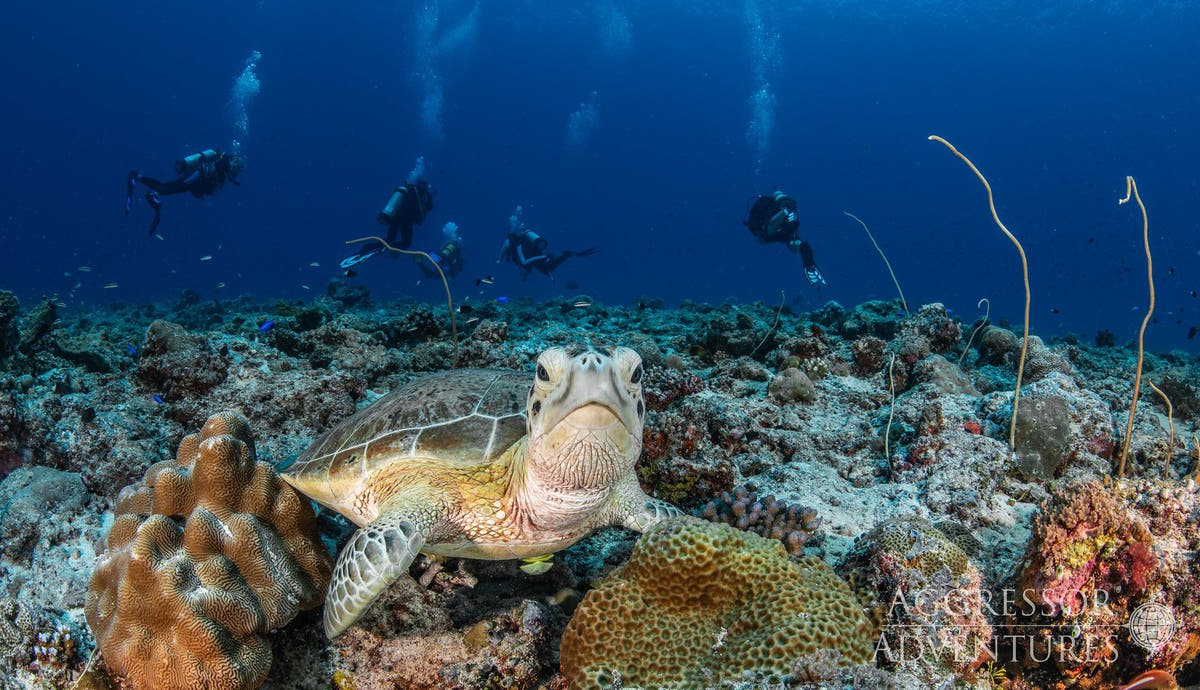
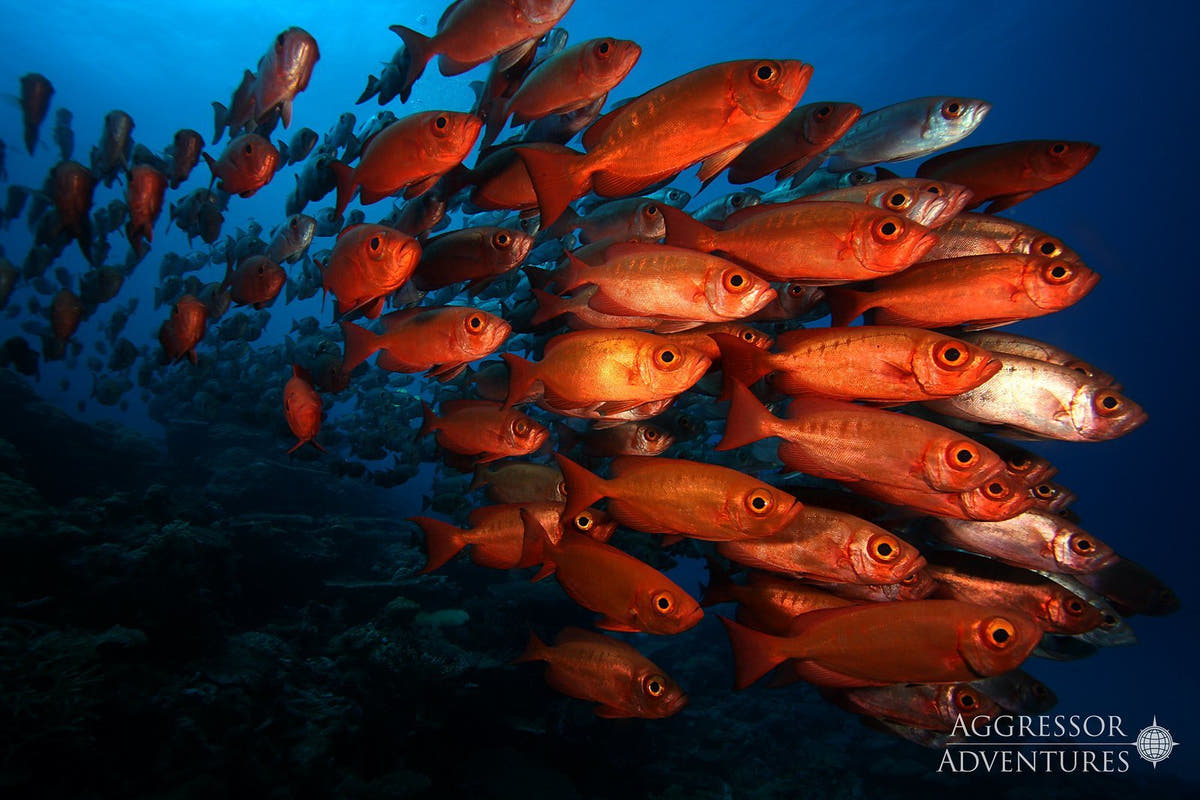
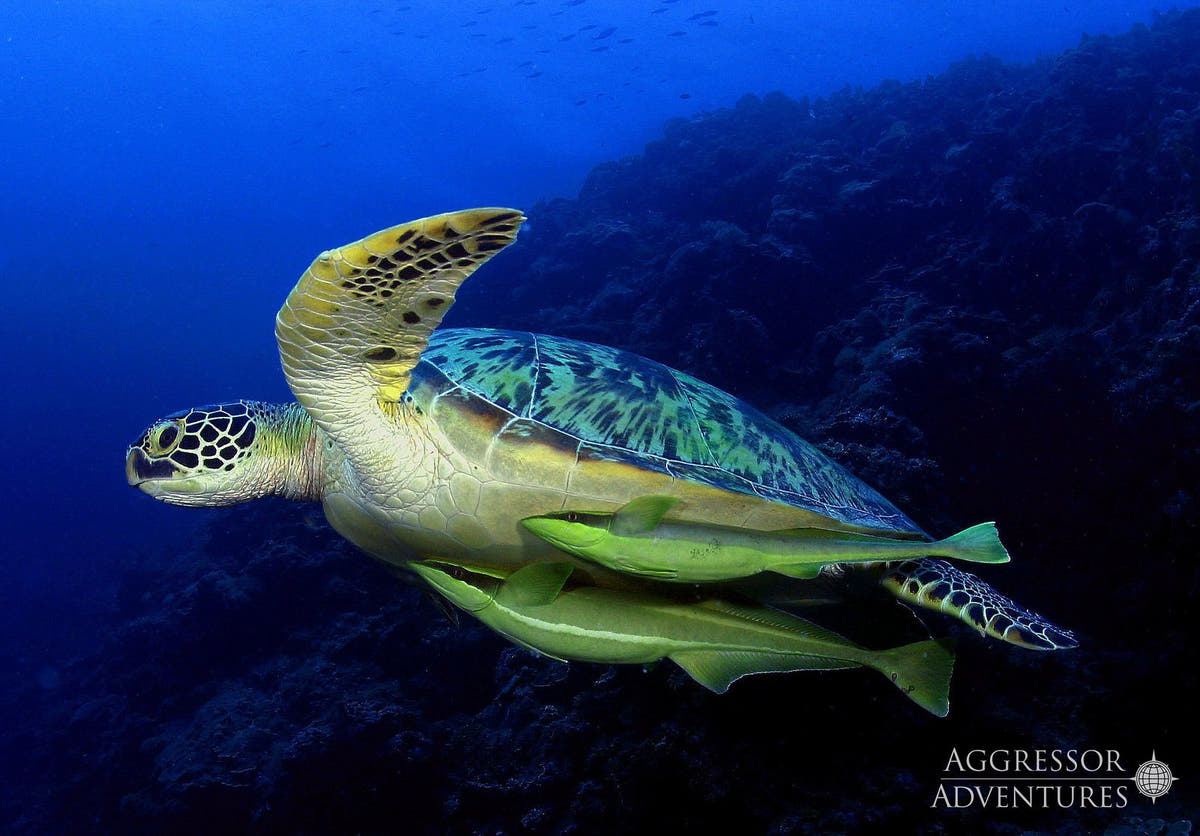
El destino recompensa la experiencia y la paciencia con la planificación de la marea. Los tiburones, mantas, tortugas y bancos de peces son razones comunes por las que los buzos viajan a Palau, pero cada encuentro sigue siendo natural. Un viaje fuerte debe venderse en torno a la calidad y diversidad de los sitios, no en torno a las promesas de un animal específico en una inmersión específica.
Planificar su estancia en Palau
Manténgase alrededor de Koror para disfrutar de la flexibilidad de la costa y el buceo diurno, o elija un liveaboard para pasar más tiempo cerca de los sitios exteriores. Compara el itinerario real y los viajes tiernos. De siete a diez noches es un marco útil para una primera visita variada, especialmente si desea tanto el buceo como la exploración de la isla.
Liveaboard routes for this destination
Explore the routes that visit this region. Compare ships and itineraries, then open a route to see its sailing dates, cabins and the areas it covers.
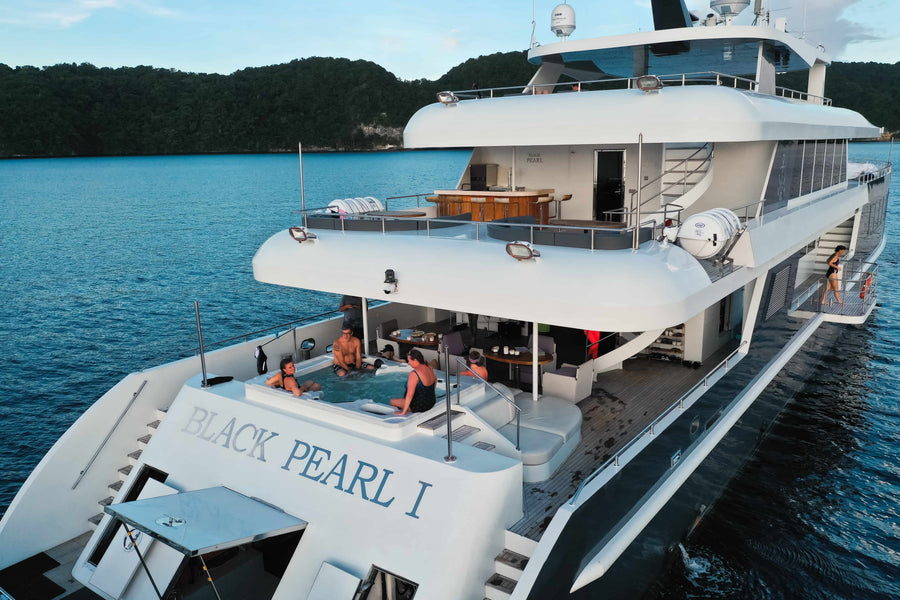
M/Y Black Pearl
Best of Palau Experience — 5 noches
- Indicative duration
- 5 nights
- Embarque
- Malakal, Palau
- Desembarque
- Malakal, Palau
M/Y Black Pearl
Best of Palau — 7 noches
- Indicative duration
- 7 nights
- Embarque
- Malakal, Palau
- Desembarque
- Malakal, Palau
M/Y Black Pearl
Bumphead Spawning — 7 noches
- Indicative duration
- 7 nights
- Embarque
- Malakal, Palau
- Desembarque
- Malakal, Palau
M/Y Black Pearl
Palau Spawning Special — 10 noches
- Indicative duration
- 10 nights
- Embarque
- Malakal, Palau
- Desembarque
- Malakal, Palau
M/Y Black Pearl
Snapper Spawning — 7 noches
- Indicative duration
- 7 nights
- Embarque
- Malakal, Palau
- Desembarque
- Malakal, Palau

Palau Aggressor II
Palau (10 noches)
- Indicative duration
- 10 nights
- Embarque
- Koror
- Desembarque
- Koror
Palau Aggressor II
Palau (7 noches)
- Indicative duration
- 7 nights
- Embarque
- Koror
- Desembarque
- Koror

Palau Siren
Full Moon Spawning — 10 noches
- Indicative duration
- 10 nights
- Embarque
- Koror / Malakal
- Desembarque
- Koror / Malakal
Palau Siren
Full Moon Spawning — 7 noches
- Indicative duration
- 7 nights
- Embarque
- Koror / Malakal
- Desembarque
- Koror / Malakal
Palau Siren
New Moon Spawning — 10 noches
- Indicative duration
- 10 nights
- Embarque
- Koror / Malakal
- Desembarque
- Koror / Malakal
Palau Siren
New Moon Spawning — 7 noches
- Indicative duration
- 7 nights
- Embarque
- Koror / Malakal
- Desembarque
- Koror / Malakal
Palau Siren
Palau Islands — 10 noches
- Indicative duration
- 10 nights
- Embarque
- Koror / Malakal
- Desembarque
- Koror / Malakal
Palau Siren
Palau Islands — 7 noches
- Indicative duration
- 7 nights
- Embarque
- Koror / Malakal
- Desembarque
- Koror / Malakal

Solitude Gaia Palau
Palau 10N - (ES)
- Indicative duration
- 10 nights
- Embarque
- Malakal Palau
- Desembarque
- Malakal Palau
Solitude Gaia Palau
Palau 12 noches (SG)
- Indicative duration
- 12 nights
- Embarque
- Malakal Palau
- Desembarque
- Malakal Palau
Solitude Gaia Palau
Palau 7N - (ES)
- Indicative duration
- 7 nights
- Embarque
- Malakal Palau
- Desembarque
- Malakal Palau
Solitude Gaia Palau
Palau NM/FM
- Indicative duration
- 21 nights
- Embarque
- Malakal Palau
- Desembarque
- Malakal Palau
Solitude Gaia Palau
Itinerario del Norte de Palau (SG)
- Indicative duration
- 10 nights
- Embarque
- Malakal Palau
- Desembarque
- Malakal Palau
No routes match this search. Try another vessel or clear your search.
Cuándo bucear Palau
El buceo está disponible todo el año. De noviembre a abril es comúnmente una ventana de inicio más seca, pero las mareas siguen siendo centrales para las inmersiones en canales y esquinas. Un encuentro con un animal en particular nunca debe ser tratado como un resultado automático de elegir el mes correcto.
Ventana de planificación: Mejor noviembre-mayo.
Cómo es el buceo
Advanced Open Water y la confianza en el buceo actual son muy recomendables para muchos sitios de firma; Algunas inmersiones protegidas son más fáciles.
Blue Corner
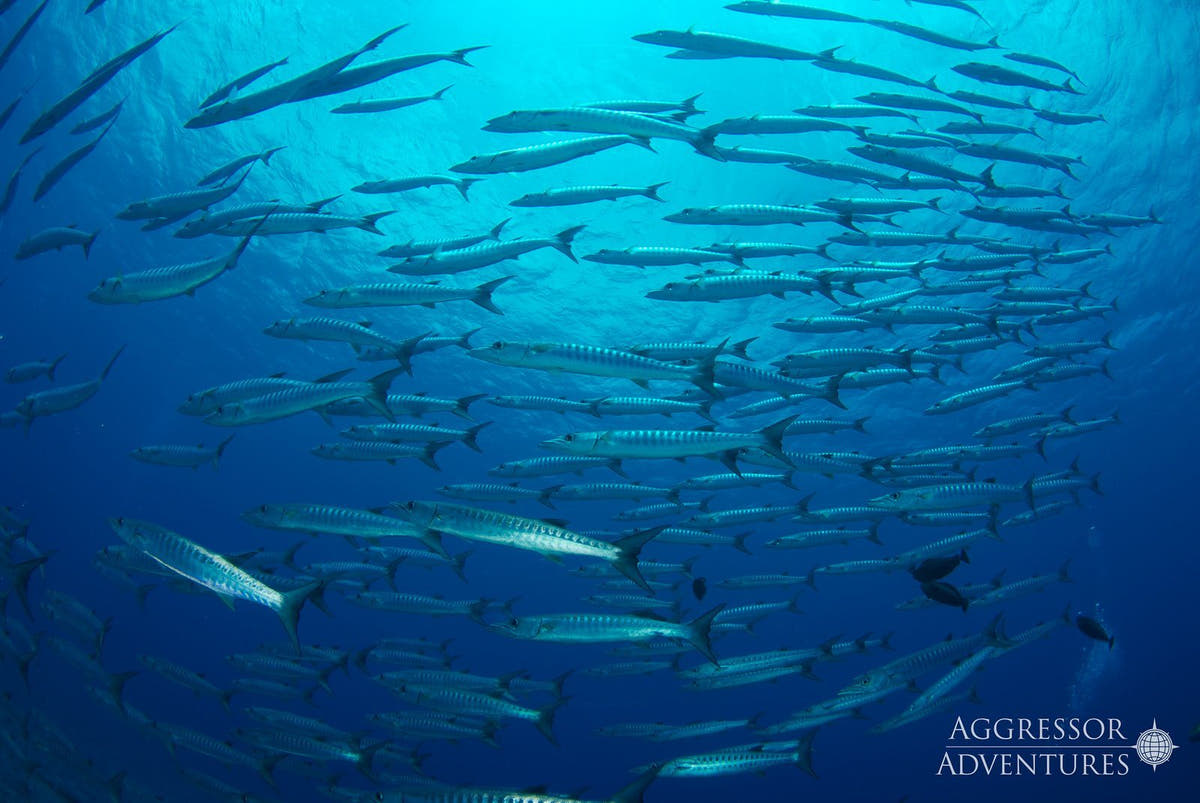
Un fuerte flujo de marea se extiende a través de una meseta de arrecife donde los tiburones grises de arrecife, gatos, barracudas y otros peces grandes pueden reunirse. La inmersión puede ser rápida y exigente, por lo que la elección de la marea, el descenso controlado y la disciplina grupal son esenciales.
German Channel
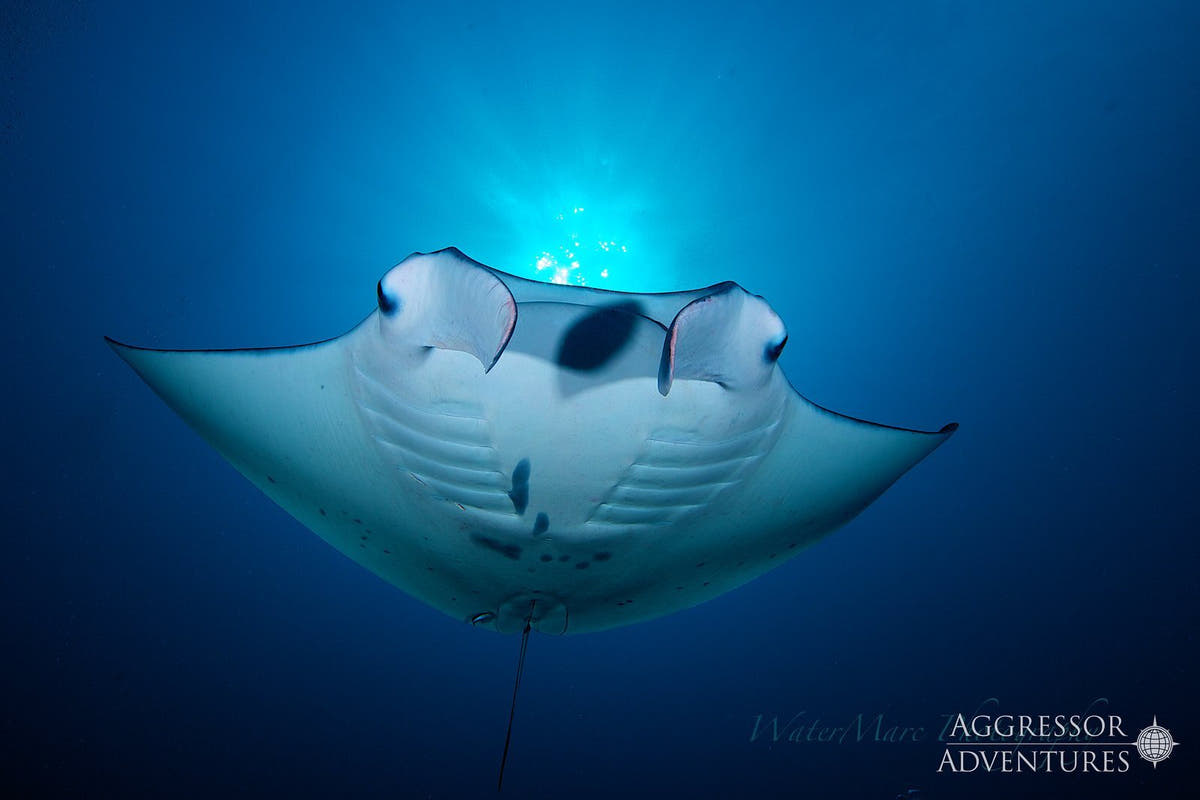
Esta boca del canal es una de las áreas de mantas más conocidas de Palau, con un comportamiento de estación de limpieza posible junto con tiburones de arrecife y bancos de peces. La visibilidad y la actividad animal cambian con la marea, y los buceadores obtienen mejores encuentros al establecerse con calma en lugar de perseguir la vida silvestre.
Ulong Channel
Un canal natural a través de la barrera de coral crea una deriva clásica a través del fondo arenoso, las laderas de coral y grandes formaciones de lechuga-coral. La corriente puede acelerarse considerablemente, por lo que los buzos necesitan un ajuste sólido y conciencia a pesar de que gran parte del perfil es relativamente superficial.
naufragios y cavernas de la Segunda Guerra Mundial
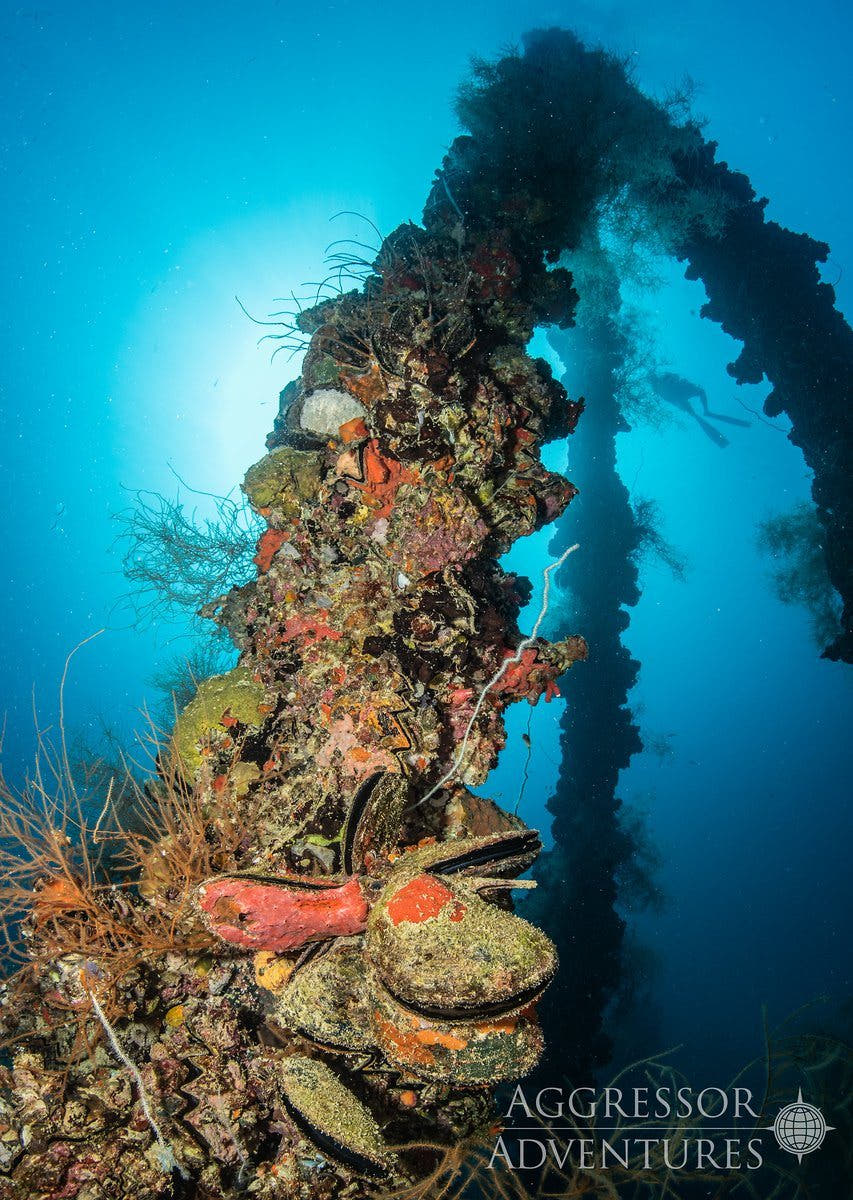
Palau agrega numerosos restos de naufragios de guerra y sitios dramáticos como Blue Holes a su reputación actual de buceo. La profundidad de los restos y los perfiles de caverna/cabecera deben elegirse de acuerdo con la certificación y los procedimientos del operador.
DIVE SITE GUIDE
Dive sites in Palau
Explore the character of individual sites, from the setting and marine life to the diving conditions. Open a card for the full description; site access and the final profile depend on conditions and experience.
ORIENTATION MAP
Where the dive sites are
Use the map to understand how the key sites are spread around the destination. Pins are for trip-planning orientation only; entry points, moorings and the final dive plan are always confirmed by the local operator on the day.
Coordinates are planning references compiled from current dive-site sources. They are not navigation coordinates; entry points, moorings, tide windows and the final dive plan are always confirmed by the local operator on the day.
Drift · Reef hook point · Pelagic
Blue Corner
Blue Corner is Palau’s benchmark high-energy dive.
Explorar este punto de buceo
- Tipo
- Drift · Reef hook point · Pelagic
- Profundidad
- 10–30 m
- Experiencia
- Advanced
- Corriente
- Strong
Blue Corner is Palau’s benchmark high-energy dive. Divers drift toward a reef plateau where current concentrates fish and predators, then settle in a controlled position near the reef edge to watch grey reef sharks, jacks, barracuda, Napoleon wrasse and other large fish move through the flow.
The exact experience changes completely with tide; the same site can be manageable or extremely demanding within hours. Reef hooks may be used where local procedures allow and only on suitable non-living substrate. The dive is best for experienced current divers who can descend quickly, stay compact as a group and manage an open-water ascent if required.
Look for: World-famous current dive · Grey reef sharks · Schooling fish · Advanced only
Ideal para: Grey reef sharks · Jacks · Barracuda · Current diving
Channel · Cleaning station · Drift
German Channel
German Channel is Palau’s most famous manta site, but the animals are only one part of a dynamic tidal system.
Explorar este punto de buceo
- Tipo
- Channel · Cleaning station · Drift
- Profundidad
- 5–40 m
- Experiencia
- Intermediate
- Corriente
- Variable / strong
German Channel is Palau’s most famous manta site, but the animals are only one part of a dynamic tidal system. The dive usually takes place near the channel mouth rather than inside the boat channel itself, with sandy slopes and cleaning stations used by mantas and reef sharks.
Incoming tide often improves visibility while outgoing water can carry more plankton and feeding activity. Divers get better encounters by settling near the cleaning area and letting mantas approach naturally rather than swimming after them. Current varies enough that the guide’s tide timing is central to the dive.
Look for: Manta cleaning station · Reef sharks · Tidal visibility changes · Wildlife etiquette
Ideal para: Mantas · Reef sharks · Cleaning station
Channel · Drift · Coral
Ulong Channel
Ulong Channel is a classic tidal drift through a natural passage in the western barrier reef.
Explorar este punto de buceo
- Tipo
- Channel · Drift · Coral
- Profundidad
- 3–20 m
- Experiencia
- Intermediate–Advanced
- Corriente
- Moderate–Strong
Ulong Channel is a classic tidal drift through a natural passage in the western barrier reef. Sandy bottom, coral heads and large lettuce-coral formations create a visually rich route while current carries divers through the channel.
Sharks, triggerfish and groupers use the current line, and the dive can become fast enough that good trim and group spacing are essential. The strongest plan follows the tide rather than fighting it, with the boat collecting the group after the channel exit. It is shallower than many Palau sites but can be more demanding because of speed.
Look for: Channel drift · Sharks possible · Lettuce coral · Strong current
Ideal para: Fast drift · Sharks · Coral channel · Groupers
Cavern · Wall · Sinkholes
Blue Holes
Blue Holes is a system of four vertical openings in the reef plateau just south of Blue Corner.
Explorar este punto de buceo
- Tipo
- Cavern · Wall · Sinkholes
- Profundidad
- 5–35 m
- Experiencia
- Intermediate–Advanced
- Corriente
- Mild–Moderate
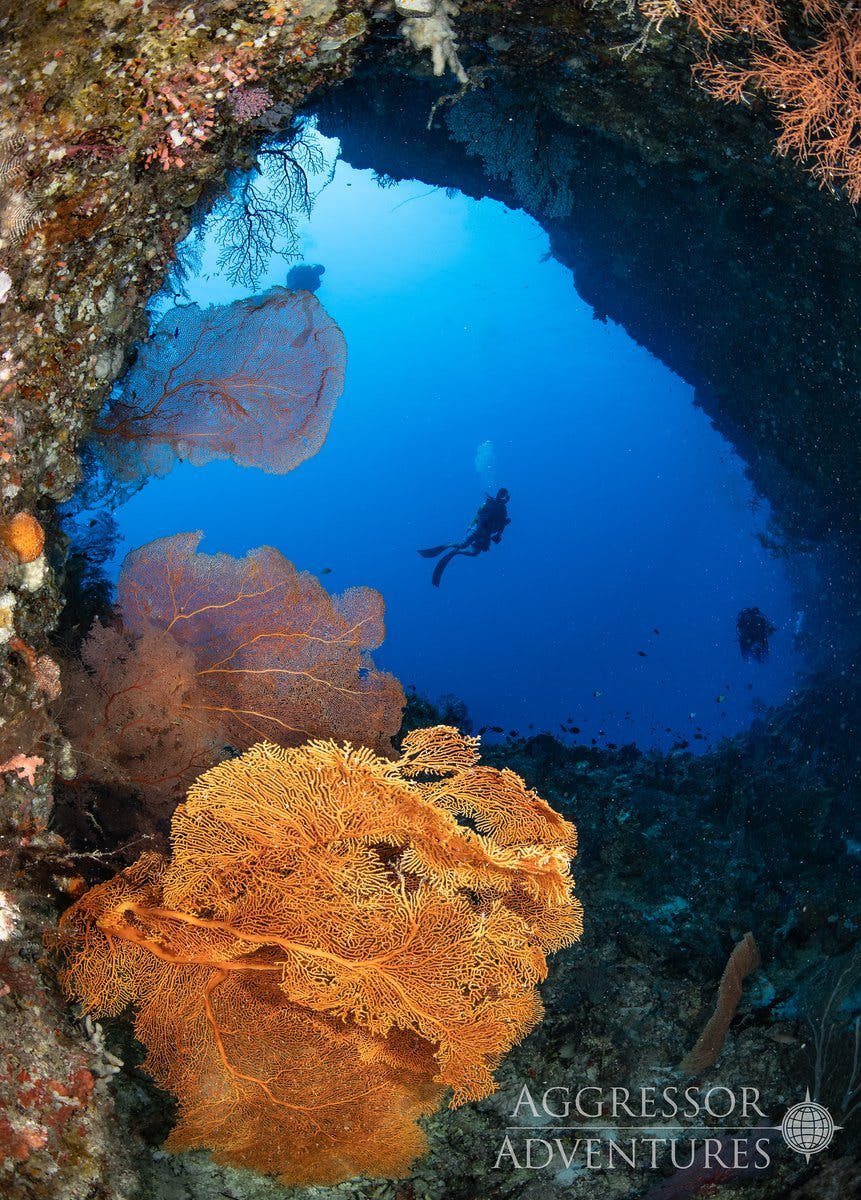
Blue Holes is a system of four vertical openings in the reef plateau just south of Blue Corner. Divers descend through shafts of blue light into a large cavern space, then can exit toward the outer wall.
The site is visually dramatic without requiring deep technical penetration, but overhead awareness and excellent buoyancy are still important. Divers uncomfortable with enclosed space can remain near the open shafts and wall. Current is usually calmer than at Blue Corner, which makes Blue Holes a useful topographic dive before moving on to the more energetic nearby sites.
Look for: Four sinkholes · Cavern light · 5–35 m · Near Blue Corner
Ideal para: Light shafts · Cavern · Wall photography
Cavern · Air chambers · Halocline
Chandelier Cave
Chandelier Cave is a shallow limestone cavern system close to Koror, with several connected chambers and air pockets decorated by stalactites and stalagmites.
Explorar este punto de buceo
- Tipo
- Cavern · Air chambers · Halocline
- Profundidad
- 3–18 m
- Experiencia
- Intermediate / Cavern awareness
- Corriente
- None–Mild
Chandelier Cave is a shallow limestone cavern system close to Koror, with several connected chambers and air pockets decorated by stalactites and stalagmites. The dive is physically easy because current is minimal and depth is modest, but overhead-environment judgement is still essential.
Divers should enter only with a guide who knows the route and should never exceed the light, gas or comfort limits appropriate to cavern diving. The halocline and reflections inside the chambers create a very different experience from Palau’s open-ocean shark dives, making it an excellent contrast within the same trip.
Look for: Five chambers · Air pockets · Stalactites · Shallow cavern
Ideal para: Stalactites · Air pockets · Unique geology
Wall · Drift · Pelagic
Peleliu Wall
Peleliu Wall is one of Palau’s most exposed southern dives, where a coral plateau drops into deep blue water and strong current can bring sharks, tuna and other pelagics along the edge.
Explorar este punto de buceo
- Tipo
- Wall · Drift · Pelagic
- Profundidad
- 7–40 m
- Experiencia
- Advanced
- Corriente
- Moderate–Strong
Peleliu Wall is one of Palau’s most exposed southern dives, where a coral plateau drops into deep blue water and strong current can bring sharks, tuna and other pelagics along the edge. The wall is covered in soft coral, black coral and sea fans, so the reef remains impressive even when larger animals stay distant.
Depth and current combine to make this an advanced profile. Divers need to keep close to the wall, monitor depth carefully and follow the guide’s exit plan rather than allowing the current to pull the group into open ocean.
Look for: Deep wall · Pelagic potential · Strong current · Advanced profile
Ideal para: Pelagics · Wall · Strong current · Wide angle
WWII wreck · Reef growth
Helmet Wreck
Helmet Wreck is one of Palau’s most accessible WWII wrecks, beginning around 10 metres at the stern and descending toward roughly 30 metres at the bow.
Explorar este punto de buceo
- Tipo
- WWII wreck · Reef growth
- Profundidad
- 10–30 m
- Experiencia
- Intermediate–Advanced
- Corriente
- Mild
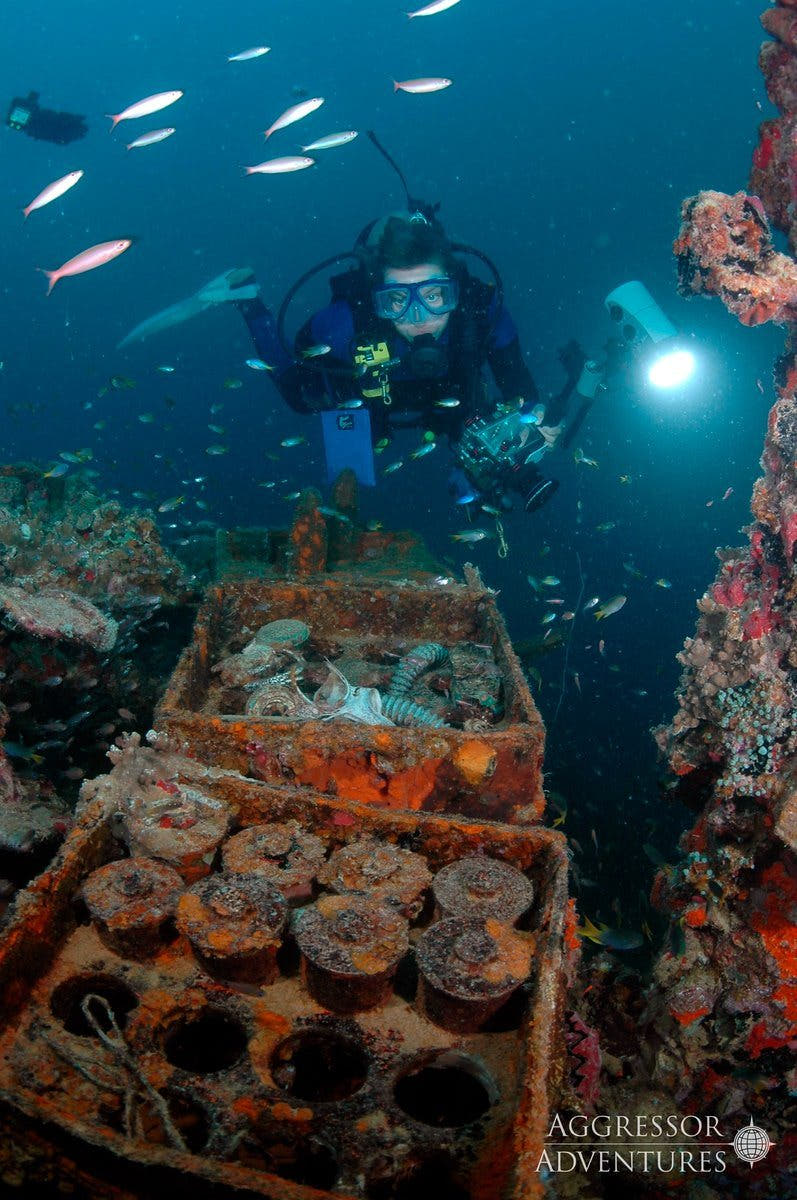
Helmet Wreck is one of Palau’s most accessible WWII wrecks, beginning around 10 metres at the stern and descending toward roughly 30 metres at the bow. Ammunition, rifles, helmets and other wartime remnants are part of the site’s historical appeal, while decades underwater have added coral and fish life to the structure.
The wreck is upright enough to be easy to understand from the outside, so penetration is not necessary for a rewarding dive. Divers should treat artifacts as protected history and avoid touching or moving anything. The exact mooring is operator-managed near Koror.
Look for: WWII wreck · 10–30 m · Historic artifacts · Accessible wreck
Ideal para: WWII wreck · Artifacts · Photography
Wall · Current point · Pelagic
New Drop Off
New Drop Off lies only a few kilometres from Blue Corner and shares many of the same ingredients: clear oceanic water, a steep wall and current that attracts sharks and schooling fish.
Explorar este punto de buceo
- Tipo
- Wall · Current point · Pelagic
- Profundidad
- 10–35 m
- Experiencia
- Advanced
- Corriente
- Moderate–Strong
New Drop Off lies only a few kilometres from Blue Corner and shares many of the same ingredients: clear oceanic water, a steep wall and current that attracts sharks and schooling fish. The site often feels slightly less intense than Blue Corner but still demands solid current skills.
Grey reef sharks, turtles, barracuda and reef fish move along the edge, while the wall provides excellent wide-angle scenery. The dive plan depends on tide and may involve drifting along the wall before settling near a corner. The public exact coordinate varies between operators, so the map uses an approximate outer-reef anchor.
Look for: Wall + current point · Grey reef sharks · Clear water · Advanced drift
Ideal para: Grey reef sharks · Turtles · Wall · Clear water
Fotografía submarina
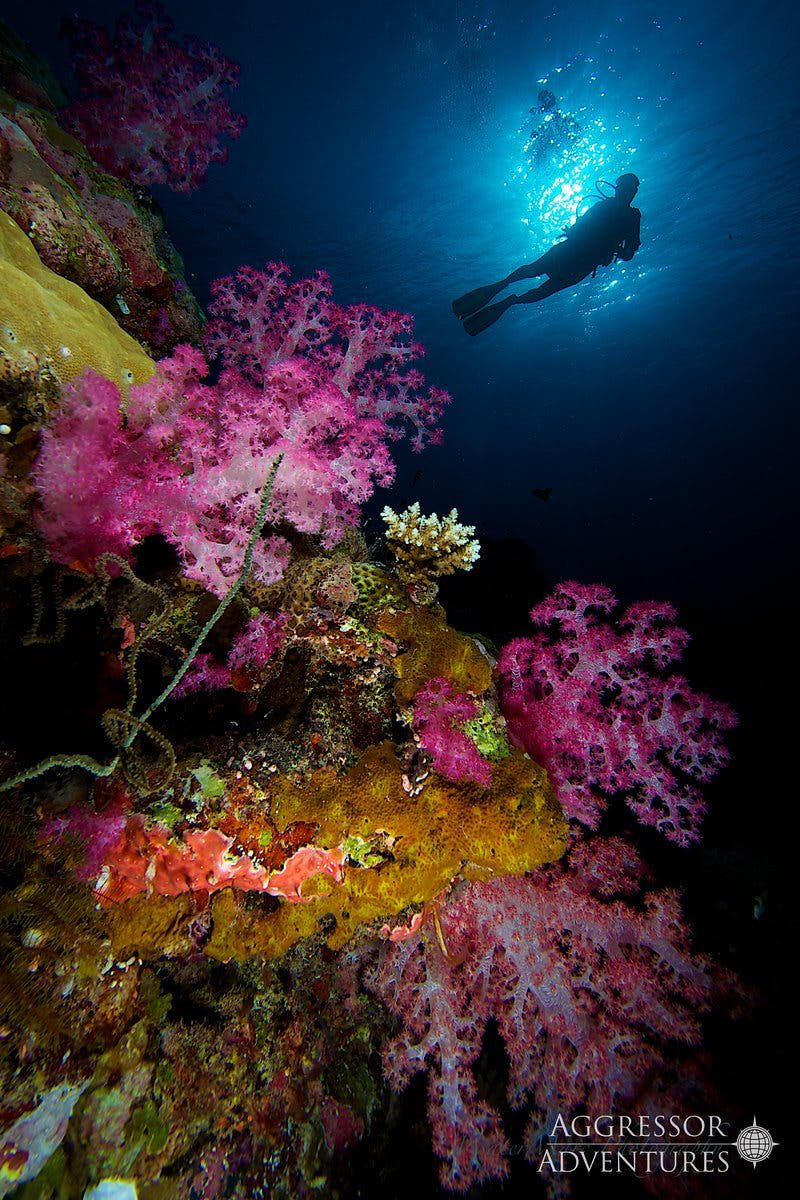
En Blue Corner, tiburones de arrecife grises, Jotas, Barracuda, El buceo actual da una idea de las posibilidades fotográficas. Elija la configuración de la cámara para los sitios planificados, luego deje tiempo para observar la escena antes de hacer la imagen. Repetir una inmersión productiva a menudo crea mejores oportunidades que buscar constantemente una ubicación diferente. Para las escenas de arrecife, use la forma del arrecife y la luz disponible para dar profundidad a la imagen. Un buceador a una distancia respetuosa puede proporcionar escala sin hacinarse con un animal.
Más allá del buceo: Palau sobre la superficie
Las Islas Roca ofrecen un paisaje distintivo para kayak, exploración de botes y buceo adecuado. La historia cultural y de la Segunda Guerra Mundial agregan interés en la tierra, con Koror que proporciona una base conveniente para las noches y las excursiones de un día.
Los sitios naturales pueden tener reglas y permisos de acceso específicos. Planifique las experiencias que más desee como partes explícitas del itinerario, especialmente para los huéspedes que no bucean. Una estadía en un resort generalmente ofrece más flexibilidad para actividades terrestres separadas que un crucero con un horario de buceo concentrado.
Cómo llegar a Palau
Vuele al Aeropuerto Internacional Roman Tmetuchl (ROR) y traslado a Koror/Malakal. Desde allí, elija botes diurnos terrestres o un liveaboard de acuerdo con el volumen de buceo preferido, el presupuesto y el estilo del itinerario.
Elija los horarios de llegada y salida alrededor del traslado, especialmente cuando se trata de un cruce en barco o un largo viaje por carretera. Deje espacio para un relajado día final en tierra y un intervalo apropiado entre la última inmersión y el vuelo.
Preguntas de buceo Palau
¿Qué hace que Palau valga la pena un viaje de buceo?
Los canales y las esquinas de los arrecifes de Palau están formados por la marea: los peces se reúnen, los tiburones patrullan y una pared puede llenarse repentinamente de movimiento. Cavernas, naufragios y las Islas Roca hacen que el destino sea mucho más amplio que una famosa inmersión a la deriva.
¿Cómo debo planificar mi estancia?
Manténgase alrededor de Koror para disfrutar de la flexibilidad de la costa y el buceo diurno, o elija un liveaboard para pasar más tiempo cerca de los sitios exteriores. Compara el itinerario real y los viajes tiernos. De siete a diez noches es un marco útil para una primera visita variada, especialmente si desea tanto el buceo como la exploración de la isla.
¿Cuándo es un momento útil para visitar?
El buceo está disponible todo el año. De noviembre a abril es comúnmente una ventana de inicio más seca, pero las mareas siguen siendo centrales para las inmersiones en canales y esquinas. Un encuentro con un animal en particular nunca debe ser tratado como un resultado automático de elegir el mes correcto.
¿Hay suficiente para los compañeros que no bucean?
Las Islas Roca ofrecen un paisaje distintivo para kayak, exploración de botes y buceo adecuado. La historia cultural y de la Segunda Guerra Mundial agregan interés en la tierra, con Koror que proporciona una base conveniente para las noches y las excursiones de un día.
A closer look at Palau
Planifica tu viaje a Palau
Cuéntanos las experiencias que más te gusten, tus fechas preferidas y cómo te gusta viajar. Podemos traer el destino, alojamiento y buceo en un itinerario coherente.
Planificar mi viaje