

Destination guide · Indonesia
Plongée à Derawan, Maratua, Sangalaki & Kakaban
Maratua’s walls, Sangalaki’s manta areas and Kakaban’s enclosed lake give the Derawan islands strikingly different personalities. The pleasure is in moving between those habitats, with turtles and island life adding quieter moments along the way.
Courtesy of Virgin Cocoa Resort / Extra Divers
Derawan, Maratua, Sangalaki & Kakaban en un coup d'œil
L'archipel de Derawan relie des îles riches en tortues, des zones fréquentées par les raies-mantes, des murs de récif et le remarquable lac intérieur de Kakaban peuplé de méduses. Derawan, Sangalaki, Kakaban et Maratua apportent chacun une dimension différente à un voyage multi-îles isolé.
Les transferts et les conditions en mer exigent davantage de souplesse qu'un séjour classique dans un complexe hôtelier, mais cette complexité forge le caractère expédition de la destination. Les raies-mantes et la faune sauvage restent imprévisibles ; l'attrait durable réside dans la combinaison d'écosystèmes inhabituels, de paysages isolés et d'une plongée variée d'île en île.
Planifier votre séjour aux îles Derawan
Choisissez l'île de base ou le bateau-hôtel en fonction des zones qu'il dessert et du temps passé en transit. Maratua, Sangalaki et Derawan sont des lieux distincts, les distances parcourues en bateau de jour sont donc importantes. Un séjour de six à huit nuits permet de profiter d'un programme varié sans transformer chaque journée en un long transfert.

Nabucco Island Resort
Petit resort de plongée insulaire isolé dans l'atoll de Maratua, avec trois catégories d'hébergement et accès à Big Fish Country, Kakaban et Sangalaki.

Virgin Cocoa Resort / Extra Divers
Refuge sur une île privée de huit hectares au sud de Maratua, avec 18 grands bungalows en bord de plage, récif du resort, centre Extra Divers, piscine, yoga et cuisine raffinée.

Nunukan Island Resort
Resort insulaire offrant une grande diversité naturelle à l'extrémité sud de l'atoll de Maratua, avec 22 bungalows en bord de plage, récif du resort de quatre kilomètres et excursions emblématiques à Muaras, Kakaban et Big...
Liveaboard routes for this destination
Explore the routes that visit this region. Compare ships and itineraries, then open a route to see its sailing dates, cabins and the areas it covers.
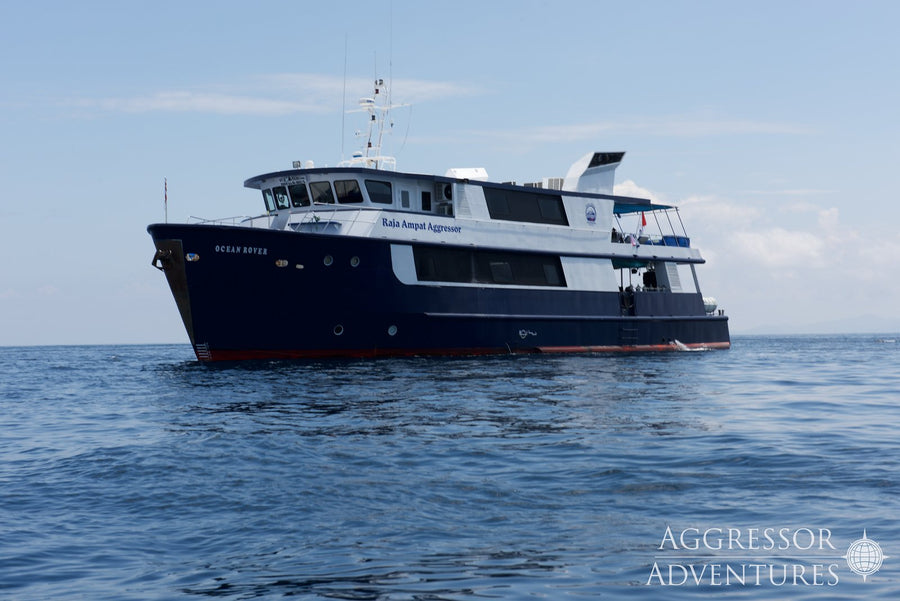
Raja Ampat Aggressor
îles Derawan (7 nuits)
- Indicative duration
- 7 nights
- Embarquement
- Berau
- Débarquement
- Berau
Raja Ampat Aggressor
Derawan/Nord Sulawesi/Lembeh (12 nights)
- Indicative duration
- 12 nights
- Embarquement
- Tanjung Batu
- Débarquement
- Bitung
Raja Ampat Aggressor
Lembeh/Nord Sulawesi/Derawan (12 nights)
- Indicative duration
- 12 nights
- Embarquement
- Bitung
- Débarquement
- Berau
No routes match this search. Try another vessel or clear your search.
Quand plonger aux îles Derawan
La période d'avril à octobre constitue une fenêtre de planification générale utile. Les conditions en mer influencent les traversées entre les îles et les points exposés, tandis que les rencontres avec les raies-mantes restent naturelles. Gardez de la souplesse pour les excursions les plus lointaines et profitez des options de récif locales entre elles.
Période de planification : idéalement de mars à octobre.
À quoi ressemble la plongée
Choisissez les îles et les sites en fonction de l'expérience du groupe.
Sites à raies-mantes de Sangalaki
Sangalaki est le point fort de la région pour les raies-mantes, leurs comportements de nettoyage et d'alimentation dépendant du plancton, de la saison et des conditions.
Lac aux méduses de Kakaban
Une expérience rare de snorkeling et de découverte de la nature avec des méduses inoffensives dans un environnement lacustre fragile.
Tortues de Derawan
Derawan est fortement associée aux tortues, aux zones de récif et aux habitats de zostères où les rencontres avec les tortues constituent une attraction majeure.
Plongée dans le canal de Maratua
Le canal de Maratua / The Pass peut offrir aux plongeurs expérimentés des courants, des barracudas, des requins, des raies et des bancs de poissons.
Sentiment d'expédition sur une île isolée
La destination semble isolée et différente, avec des transferts plus longs, des villages insulaires et une atmosphère indonésienne moins axée sur le tourisme de masse.
Photographie de raies-mantes, de tortues & d'îles
Le grand-angle est utile pour les raies-mantes, les tortues, les murs et les paysages insulaires ; le macro peut être utile autour des jetées et des sites de débris.
Plongée récif, mur & bateau
Le style de plongée comprend des sites de récif, de mur et de raies-mantes, du macro, de la plongée en bateau sur des îles isolées et des sites de courant avancés sélectionnés.
Extensions Bornéo & Kalimantan
La région peut facilement s'associer à la faune de Bornéo, aux extensions de Kalimantan ou à des escales à Singapour, Kuala Lumpur, Bali ou Jakarta.
DIVE SITE GUIDE
Dive sites in Derawan, Maratua, Sangalaki & Kakaban
Explore the character of individual sites, from the setting and marine life to the diving conditions. Open a card for the full description; site access and the final profile depend on conditions and experience.
ORIENTATION MAP
Where the dive sites are
Use the map to understand how the key sites are spread around the destination. Pins are for trip-planning orientation only; entry points, moorings and the final dive plan are always confirmed by the local operator on the day.
Coordinates are planning references compiled from current dive-site sources. They are not navigation coordinates; entry points, moorings, tide windows and the final dive plan are always confirmed by the local operator on the day.
Channel · Wall · Current
Big Fish Country
Big Fish Country is Maratua’s signature current site, a channel through the atoll rim where fish stack up because the water is moving.
Découvrir ce site de plongée
- Type
- Channel · Wall · Current
- Profondeur
- 10–26 m
- Expérience
- Advanced
- Courant
- Strong
Big Fish Country is Maratua’s signature current site, a channel through the atoll rim where fish stack up because the water is moving. Divers descend toward the channel edge, use the reef contour — and, where local procedures permit, a reef hook on non-living substrate — to hold position and watch the show.
Barracuda, jacks and reef sharks are the headline animals, but the density of fish across the channel is what makes the dive feel large. The site is intentionally dived when current is present, so it is not a beginner profile. A controlled negative entry, close group spacing and a disciplined exit plan are part of the experience.
Look for: Barracuda tornado potential · Strong current · Channel wall · Advanced drift skills
Idéal pour : Barracuda · Jacks · Reef sharks · Hook-in diving
Slope · Deep wall
Big Fish Wall
Big Fish Wall sits next to the better-known channel and gives experienced divers a more continuous wall profile.
Découvrir ce site de plongée
- Type
- Slope · Deep wall
- Profondeur
- 15–40+ m
- Expérience
- Advanced
- Courant
- Moderate
Big Fish Wall sits next to the better-known channel and gives experienced divers a more continuous wall profile. A sandy coral slope falls toward a deeper vertical section, with the wall beginning much lower than most recreational sites in the region.
The dive is therefore about planning rather than chasing the bottom: a conservative maximum depth still gives views of the wall, schooling fish and the chance of larger pelagics moving through open water. Current is normally less intense than in the channel but remains part of the site. Many dives finish toward the shallower reef near Big Fish Country, creating a natural multilevel profile if gas and current allow.
Look for: Deep wall · Pelagic potential · Moderate current · Advanced depth planning
Idéal pour : Wall · Pelagics · Deep profile
Reef · Feeding / cleaning area
Sangalaki Manta Point
Sangalaki’s east side is famous for manta activity across a cluster of sites known as Manta Avenue, Manta Parade and Manta Run.
Découvrir ce site de plongée
- Type
- Reef · Feeding / cleaning area
- Profondeur
- 5–25 m
- Expérience
- Beginner–Intermediate
- Courant
- Mild–Moderate
Sangalaki’s east side is famous for manta activity across a cluster of sites known as Manta Avenue, Manta Parade and Manta Run. Reef mantas can feed close to the surface or visit cleaning areas over the reef, which makes the experience accessible without a deep profile.
The most important technique is restraint: divers who stay low, avoid chasing and leave the animals a clear route are more likely to see natural behavior. Manta numbers vary with plankton, moon, tide and season, and no encounter is guaranteed. Even on a quiet day, the shallow reef and sandy ridges remain worth diving, especially for photographers and divers who prefer a slower pace.
Look for: Manta feeding area · Shallow profile · Wildlife etiquette · Sangalaki
Idéal pour : Reef mantas · Shallow wildlife observation
Wall · Current point
Barracuda Point, Kakaban
Kakaban’s Barracuda Point is a current-fed wall where the site comes alive because water is moving around the island.
Découvrir ce site de plongée
- Type
- Wall · Current point
- Profondeur
- 10–25 m
- Expérience
- Advanced
- Courant
- Strong
Kakaban’s Barracuda Point is a current-fed wall where the site comes alive because water is moving around the island. Schools of barracuda and jacks can gather at the point while grey and whitetip reef sharks, eagle rays and other pelagics patrol the edge.
Strong flow is normal enough that the dive is recommended for advanced divers and local operators may use a fixed line or reef-hook procedure where appropriate. The best strategy is not to chase the school but to establish a stable position, watch the current line and let the animals move around the group. Down-current potential means the briefing and exit plan matter as much as the wildlife.
Look for: Barracuda schools · Reef sharks · Eagle rays · Strong current
Idéal pour : Barracuda · Sharks · Eagle rays · Current diving
Reef · Shallow coral
Turtle Traffic
Turtle Traffic is the relaxed side of Maratua.
Découvrir ce site de plongée
- Type
- Reef · Shallow coral
- Profondeur
- 5–15 m
- Expérience
- Beginner
- Courant
- Mild–Moderate
Turtle Traffic is the relaxed side of Maratua. The reef stays shallow enough for Open Water divers and is known for green and hawksbill turtles resting beneath table coral or moving through the reef, particularly when the tide encourages them into the area.
The site is not about dramatic topography or depth; it is about spending a long dive watching turtle behavior and the reef life around them. Current is usually manageable but can still increase with tide. For photographers, the shallow water gives good natural light and generous bottom time, while newer divers get a memorable wildlife dive without the demands of Big Fish Country.
Look for: High turtle density · Shallow reef · Beginner friendly · Long bottom time
Idéal pour : Green turtles · Hawksbills · Easy reef diving
Cave · Chimney · Deep overhead
Blue Light Cave, Kakaban
Blue Light Cave is not a normal recreational cave swim-through.
Découvrir ce site de plongée
- Type
- Cave · Chimney · Deep overhead
- Profondeur
- 2–44 m
- Expérience
- Expert / Cave-trained
- Courant
- Overhead environment
Blue Light Cave is not a normal recreational cave swim-through. The entrance begins in a shallow crack, then descends through a narrow chimney to a large cavern around the low twenties before continuing toward a deep vertical exit near 44 metres. That combination creates all the classic overhead risks: no direct ascent, depth, silt-out potential and a long route through enclosed space.
The site should only be attempted by divers with appropriate cave or technical training, equipment and an operator experienced with the system. For properly qualified teams, the blue glow of the open sea seen from inside the cavern is the defining image. For everyone else, Kakaban’s outside walls are the appropriate alternative.
Look for: True overhead environment · Exit around 44 m · Cave training required · Expert site
Idéal pour : Cave diving · Blue-light exit · Technical planning
House reef · Turtle reef · Macro
Derawan House Reef
Derawan House Reef provides the archipelago’s most convenient everyday dive.
Découvrir ce site de plongée
- Type
- House reef · Turtle reef · Macro
- Profondeur
- 3–25 m
- Expérience
- Beginner–Intermediate
- Courant
- Usually mild
Derawan House Reef provides the archipelago’s most convenient everyday dive. Coral and sand around the island support turtles, reef fish and smaller subjects, and the easy access makes the site ideal for check dives, afternoon tanks and night diving.
The profile can stay shallow for a long time, so photographers can work individual subjects without the time pressure of a deep channel dive. Current is generally easier than around Maratua and Kakaban, although tide still matters around the island. The map pin should be treated as the broader house-reef area rather than a single permanent mooring, since different operators may use different sections around Derawan according to conditions.
Look for: Easy access · Turtles · Macro · Night-dive potential
Idéal pour : Turtles · Macro · Flexible shore/jetty diving
Sand · Coral heads · Macro
Lighthouse Reef, Sangalaki
Lighthouse Reef is the macro counterpoint to Sangalaki’s manta dives.
Découvrir ce site de plongée
- Type
- Sand · Coral heads · Macro
- Profondeur
- 5–25 m
- Expérience
- Beginner–Intermediate
- Courant
- Mild
Lighthouse Reef is the macro counterpoint to Sangalaki’s manta dives. Sandy bottom and coral heads create habitat for gobies, scorpionfish, nudibranchs, frogfish, ribbon eels and giant clams, while small wooden wrecks add structure and shelter.
The site rewards slow movement and a close look rather than distance covered, making it useful when divers want a quieter second dive after an open-water manta session. Conditions are generally less intimidating than the current-heavy Maratua and Kakaban sites, so mixed-experience groups can enjoy it. The exact mooring is operator-managed; the map shows the Sangalaki lighthouse reef area rather than a surveyed entry point.
Look for: Macro reef · Small wrecks · Frogfish potential · Gentler conditions
Idéal pour : Frogfish · Gobies · Nudibranchs · Mandarin fish
Photographie sous-marine
À Big Fish Country, les barracudas, les jacks, les requins de récif et la plongée Hook-in donnent une idée des possibilités photographiques. Choisissez la configuration de l'appareil pour les sites prévus, puis prenez le temps d'observer la scène avant de prendre la photo. Revenir sur une plongée fructueuse offre souvent de meilleures opportunités que de chercher constamment un autre site. Pour les scènes de récif, utilisez la forme du récif et la lumière disponible pour donner de la profondeur à l'image. Un plongeur à une distance respectueuse peut donner une idée de l'échelle sans envahir l'espace de l'animal.
Au-delà de la plongée : les îles Derawan au-dessus de la surface
L'île-hopping est le moyen naturel de découvrir cette partie du Kalimantan oriental. Les plages, les villages et les habitats marins peu profonds séduisent les compagnons qui aiment les lieux isolés et passer du temps sur l'eau.
Le lac aux méduses de Kakaban est un écosystème sensible et les conditions d'accès peuvent changer. Considérez une visite comme une activité de nature encadrée, respectez les règles locales et évitez de toucher les animaux. Profitez pleinement de l'ensemble des vacances grâce à leurs récifs et à leurs paysages insulaires plutôt que de dépendre de l'ouverture d'une seule excursion.
Comment se rendre aux îles Derawan
La plupart des visiteurs internationaux atteignent la région en volant via Jakarta, Singapour ou les hubs indonésiens jusqu'à Berau ou Tarakan, puis en poursuivant par la route et par bateau selon l'itinéraire final.
Choisissez des horaires d'arrivée et de départ autour du transfert suivant, surtout lorsqu'une traversée en bateau ou un long trajet en voiture est impliqué. Prévoyez une dernière journée de détente à terre et un intervalle approprié entre la dernière plongée et le vol.
Questions sur la plongée aux îles Derawan
Qu'est-ce qui rend les îles Derawan dignes d'un voyage de plongée ?
Les murs de Maratua, les zones à raies-mantes de Sangalaki et le lac fermé de Kakaban donnent aux îles Derawan des personnalités remarquablement différentes. Le plaisir réside dans le passage d'un habitat à l'autre, avec les tortues et la vie insulaire qui ajoutent des moments plus calmes en chemin.
Comment dois-je planifier mon séjour ?
Choisissez l'île de base ou le bateau-hôtel en fonction des zones qu'il dessert et du temps passé en transit. Maratua, Sangalaki et Derawan sont des lieux distincts, si bien que les distances parcourues en bateau de jour sont importantes. Un séjour de six à huit nuits permet de profiter d'un programme varié sans transformer chaque journée en un long transfert.
Quelle est la meilleure période pour s'y rendre ?
La période d'avril à octobre constitue une fenêtre de planification générale utile. Les conditions en mer influencent les traversées entre les îles et les points exposés, tandis que les rencontres avec les raies-mantes restent naturelles. Gardez de la souplesse pour les excursions les plus lointaines et profitez des options de récif locales entre elles.
Y a-t-il suffisamment d'activités pour les compagnons qui ne plongent pas ?
L'île-hopping est le moyen naturel de découvrir cette partie du Kalimantan oriental. Les plages, les villages et les habitats marins peu profonds séduisent les compagnons qui aiment les lieux isolés et passer du temps sur l'eau.
A closer look at Derawan, Maratua, Sangalaki & Kakaban


Planifiez votre voyage aux îles Derawan
Dites-nous quelles expériences vous souhaitez le plus, vos dates préférées et votre façon de voyager. Nous pouvons regrouper la destination, l'hébergement et la plongée dans un itinéraire cohérent.
Planifier mon voyage