

Destination guide · Malaysia
Mataking & Outer Semporna Plongée
Mataking and the outer Semporna islands offer a reef holiday of their own: coral slopes, walls, turtle habitat and small subjects spread across neighbouring islands. The appeal is in that variety and the setting you return to between dives.
Mataking et les îles extérieures de Semporna en un coup d'œil
Mataking est une base de plongée avec hébergement située dans l'archipel des îles extérieures de Semporna, avec accès aux récifs autour de Mataking, Timba-Timba, Pandanan et d'autres îles au large. La plongée combine des pentes coralliennes, des parois, une épave locale, un habitat pour les tortues et des sites macro au sein d'un programme compact à partir du bateau.
Il s'agit d'une proposition différente de l'utilisation de Mabul comme porte d'entrée vers Sipadan. Mataking se suffit à lui-même pour la plongée sur les récifs des îles extérieures, et toute journée à Sipadan doit être considérée comme une option distincte dépendante d'un permis plutôt que comme acquise dans la description de la destination.
Planifier votre séjour à Mataking
Comparez l'expérience du complexe hôtelier et le programme à partir du bateau autour de Mataking, Timba-Timba, Pandanan et des autres sites proposés. Cinq à sept nuits permettent de consacrer du temps aux récifs locaux, à l'épave et aux excursions aux îles. Choisissez cette base parce que vous souhaitez visiter ces îles, toute excursion plus lointaine devant être traitée séparément.
Quand plonger à Mataking
La période de mars à octobre est utile pour planifier, avec une plongée locale possible en dehors de cette période lorsque les conditions le permettent. Les principaux problèmes pratiques sont le timing des transferts en bateau et les îles extérieures qui sont agréables à atteindre chaque jour.
Période de planification : idéalement de mars à octobre.
À quoi ressemble la plongée
Les plongeurs de niveau Open Water peuvent profiter du récif du complexe et de nombreux récifs peu profonds ; une expérience avancée est utile pour les parois plus profondes et les jours de courant plus fort.
Récif du complexe de Mataking
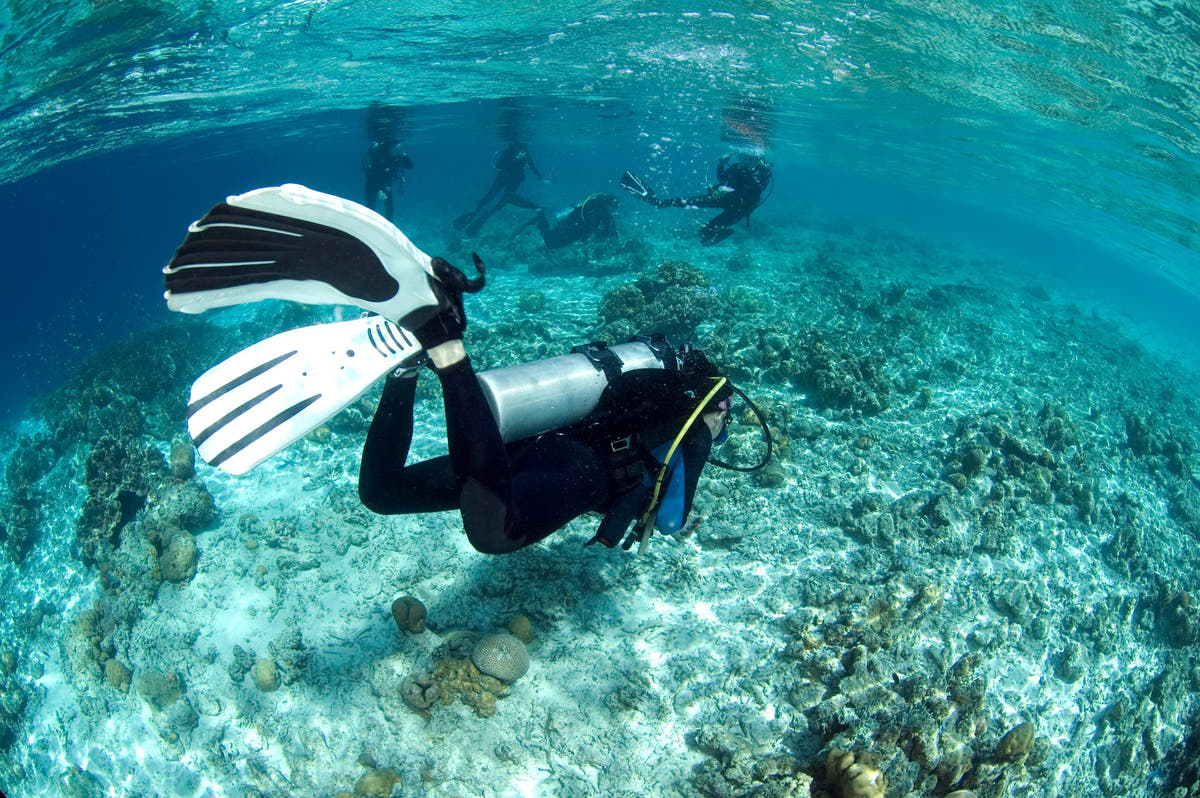
Le récif local du complexe offre une introduction facile à la région, avec du corail, des bancs de poissons et une vie récifale régulière à proximité de l'île. Il est utile pour les plongées de vérification, les plongées d'après-midi détendues et les invités qui préfèrent des transferts en bateau plus courts.
Épave de Mataking
L'épave de l'île est devenue un récif artificiel où l'on peut rencontrer des poissons de récif, des mérous, des poissons-lions, des nudibranches et des tortues. La profondeur et le profil dépendent de la route choisie autour de la structure.
Récifs de Timba-Timba
Le Timba-Timba voisin ajoute des paysages de récifs aux eaux claires, des tortues et une faune à fond sableux. Il élargit un séjour à Mataking au-delà du récif immédiat du complexe et convient bien à la photographie grand-angle.
Sites macro de Pandanan
Pandanan ajoute des habitats coralliens et sableux plus peu profonds avec des nudibranches, des gobies, des crustacés et des poissons-grenouilles, créant un contrepoint macro utile aux plongées axées sur les tortues et les récifs de la région.
DIVE SITE GUIDE
Dive sites in Mataking & Outer Semporna
Explore the character of individual sites, from the setting and marine life to the diving conditions. Open a card for the full description; site access and the final profile depend on conditions and experience.
ORIENTATION MAP
Where the dive sites are
Use the map to understand how the key sites are spread around the destination. Pins are for trip-planning orientation only; entry points, moorings and the final dive plan are always confirmed by the local operator on the day.
Coordinates are orientation references, not navigation coordinates. 'verified' means a published site coordinate; 'operator' means a clearly labelled island, locality or dive-area anchor used where the exact mooring/drop is not publicly verified. Entry points, currents and the final dive plan are always confirmed by the local operator on the day.
House reef · Wall · Coral
Mataking House Reef
Mataking House Reef begins directly off the island and can be kept shallow for check dives or extended down the wall by experienced groups.
Découvrir ce site de plongée
- Type
- House reef · Wall · Coral
- Profondeur
- 4–40 m
- Expérience
- Beginner–Intermediate
- Courant
- Mild
Mataking House Reef begins directly off the island and can be kept shallow for check dives or extended down the wall by experienced groups. Schools of jacks, goatfish and mullet use the reef, while a large resident barracuda is a familiar local character.
The protected access and broad depth range make the site useful for both daytime orientation and night macro dives. There is no reason to push deep on the first dive; the upper coral fields hold much of the life. The map uses Mataking Island itself as the operator-area anchor.
Look for: Easy access · 4–40 m range · Jacks & barracuda · Night diving
Idéal pour : Check dives · Barracuda · Jacks · Night diving
Artificial wreck · Underwater post
Mataking 1 Shipwreck
The Mataking 1 is a 40-foot wooden cargo boat deliberately sunk in 2006 to create an artificial reef and underwater post-office attraction.
Découvrir ce site de plongée
- Type
- Artificial wreck · Underwater post
- Profondeur
- 15–30 m
- Expérience
- Intermediate
- Courant
- Mild
The Mataking 1 is a 40-foot wooden cargo boat deliberately sunk in 2006 to create an artificial reef and underwater post-office attraction. The wreck sits within a typical 15–30 metre recreational profile and is now used by grouper, sweetlips, lionfish and smaller reef species.
Exterior exploration is the sensible focus because the structure is small and the surrounding reef is part of the experience. The dive combines a recognizable man-made subject with ordinary coral-reef life rather than functioning as a technical wreck. The map uses the Mataking Island anchor because the resort does not publish a separate numeric wreck GPS.
Look for: Underwater post office · Scuttled in 2006 · 15–30 m · Artificial reef
Idéal pour : Underwater post office · Artificial reef · Grouper
Wall · Channel · Pelagic
North Point (Alice Channel)
North Point sits where Mataking’s reef drops toward the deep Alice Channel, turning the dive into a more exposed wall profile than the protected house reef.
Découvrir ce site de plongée
- Type
- Wall · Channel · Pelagic
- Profondeur
- 10–40 m
- Expérience
- Advanced
- Courant
- Moderate–Strong
North Point sits where Mataking’s reef drops toward the deep Alice Channel, turning the dive into a more exposed wall profile than the protected house reef. The useful range begins around 10 metres but can extend toward 40 metres, so advanced divers should set a clear maximum depth before entry.
Current can bring larger fish into the channel and also make group control more demanding. The strongest route stays close to the wall for reference and finishes shallower on the reef rather than drifting into open water. The map uses the island anchor because the exact north-point drop is operator and tide dependent.
Look for: Alice Channel · 10–40 m · Advanced wall · Pelagic potential
Idéal pour : Deep wall · Pelagics · Current diving
Sandy shelf · Reef
Stingray City (Timba Timba)
Stingray City lies off Timba Timba on a deeper sandy shelf around 20–30 metres.
Découvrir ce site de plongée
- Type
- Sandy shelf · Reef
- Profondeur
- 20–30 m
- Expérience
- Intermediate
- Courant
- Mild–Moderate
Stingray City lies off Timba Timba on a deeper sandy shelf around 20–30 metres. A resident group of stingrays is the headline attraction, while turtles, large cuttlefish, sea snakes and occasional nurse sharks add variety.
The open sand makes good buoyancy especially important because a few careless fin kicks can destroy visibility. Mild to moderate drift is normal, so the group should follow the guide rather than settling directly on the bottom. The coordinate is the published Timba Timba Island position, used as an area anchor rather than an exact stingray station.
Look for: Stingray school · 20–30 m · Timba Timba · Sandy shelf
Idéal pour : Stingrays · Turtles · Cuttlefish · Nurse sharks possible
Shallow reef · Muck · Sand
Frog Fish Farm (Pandanan)
Frog Fish Farm is a shallow macro site off Pandanan where coral gives way to sand and rubble.
Découvrir ce site de plongée
- Type
- Shallow reef · Muck · Sand
- Profondeur
- 5–15 m
- Expérience
- Beginner
- Courant
- Mild
Frog Fish Farm is a shallow macro site off Pandanan where coral gives way to sand and rubble. The depth is only about 5–15 metres and current is usually very light, allowing divers to search slowly for camouflaged frogfish, nudibranchs, gobies, shrimp and jawfish.
The challenge is visual rather than physical: small animals disappear into the substrate and careless finning can cover them in silt. Long bottom time makes the site particularly effective for photographers. The map uses the published Pulau Pandanan coordinate as the local anchor.
Look for: 5–15 m · Frogfish · Mild current · Macro photography
Idéal pour : Frogfish · Nudibranchs · Jawfish · Macro
Wall · Coral · Gorgonians
Kalapuan R.D. Wall
Kalapuan’s wall diving adds a steeper reef profile to the outer Semporna islands.
Découvrir ce site de plongée
- Type
- Wall · Coral · Gorgonians
- Profondeur
- 5–30 m
- Expérience
- Intermediate
- Courant
- Mild–Moderate
Kalapuan’s wall diving adds a steeper reef profile to the outer Semporna islands. Coral, gorgonians and reef fish line the drop, and the route can be kept in the middle recreational range rather than pushed deep.
Current is usually manageable but can strengthen around exposed corners, so the guide selects the direction according to conditions. The site works well for wide-angle photography and as a contrast to the nearby sandy macro dives. The map uses the published Pulau Kalapuan coordinate because the precise wall entry is not separately published.
Look for: Island wall · Gorgonians · Wide angle · Flexible depth
Idéal pour : Wall scenery · Gorgonians · Reef fish
Sloping wall · Gorgonians
Bohayan Pygmy Point
Bohayan’s reef is a sloping wall where red gorgonian fans around the mid-teens are used by pygmy seahorses.
Découvrir ce site de plongée
- Type
- Sloping wall · Gorgonians
- Profondeur
- 5–25 m
- Expérience
- Beginner–Intermediate
- Courant
- Mild
Bohayan’s reef is a sloping wall where red gorgonian fans around the mid-teens are used by pygmy seahorses. The site is accessible to newer divers because useful habitat begins shallow and the profile can stay within 25 metres.
Finding the seahorses requires patience and a guide familiar with individual fans; repeated bright flashes should be avoided around such small animals. The wider reef still offers enough coral and fish life for divers without macro cameras. The map uses the nearby Boheian/Bohayan island coordinate as an area anchor.
Look for: Pygmy seahorses · Gorgonian fans · 5–25 m · Macro focus
Idéal pour : Pygmy seahorses · Gorgonians · Macro
Reef slope · Macro
Mandarin Heaven (Pom Pom)
Mandarin Heaven starts on a shallow Pom Pom plateau around 5 metres and continues down a gentle slope beyond normal beginner depth.
Découvrir ce site de plongée
- Type
- Reef slope · Macro
- Profondeur
- 5–40 m
- Expérience
- Beginner–Intermediate
- Courant
- Mild
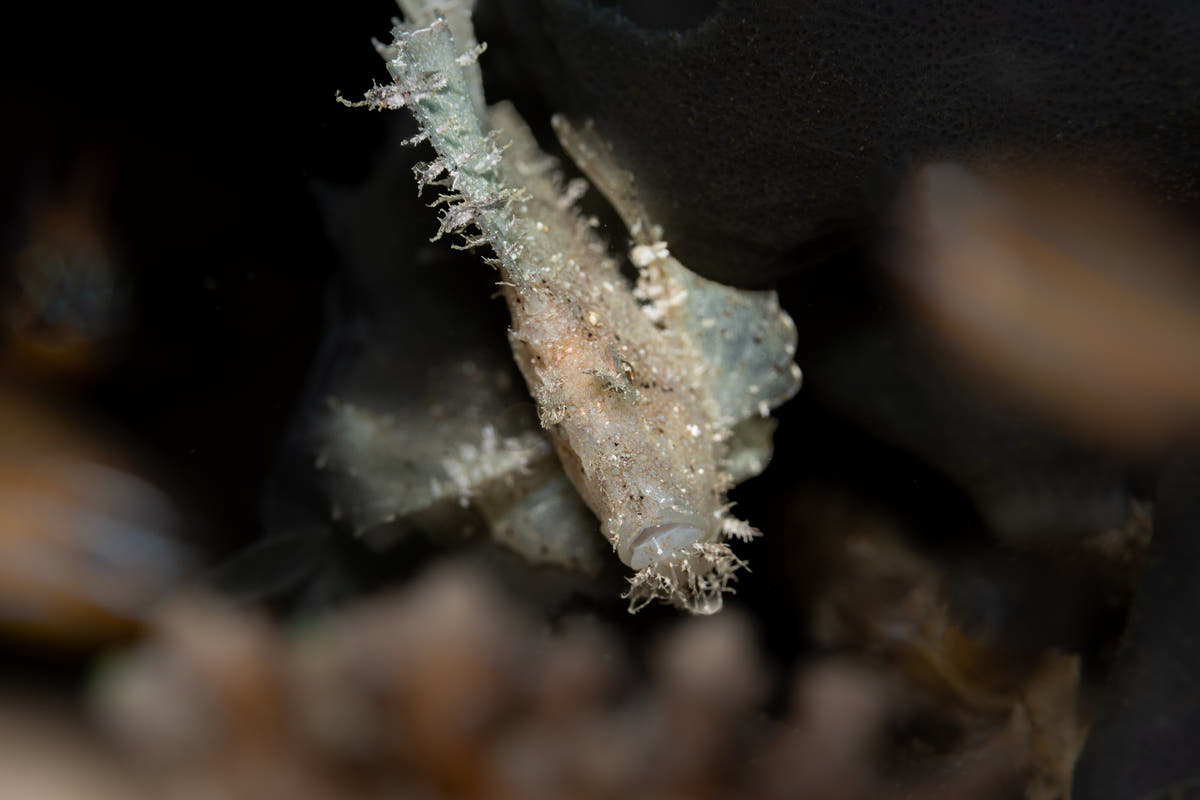
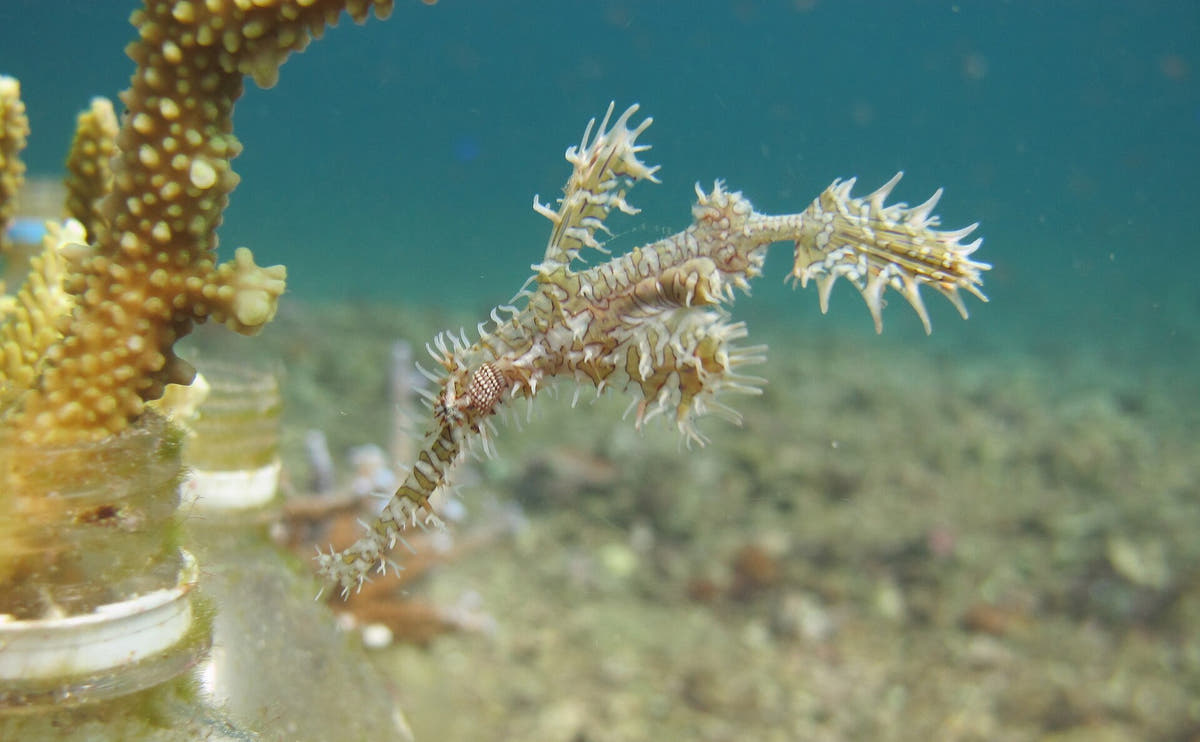
Mandarin Heaven starts on a shallow Pom Pom plateau around 5 metres and continues down a gentle slope beyond normal beginner depth. Coral heads and artificial structures create habitat for octopus, shrimp, ghost pipefish, lionfish and the mandarinfish that give the site its name.
Most divers gain more from staying in the productive shallows than from following the slope deep. Mild conditions and easy boat access make it suitable for macro-focused dives and late-afternoon behaviour watching. The coordinate uses the published Pom Pom Island position rather than claiming an exact reef entry.
Look for: Mandarinfish · Macro slope · Starts ~5 m · Pom Pom Island
Idéal pour : Mandarinfish · Ghost pipefish · Octopus · Macro
Photographie sous-marine
Au récif du complexe de Mataking, les plongées de vérification, les barracudas, les jacks et la plongée de nuit donnent une idée des possibilités photographiques. Choisissez la configuration de l'appareil pour les sites prévus, puis laissez du temps pour observer la scène avant de prendre l'image. Recommencer une plongée productive crée souvent de meilleures opportunités que de chercher constamment un autre emplacement. Pour les scènes de récif, utilisez la forme du récif et la lumière disponible pour donner de la profondeur à l'image. Un plongeur à une distance respectueuse peut fournir une échelle sans accabler un animal.
Au-delà de la plongée : Mataking au-dessus de la surface
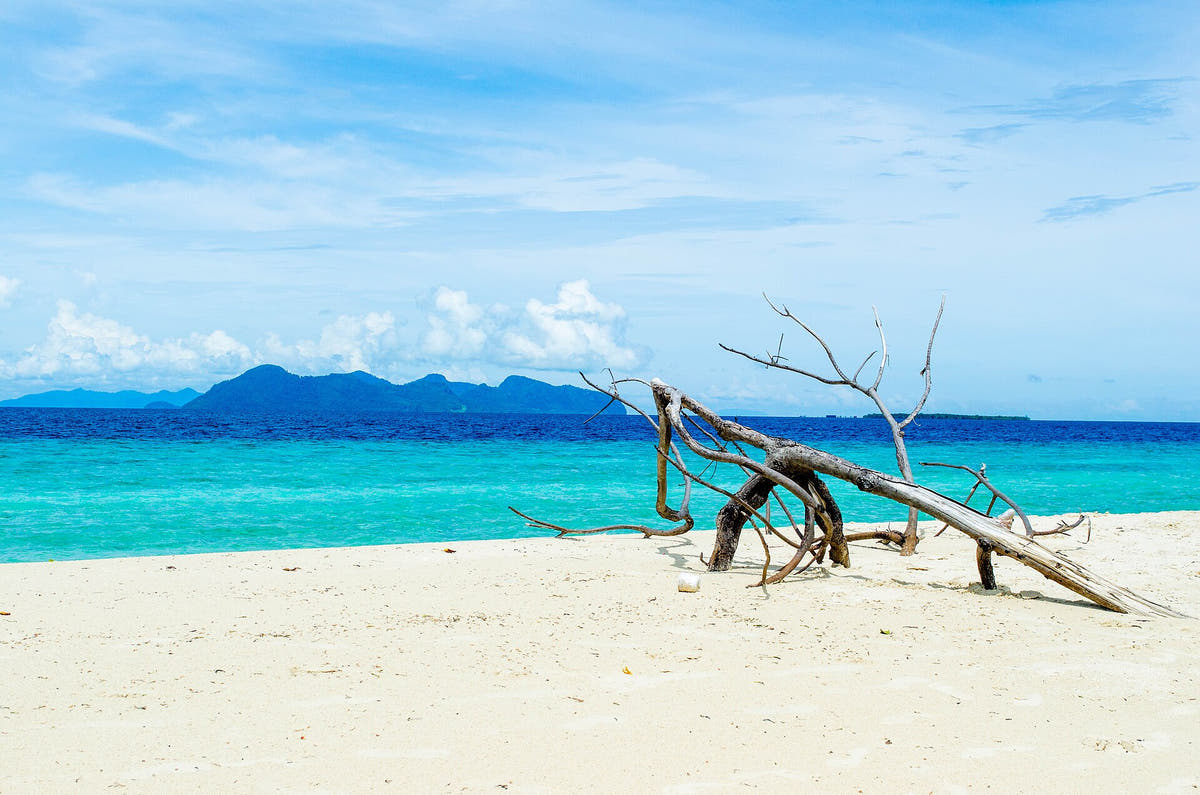
Les plages, le snorkeling, les vues sur la mer et les activités douces du complexe font de Mataking un bon choix pour des vacances insulaires plus calmes. Le cadre au large peut convenir particulièrement bien aux couples qui souhaitent partager la détente en plus de quelques jours de plongée.
Les excursions aux îles voisines ajoutent de la variété lorsque les conditions et l'accès le permettent. Il s'agit d'une base différente de Mabul, alors choisissez-la pour le programme de Mataking et des îles extérieures. Toute visite à Sipadan est un arrangement séparé dépendant d'un permis et ne devrait jamais être supposée à partir de l'emplacement de Semporna seul.
Comment se rendre à Mataking
Prenez l'avion pour Tawau (TWU), continuez par la route jusqu'à Semporna et effectuez le transfert par bateau du complexe vers Mataking. Les créneaux de départ du bateau et la gestion des bagages doivent être vérifiés auprès de l'établissement sélectionné avant de finaliser les vols.
Choisissez des horaires d'arrivée et de départ autour du transfert ultérieur, en particulier lorsqu'une traversée en bateau ou un long trajet en voiture est impliqué. Laissez de la place pour une dernière journée détendue à terre et un intervalle approprié entre la dernière plongée et le vol.
Questions sur la plongée à Mataking
Qu'est-ce qui rend Mataking digne d'un voyage de plongée ?
Mataking et les îles extérieures de Semporna offrent des vacances sur les récifs à part entière : des pentes coralliennes, des parois, un habitat pour les tortues et de petits sujets répartis sur les îles voisines. L'attrait réside dans cette variété et le cadre où vous revenez entre les plongées.
Comment devrais-je planifier mon séjour ?
Comparez l'expérience du complexe et le programme à partir du bateau autour de Mataking, Timba-Timba, Pandanan et des autres sites proposés. Cinq à sept nuits permettent de consacrer du temps aux récifs locaux, à l'épave et aux excursions aux îles. Choisissez cette base parce que vous souhaitez visiter ces îles, toute excursion plus lointaine devant être traitée séparément.
Quand est-il utile de visiter ?
La période de mars à octobre est utile pour planifier, avec une plongée locale possible en dehors de cette période lorsque les conditions le permettent. Les principaux problèmes pratiques sont le timing des transferts en bateau et les îles extérieures qui sont agréables à atteindre chaque jour.
Y a-t-il assez pour les compagnons qui ne plongent pas ?
Les plages, le snorkeling, les vues sur la mer et les activités douces du complexe font de Mataking un bon choix pour des vacances insulaires plus calmes. Le cadre au large peut convenir particulièrement bien aux couples qui souhaitent partager la détente en plus de quelques jours de plongée.
A closer look at Mataking & Outer Semporna
Planifiez votre voyage à Mataking
Dites-nous les expériences que vous souhaitez le plus, vos dates préférées et comment vous aimez voyager. Nous pouvons réunir la destination, l'hébergement et la plongée dans un itinéraire cohérent.
Planifier mon voyageCrédits photo
Les images sont redimensionnées pour l'affichage et peuvent être recadrées pour s'adapter à la mise en page de la page.
- Sable blanc et eau turquoise sur l'île de Mataking, Sabah : Mataking Island Sabah.jpg — Angah hfz. CC BY-SA 4.0. Image de taille web fournie par Wikimedia Commons ; aucune modification de la scène.
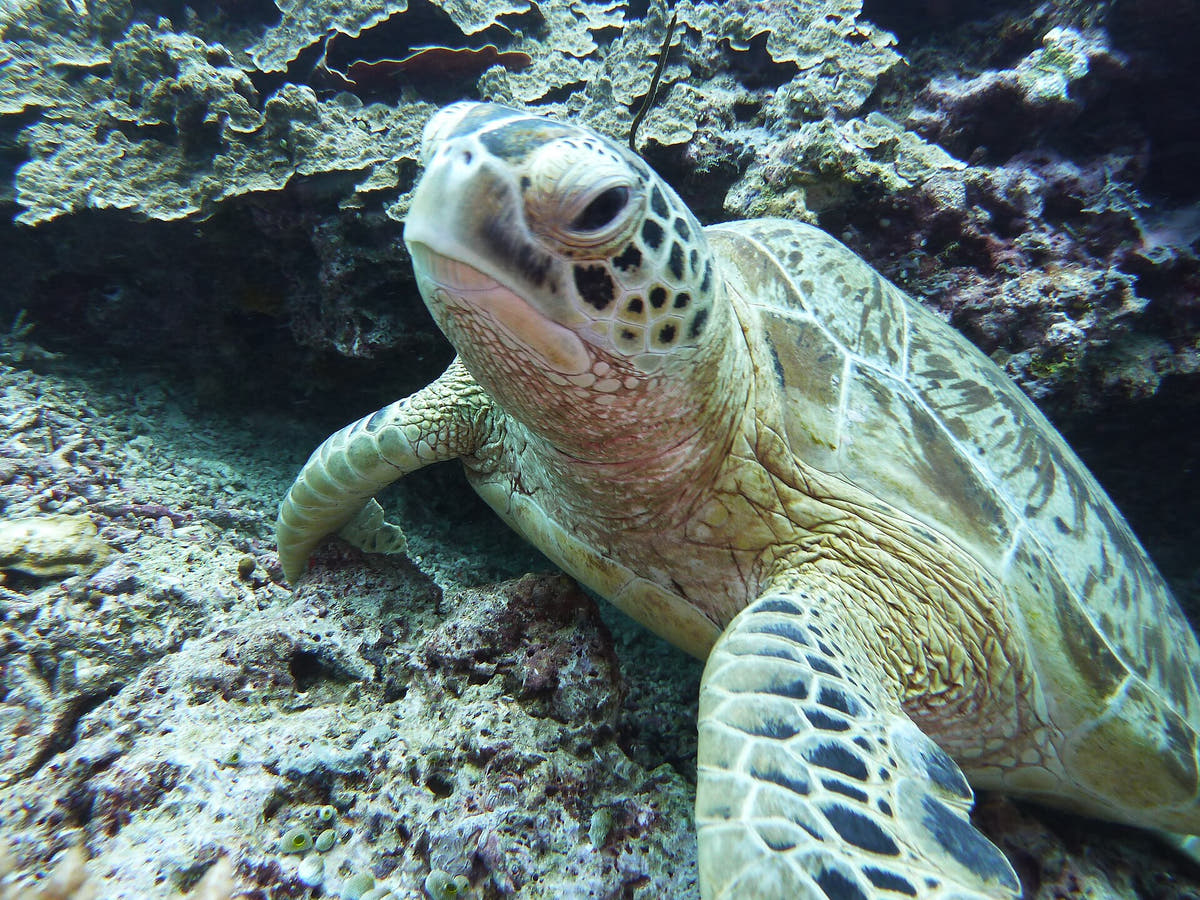
- Tortue verte se reposant sur le récif à l'île de Pom Pom, Semporna extérieure : Green Turtlel on Pom Pom Island, Celebes resort, Sabah.JPG — Profmauri. CC BY-SA 3.0. Image de taille web fournie par Wikimedia Commons ; aucune modification de la scène.
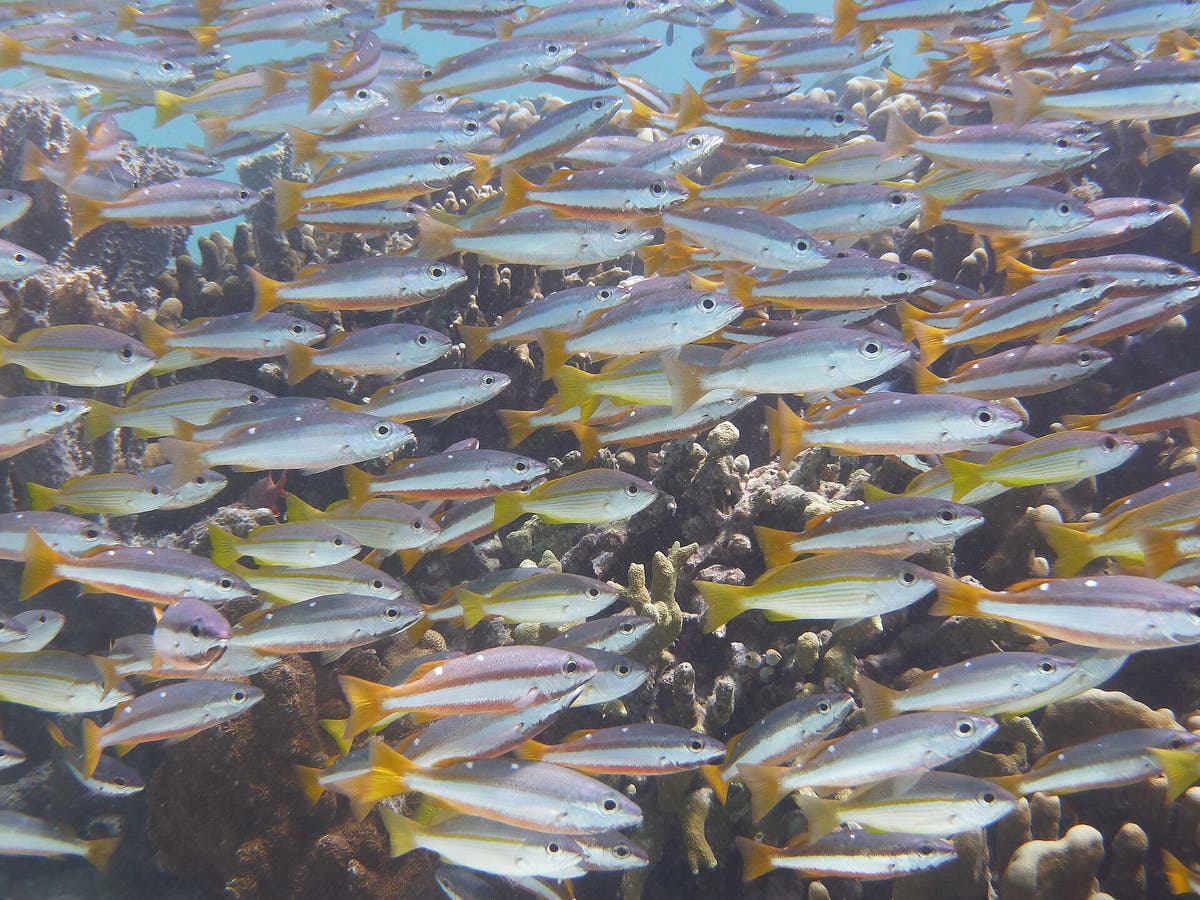
- Banc de poissons-maigres à rayures jaunes à l'île de Pom Pom, Sabah : One line snapper school on Pom Pom Island, Celebes resort, Sabah.JPG — Profmauri. CC BY-SA 3.0. Image de taille web fournie par Wikimedia Commons ; aucune modification de la scène.
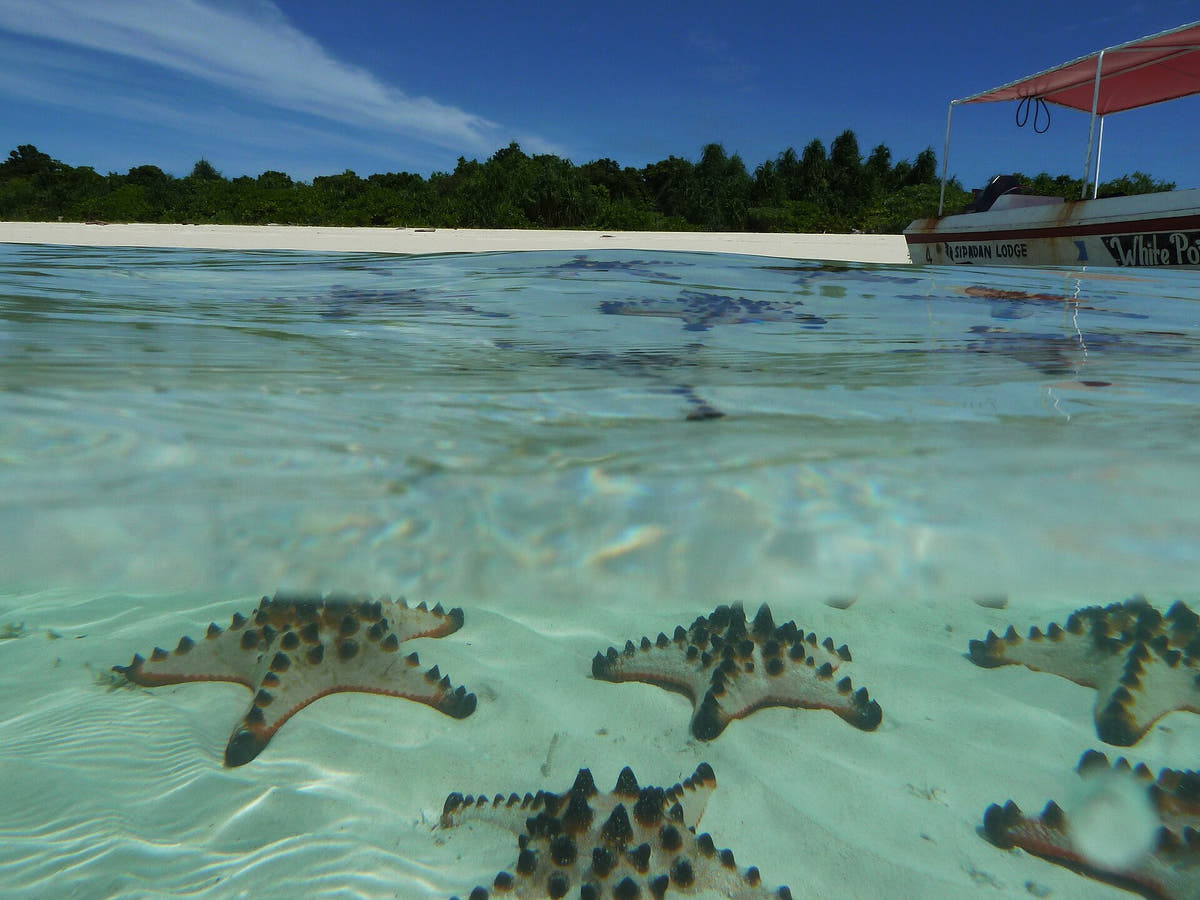
- Étoiles de mer dans la lagune peu profonde à l'île de Pom Pom, Sabah : Starfish in lagoon on Pom Pom Island, Celebes resort, Sabah.JPG — Profmauri. CC BY-SA 3.0. Image de taille web fournie par Wikimedia Commons ; aucune modification de la scène.
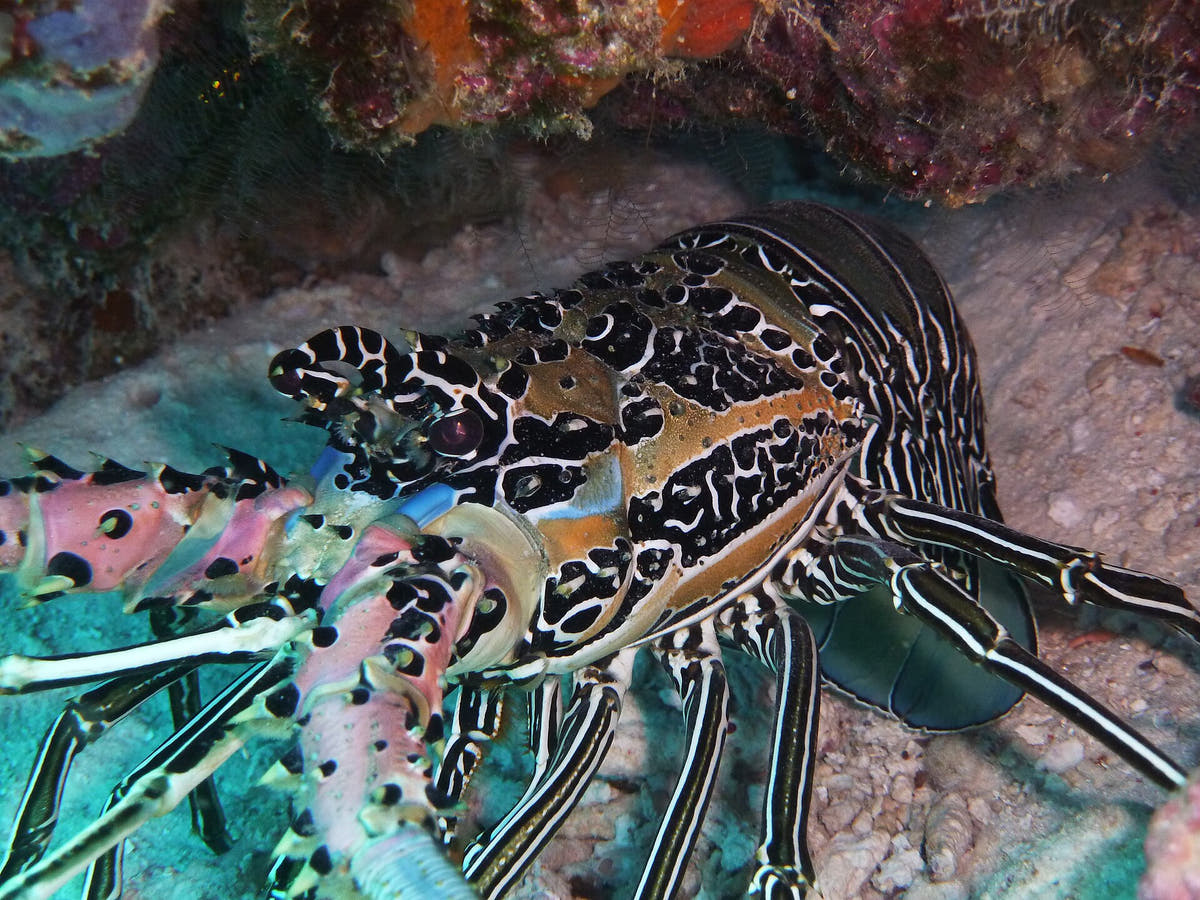
- Langouste peinte se protégeant sur le récif à l'île de Pom Pom : Painted lobster on Pom Pom Island, Celebes resort, Sabah.JPG — Profmauri. CC BY-SA 3.0. Image de taille web fournie par Wikimedia Commons ; aucune modification de la scène.
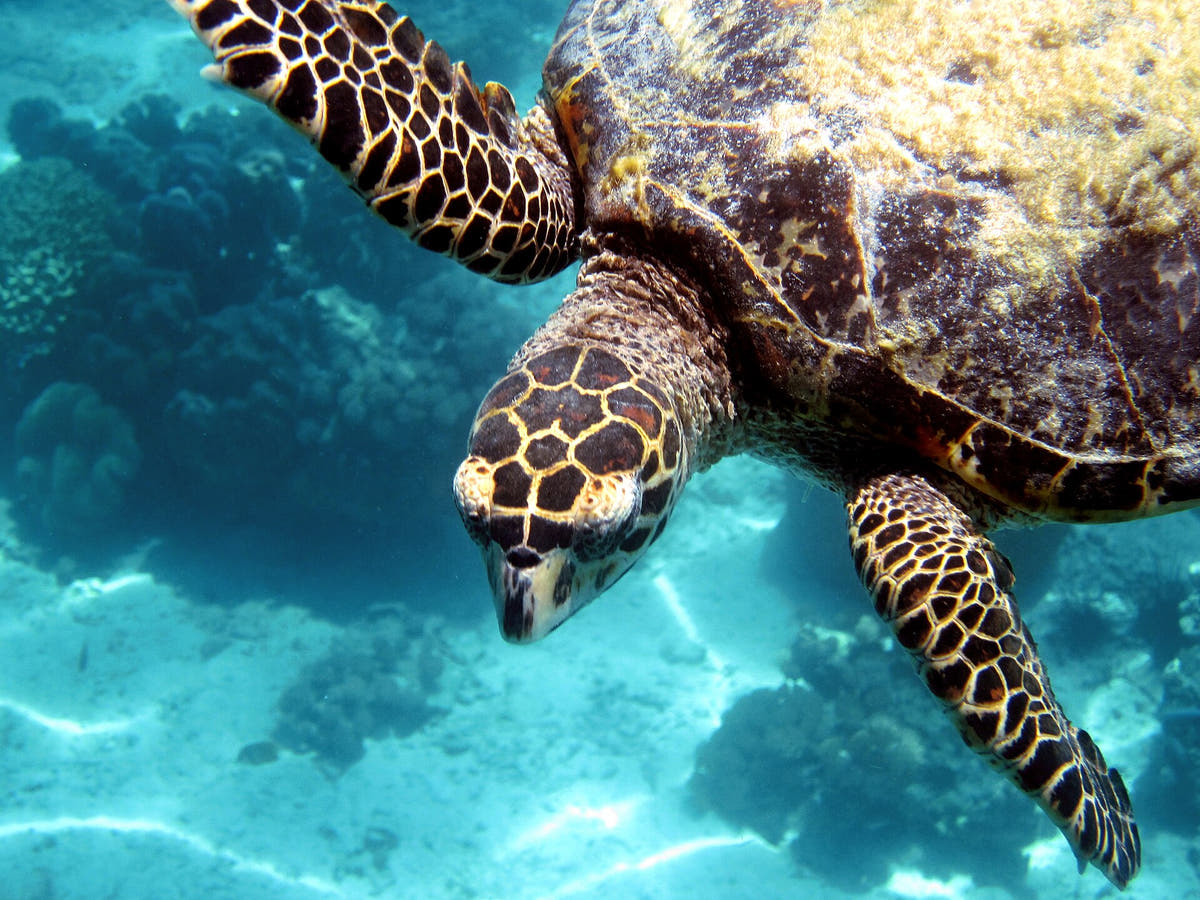
- Tortue à carapace imbriquée nageant à l'île de Pom Pom, Sabah : Hawksbill turtle on Pom Pom Island.jpg — Profmauri. CC BY-SA 3.0. Image de taille web fournie par Wikimedia Commons ; aucune modification de la scène.
- Poisson-pipe fantôme sur le récif Bottle au nord de l'île de Pom Pom : Ghost pipe fish living on Bottle reef at N tip of Pom Pom Island, Semporna, Sabah.jpg — Profmauri. CC BY-SA 3.0. Image de taille web fournie par Wikimedia Commons ; aucune modification de la scène.
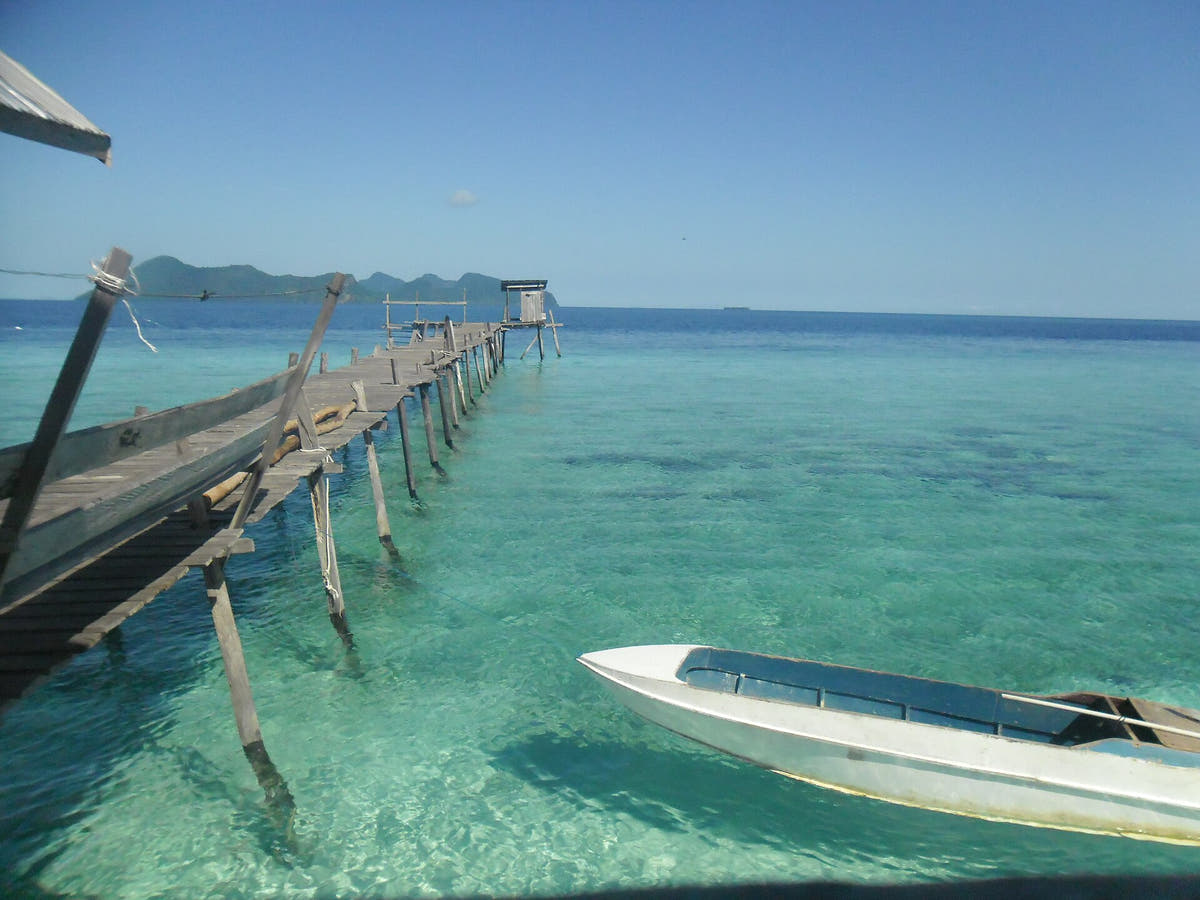
- Jetée et eau claire à l'île de Pom Pom, Semporna extérieure : Kampung Jetty on Pom Pom Island, Semporna, Sabah.JPG — Profmauri. CC BY-SA 3.0. Image de taille web fournie par Wikimedia Commons ; aucune modification de la scène.
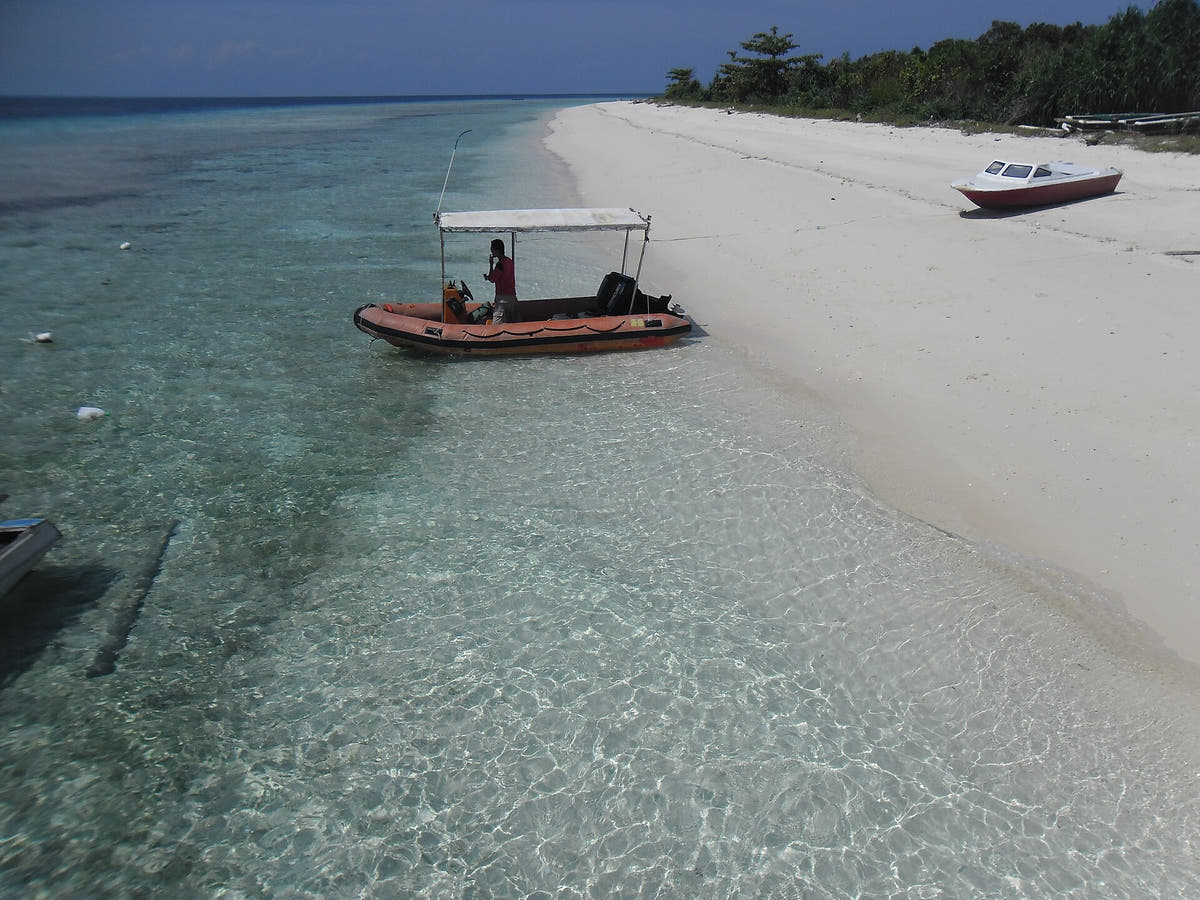
- Sable blanc, petits bateaux et eau peu profonde à Turtle Beach, île de Pom Pom : Turtle beach Pom Pom Island.JPG — Profmauri. CC BY-SA 3.0. Image de taille web fournie par Wikimedia Commons ; aucune modification de la scène.


