

Destination guide · Solomon Islands
Munda Tauchen
Munda brings wartime history into a living reef landscape. Aircraft, shipwrecks, walls and current-fed points create very different dives within the same region, with the lagoons and islands adding a quieter surface setting.
Munda im Überblick
Munda vereint Flugzeuge und Schiffswracks aus dem Zweiten Weltkrieg, Riffhaie, Riffwände und intakte Korallenriffe rund um die Western Province der Salomonen. Geschichte und Meeresleben sind an diesem Reiseziel eng miteinander verbunden.
Einige Tauchplätze erfordern aufgrund von Tiefe, Strömung oder dem Aufenthalt im offenen Wasser fortgeschrittene Taucherfahrung. Die Lagunen, Dörfer und das Erbe der Kriegszeit der Region bieten Raum für eine vielfältigere Inselreise, während Tierbegegnungen stets von den natürlichen Bedingungen abhängen.
Planen Sie Ihren Aufenthalt in Munda
Wählen Sie eine Basis, die Wracktauchgänge, Riffgänge und die Erfahrung der Gruppe ausgewogen miteinander verbindet. Fünf bis sieben Nächte bieten genügend Zeit, um diese Mischung zu erleben. Tiefe Tauchprofile und Höhlentauchgänge erfordern eine entsprechende Spezialausbildung und sind nicht einfach der nächste Schritt nach einem leichteren Riffgang.
Liveaboard routes for this destination
Explore the routes that visit this region. Compare ships and itineraries, then open a route to see its sailing dates, cabins and the areas it covers.
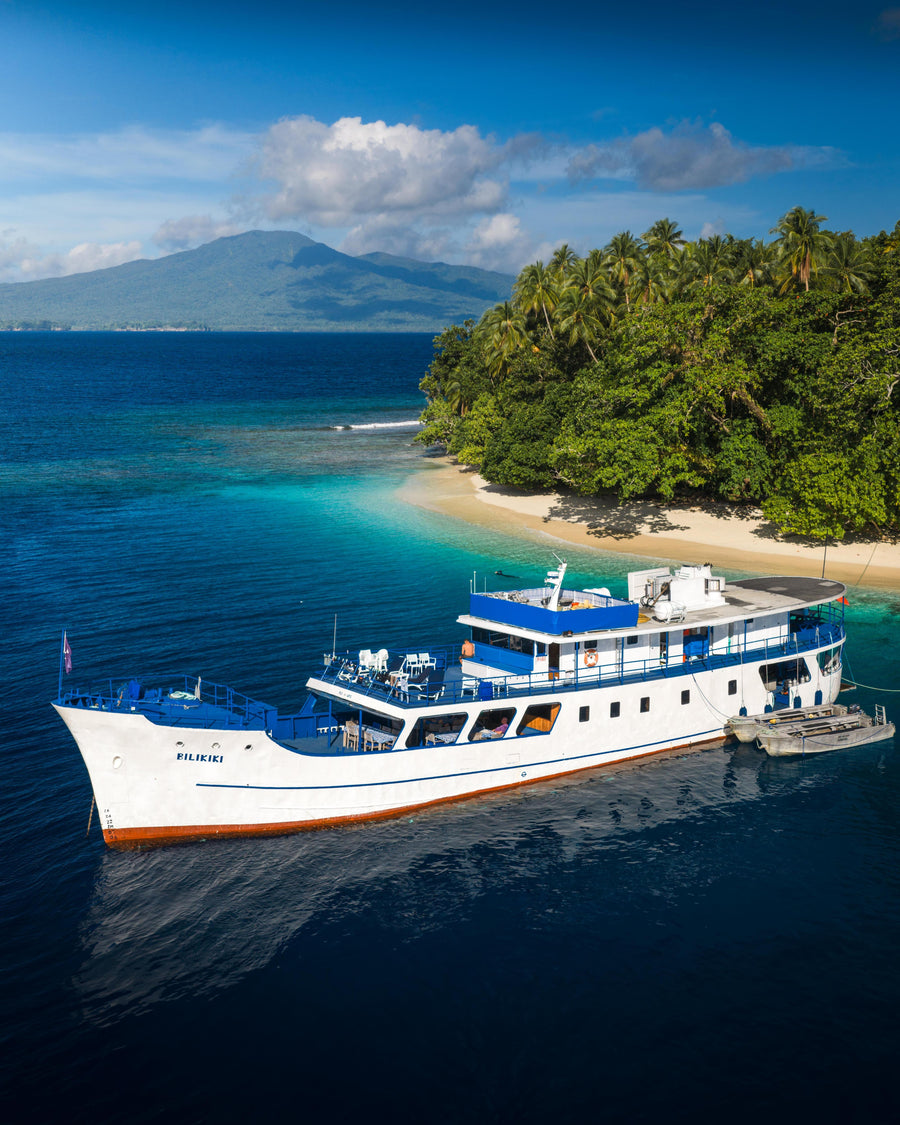
Emperor Bilikiki
Das Beste von Solomon Islands
- Indicative duration
- 10 nights
- Einschiffung
- Honiara
- Ausschiffung
- Honiara
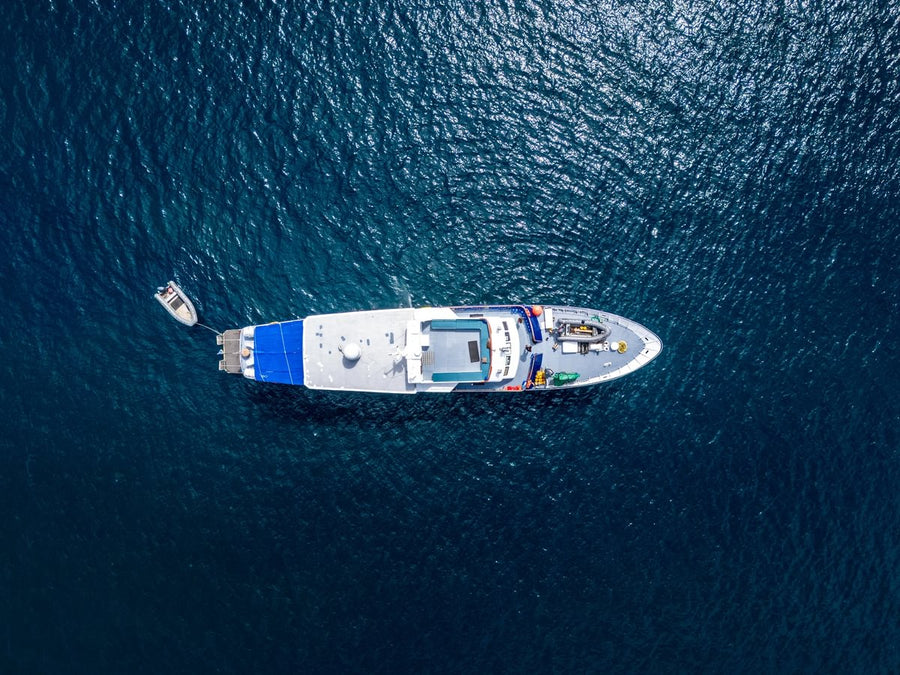
Solomons Master
Best of the Solomons — 10 Nächte
- Indicative duration
- 10 nights
- Einschiffung
- Honiara
- Ausschiffung
- Honiara
Solomons Master
Florida & Russell Islands — 7 Nächte
- Indicative duration
- 7 nights
- Einschiffung
- Honiara
- Ausschiffung
- Honiara
Solomons Master
Guadalcanal & Western Province — 10 Nächte
- Indicative duration
- 10 nights
- Einschiffung
- Honiara / route-dependent
- Ausschiffung
- Munda / Honiara route-dependent
Solomons Master
WWII Wreck Week — 7 Nächte
- Indicative duration
- 7 nights
- Einschiffung
- Honiara
- Ausschiffung
- Honiara
No routes match this search. Try another vessel or clear your search.
Wann sollte man in Munda tauchen?
Tauchgänge sind das ganze Jahr über möglich, wobei Regen, Seegang und Strömung die täglichen Entscheidungen beeinflussen. Planen Sie flexibel zwischen Riff- und Wracktauchgängen. Auch bei Inlandsflügen und Bootstransfers ist ein Puffer am Anfang und Ende des Aufenthalts von Vorteil.
Planungszeitraum: Ganzjährig tauchen.
Was Sie beim Tauchen erwartet
Für tiefere Wrack- und Haistauchplätze wird fortgeschrittene Taucherfahrung empfohlen.
Flugzeuge und Wracks aus dem Zweiten Weltkrieg
Munda ist einer der besten Ausgangspunkte der Salomonen, um Korallentauchen mit zugänglicher Geschichte aus dem Zweiten Weltkrieg zu verbinden. Flugzeuge wie die P-39 Airacobra und mehrere Schiffswracks können neben Riffgängen in den Tauchplan aufgenommen werden. Tiefe und Zugänglichkeit variieren jedoch so stark, dass der Tauchveranstalter jedes Wrack individuell auf die Erfahrung der Taucher abstimmen sollte.
Begegnungen mit Haien
Strömungswände und Riffkanten rund um Munda ziehen Grauhaien, Schwarzkopf- und Weißspitzenriffhaie sowie Barrakudas, Trevally und Rochen an. Die Aktivität der Haie ist natürlich und variiert, daher sollte das Reiseziel am besten für eine umfassende Mischung aus Riff- und Wracktauchgängen und nicht für eine garantierte Anzahl von Haien geplant werden.
Wände und Riffe
Die Western Province bietet steile Wände, Hartkorallenplateaus, Seefächer und tiefere Riffkanten rund um New Georgia und die benachbarten Inseln. Einige Tauchplätze sind ruhig genug für unkompliziertes Freizeit-Tauchgänge, während andere Strömung und tiefere Tauchprofile nutzen, die sich für erfahrenere Taucher eignen.
Geschichte abgelegener Inseln
An Land ist das Gebiet von Munda eng mit der Pazifikkampagne des Zweiten Weltkriegs verbunden. Flugplätze, Überreste und lokale Sammlungen geben den Unterwasserwracks einen weiteren Kontext. Dorf- und Inselbesuche lassen sich mit Tauchgängen kombinieren und verleihen dem Reiseziel mehr historische Tiefe als ein herkömmlicher reiner Resort-Aufenthalt.
DIVE SITE GUIDE
Dive sites in Munda
Explore the character of individual sites, from the setting and marine life to the diving conditions. Open a card for the full description; site access and the final profile depend on conditions and experience.
ORIENTATION MAP
Where the dive sites are
Use the map to understand how the key sites are spread around the destination. Pins are for trip-planning orientation only; entry points, moorings and the final dive plan are always confirmed by the local operator on the day.
Coordinates are planning references compiled from current dive-site sources. They are not navigation coordinates; entry points, moorings, tide windows and the final dive plan are always confirmed by the local operator on the day.
Wall · Point · Drift
Shark Point
Shark Point is one of Munda’s most dynamic natural dives.
Tauchplatz entdecken
- Typ
- Wall · Point · Drift
- Tiefe
- 5–60 m
- Erfahrung
- Advanced
- Strömung
- Moderate–Strong
Shark Point is one of Munda’s most dynamic natural dives. A shelving reef steepens toward a point where currents converge, creating the conditions that attract reef sharks, barracuda and trevally into the blue.
The wall continues far beyond normal recreational depth, so divers need a clear maximum before descent and should use the reef rather than open water as their reference. Stronger current makes the point best for experienced divers, although shallower routes can be used when conditions are gentler. Wildlife remains natural — there may be outstanding shark action on one dive and none on the next — but the coral wall itself is consistently rewarding.
Look for: Reef sharks possible · Strong current · Wall · Excellent visibility
Ideal für: Reef sharks · Barracuda · Trevally · Wall
Aircraft wreck · Sand
P-39 Airacobra Wreck
The P-39 Airacobra rests upright on a sandy bottom around 27–28 metres and is one of Munda’s most photogenic WWII aircraft dives.
Tauchplatz entdecken
- Typ
- Aircraft wreck · Sand
- Tiefe
- 27–28 m
- Erfahrung
- Advanced
- Strömung
- Mild
The P-39 Airacobra rests upright on a sandy bottom around 27–28 metres and is one of Munda’s most photogenic WWII aircraft dives. The aircraft remains recognizable enough that wings, propeller and cockpit can all be appreciated without touching or entering the structure. Current is normally mild, making depth the principal planning concern.
Divers get the most from an efficient descent and a controlled working time around the aircraft before beginning a slow ascent. The sand is easily disturbed, so careful buoyancy protects both visibility and the wreck. Marine growth and small fish have turned the airframe into habitat while preserving the historical shape.
Look for: P-39 fighter · 27–28 m · Mild current · WWII history
Ideal für: WWII aircraft · Photography · Historical dive
Shallow shipwreck · Historical
Kashi Maru
Kashi Maru is a remarkably shallow Japanese wartime wreck lying close to shore in Mbaeroko Bay.
Tauchplatz entdecken
- Typ
- Shallow shipwreck · Historical
- Tiefe
- 3–15 m
- Erfahrung
- Beginner–Intermediate
- Strömung
- Mild
Kashi Maru is a remarkably shallow Japanese wartime wreck lying close to shore in Mbaeroko Bay. The wreck sits upright with a maximum depth around 15 metres, making it far more accessible than many Pacific war wrecks.
Sections of the holds and engine-room area remain recognizable, but divers should still respect overhead limits and local access rules. The shallow profile gives long bottom time and enough natural light for wide-angle photography. Because the wreck is close to customary-owned shoreline, access can occasionally depend on local arrangements, so it should be requested rather than treated as a guaranteed fixed inclusion.
Look for: Shallow WWII wreck · Max ~15 m · Long bottom time · Local access may vary
Ideal für: WWII shipwreck · Engine room exterior · Snorkel crossover
Reef slope · Wall
Munda Reef / Munda Bar
Munda Reef, also called Munda Bar, is a long scenic reef that gives divers an easy introduction to the region before the more demanding current sites.
Tauchplatz entdecken
- Typ
- Reef slope · Wall
- Tiefe
- 5–26 m
- Erfahrung
- Beginner–Intermediate
- Strömung
- Mild
Munda Reef, also called Munda Bar, is a long scenic reef that gives divers an easy introduction to the region before the more demanding current sites. The reef top is shallow and falls through coral, sea fans and barrel sponges toward the mid-twenties.
Grey reef sharks and rays can pass the deeper edge, while fusiliers and reef fish keep the shallows active. Mild current and a broad usable depth range make the site suitable for mixed groups. The exact daily entry depends on the operator because the reef is extensive; the map pin should be read as an area marker rather than one permanent mooring.
Look for: Long coral reef · Mild current · Mixed-experience friendly · Sharks possible
Ideal für: Coral · Grey reef sharks possible · Reef fish
Deep shelf · Pelagic · Current
Top Shelf
Top Shelf is one of Munda’s deeper pelagic dives, beginning around 25 metres and falling beyond normal recreational limits.
Tauchplatz entdecken
- Typ
- Deep shelf · Pelagic · Current
- Tiefe
- 25–40+ m
- Erfahrung
- Advanced
- Strömung
- Strong
Top Shelf is one of Munda’s deeper pelagic dives, beginning around 25 metres and falling beyond normal recreational limits. The site is exposed to open-ocean current and can attract barracuda, trevally, sharks and rays around the shelf edge.
The challenge is that the starting depth is already advanced, so gas and no-decompression time need active management from the first minutes. Divers should establish a maximum depth and resist following animals downward. The public coordinate published online is treated as approximate because different operator references vary; the local guide’s actual drop point takes precedence.
Look for: 25–40+ m · Pelagic action · Strong current · Advanced only
Ideal für: Barracuda · Sharks · Rays · Deep reef
Coral garden · Reef
Alice in Wonderland
Alice in Wonderland is one of Munda’s coral-first dives.
Tauchplatz entdecken
- Typ
- Coral garden · Reef
- Tiefe
- 5–30 m
- Erfahrung
- Beginner–Intermediate
- Strömung
- Mild
Alice in Wonderland is one of Munda’s coral-first dives. Instead of wreckage or strong-current points, the site is known for broad healthy reef scenery and the sense of moving through a dense coral landscape.
It suits a wide range of divers because the useful habitat spans shallow and mid-depth zones, allowing the guide to adapt the route to certification. For photographers it is a wide-angle reef dive rather than a single-animal site, with coral structure and fish density carrying the experience. The exact public GPS is not consistently published, so the map uses an operator-area anchor within the Munda reef network.
Look for: Coral garden · Wide-angle reef · Mixed-experience friendly · Mild current
Ideal für: Coral scenery · Wide angle · Relaxed reef
Sinkhole · Cave · Reef exit
Cave of the Kastom Shark
Cave of the Kastom Shark is one of Munda’s most unusual dives.
Tauchplatz entdecken
- Typ
- Sinkhole · Cave · Reef exit
- Tiefe
- 0–30+ m
- Erfahrung
- Expert / Cave-oriented
- Strömung
- Overhead environment
Cave of the Kastom Shark is one of Munda’s most unusual dives. The entry begins inland through mangroves at a small sinkhole, followed by a vertical descent through a chimney and a tunnel that eventually opens onto the reef wall. This is genuine overhead-environment diving, not a casual swim-through.
It requires strong buoyancy, comfort in enclosed spaces and a guide who knows the route intimately. The reward is extraordinary topography: dark enclosed passage gives way to blue ocean framed by large gorgonians and coral at the exit. Divers who do not have the appropriate experience should choose the region’s open-water reefs instead.
Look for: Sinkhole entry · Vertical chimney · Overhead environment · Expert topography
Ideal für: Vertical chimney · Cave · Unique topography
Coral reef · Slope
Hapi Reef
Hapi Reef is a straightforward natural-reef dive that balances Munda’s wreck and current-heavy sites.
Tauchplatz entdecken
- Typ
- Coral reef · Slope
- Tiefe
- 5–25 m
- Erfahrung
- Beginner–Intermediate
- Strömung
- Mild
Hapi Reef is a straightforward natural-reef dive that balances Munda’s wreck and current-heavy sites. Hard coral and reef fish fill a comfortable recreational depth range, making it useful for relaxed photography and mixed-experience groups.
The dive is best approached slowly, with attention to reef detail rather than distance covered. It also works well as a second dive after a deeper wreck because the profile can remain shallow for most of the tank. Public sources describe Hapi as one of Dive Munda’s regular sites but do not publish a dependable mooring coordinate, so the map uses a general reef-area point rather than false precision.
Look for: Relaxed coral reef · Mild current · Photography · Mixed-experience friendly
Ideal für: Coral · Reef fish · Photography
Unterwasserfotografie
Am Shark Point vermitteln Riffhaie, Barrakudas, Trevally und die Riffwand einen Eindruck von den fotografischen Möglichkeiten. Wählen Sie die Kameraausrüstung für die geplanten Tauchplätze und nehmen Sie sich anschließend Zeit, die Szene zu beobachten, bevor Sie das Bild aufnehmen. Ein erfolgreicher Tauchgang kann oft bessere Motive bieten als die ständige Suche nach einem anderen Ort. Nutzen Sie bei Riffszenen die Form des Riffs und das vorhandene Licht, um dem Bild Tiefe zu verleihen. Ein Taucher in respektvollem Abstand kann Größe vermitteln, ohne das Tier einzuschüchtern.
Mehr als nur Tauchen: Munda über der Wasseroberfläche
Die Geschichte des Zweiten Weltkriegs ist eine natürliche Ergänzung zu den Wracktauchgängen, während lokale Geschichten und Landbesuche den versunkenen Strukturen mehr Bedeutung verleihen. Lagunenausflüge und Dorfbesuche erweitern das Erlebnis für Gäste, die sich für die Western Province als Ort interessieren und nicht nur für eine Tauchkarte.
Das Tempo sollte am besten entspannt bleiben. Nicht-Taucher können die Insellandschaften und die lokale Kultur genießen, und die Unterkunft sollte eine komfortable Basis für die Tage bieten, an denen die Taucher mit dem Boot unterwegs sind.
Anreise nach Munda
Fliegen Sie über Honiara nach Munda und nutzen Sie lokale Bootstransfers.
Wählen Sie Ankunfts- und Abfahrtszeiten so, dass sie sich mit dem Weiterreisestück verbinden lassen, insbesondere wenn eine Bootsüberfahrt oder eine lange Fahrt über Land ansteht. Planen Sie einen entspannten letzten Tag an Land und einen angemessenen Zeitabstand zwischen dem letzten Tauchgang und dem Flug ein.
Fragen zum Tauchen in Munda
Was macht Munda zu einem lohnenden Tauchreiseziel?
Munda verbindet die Geschichte des Zweiten Weltkriegs mit einer lebendigen Rifflandschaft. Flugzeuge, Schiffswracks, Wände und strömungsgeprägte Riffkanten bieten in derselben Region sehr unterschiedliche Taucherlebnisse, während die Lagunen und Inseln eine ruhigere Atmosphäre an der Wasseroberfläche schaffen.
Wie sollte ich meinen Aufenthalt planen?
Wählen Sie eine Basis, die Wracktauchgänge, Riffgänge und die Erfahrung der Gruppe ausgewogen miteinander verbindet. Fünf bis sieben Nächte bieten genügend Zeit, um diese Mischung zu erleben. Tiefe Tauchprofile und Höhlentauchgänge erfordern eine entsprechende Spezialausbildung und sind nicht einfach der nächste Schritt nach einem leichteren Riffgang.
Wann ist eine gute Reisezeit?
Tauchgänge sind das ganze Jahr über möglich, wobei Regen, Seegang und Strömung die täglichen Entscheidungen beeinflussen. Planen Sie flexibel zwischen Riff- und Wracktauchgängen. Auch bei Inlandsflügen und Bootstransfers ist ein Puffer am Anfang und Ende des Aufenthalts von Vorteil.
Gibt es genug für Begleiter, die nicht tauchen?
Die Geschichte des Zweiten Weltkriegs ist eine natürliche Ergänzung zu den Wracktauchgängen, während lokale Geschichten und Landbesuche den versunkenen Strukturen mehr Bedeutung verleihen. Lagunenausflüge und Dorfbesuche erweitern das Erlebnis für Gäste, die sich für die Western Province als Ort interessieren und nicht nur für eine Tauchkarte.
A closer look at Munda


Planen Sie Ihre Munda-Reise
Teilen Sie uns mit, welche Erlebnisse Sie am meisten wünschen, welche Daten Sie bevorzugen und wie Sie gerne reisen. Wir können das Reiseziel, die Unterkunft und die Tauchgänge zu einem stimmigen Reiseplan zusammenstellen.
Meine Reise planen