

Destination guide · Indonesia
Derawan, Maratua, Sangalaki & Kakaban Diving
Maratua’s walls, Sangalaki’s manta areas and Kakaban’s enclosed lake give the Derawan islands strikingly different personalities. The pleasure is in moving between those habitats, with turtles and island life adding quieter moments along the way.
Derawan, Maratua, Sangalaki & Kakaban at a glance
The Derawan Archipelago links turtle-rich islands, manta areas, reef walls and Kakaban’s remarkable landlocked jellyfish lake. Derawan, Sangalaki, Kakaban and Maratua each contribute a different element to a remote multi-island journey.
Transfers and sea conditions require more flexibility than a mainstream resort holiday, but this complexity creates the destination’s expedition character. Mantas and other wildlife remain unpredictable; the enduring appeal lies in the combination of unusual ecosystems, remote landscapes and varied island diving.
Planning your Derawan Islands stay
Choose the island base or liveaboard by the areas it reaches and the time spent in transit. Maratua, Sangalaki and Derawan are distinct locations, so day-boat distances matter. A stay of six to eight nights allows a varied programme without turning every day into a long transfer.

Nabucco Island Resort
A small remote island dive resort in Maratua Atoll, combining three accommodation categories with Big Fish Country, Kakaban and Sangalaki access.

Virgin Cocoa Resort / Extra Divers
An eight-hectare private island hideaway in southern Maratua with 18 large beachfront bungalows, a house reef, Extra Divers centre, pool, yoga and refined dining.

Nunukan Island Resort
A nature-rich island resort at the southern end of Maratua Atoll with 22 beachfront bungalows, a four-kilometre house reef and signature Muaras, Kakaban and Big Fish Country trips.
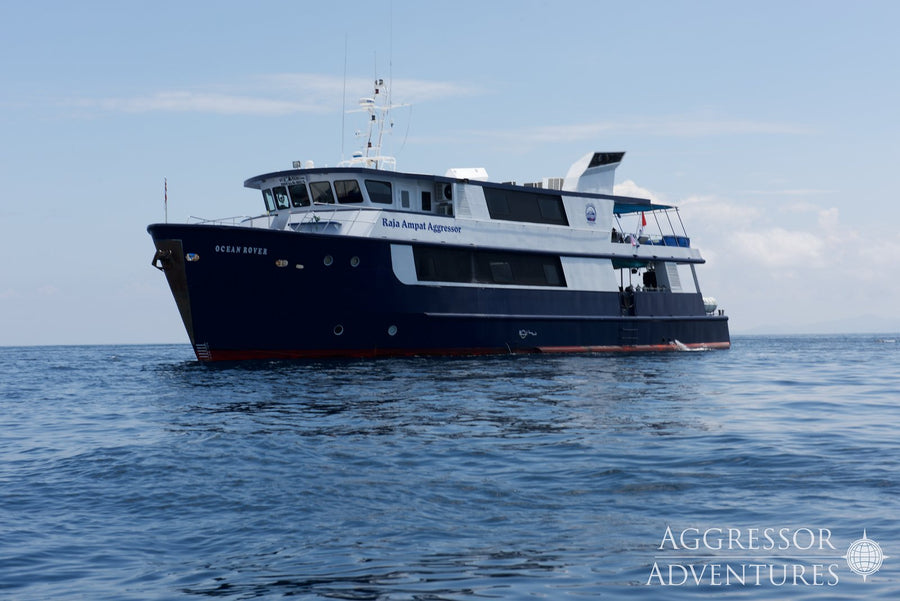
Liveaboard routes for this destination
Explore the routes that visit this region. Compare ships and itineraries, then open a route to see its sailing dates, cabins and the areas it covers.
Raja Ampat Aggressor
Derawan Islands (7 nights)
- Indicative duration
- 7 nights
- Embarkation
- Berau
- Disembarkation
- Berau
Raja Ampat Aggressor
Derawan/North Sulawesi/Lembeh (12 nights)
- Indicative duration
- 12 nights
- Embarkation
- Tanjung Batu
- Disembarkation
- Bitung
Raja Ampat Aggressor
Lembeh/North Sulawesi/Derawan (12 nights)
- Indicative duration
- 12 nights
- Embarkation
- Bitung
- Disembarkation
- Berau
No routes match this search. Try another vessel or clear your search.
When to dive Derawan Islands
April to October is a useful general planning window. Sea conditions influence island crossings and exposed points, while manta visits remain natural. Leave flexibility for the most distant excursions and enjoy the local reef options between them.
Planning window: Best March–October.
What the diving is like
Choose the islands and sites to suit the group’s experience.
Sangalaki Manta Sites
Sangalaki is the manta highlight of the region, with cleaning and feeding behaviour depending on plankton, season and conditions.
Kakaban Jellyfish Lake
A rare snorkeling and nature experience with harmless jellyfish in a fragile lake environment.
Derawan Turtles
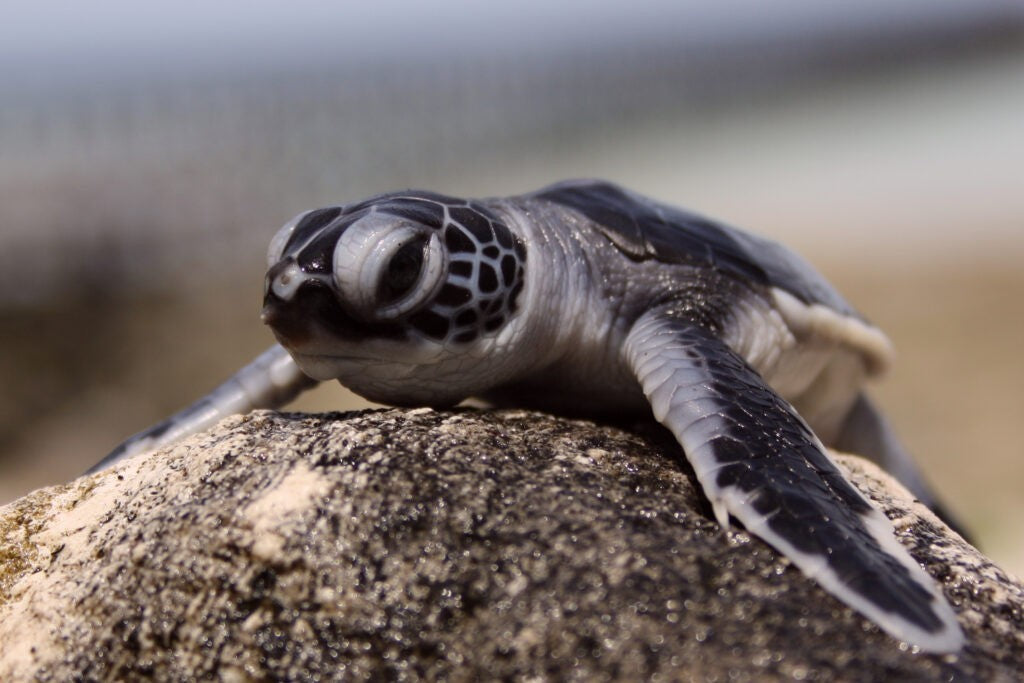
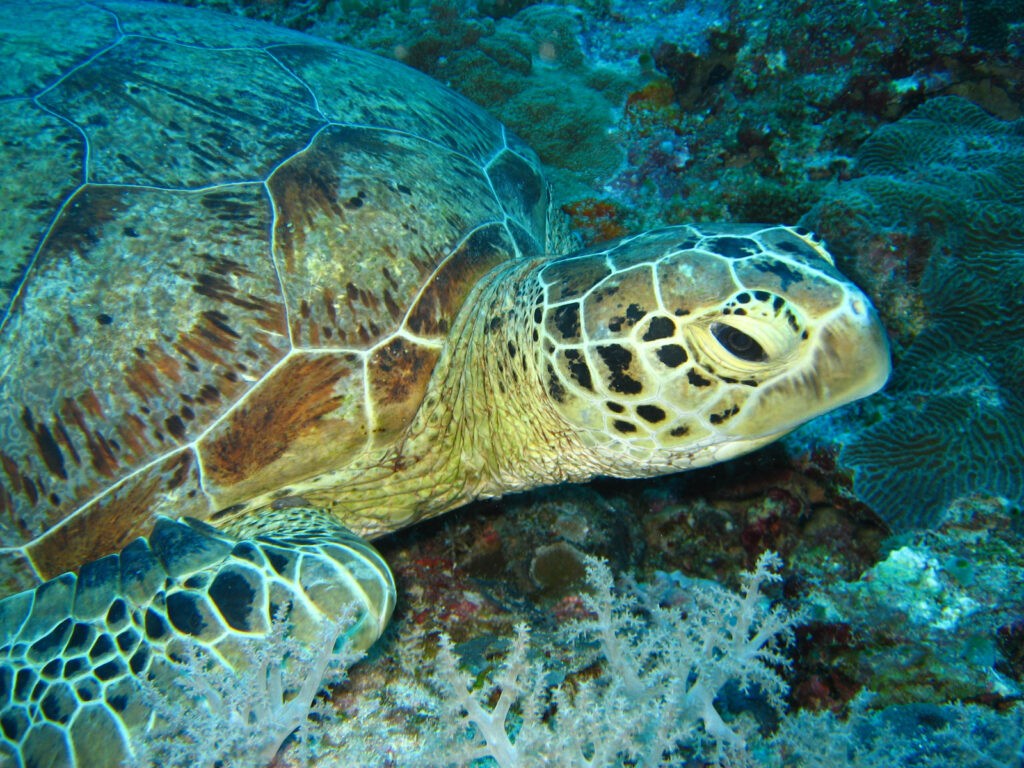
Derawan is strongly associated with turtles, reef areas and seagrass habitats where turtle encounters are a major attraction.
Maratua Channel Diving
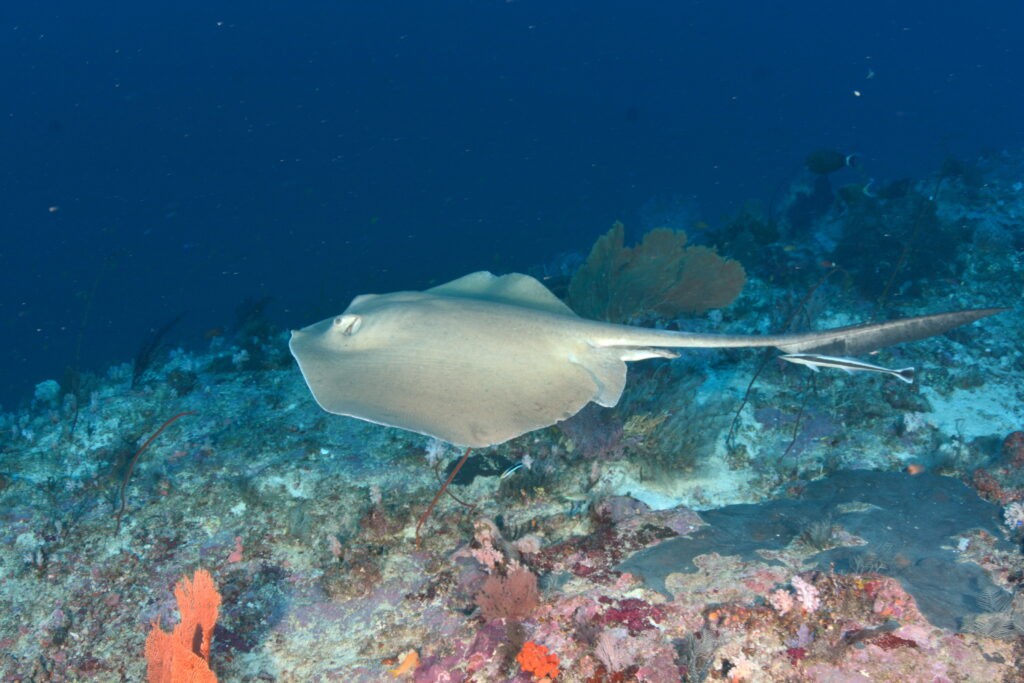
Maratua Channel / The Pass can offer current, barracuda, sharks, rays and schooling fish potential for experienced divers.
Remote Island Expedition Feeling
The destination feels remote and different, with longer transfers, island villages and a less mass-market Indonesia atmosphere.
Manta, Turtle & Island Photography
Wide-angle is useful for mantas, turtles, walls and island scenes; macro can be useful around jetties and rubble sites.
Reef, Wall & Boat Diving
The dive style includes reef, wall, manta sites, macro, remote island boat diving and selected advanced current sites.
Borneo & Kalimantan Extensions
The region can combine well with Borneo wildlife, Kalimantan extensions or stopovers through Singapore, Kuala Lumpur, Bali or Jakarta.
DIVE SITE GUIDE
Dive sites in Derawan, Maratua, Sangalaki & Kakaban
Explore the character of individual sites, from the setting and marine life to the diving conditions. Open a card for the full description; site access and the final profile depend on conditions and experience.
ORIENTATION MAP
Where the dive sites are
Use the map to understand how the key sites are spread around the destination. Pins are for trip-planning orientation only; entry points, moorings and the final dive plan are always confirmed by the local operator on the day.
Coordinates are planning references compiled from current dive-site sources. They are not navigation coordinates; entry points, moorings, tide windows and the final dive plan are always confirmed by the local operator on the day.
Channel · Wall · Current
Big Fish Country
Big Fish Country is Maratua’s signature current site, a channel through the atoll rim where fish stack up because the water is moving.
Explore this dive site
- Type
- Channel · Wall · Current
- Depth
- 10–26 m
- Experience
- Advanced
- Current
- Strong
Big Fish Country is Maratua’s signature current site, a channel through the atoll rim where fish stack up because the water is moving. Divers descend toward the channel edge, use the reef contour — and, where local procedures permit, a reef hook on non-living substrate — to hold position and watch the show.
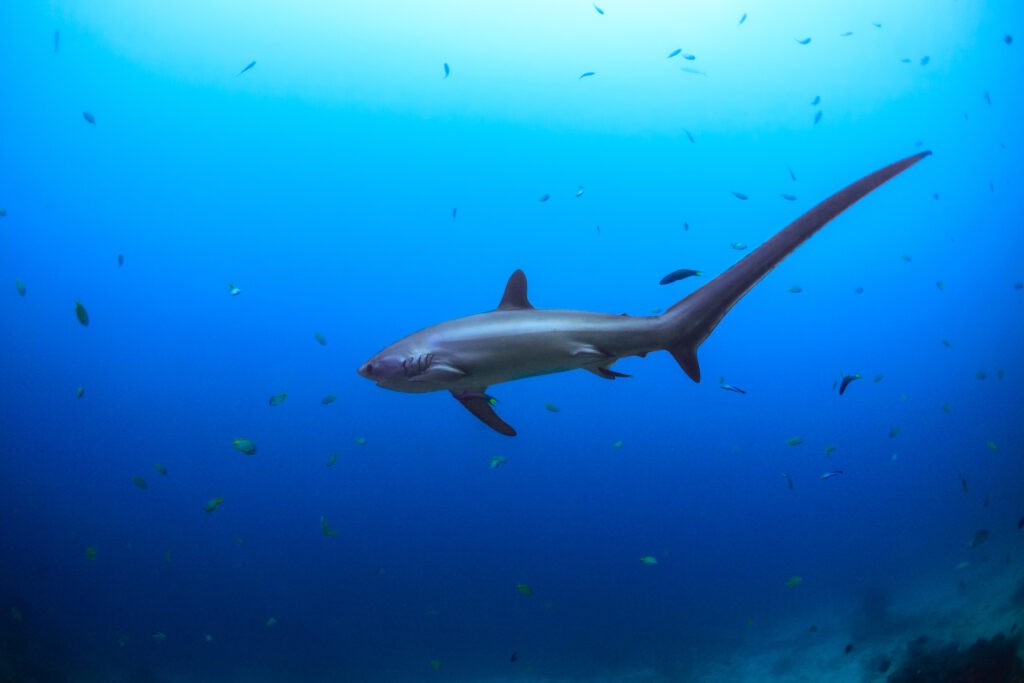
Barracuda, jacks and reef sharks are the headline animals, but the density of fish across the channel is what makes the dive feel large. The site is intentionally dived when current is present, so it is not a beginner profile. A controlled negative entry, close group spacing and a disciplined exit plan are part of the experience.
Look for: Barracuda tornado potential · Strong current · Channel wall · Advanced drift skills
Best for: Barracuda · Jacks · Reef sharks · Hook-in diving
Slope · Deep wall
Big Fish Wall
Big Fish Wall sits next to the better-known channel and gives experienced divers a more continuous wall profile.
Explore this dive site
- Type
- Slope · Deep wall
- Depth
- 15–40+ m
- Experience
- Advanced
- Current
- Moderate
Big Fish Wall sits next to the better-known channel and gives experienced divers a more continuous wall profile. A sandy coral slope falls toward a deeper vertical section, with the wall beginning much lower than most recreational sites in the region.
The dive is therefore about planning rather than chasing the bottom: a conservative maximum depth still gives views of the wall, schooling fish and the chance of larger pelagics moving through open water. Current is normally less intense than in the channel but remains part of the site. Many dives finish toward the shallower reef near Big Fish Country, creating a natural multilevel profile if gas and current allow.
Look for: Deep wall · Pelagic potential · Moderate current · Advanced depth planning
Best for: Wall · Pelagics · Deep profile
Reef · Feeding / cleaning area
Sangalaki Manta Point
Sangalaki’s east side is famous for manta activity across a cluster of sites known as Manta Avenue, Manta Parade and Manta Run.
Explore this dive site
- Type
- Reef · Feeding / cleaning area
- Depth
- 5–25 m
- Experience
- Beginner–Intermediate
- Current
- Mild–Moderate
Sangalaki’s east side is famous for manta activity across a cluster of sites known as Manta Avenue, Manta Parade and Manta Run. Reef mantas can feed close to the surface or visit cleaning areas over the reef, which makes the experience accessible without a deep profile.
The most important technique is restraint: divers who stay low, avoid chasing and leave the animals a clear route are more likely to see natural behavior. Manta numbers vary with plankton, moon, tide and season, and no encounter is guaranteed. Even on a quiet day, the shallow reef and sandy ridges remain worth diving, especially for photographers and divers who prefer a slower pace.
Look for: Manta feeding area · Shallow profile · Wildlife etiquette · Sangalaki
Best for: Reef mantas · Shallow wildlife observation
Wall · Current point
Barracuda Point, Kakaban
Kakaban’s Barracuda Point is a current-fed wall where the site comes alive because water is moving around the island.
Explore this dive site
- Type
- Wall · Current point
- Depth
- 10–25 m
- Experience
- Advanced
- Current
- Strong
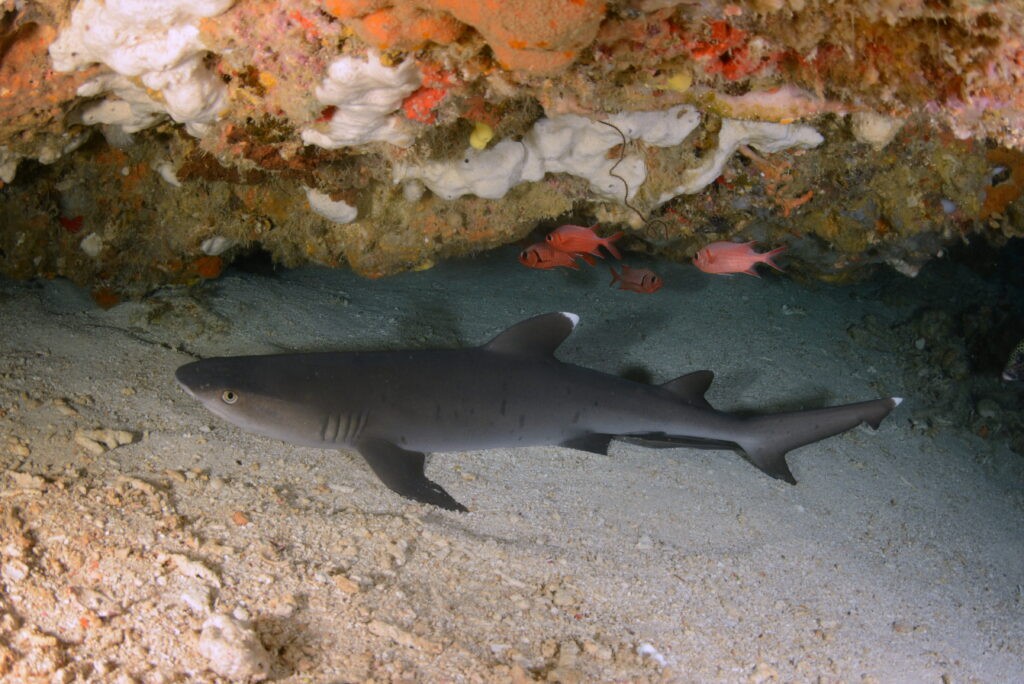
Kakaban’s Barracuda Point is a current-fed wall where the site comes alive because water is moving around the island. Schools of barracuda and jacks can gather at the point while grey and whitetip reef sharks, eagle rays and other pelagics patrol the edge.
Strong flow is normal enough that the dive is recommended for advanced divers and local operators may use a fixed line or reef-hook procedure where appropriate. The best strategy is not to chase the school but to establish a stable position, watch the current line and let the animals move around the group. Down-current potential means the briefing and exit plan matter as much as the wildlife.
Look for: Barracuda schools · Reef sharks · Eagle rays · Strong current
Best for: Barracuda · Sharks · Eagle rays · Current diving
Reef · Shallow coral
Turtle Traffic
Turtle Traffic is the relaxed side of Maratua.
Explore this dive site
- Type
- Reef · Shallow coral
- Depth
- 5–15 m
- Experience
- Beginner
- Current
- Mild–Moderate
Turtle Traffic is the relaxed side of Maratua. The reef stays shallow enough for Open Water divers and is known for green and hawksbill turtles resting beneath table coral or moving through the reef, particularly when the tide encourages them into the area.
The site is not about dramatic topography or depth; it is about spending a long dive watching turtle behavior and the reef life around them. Current is usually manageable but can still increase with tide. For photographers, the shallow water gives good natural light and generous bottom time, while newer divers get a memorable wildlife dive without the demands of Big Fish Country.
Look for: High turtle density · Shallow reef · Beginner friendly · Long bottom time
Best for: Green turtles · Hawksbills · Easy reef diving
Cave · Chimney · Deep overhead
Blue Light Cave, Kakaban
Blue Light Cave is not a normal recreational cave swim-through.
Explore this dive site
- Type
- Cave · Chimney · Deep overhead
- Depth
- 2–44 m
- Experience
- Expert / Cave-trained
- Current
- Overhead environment
Blue Light Cave is not a normal recreational cave swim-through. The entrance begins in a shallow crack, then descends through a narrow chimney to a large cavern around the low twenties before continuing toward a deep vertical exit near 44 metres. That combination creates all the classic overhead risks: no direct ascent, depth, silt-out potential and a long route through enclosed space.
The site should only be attempted by divers with appropriate cave or technical training, equipment and an operator experienced with the system. For properly qualified teams, the blue glow of the open sea seen from inside the cavern is the defining image. For everyone else, Kakaban’s outside walls are the appropriate alternative.
Look for: True overhead environment · Exit around 44 m · Cave training required · Expert site
Best for: Cave diving · Blue-light exit · Technical planning
House reef · Turtle reef · Macro
Derawan House Reef
Derawan House Reef provides the archipelago’s most convenient everyday dive.
Explore this dive site
- Type
- House reef · Turtle reef · Macro
- Depth
- 3–25 m
- Experience
- Beginner–Intermediate
- Current
- Usually mild
Derawan House Reef provides the archipelago’s most convenient everyday dive. Coral and sand around the island support turtles, reef fish and smaller subjects, and the easy access makes the site ideal for check dives, afternoon tanks and night diving.
The profile can stay shallow for a long time, so photographers can work individual subjects without the time pressure of a deep channel dive. Current is generally easier than around Maratua and Kakaban, although tide still matters around the island. The map pin should be treated as the broader house-reef area rather than a single permanent mooring, since different operators may use different sections around Derawan according to conditions.
Look for: Easy access · Turtles · Macro · Night-dive potential
Best for: Turtles · Macro · Flexible shore/jetty diving
Sand · Coral heads · Macro
Lighthouse Reef, Sangalaki
Lighthouse Reef is the macro counterpoint to Sangalaki’s manta dives.
Explore this dive site
- Type
- Sand · Coral heads · Macro
- Depth
- 5–25 m
- Experience
- Beginner–Intermediate
- Current
- Mild
Lighthouse Reef is the macro counterpoint to Sangalaki’s manta dives. Sandy bottom and coral heads create habitat for gobies, scorpionfish, nudibranchs, frogfish, ribbon eels and giant clams, while small wooden wrecks add structure and shelter.
The site rewards slow movement and a close look rather than distance covered, making it useful when divers want a quieter second dive after an open-water manta session. Conditions are generally less intimidating than the current-heavy Maratua and Kakaban sites, so mixed-experience groups can enjoy it. The exact mooring is operator-managed; the map shows the Sangalaki lighthouse reef area rather than a surveyed entry point.
Look for: Macro reef · Small wrecks · Frogfish potential · Gentler conditions
Best for: Frogfish · Gobies · Nudibranchs · Mandarin fish
Underwater photography
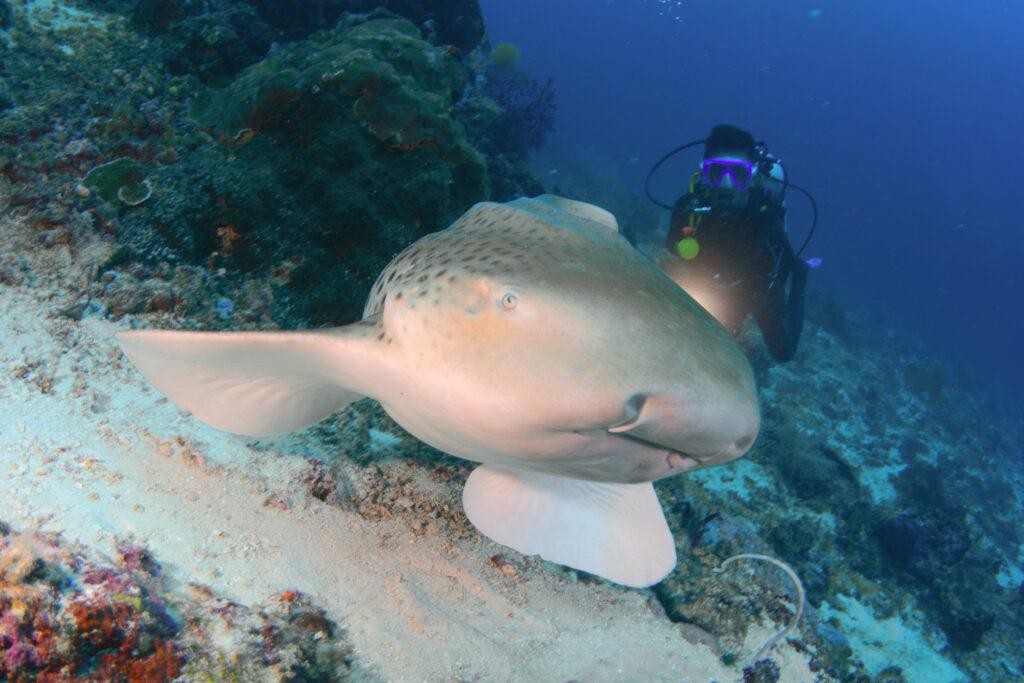
At Big Fish Country, barracuda, Jacks, Reef sharks, Hook-in diving give an idea of the photographic possibilities. Choose the camera setup for the planned sites, then leave time to observe the scene before making the image. Repeating a productive dive often creates better opportunities than constantly searching for a different location. For reef scenes, use the shape of the reef and the available light to give the image depth. A diver at a respectful distance can provide scale without crowding an animal.
Beyond diving: Derawan Islands above the surface
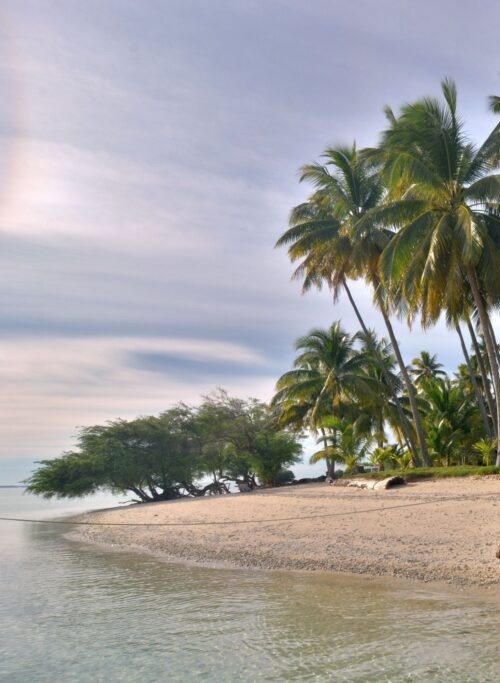
Island hopping is the natural way to experience this part of East Kalimantan. Beaches, villages and shallow marine habitats appeal to companions who enjoy remote places and time on the water.
Kakaban’s jellyfish lake is a sensitive ecosystem, and access conditions can change. Treat a visit as a managed nature activity, follow the local rules and avoid handling animals. Keep the wider holiday worthwhile through its reefs and island scenery instead of depending on one excursion being open.
Getting to Derawan Islands
Most international guests reach the region by flying via Jakarta, Singapore or Indonesian hubs to Berau or Tarakan, then continuing by road and boat according to the final itinerary.
Choose arrival and departure times around the onward transfer, especially when a boat crossing or a long road journey is involved. Leave space for a relaxed final day ashore and an appropriate interval between the last dive and flying.
Derawan Islands diving questions
What makes Derawan Islands worth a diving trip?
Maratua’s walls, Sangalaki’s manta areas and Kakaban’s enclosed lake give the Derawan islands strikingly different personalities. The pleasure is in moving between those habitats, with turtles and island life adding quieter moments along the way.
How should I plan my stay?
Choose the island base or liveaboard by the areas it reaches and the time spent in transit. Maratua, Sangalaki and Derawan are distinct locations, so day-boat distances matter. A stay of six to eight nights allows a varied programme without turning every day into a long transfer.
When is a useful time to visit?
April to October is a useful general planning window. Sea conditions influence island crossings and exposed points, while manta visits remain natural. Leave flexibility for the most distant excursions and enjoy the local reef options between them.
Is there enough for non-diving companions?
Island hopping is the natural way to experience this part of East Kalimantan. Beaches, villages and shallow marine habitats appeal to companions who enjoy remote places and time on the water.
A closer look at Derawan, Maratua, Sangalaki & Kakaban


Plan your Derawan Islands trip
Tell us the experiences you most want, your preferred dates and how you like to travel. We can bring the destination, accommodation and diving into one coherent itinerary.
Plan my trip