

Destination guide · Philippines
Camiguin Diving
Camiguin’s volcanic character continues underwater, from dark slopes to reefs around offshore islands. A diving day can be followed by waterfalls, springs or a view of the mountains, making the island unusually rewarding for a mixed holiday.
Camiguin at a glance
Camiguin’s volcanic character continues underwater, from dark slopes to reefs around offshore islands. A diving day can be followed by waterfalls, springs or a view of the mountains, making the island unusually rewarding for a mixed holiday.
Planning your Camiguin stay
Choose a coastal base that gives practical access to both local volcanic sites and boat trips to Mantigue or other offshore areas. Four to six nights allows diving and land exploration to share the holiday, rather than making the waterfalls an afterthought.

Balai sa Baibai & Coraya Divers Camiguin
Seven-room boutique beachfront resort in Mambajao with on-site Coraya Divers, small-group 1:4 guiding and flexible Camiguin reef, macro and Mantigue Island diving.

Scuba de Oro Camiguin
Independent Camiguin dive centre offering 2- and 3-dive day packages, a spacious 15 m dive boat, personalised dive support and access to Mantigue Island, volcanic reefs, walls and macro sites.
Liveaboard routes for this destination
Explore the routes that visit this region. Compare ships and itineraries, then open a route to see its sailing dates, cabins and the areas it covers.
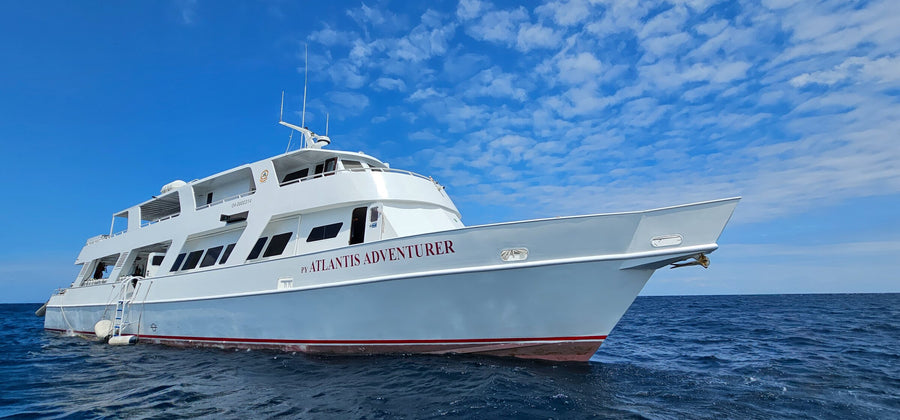
Atlantis Adventurer
Camiguin Safari
- Indicative duration
- 7 nights
- Embarkation
- Atlantis Dumaguete Resort, Dauin
- Disembarkation
- Atlantis Dumaguete Resort, Dauin
No routes match this search. Try another vessel or clear your search.
When to dive Camiguin
Diving is available across the year. Wind direction, rainfall and the chosen side of the island influence each day’s plan, so allow flexibility between sheltered coastal sites and offshore reefs. The variety is part of Camiguin’s strength.
Planning window: Diving through the year.
What the diving is like
Choose the islands and sites to suit the group’s experience.
Mantigue Island Reefs
Fringing reefs, coral slopes, turtles and schooling fish make Mantigue the island’s classic all-round diving and snorkeling day.
Burias Shoal
A submerged reef with slopes, wall sections and schooling fish, offering a stronger blue-water feel than many of Camiguin’s coastal sites.
Volcanic Underwater Landscapes
Old lava, rock formations, steep slopes and reef growth around the Old Volcano and Sunken Cemetery tell Camiguin’s geological story underwater.
Black Coral & Reef Gardens
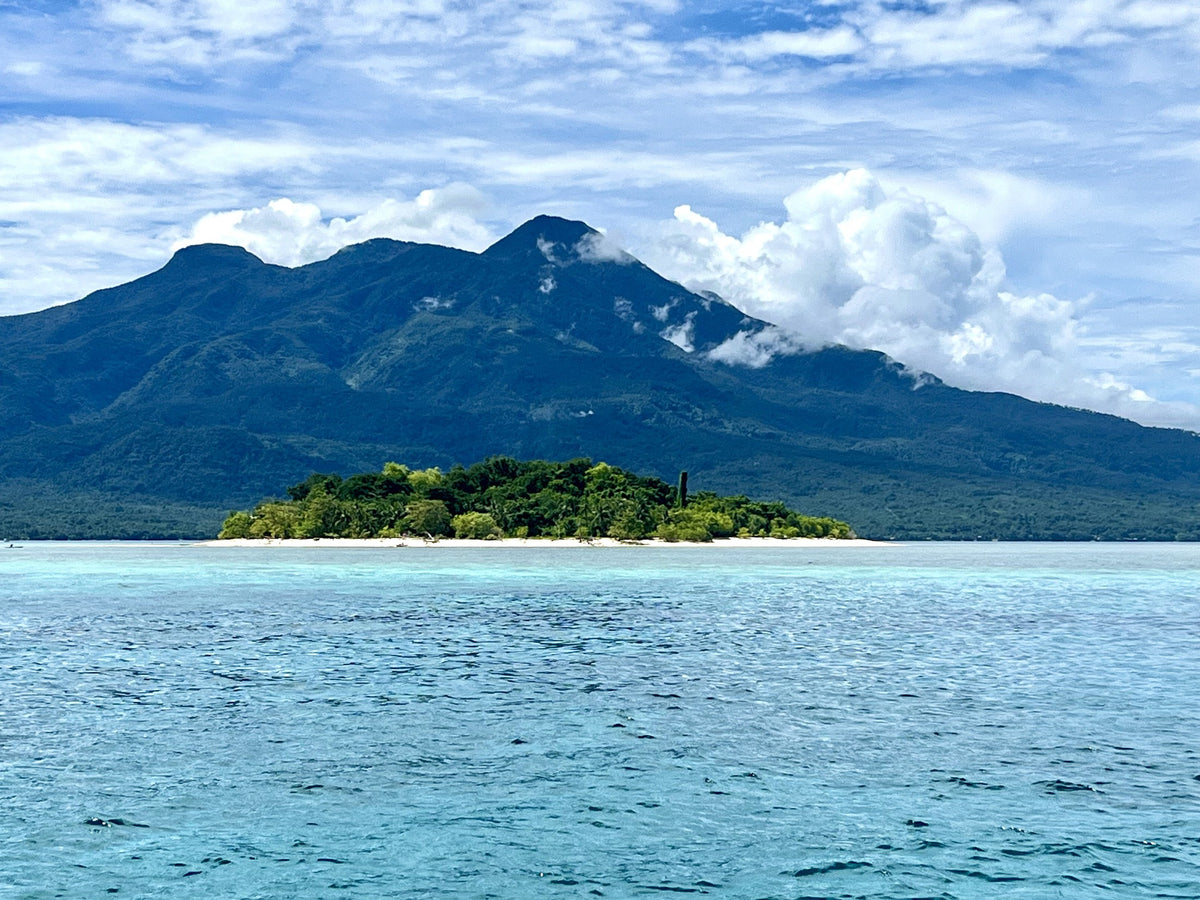
White Island and other sites combine coral gardens, black-coral habitat and reef fish with dramatic views of Camiguin above the surface.
Macro & Wide-Angle Photography
Turtles, schools and reef scenes reward wide-angle shooters, while nudibranchs, frogfish, scorpionfish, shrimp and other smaller subjects give macro photographers variety.
White Island & Mantigue Surface Time
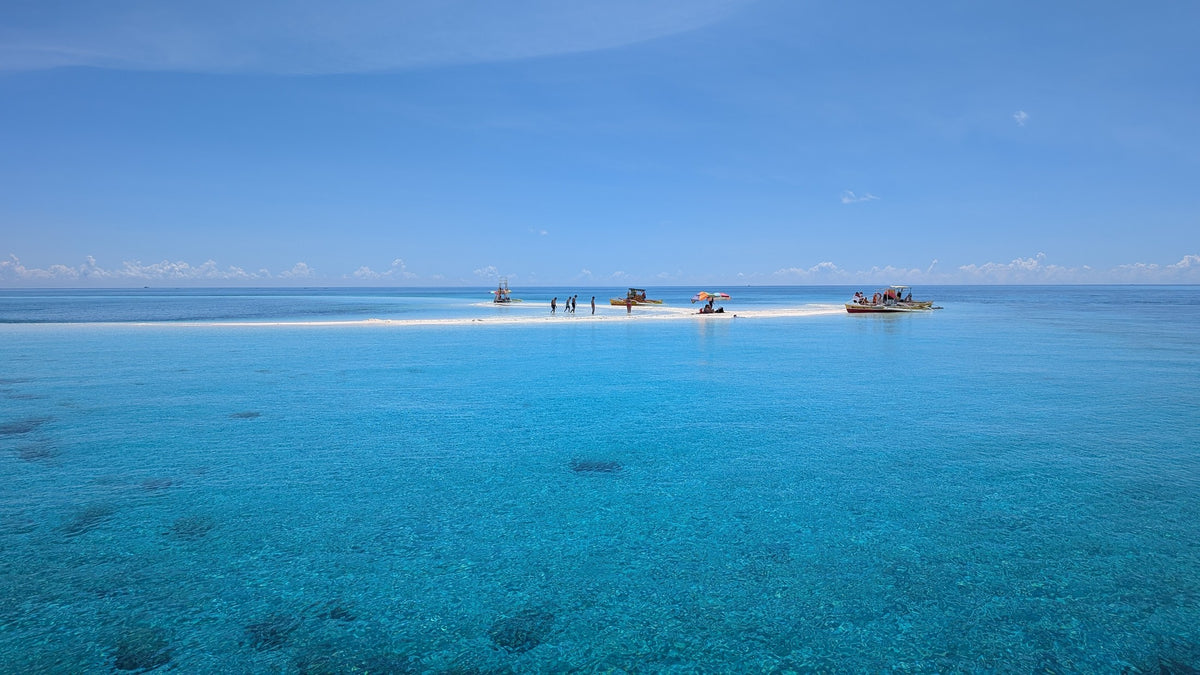
Camiguin’s sandbar and protected island park add strong surface intervals, snorkeling and photography opportunities for divers and non-divers alike.
Small-Group Diving
Camiguin suits individual divers, couples and small private parties who prefer flexible site selection and a quieter island rhythm.
Volcanoes, Springs & Waterfalls
Hibok-Hibok, waterfalls, hot and cold springs and heritage sites turn dive rest days into part of the expedition rather than simply time off the water.
DIVE SITE GUIDE
Dive sites in Camiguin
Explore the character of individual sites, from the setting and marine life to the diving conditions. Open a card for the full description; site access and the final profile depend on conditions and experience.
ORIENTATION MAP
Where the dive sites are
Use the map to understand how the key sites are spread around the destination. Pins are for trip-planning orientation only; entry points, moorings and the final dive plan are always confirmed by the local operator on the day.
Coordinates are planning references compiled from current dive-site sources. They are not navigation coordinates; entry points, moorings, tide windows and the final dive plan are always confirmed by the local operator on the day.
Reef · Wall · Offshore island
Mantigue Island
Mantigue Island is Camiguin’s best-known offshore reef and the natural choice for divers who want clear water and a more expansive reef than the nearshore volcanic sites.
Explore this dive site
- Type
- Reef · Wall · Offshore island
- Depth
- 5–35 m
- Experience
- Beginner–Intermediate
- Current
- Mild–Moderate
Mantigue Island is Camiguin’s best-known offshore reef and the natural choice for divers who want clear water and a more expansive reef than the nearshore volcanic sites. A shallow fringing reef leads into slope and wall terrain, with turtles, schooling fish and healthy coral giving the dive strong wide-angle appeal.
Depth can be adapted easily to certification, so mixed groups can stay on the upper reef while experienced divers work deeper sections. Current varies around the island and the boat normally selects the sheltered or productive side for the day. The shallow finish is especially good: after deeper scenery, divers can spend the final minutes among bright coral rather than hanging over featureless water.
Look for: Offshore island · Turtles · Coral wall/slope · Mixed-experience friendly
Best for: Turtles · Schooling fish · Coral reef · Wide angle
Wall · Offshore shoal
Jicdup Wall
Jicdup Wall sits on an offshore shoal where the reef drops dramatically into deep water.
Explore this dive site
- Type
- Wall · Offshore shoal
- Depth
- 8–40+ m
- Experience
- Advanced
- Current
- Moderate
Jicdup Wall sits on an offshore shoal where the reef drops dramatically into deep water. The vertical terrain gives the site a bigger, more oceanic feel than Camiguin’s protected coastal slopes, with coral and fans on the wall and room for schooling fish or passing pelagics in the blue.
Because the drop continues well beyond recreational limits, depth awareness is essential; the wall can make 30 metres feel deceptively shallow. The strongest dive is usually a controlled multilevel profile — deeper section first, then a gradual rise toward the reef top — rather than trying to follow the wall downward. It is best for experienced divers comfortable without a visible bottom reference.
Look for: Offshore wall · Deep drop-off · Wide angle · Advanced depth control
Best for: Deep wall · Wide angle · Pelagic potential
Slope · Soft coral · Current
Jicdup Black Forest
Jicdup Black Forest is a current-fed slope rather than a sheer wall, with soft coral and darker reef structure giving the site a distinctive look.
Explore this dive site
- Type
- Slope · Soft coral · Current
- Depth
- 5–25 m
- Experience
- Intermediate
- Current
- Moderate
Jicdup Black Forest is a current-fed slope rather than a sheer wall, with soft coral and darker reef structure giving the site a distinctive look. The moving water keeps fish active and turns the dive into a gentle drift when conditions are right, while coral heads and reef edges provide enough structure for photographers to work close to the bottom.
Stronger current can make the site more demanding, so the guide chooses entry and direction around tide. Compared with Jicdup Wall, the emphasis is less on depth and more on color and movement across the slope. It is particularly rewarding for wide-angle shooters who want soft coral and fish in the same frame.
Look for: Soft-coral slope · Drift dive · Current-fed reef · Wide angle
Best for: Soft coral · Drift · Reef fish · Photography
Coral garden · Reef
White Island Old Sanctuary
White Island Old Sanctuary is a shallow coral-garden dive where the attraction is time rather than depth.
Explore this dive site
- Type
- Coral garden · Reef
- Depth
- 5–16 m
- Experience
- Beginner
- Current
- Usually mild
White Island Old Sanctuary is a shallow coral-garden dive where the attraction is time rather than depth. Hard coral and reef fish fill a modest depth range, making it easy for newer divers to settle into the environment and for photographers to work with natural light.
Because most of the useful reef lies inside the first 15–16 metres, no-decompression time is rarely the limiting factor and the dive can be shaped around air consumption and interest instead. Current is usually manageable but still varies around the sandbar. It is a strong second or third dive, particularly after a deeper Jicdup profile, and a good reminder that Camiguin does not need dramatic walls to deliver healthy reef scenery.
Look for: Shallow coral garden · Beginner friendly · Natural light · Long bottom time
Best for: Shallow coral · Easy photography · Long bottom times
Slope · Coral · Macro + reef
White Island Black Forest
White Island Black Forest moves away from the sandbar’s shallow sanctuary into a deeper slope where coral patches, darker substrate and smaller subjects give the dive a more detailed character.
Explore this dive site
- Type
- Slope · Coral · Macro + reef
- Depth
- 8–30 m
- Experience
- Intermediate
- Current
- Mild–Moderate
White Island Black Forest moves away from the sandbar’s shallow sanctuary into a deeper slope where coral patches, darker substrate and smaller subjects give the dive a more detailed character. Divers can search the reef for nudibranchs and other macro life while still enjoying a broader coral landscape.
The profile is simple to control, with the slope providing a visible reference throughout the dive, but the deeper end can exceed the depth needed for the best subjects. A deliberate turn depth keeps the group from drifting down simply because the bottom continues. It is well suited to photographers who want a mixed reef-and-macro dive rather than a single big-animal target.
Look for: Reef slope · Macro potential · Visible bottom reference · Photography
Best for: Coral slope · Macro · Reef fish
Volcanic wall · Deep reef
Old Volcano
Old Volcano is Camiguin’s geology underwater: a volcanic cliff continues below the surface as a steep wall, giving the dive a dramatic vertical shape and dark-rock backdrop.
Explore this dive site
- Type
- Volcanic wall · Deep reef
- Depth
- 5–40+ m
- Experience
- Advanced
- Current
- Mild–Moderate
Old Volcano is Camiguin’s geology underwater: a volcanic cliff continues below the surface as a steep wall, giving the dive a dramatic vertical shape and dark-rock backdrop. Coral and reef life occupy ledges and sections of the face, while the open water beside the wall can bring larger fish through the scene.
The drop extends far beyond recreational limits, so the wall demands disciplined depth control even when current is mild. Divers do not need to go deep to appreciate the volcanic structure; the shallower wall offers better light and longer bottom time. For wide-angle photographers, the contrast between black volcanic rock, coral and blue water is the site’s strongest visual feature.
Look for: Volcanic wall · Deep drop-off · Wide-angle scenery · Advanced profile
Best for: Volcanic topography · Wall · Wide angle
Slope · Soft coral · Reef
Old Volcano Bay
Old Volcano Bay is the softer counterpart to the nearby wall.
Explore this dive site
- Type
- Slope · Soft coral · Reef
- Depth
- 2–30 m
- Experience
- Beginner–Intermediate
- Current
- Usually mild
Old Volcano Bay is the softer counterpart to the nearby wall. A gentle slope begins almost at the surface and runs through soft coral and reef habitat toward deeper water, giving divers a wide choice of depth without the psychological pull of a vertical drop.
The site is ideal for a slow photographic dive: wide-angle shooters can work soft coral and reef scenes while macro divers search the slope for smaller animals. Because useful habitat starts very shallow, the final part of the dive remains productive and there is no need for a featureless safety stop. On a calm day it suits newer divers as well as experienced photographers looking for an unhurried profile.
Look for: Gentle slope · Soft coral · Beginner accessible · Productive shallows
Best for: Soft coral · Relaxed reef · Photography
Historical site · Shallow reef
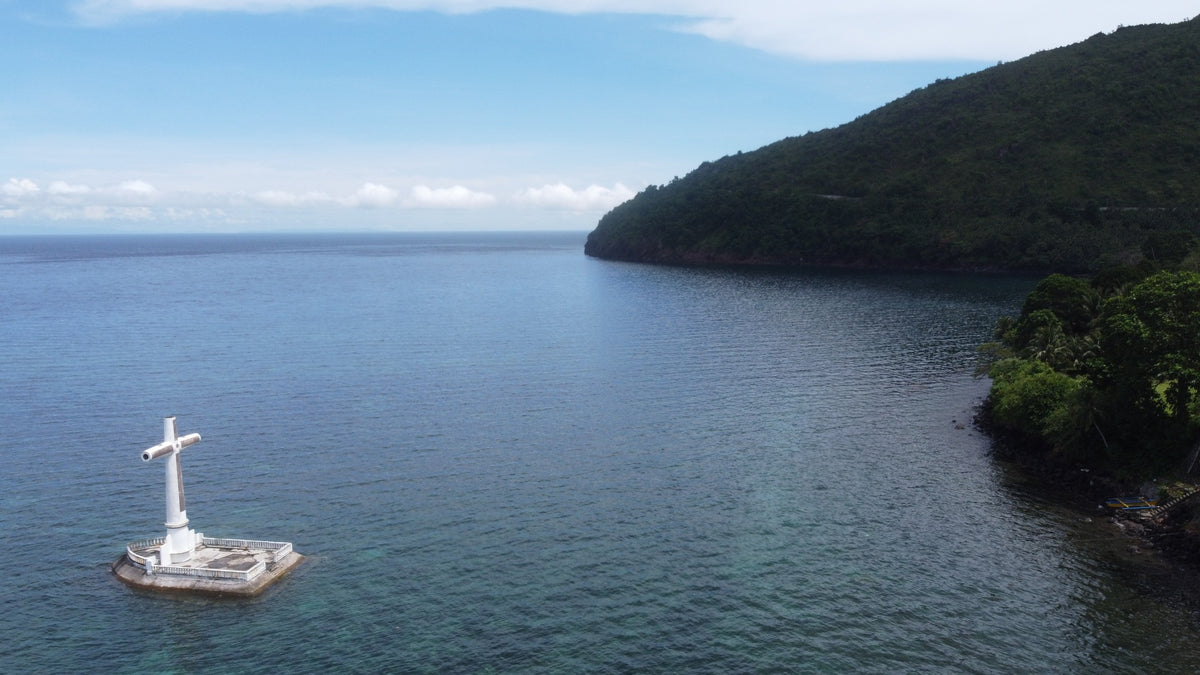
Sunken Cemetery
The Sunken Cemetery is one of the rare dive sites where Camiguin’s human and volcanic history is part of the underwater experience.
Explore this dive site
- Type
- Historical site · Shallow reef
- Depth
- 3–15 m
- Experience
- Beginner
- Current
- Usually mild
The Sunken Cemetery is one of the rare dive sites where Camiguin’s human and volcanic history is part of the underwater experience. Remains and submerged structures from the old coastal cemetery have become reef habitat, with coral and fish growing around features that connect the dive directly to the island’s eruptive past.
The site is shallow, so it works well for newer divers, long photo sessions and an easy final dive of the day. Visibility and marine growth vary, and the historical remains should be observed without contact or disturbance. Rather than a deep or adrenaline-heavy dive, the appeal is atmosphere: a quiet reef where cultural history and marine succession occupy the same small area.
Look for: Historical site · Shallow reef · Beginner friendly · Unique Camiguin story
Best for: History · Shallow coral · Photography
Underwater photography
At Mantigue Island, turtles, Schooling fish, Coral reef, Wide angle give an idea of the photographic possibilities. Choose the camera setup for the planned sites, then leave time to observe the scene before making the image. Repeating a productive dive often creates better opportunities than constantly searching for a different location. On close-focus dives, stay clear of the bottom and allow subjects to behave naturally. A clean background and patient framing can be more effective than moving closer.
Beyond diving: Camiguin above the surface
Camiguin offers a full island programme: Katibawasan and Tuasan Falls, hot and cold springs, Old Church Ruins and the Sunken Cemetery viewpoint all add a different perspective on its volcanic landscape. White Island and Mantigue bring beaches and sea views into the mix.
A guided Mt. Hibok-Hibok hike is a more demanding undertaking and deserves its own day. Keep strenuous or high-altitude activities separate from recent diving and build the sequence around appropriate surface intervals. Easier touring works well for companions who prefer a gentler pace.
Getting to Camiguin
Camiguin can be reached by air or by a road-and-ferry journey through northern Mindanao. Balingoan is the mainland ferry gateway; the better option depends on your starting point, arrival time and onward plans.
Give the island connection its own space in the itinerary. A flight, a long road journey and a ferry crossing create different arrival days, especially with dive and camera luggage. Plan the island tour and diving after arrival rather than relying on an immediate first dive.
Camiguin diving questions
What makes Camiguin worth a diving trip?
Camiguin’s volcanic character continues underwater, from dark slopes to reefs around offshore islands. A diving day can be followed by waterfalls, springs or a view of the mountains, making the island unusually rewarding for a mixed holiday.
How should I plan my stay?
Choose a coastal base that gives practical access to both local volcanic sites and boat trips to Mantigue or other offshore areas. Four to six nights allows diving and land exploration to share the holiday, rather than making the waterfalls an afterthought.
When is a useful time to visit?
Diving is available across the year. Wind direction, rainfall and the chosen side of the island influence each day’s plan, so allow flexibility between sheltered coastal sites and offshore reefs. The variety is part of Camiguin’s strength.
Is there enough for non-diving companions?
Camiguin offers a full island programme: Katibawasan and Tuasan Falls, hot and cold springs, Old Church Ruins and the Sunken Cemetery viewpoint all add a different perspective on its volcanic landscape. White Island and Mantigue bring beaches and sea views into the mix.
A closer look at Camiguin


Plan your Camiguin trip
Tell us the experiences you most want, your preferred dates and how you like to travel. We can bring the destination, accommodation and diving into one coherent itinerary.
Plan my trip