

Destination guide · Indonesia
Luwuk & Banggai Diving
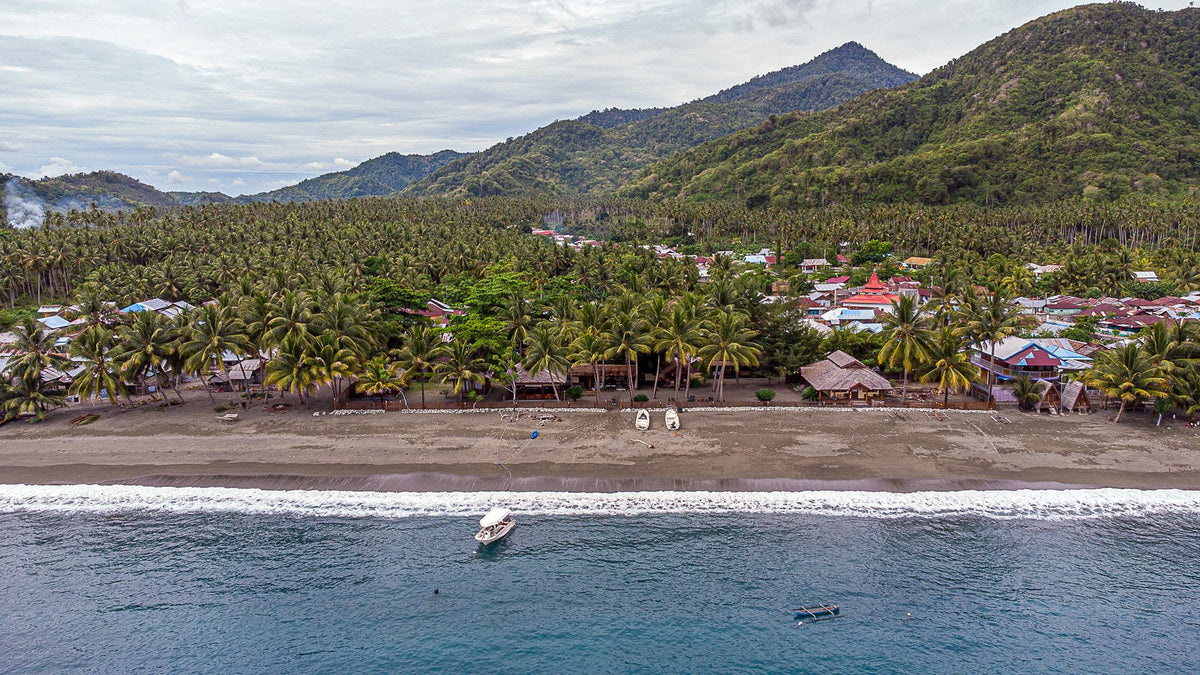
The coast near Pulau Dua and the Balantak Peninsula offers a quieter Sulawesi journey. Rocky ridges, coral-covered boulders and macro slopes give divers several ways to explore a region where the surrounding landscape remains part of everyday life.
Luwuk & Banggai at a glance
This is a deliberately low-volume diving region. The main land-based gateway is Luwuk, followed by an overland transfer to the eastern Banggai Regency coast. Around Pulau Dua and the Balantak Peninsula, diving combines exposed rocky ridges, coral-covered boulders and sandy muck slopes in an area that remains far quieter than Indonesia’s best-known dive hubs.
The local programme is especially attractive to experienced recreational divers and underwater photographers who value variety over a single headline encounter: scenic wide-angle reefs in the morning, macro-rich slopes and house-reef diving, plus the possibility of schooling trevallies, barracuda, tuna, reef sharks and rays. Wildlife is wild and sightings are never guaranteed.
Planning your Luwuk & Banggai stay
Use a small coastal lodge as the base for reefs, ridges and macro sites around Pulau Dua. Six to eight nights gives time for repeated dives and local nature activities. Small groups and an interest in a quieter region are a better match here than a busy resort-town holiday.

Tompotika Dive Lodge
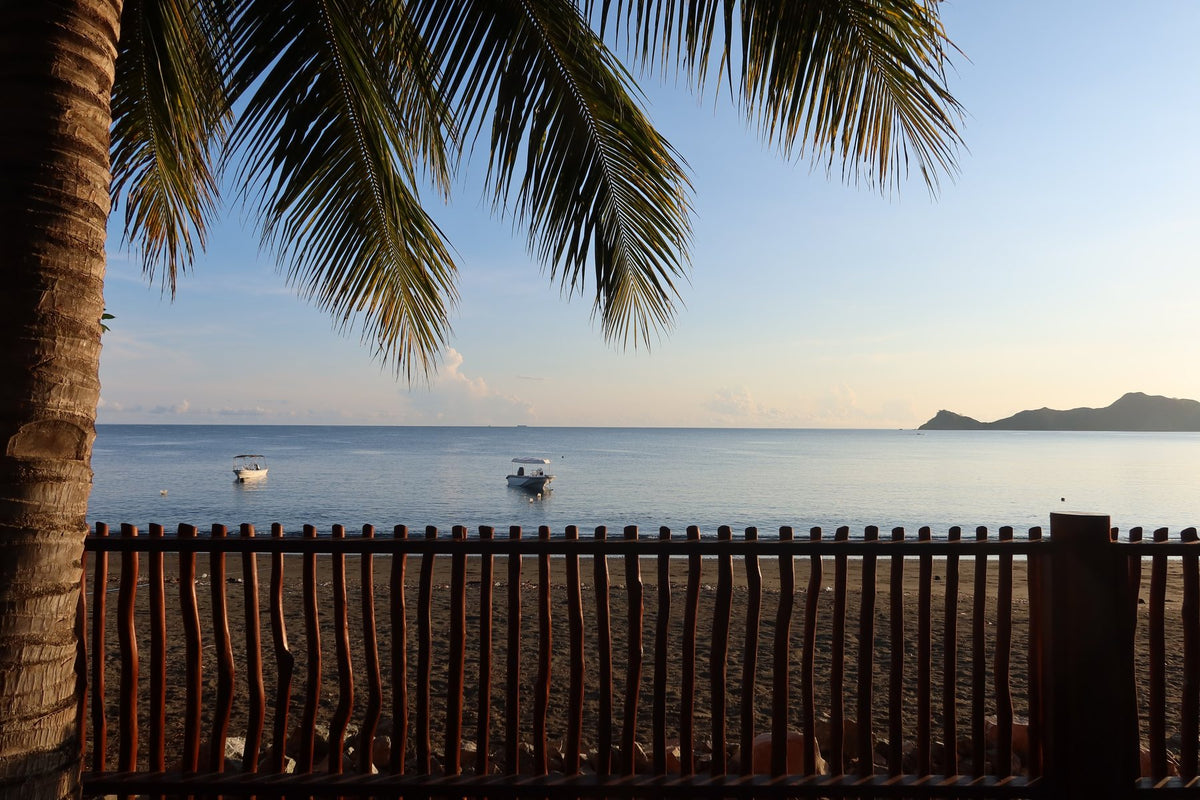
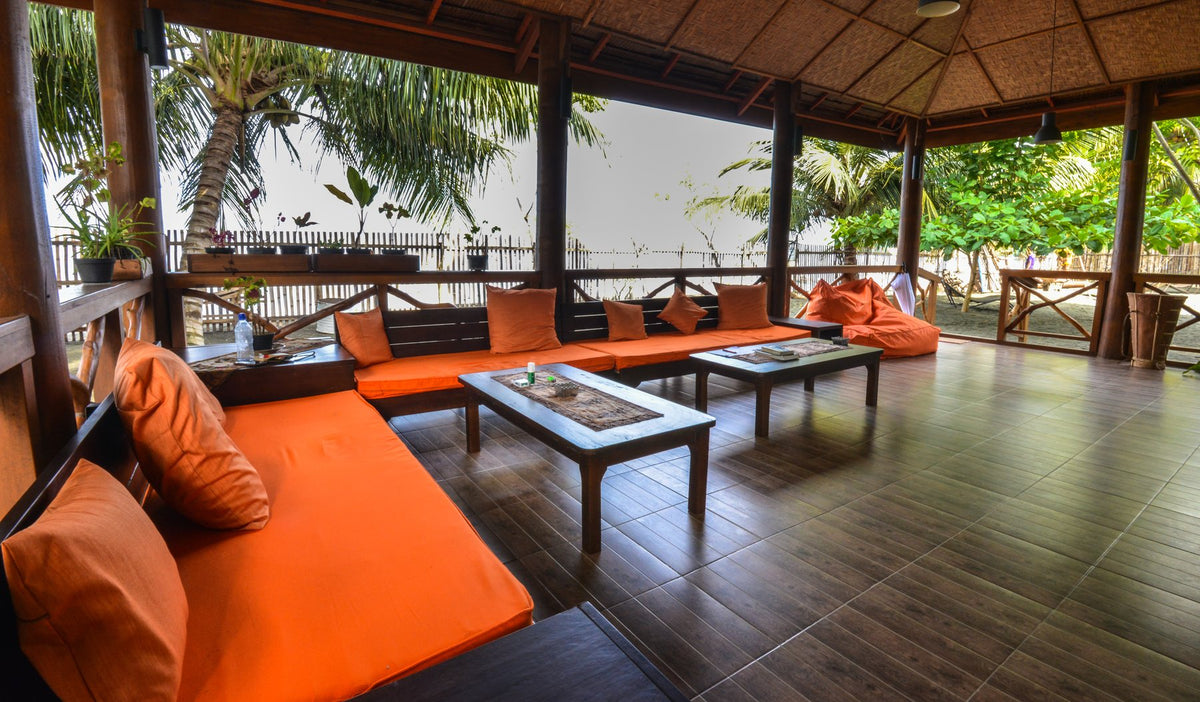
Remote five-bungalow dive lodge on Central Sulawesi’s east coast, with 30+ uncrowded dive sites, small 1:4 guide groups, full-board packages, unlimited unguided house-reef diving and included Luwuk airport transfers.
When to dive Luwuk & Banggai
The current local guidance identifies roughly October–April for often better visibility, while May–October is generally drier with a southeast breeze. Those are different considerations, so select dates according to the experience you value rather than assuming the driest period is always the clearest underwater.
Planning window: Local conditions vary by area.
What the diving is like
Choose the islands and sites to suit the group’s experience.
The character of the diving
The coast near Pulau Dua and the Balantak Peninsula offers a quieter Sulawesi journey. Rocky ridges, coral-covered boulders and macro slopes give divers several ways to explore a region where the surrounding landscape remains part of everyday life.
DIVE SITE GUIDE
Dive sites in Luwuk & Banggai
Explore the character of individual sites, from the setting and marine life to the diving conditions. Open a card for the full description; site access and the final profile depend on conditions and experience.
ORIENTATION MAP
Where the dive sites are
Use the map to understand how the key sites are spread around the destination. Pins are for trip-planning orientation only; entry points, moorings and the final dive plan are always confirmed by the local operator on the day.
Coordinates are orientation references, not navigation coordinates. 'verified' means a published site coordinate; 'operator' means a clearly labelled island, locality or dive-area anchor used where the exact mooring/drop is not publicly verified. Entry points, currents and the final dive plan are always confirmed by the local operator on the day.
Rocky reef · Sharks · Soft coral
Alibaba
Alibaba is one of the named Pulau Dua sites repeatedly cited by local and liveaboard operators.
Explore this dive site
- Type
- Rocky reef · Sharks · Soft coral
- Depth
- 8–30 m
- Experience
- Intermediate–Advanced
- Current
- Moderate
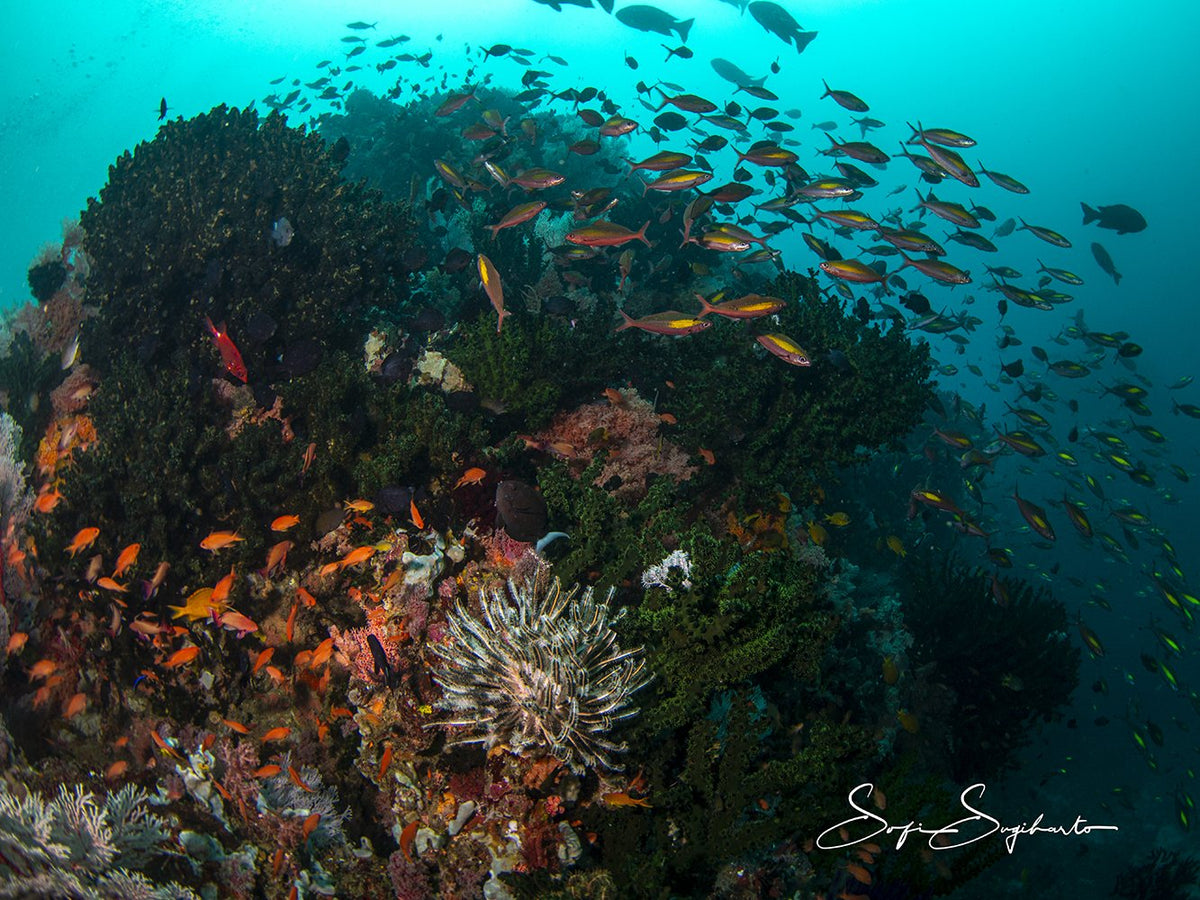
Alibaba is one of the named Pulau Dua sites repeatedly cited by local and liveaboard operators. The reef combines rocky structure, healthy coral and strong fish life, with local reports also associating the site with whitetip reef sharks.
Because the Pulau Dua reefs sit in moving water, the same site can feel relaxed on one tide and more energetic on another. A mid-depth profile keeps the group close to the reef while preserving a long shallow finish. The exact site GPS is not public, so the map uses Pulau Dua itself as an operator-area anchor rather than an invented pin.
Look for: Pulau Dua signature · Reef sharks possible · Healthy coral · Current-aware profile
Best for: Whitetip reef sharks · Coral · Fish life
Rock pinnacle · Wreck remains · Reef
Ondoliang Rock
Ondoliang Rock is one of the better-known Pulau Dua names and is described locally as a favourite because coral scenery is combined with historical wreck remains.
Explore this dive site
- Type
- Rock pinnacle · Wreck remains · Reef
- Depth
- 8–30 m
- Experience
- Intermediate–Advanced
- Current
- Moderate
Ondoliang Rock is one of the better-known Pulau Dua names and is described locally as a favourite because coral scenery is combined with historical wreck remains. The rock gives the dive a clear structural reference, while reef fish and coral keep the exterior interesting even if the wreck material is not the focus.
Conditions should determine how much of the exposed side is explored. Any metal or historical objects should be left in place and penetration avoided unless a local operator specifically confirms a safe, trained route. The coordinate is the Pulau Dua area anchor because no dependable public site-level GPS has been published.
Look for: Rock topography · Wreck remains · Coral scenery · Operator-guided route
Best for: Rock topography · Historical wreckage · Coral
Ridges · Soft coral · Pelagic
Batu Gong
Batu Gong is a higher-energy Pulau Dua dive built around two large underwater ridges.
Explore this dive site
- Type
- Ridges · Soft coral · Pelagic
- Depth
- 8–30 m
- Experience
- Advanced
- Current
- Moderate–Strong
Batu Gong is a higher-energy Pulau Dua dive built around two large underwater ridges. Black coral, colourful soft coral and dense fish life cover the structure, while whitetip reef sharks, eagle rays and occasional mantas or grey reef sharks are reported possibilities.
The exposed ridges can receive anything from light to strong flow depending on moon and tide, so experience with drift-style diving is useful. The best route works with the current and uses the ridge for shelter instead of fighting open water. Its map pin is an area anchor at Pulau Dua because the actual entry shifts with conditions.
Look for: Twin ridges · Black coral · Rays & sharks possible · Strong current possible
Best for: Black coral · Eagle rays · Reef sharks · Mantas possible
Reef ridge · Soft coral · Schooling fish
Solan Reef
Solan Reef is a fish-heavy Pulau Dua reef used on liveaboard itineraries through Central Sulawesi.
Explore this dive site
- Type
- Reef ridge · Soft coral · Schooling fish
- Depth
- 5–30 m
- Experience
- Intermediate–Advanced
- Current
- Moderate
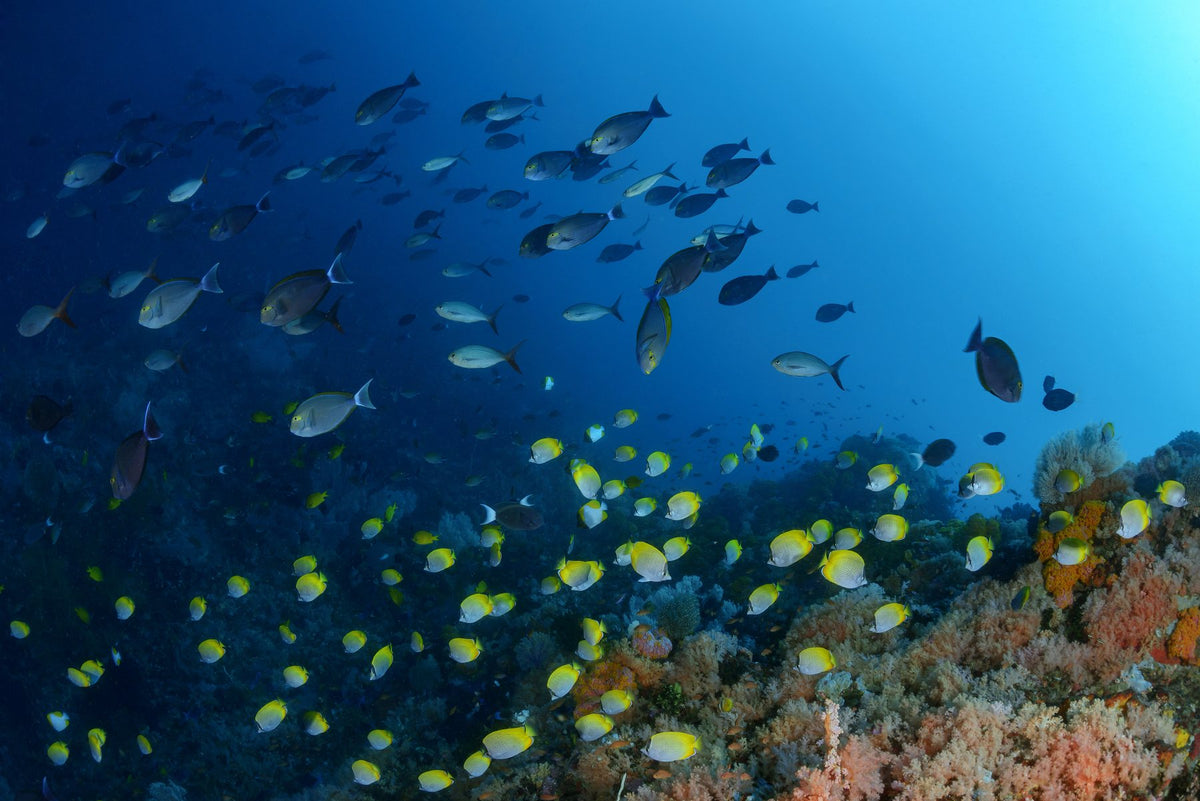
Solan Reef is a fish-heavy Pulau Dua reef used on liveaboard itineraries through Central Sulawesi. The underwater ridges and coral-covered rock support dense schooling fish, and diver reports also mention shark encounters around the site.
A moderate current helps feed the reef, but the guide can keep the group in protected terrain when flow increases. The dive is strongest as a wide-angle reef profile rather than a deep excursion. Because public sources name the site but do not publish a surveyed GPS, the map uses the Pulau Dua area anchor.
Look for: Schooling fish · Soft coral · Reef ridge · Sharks possible
Best for: Schooling fish · Soft coral · Sharks possible
Rock · Coral reef
Nemo Rock (Batu Mandi)
Nemo Rock, also referred to locally as Batu Mandi, is one of the regularly listed recreational sites around Pulau Dua.
Explore this dive site
- Type
- Rock · Coral reef
- Depth
- 5–25 m
- Experience
- Beginner–Intermediate
- Current
- Mild–Moderate
Nemo Rock, also referred to locally as Batu Mandi, is one of the regularly listed recreational sites around Pulau Dua. It is a reef-and-rock dive rather than a specialist wreck or pelagic site, making it useful for mixed-experience groups and photographers.
Clear water and colourful coral are the main reasons to include it in a programme. Current can still move around the island, so the guide selects the protected side when necessary. The exact dive-site position is not published, so the map pin marks Pulau Dua as an orientation reference only.
Look for: Rock reef · Colourful coral · Mixed levels · Photography
Best for: Coral gardens · Reef fish · Photography
Shallow reef · Coral garden
Shallow Paradise
Shallow Paradise is one of the named Pulau Dua sites in local destination lists and its role in a programme is exactly what the name suggests: a relaxed shallow reef.
Explore this dive site
- Type
- Shallow reef · Coral garden
- Depth
- 3–15 m
- Experience
- Beginner
- Current
- Mild
Shallow Paradise is one of the named Pulau Dua sites in local destination lists and its role in a programme is exactly what the name suggests: a relaxed shallow reef. The upper coral zone gives long bottom time, strong natural light and a comfortable profile after deeper current dives.
It is appropriate for newer divers when sea conditions are calm and also works well for photographers who want to stay in the colour-rich shallows. The site should be dived slowly to protect fragile coral and avoid unnecessary fin contact. With no public GPS, the coordinate is the Pulau Dua area anchor.
Look for: Shallow coral · Beginner friendly · Long bottom time · Natural-light photography
Best for: Shallow coral · Natural light · Easy photography
Boulders · Reef · Macro + wide angle
Batu Tetek
Batu Tetek is another of the established names around Pulau Dua, adding boulder terrain to the destination’s mix of ridges and coral slopes.
Explore this dive site
- Type
- Boulders · Reef · Macro + wide angle
- Depth
- 5–25 m
- Experience
- Intermediate
- Current
- Mild–Moderate
Batu Tetek is another of the established names around Pulau Dua, adding boulder terrain to the destination’s mix of ridges and coral slopes. The broken structure creates both wide-angle shapes and small protected niches where macro life can hide.
The site is most productive when divers slow down and search the rock rather than trying to cover a large distance. A flexible 5–25 metre profile keeps it suitable for standard recreational diving while leaving room to adapt to current. The map point is an operator-area marker at Pulau Dua because a reliable public mooring coordinate is unavailable.
Look for: Boulder terrain · Macro + wide angle · Flexible depth · Reef fish
Best for: Boulders · Coral · Macro subjects · Reef fish
Muck · Black sand · Macro
Tompotika House Reef
Tompotika’s house reef provides the macro counterpoint to Pulau Dua’s offshore ridges.
Explore this dive site
- Type
- Muck · Black sand · Macro
- Depth
- 3–20 m
- Experience
- Beginner–Intermediate
- Current
- Mild
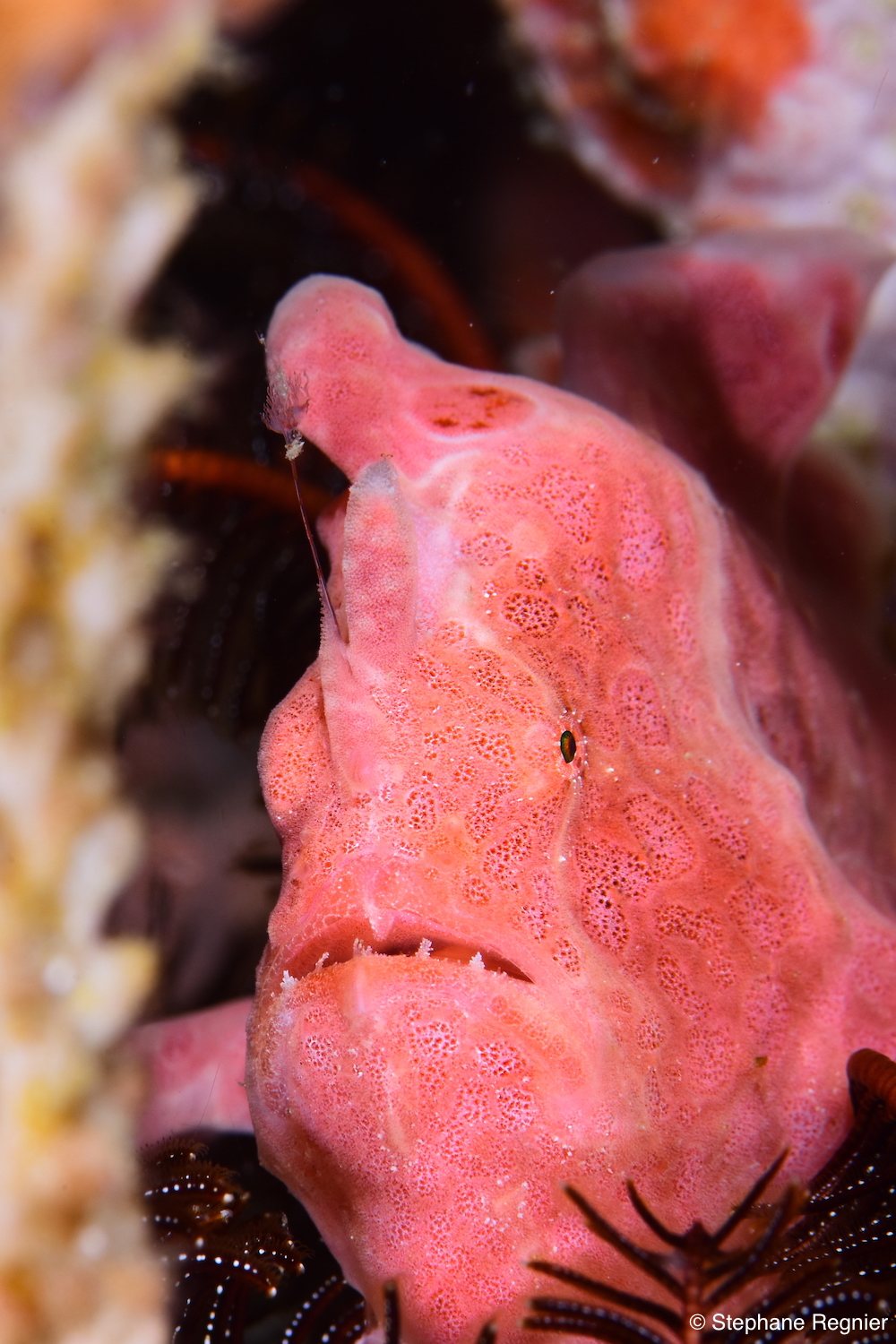
Tompotika’s house reef provides the macro counterpoint to Pulau Dua’s offshore ridges. Dark volcanic sand and small habitat patches are used for slow critter hunting, with frogfish, ghost pipefish, blue-ring octopus and crustaceans among the animals reported from the area.
The shallow profile and mild water movement make it suitable for long dives and night sessions, provided buoyancy is good enough to avoid stirring the bottom. It is a site where distance covered means very little; the guide’s ability to find small animals is the real value. The map uses the Balantak coast as an operator-area anchor because the lodge’s exact house-reef entry is not publicly mapped.
Look for: Black-sand macro · Night diving · Frogfish & pipefish · Shallow profile
Best for: Frogfish · Pipefish · Blue-ring octopus possible · Night diving
Underwater photography
At Alibaba, whitetip reef sharks, Coral, Fish life give an idea of the photographic possibilities. Choose the camera setup for the planned sites, then leave time to observe the scene before making the image. Repeating a productive dive often creates better opportunities than constantly searching for a different location. On close-focus dives, stay clear of the bottom and allow subjects to behave naturally. A clean background and patient framing can be more effective than moving closer.
Beyond diving: Luwuk & Banggai above the surface
The local nature programme can include a Maleo sanctuary visit, plantation landscapes, kayaking, cycling and local cooking. Sunset outings for flying foxes add another reason to spend time above the water.
Mount Tompotika is a more demanding option and should be planned as a separate activity with suitable timing around diving. This is mainland Banggai Regency near Luwuk and Balantak, rather than an assumption that the resort sits in the offshore Banggai Islands.
Getting to Luwuk & Banggai
Luwuk is the practical gateway for this part of Central Sulawesi. The established mainland dive base lies on the Balantak Peninsula near Pulau Dua in Banggai Regency, reached by a substantial road transfer from the airport.
Banggai Regency on the mainland and the offshore Banggai Islands are different travel propositions. Choose the actual accommodation and dive area first, then arrange the domestic connection and road journey to match it.
Luwuk & Banggai diving questions
What makes Luwuk & Banggai worth a diving trip?
The coast near Pulau Dua and the Balantak Peninsula offers a quieter Sulawesi journey. Rocky ridges, coral-covered boulders and macro slopes give divers several ways to explore a region where the surrounding landscape remains part of everyday life.
How should I plan my stay?
Use a small coastal lodge as the base for reefs, ridges and macro sites around Pulau Dua. Six to eight nights gives time for repeated dives and local nature activities. Small groups and an interest in a quieter region are a better match here than a busy resort-town holiday.
When is a useful time to visit?
The current local guidance identifies roughly October–April for often better visibility, while May–October is generally drier with a southeast breeze. Those are different considerations, so select dates according to the experience you value rather than assuming the driest period is always the clearest underwater.
Is there enough for non-diving companions?
The local nature programme can include a Maleo sanctuary visit, plantation landscapes, kayaking, cycling and local cooking. Sunset outings for flying foxes add another reason to spend time above the water.
A closer look at Luwuk & Banggai





Plan your Luwuk & Banggai trip
Tell us the experiences you most want, your preferred dates and how you like to travel. We can bring the destination, accommodation and diving into one coherent itinerary.
Plan my trip