

Destination guide · Indonesia
Triton Bay Diving
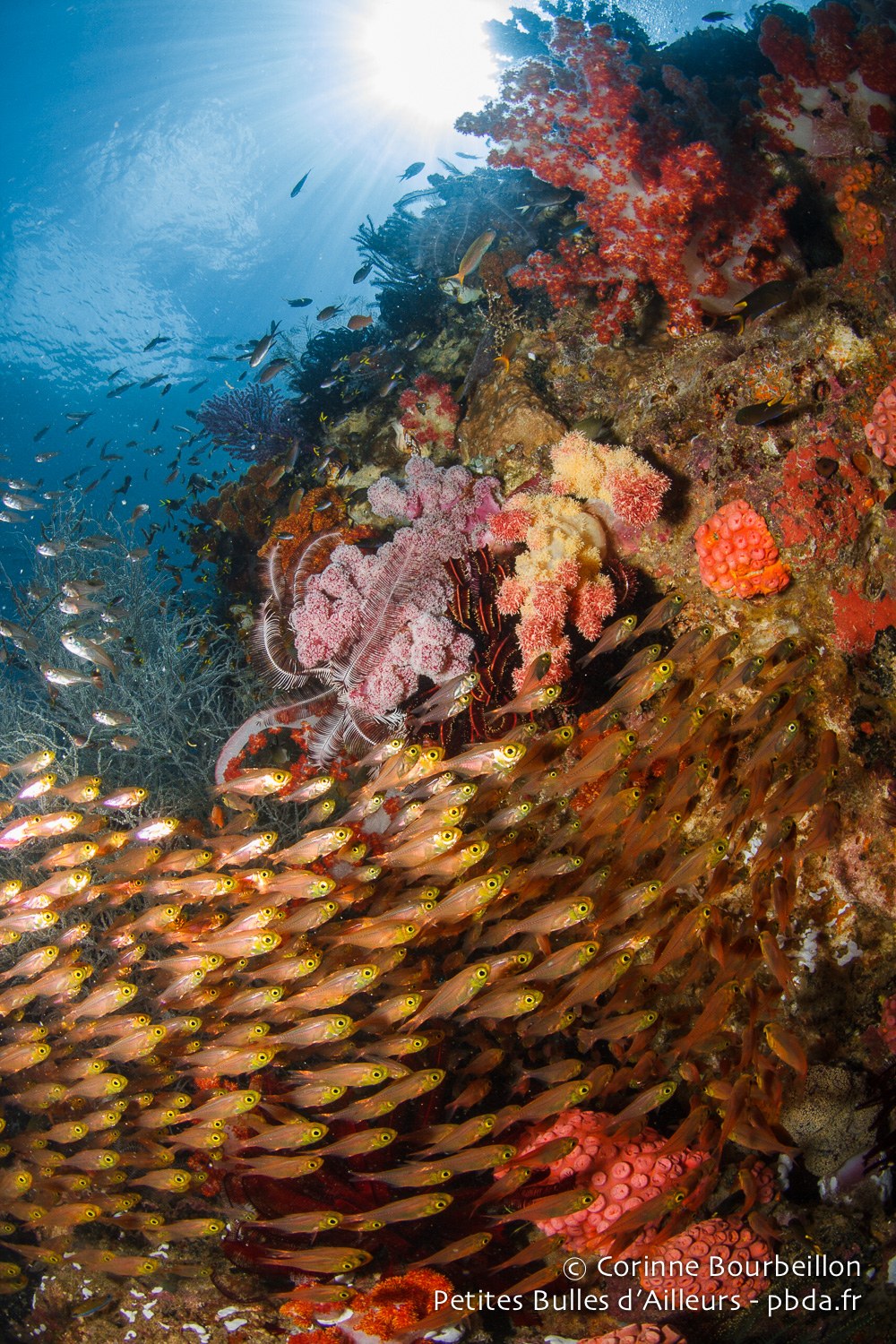
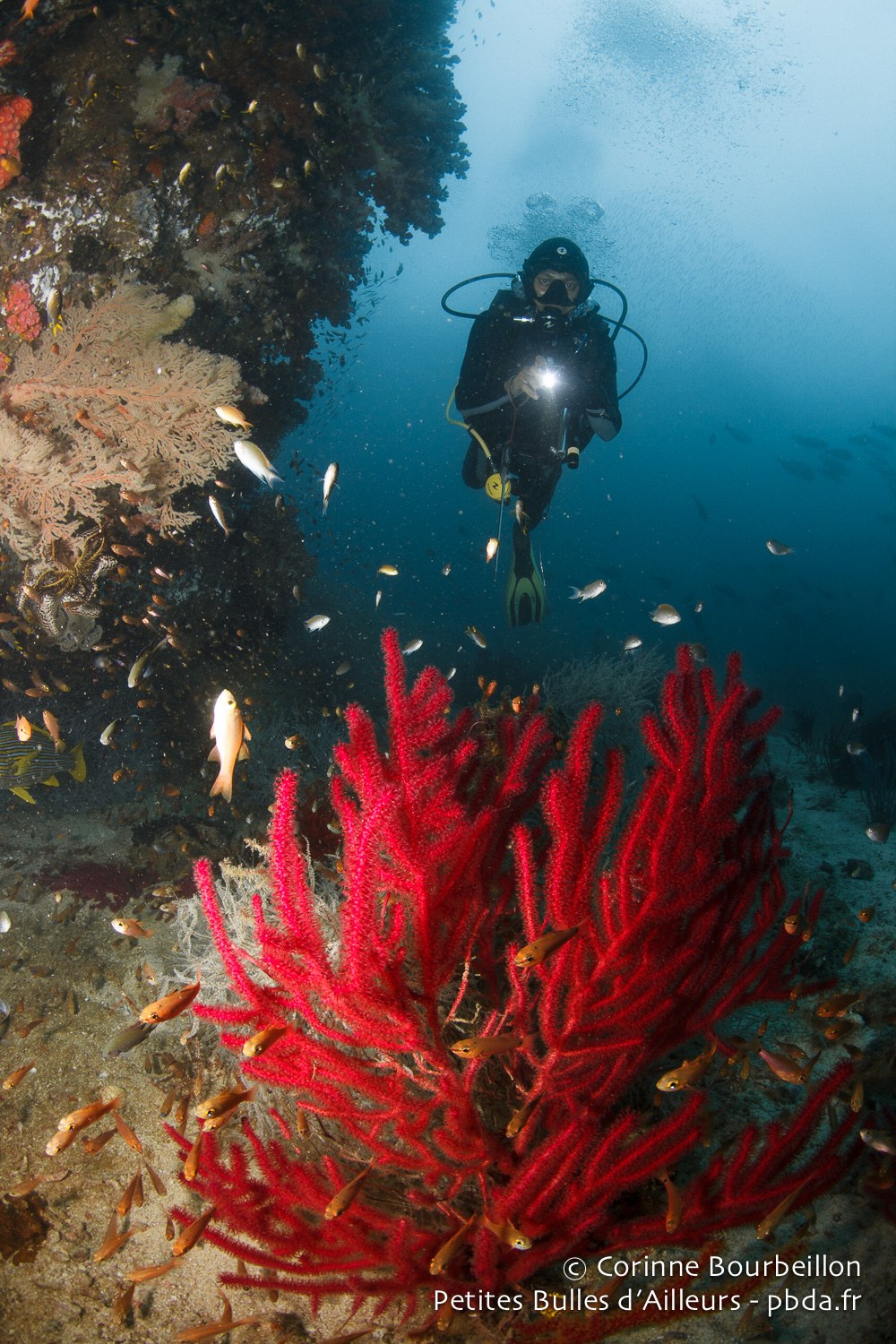
Triton Bay is rich in colour and texture: soft coral across boulders, dark coral branches and fish moving through narrow water passages. Forested shores and limestone islands create an equally absorbing landscape above the surface.
Triton Bay at a glance
Triton Bay lies on the remote Kaimana coast of West Papua, Indonesia, where limestone islands, forested shorelines and sheltered channels meet reefs famous for dense soft coral, black coral and schooling fish. It is a destination for divers who value colour, fish life and a sense of exploration more than consistently clear blue water.
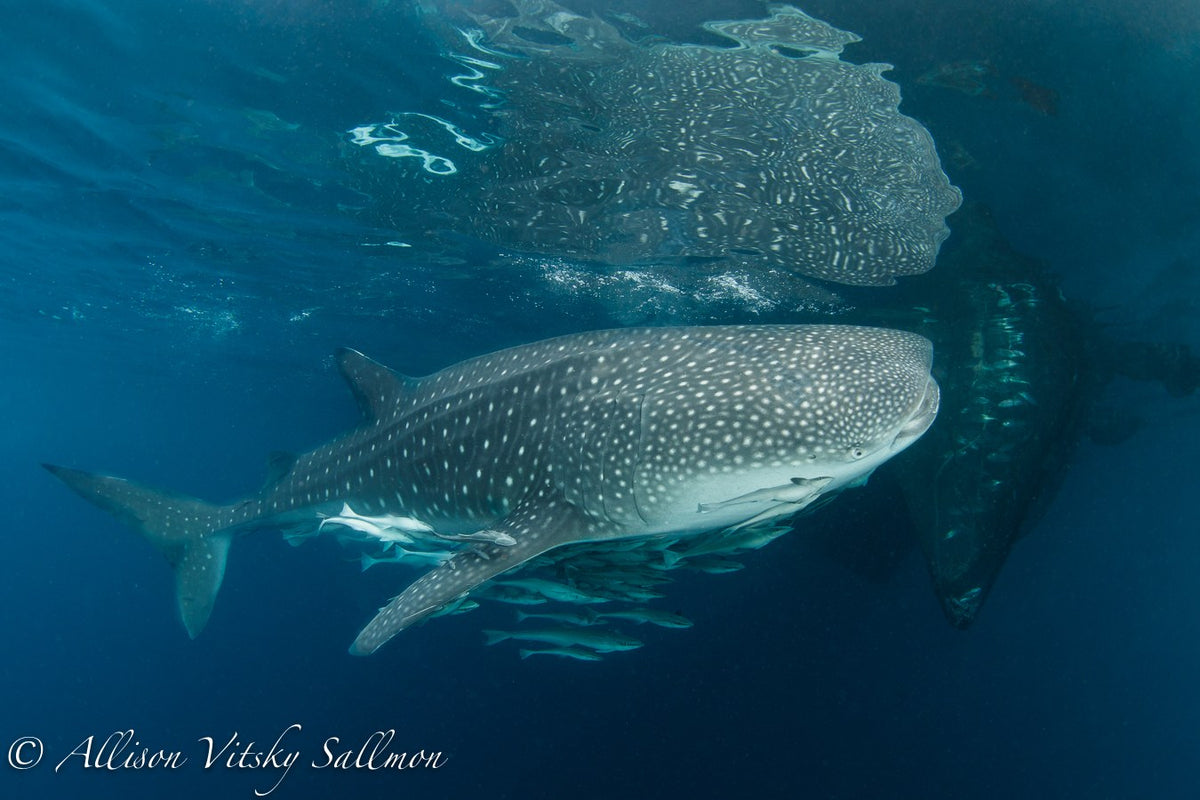
The strongest reason to come is the combination of shallow soft-coral scenery, dramatic boulder reefs, current-swept fish action and unusual wildlife potential. Whale sharks may be encountered in the wider Kaimana region and Triton Bay also offers excellent macro subjects, but no animal sighting should ever be treated as guaranteed.
Planning your Triton Bay stay
A resort stay provides repeated access to the bay’s reefs and a settled island base. A liveaboard can connect Triton Bay with other eastern Indonesian regions, but the itinerary determines the actual time here. Six to eight nights suits a focused visit, with transfers built around the operating days.
Liveaboard routes for this destination
Explore the routes that visit this region. Compare ships and itineraries, then open a route to see its sailing dates, cabins and the areas it covers.
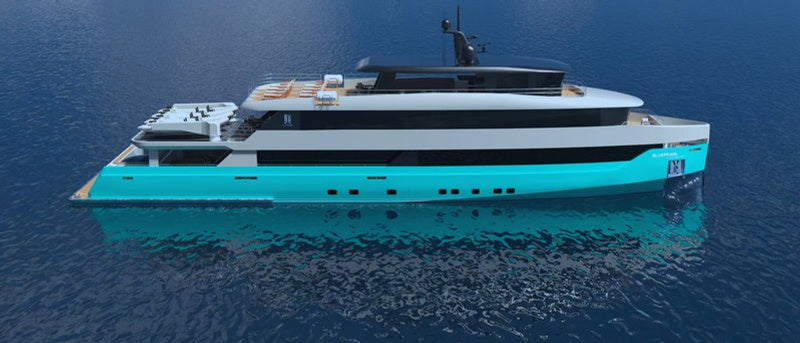
M/Y Blue Pearl
Raja Ampat & Triton Bay
- Indicative duration
- 10 nights
- Embarkation
- Sorong / Kaimana
- Disembarkation
- Kaimana / Sorong
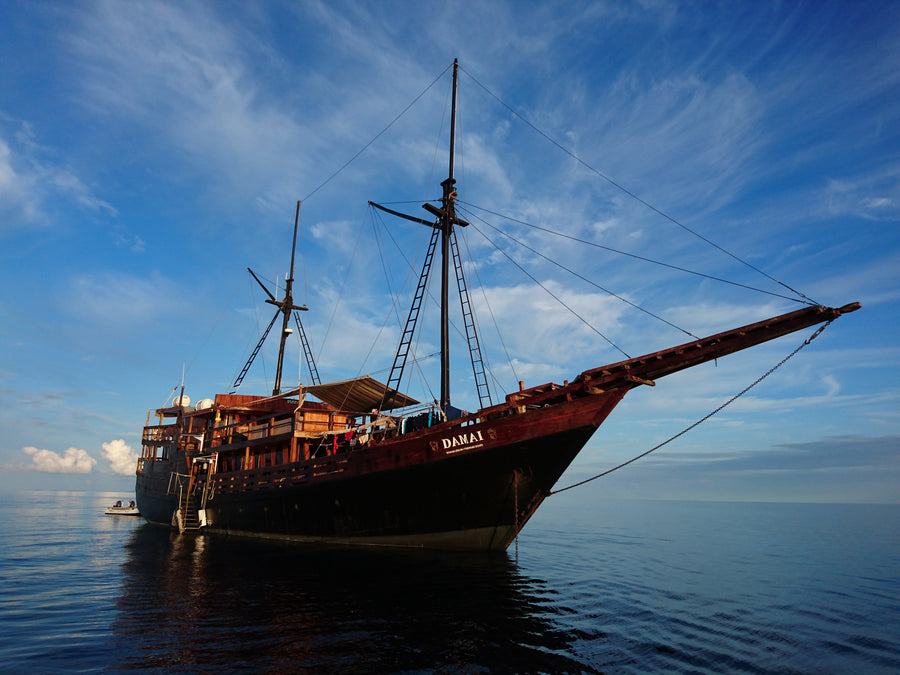
DAMAI I
Raja Ampat & Triton Bay
- Indicative duration
- 11 nights
- Embarkation
- Sorong
- Disembarkation
- Kaimana
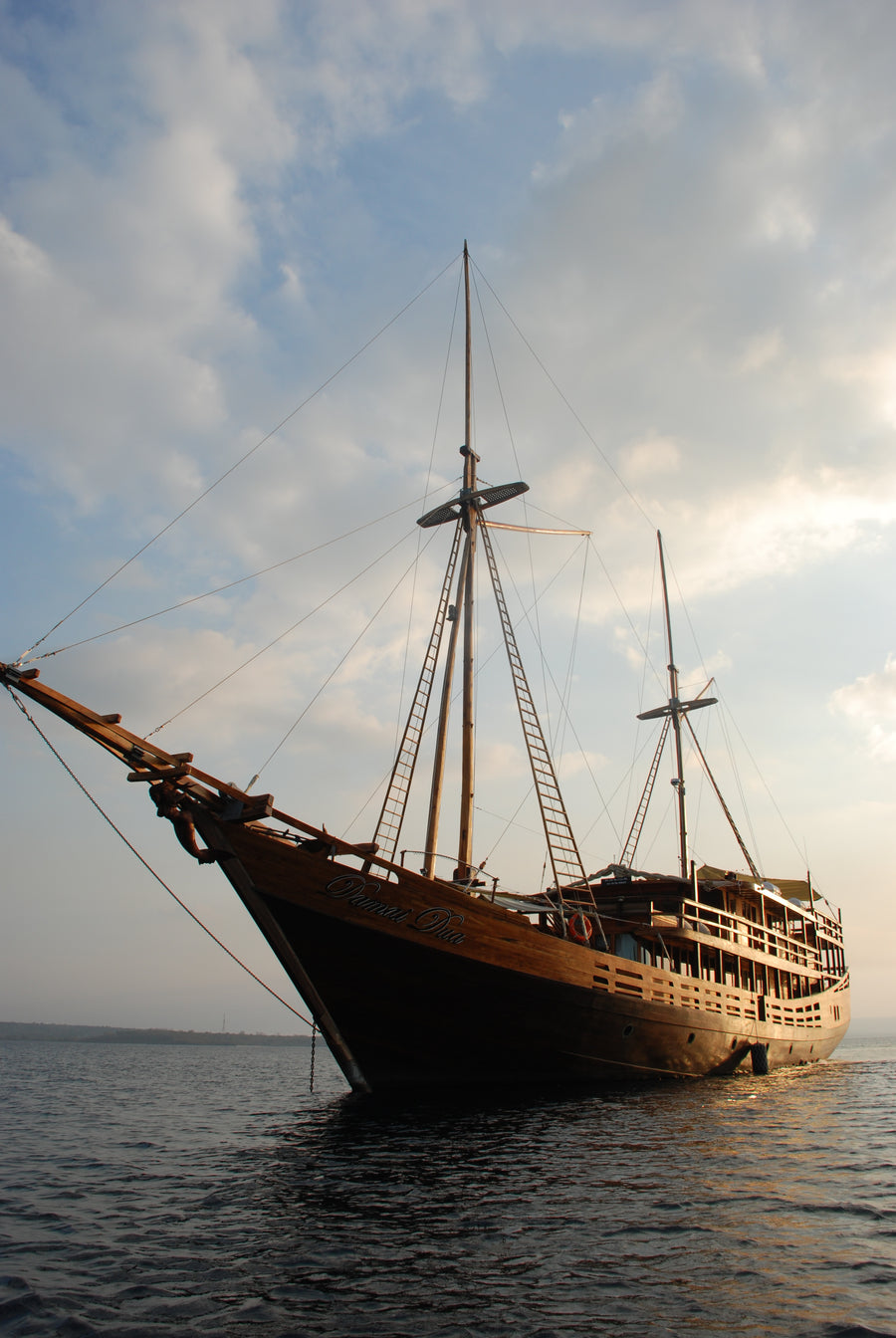
DAMAI II
Triton Bay, Forgotten Islands & Banda Sea
- Indicative duration
- 11 nights
- Embarkation
- Kaimana
- Disembarkation
- Ambon
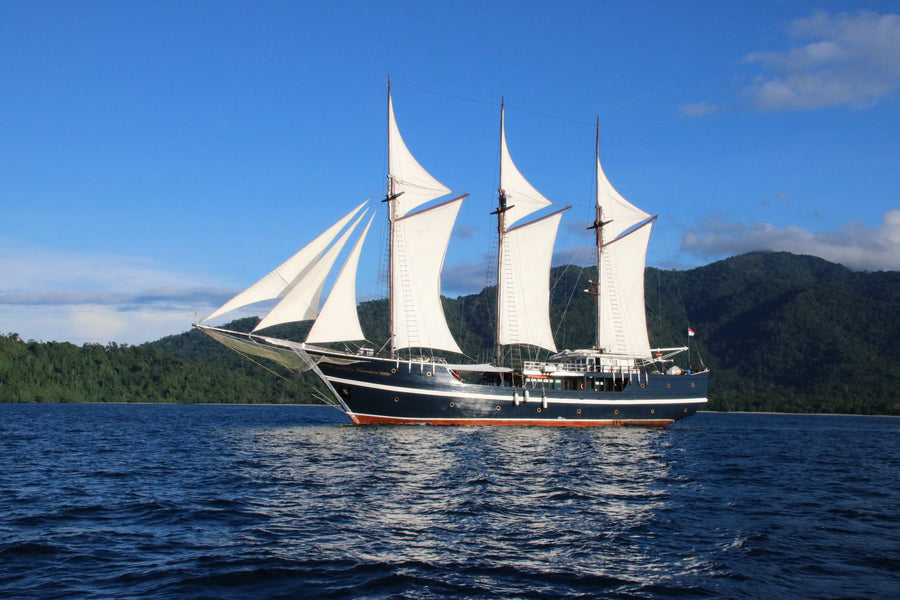
Dewi Nusantara
Indonesia Oceania: Route II - Triton Bay, The Bomberai Peninsula, Banda Islands & Ambon — Kaimana to Ambon
- Indicative duration
- 11 nights
- Embarkation
- Kaimana
- Disembarkation
- Ambon
Dewi Nusantara
Wild West Papua: Route I - South Raja Ampat, Misool, The Bomberai Peninsula & Triton Bay — Sorong to Kaimana
- Indicative duration
- 10 nights
- Embarkation
- Sorong
- Disembarkation
- Kaimana
Dewi Nusantara
Wild West Papua: Route I - South Raja Ampat, Misool, The Bomberai Peninsula & Triton Bay — Sorong to Kaimana
- Indicative duration
- 11 nights
- Embarkation
- Sorong
- Disembarkation
- Kaimana
Dewi Nusantara
Wild West Papua: Route II - Triton Bay, The Bomberai Peninsula, Misool & South Raja Ampat — Kaimana to Sorong
- Indicative duration
- 10 nights
- Embarkation
- Kaimana
- Disembarkation
- Sorong
Dewi Nusantara
Wild West Papua: Route II - Triton Bay, The Bomberai Peninsula, Misool & South Raja Ampat — Kaimana to Sorong
- Indicative duration
- 11 nights
- Embarkation
- Kaimana
- Disembarkation
- Sorong
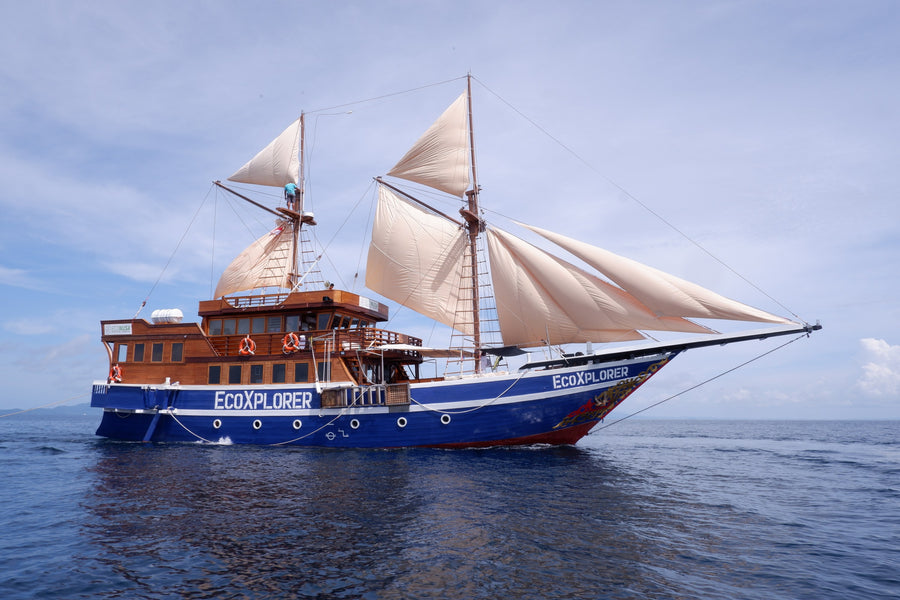
EcoXplorer
Wallace Biodiversity & Cultural Expedition: Kaimana – Sorong
- Indicative duration
- 11 nights
- Embarkation
- Kaimana
- Disembarkation
- Sorong
EcoXplorer
Whale Shark Expedition: Kaimana – Fak-Fak – Sorong
- Indicative duration
- 9 nights
- Embarkation
- Kaimana
- Disembarkation
- Sorong
EcoXplorer
Whale Shark Expedition: Sorong – Fak-Fak – Kaimana
- Indicative duration
- 9 nights
- Embarkation
- Sorong
- Disembarkation
- Kaimana
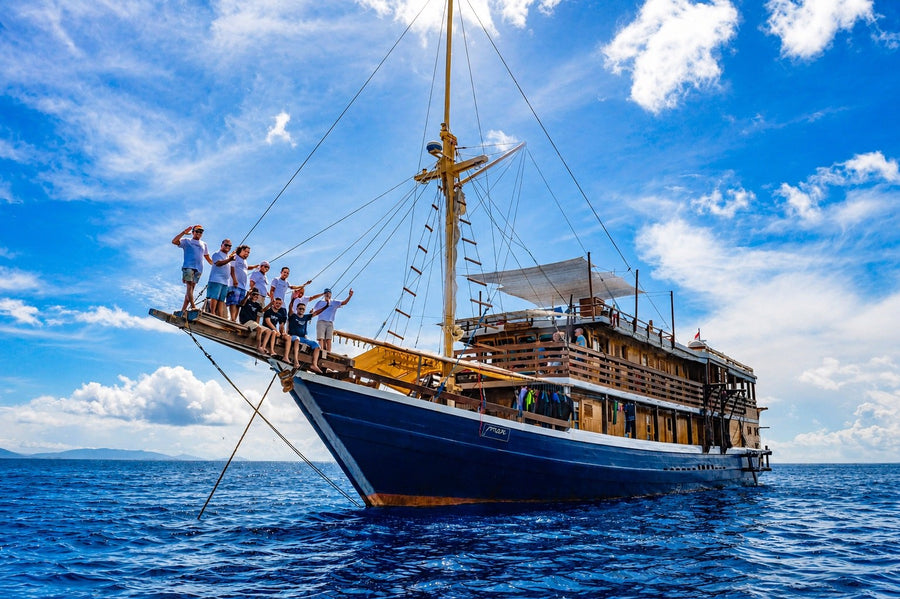
MARI Liveaboard
MARI — Banda Sea & Triton Bay - Hammerhead Special — Ambon to Kaimana
- Indicative duration
- 12 nights
- Embarkation
- Ambon
- Disembarkation
- Kaimana
MARI Liveaboard
MARI — Forgotten Islands - Banda East - Triton Bay — Saumlaki to Kaimana
- Indicative duration
- 12 nights
- Embarkation
- Saumlaki
- Disembarkation
- Kaimana
MARI Liveaboard
MARI — The Forgotten Islands, Banda Sea & Triton Bay — Saumlaki to Kaimana
- Indicative duration
- 12 nights
- Embarkation
- Saumlaki
- Disembarkation
- Kaimana
MARI Liveaboard
MARI — Triton Bay - Misool & Raja Ampat — Kaimana to Sorong
- Indicative duration
- 12 nights
- Embarkation
- Kaimana
- Disembarkation
- Sorong
MARI Liveaboard
MARI — Triton Bay - The Ring Of Fire & The Forgotten Islands — Kaimana to Saumlaki
- Indicative duration
- 12 nights
- Embarkation
- Kaimana
- Disembarkation
- Saumlaki
MARI Liveaboard
MARI — Triton Bay — Kaimana to Kaimana
- Indicative duration
- 9 nights
- Embarkation
- Kaimana
- Disembarkation
- Kaimana
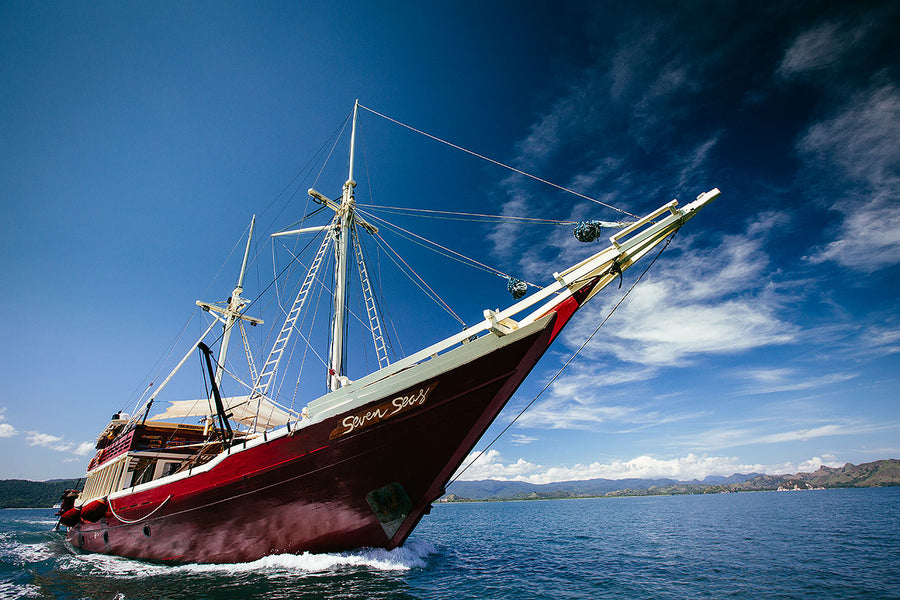
The Seven Seas
Banda Sea & Triton Bay — Tual to Kaimana
- Indicative duration
- 14 nights
- Embarkation
- Tual
- Disembarkation
- Kaimana
The Seven Seas
Raja Ampat & Triton Bay — Sorong to Kaimana
- Indicative duration
- 14 nights
- Embarkation
- Sorong
- Disembarkation
- Kaimana
The Seven Seas
Triton Bay & Banda Sea — Kaimana to Ambon
- Indicative duration
- 14 nights
- Embarkation
- Kaimana
- Disembarkation
- Ambon
The Seven Seas
Triton Bay — Kaimana to Kaimana
- Indicative duration
- 9 nights
- Embarkation
- Kaimana
- Disembarkation
- Kaimana
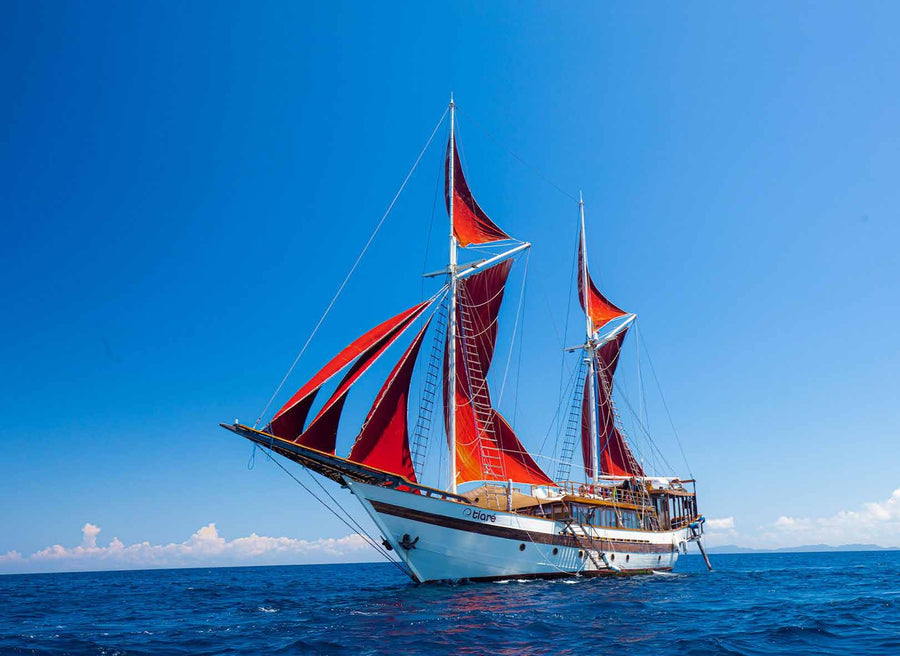
Tiare
Forgotten Island - Triton Bay — Saumlaki to Kaimana
- Indicative duration
- 12 nights
- Embarkation
- Saumlaki
- Disembarkation
- Kaimana
Tiare
Raja Ampat Triton Bay — Sorong to Kaimana
- Indicative duration
- 14 nights
- Embarkation
- Sorong
- Disembarkation
- Kaimana
Tiare
Triton Bay - Banda Neira — Kaimana to Ambon
- Indicative duration
- 11 nights
- Embarkation
- Kaimana
- Disembarkation
- Ambon
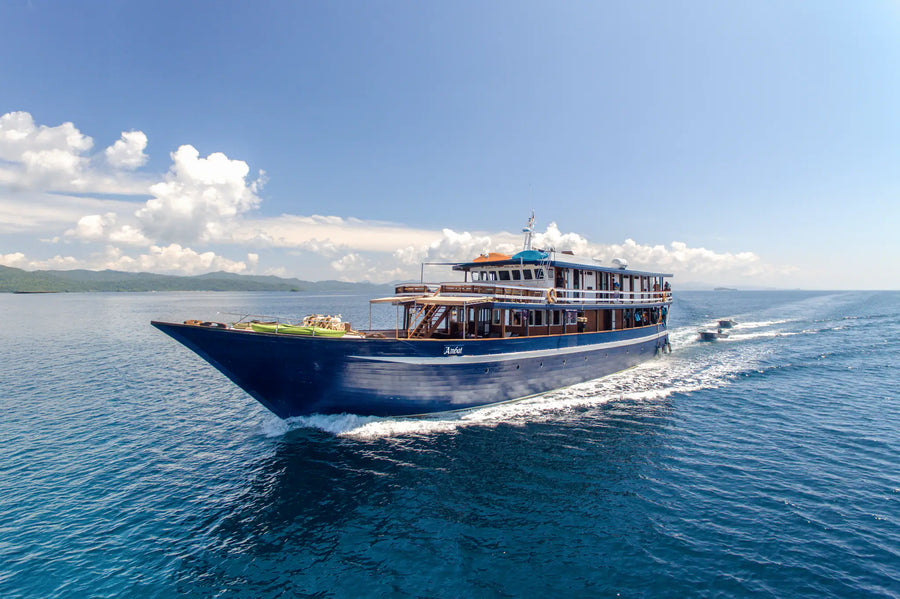
MV Ambai
Raja Ampat & Triton Bay
- Indicative duration
- 11 nights
- Embarkation
- Sorong or Kaimana
- Disembarkation
- Kaimana or Sorong
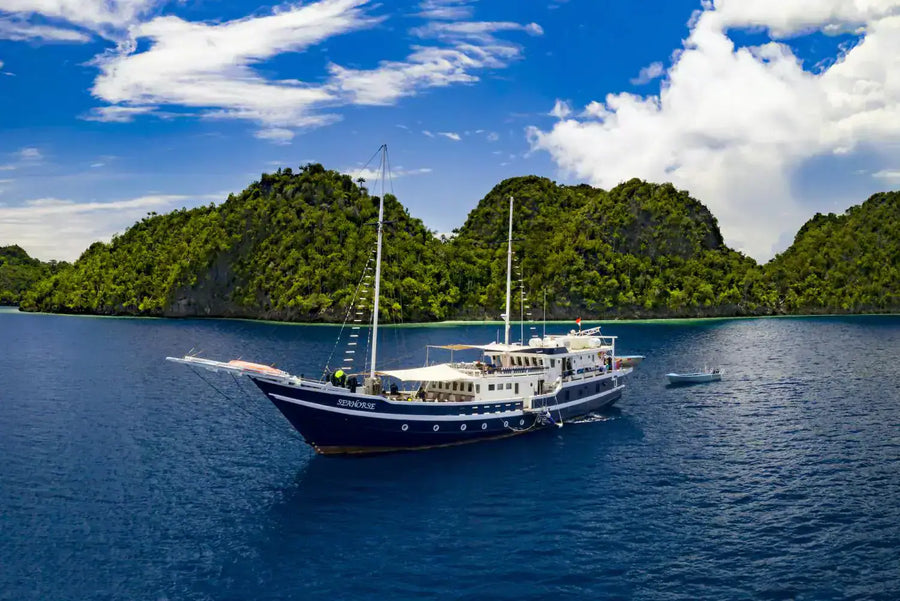
MSY Seahorse
Triton Bay & Raja Ampat
- Indicative duration
- 11 nights
- Embarkation
- Kaimana or Sorong
- Disembarkation
- Sorong or Kaimana
No routes match this search. Try another vessel or clear your search.
When to dive Triton Bay
The sheltered and exposed parts of the region respond differently to wind and water movement. Plan the trip around the selected resort’s opening period or a published sailing. Visibility may be lower than in clear-water reef destinations; the reward is often close, richly coloured reef scenery.
Planning window: Plan around the chosen operating season.
What the diving is like
Protected sites can suit less-experienced divers, but current-exposed boulder reefs reward confident buoyancy and drift-diving skills.
Soft-coral forests
Boulder reefs and walls are covered in orange, pink, red and purple soft coral, creating some of Triton Bay's most recognisable wide-angle scenes.
Dense fish life
Anthias, fusiliers, sweetlips and other schooling fish bring movement to the reefs, especially where current concentrates food around rocks and island points.
Wobbegongs & unusual wildlife
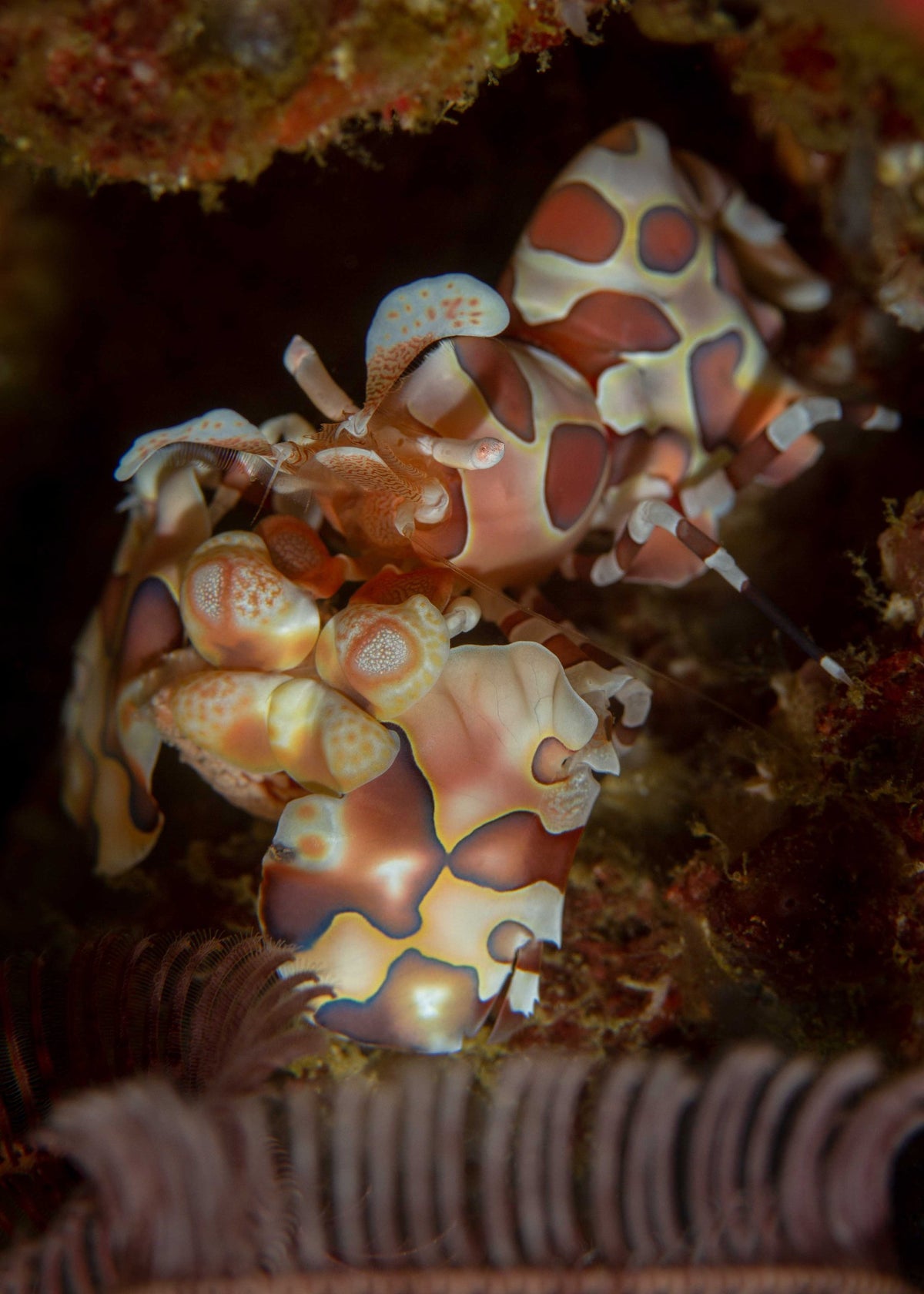
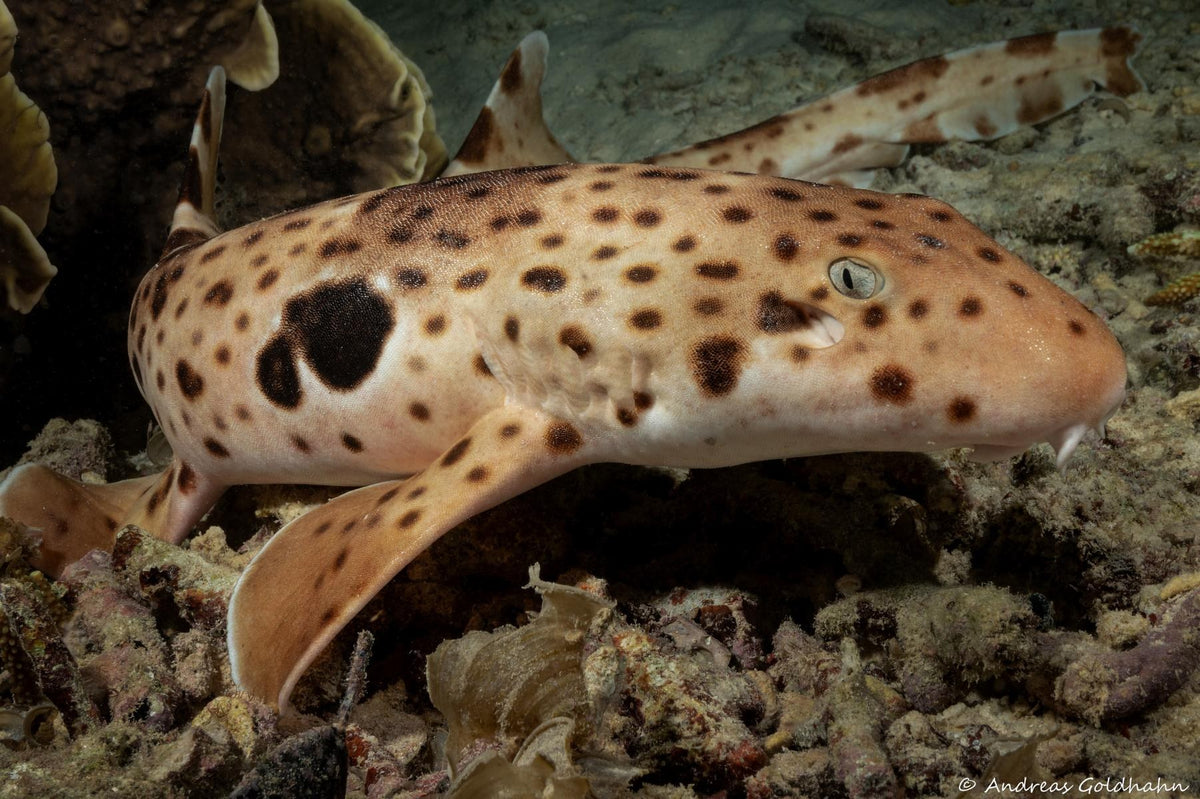
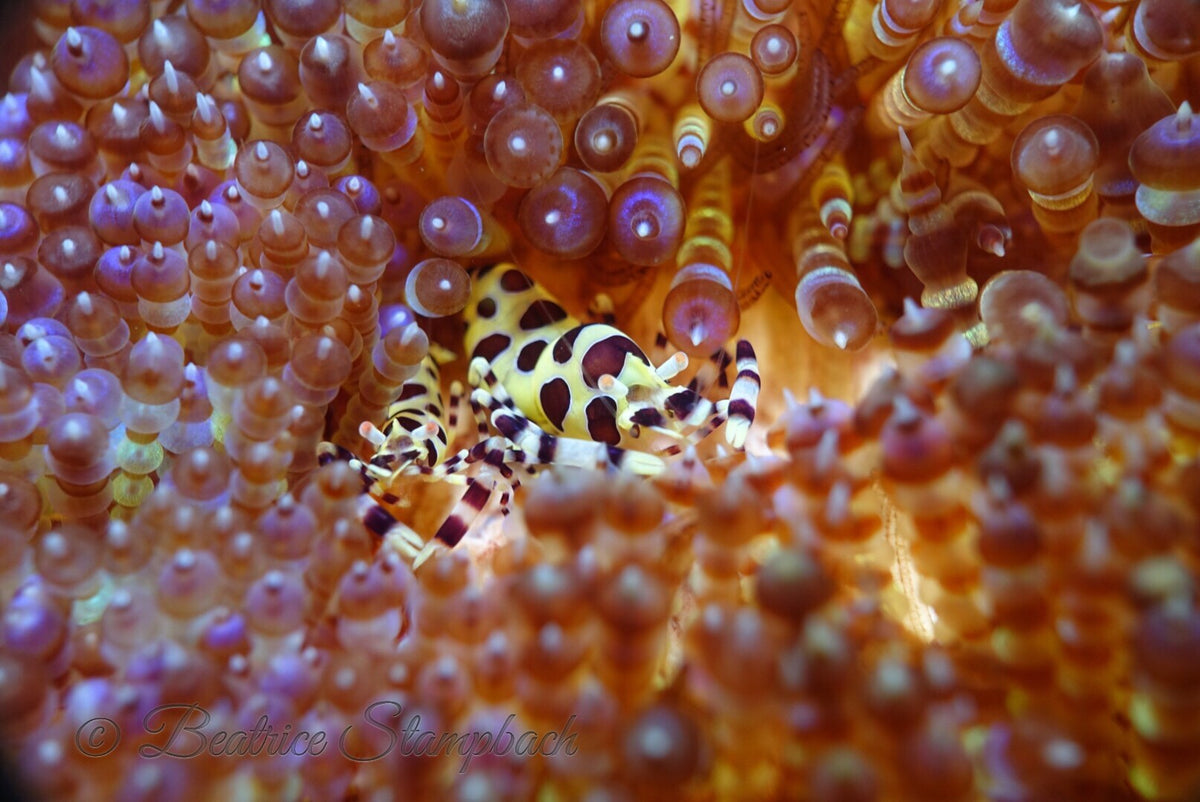
Wobbegong sharks are among the region's signature larger subjects, while macro sites can produce frogfish, flasher wrasse, nudibranchs and small crustaceans.
Whale-shark potential
Whale sharks may be encountered in the wider Kaimana area. They remain wild animals, so sightings depend on local conditions and vary with conditions and animal behaviour.
DIVE SITE GUIDE
Dive sites in Triton Bay
Explore the character of individual sites, from the setting and marine life to the diving conditions. Open a card for the full description; site access and the final profile depend on conditions and experience.
ORIENTATION MAP
Where the dive sites are
Use the map to understand how the key sites are spread around the destination. Pins are for trip-planning orientation only; entry points, moorings and the final dive plan are always confirmed by the local operator on the day.
Coordinates are orientation references, not navigation coordinates. 'verified' means a published site coordinate; 'operator' means a clearly labelled island, locality or dive-area anchor used where the exact mooring/drop is not publicly verified. Entry points, currents and the final dive plan are always confirmed by the local operator on the day.
Boulders · Soft coral · Current
Little Komodo
Little Komodo is built around huge boulders on Saruenus Island, with soft coral and clouds of anthias, damsels and fusiliers covering the structure.
Explore this dive site
- Type
- Boulders · Soft coral · Current
- Depth
- 5–25 m
- Experience
- Intermediate–Advanced
- Current
- Moderate–Strong
Little Komodo is built around huge boulders on Saruenus Island, with soft coral and clouds of anthias, damsels and fusiliers covering the structure. Deeper black-coral bushes can hold sweetlips and snapper, while hunting jacks and wobbegong sharks are possible.
The site can become energetic when current runs, so the guide uses the rock for shelter and chooses the direction carefully. Macro subjects such as pygmy seahorses remain available even on a dive that is visually dominated by wide-angle scenery. The coordinate comes from a published scientific survey of the Saruenus northeast face identified as Little Komodo.
Look for: Saruenus boulders · Soft-coral density · Schooling fish · Surveyed area coordinate
Best for: Soft coral · Schooling fish · Wobbegong · Wide angle
Wall · Soft-coral bommies
Aquarium
Aquarium is a compact Saruenus site known for soft-coral bommies and dense schooling fish.
Explore this dive site
- Type
- Wall · Soft-coral bommies
- Depth
- 5–20 m
- Experience
- Intermediate
- Current
- Mild–Moderate
Aquarium is a compact Saruenus site known for soft-coral bommies and dense schooling fish. Triton Bay Divers recommends it especially in calm morning water, when the surface can become glassy enough for reflection photography.
A gentle drift can connect the soft-coral wall into the main Aquarium section, but the exact route depends on current. The site is not about depth; the richest colour and fish action are normally in the upper recreational range. The map uses the same surveyed Saruenus northeast-face coordinate because no separate public Aquarium mooring is published.
Look for: Soft-coral bommies · Morning reflections · Schooling fish · Shallow colour
Best for: Soft coral · Schooling fish · Reflection photography
Tiered reef · Drift · Current
Pintu Arus
Pintu Arus is the high-energy western-side dive on Saruenus Island.
Explore this dive site
- Type
- Tiered reef · Drift · Current
- Depth
- 5–25 m
- Experience
- Advanced
- Current
- Strong / eddies
Pintu Arus is the high-energy western-side dive on Saruenus Island. Tiered reef structure is carpeted in soft coral while fusiliers and anthias work the current, and giant grouper may patrol the site.
The defining feature is water movement: eddies can make timing critical, so this is not a site to force when the tide window is wrong. Divers should stay close to the reef and the guide rather than trying to outswim the flow. The map uses a Saruenus-area anchor because the precise drop changes with current and is not published as a fixed GPS point.
Look for: Strong current · Tiered soft-coral reef · Giant grouper possible · Advanced drift
Best for: Fast drift · Soft coral · Giant grouper · Fusiliers
Boulder reef · Soft-coral garden
Bo’s Rainbow
Bo’s Rainbow is one of Triton Bay’s easiest signature dives: a shallow rocky island wrapped in soft coral and schooling fish.
Explore this dive site
- Type
- Boulder reef · Soft-coral garden
- Depth
- 5–16 m
- Experience
- Beginner–Intermediate
- Current
- Usually mild
Bo’s Rainbow is one of Triton Bay’s easiest signature dives: a shallow rocky island wrapped in soft coral and schooling fish. The bottom reaches only about 16 metres on a gentle sandy slope, and in calm water divers may circle the island.
A shallow swim-through adds topography, while flasher wrasse and smaller subjects keep the site useful for macro photographers. If current increases, the group simply remains on the protected side rather than completing the circuit. No exact public site coordinate is available, so the map uses the Aiduma/Triton operator area and is explicitly marked approximate.
Look for: Max ~16 m · Soft-coral boulders · Flasher wrasse · Protected-side option
Best for: Soft coral · Flasher wrasse · Wide angle + macro
Macro slope · Soft coral
White Rock
White Rock is a gentle shallow slope where the emphasis switches from Triton Bay’s big soft-coral scenery to close macro searching.
Explore this dive site
- Type
- Macro slope · Soft coral
- Depth
- 5–14 m
- Experience
- Beginner–Intermediate
- Current
- Mild
White Rock is a gentle shallow slope where the emphasis switches from Triton Bay’s big soft-coral scenery to close macro searching. Soft-coral bushes are particularly productive for candy crabs, while frogfish and occasional wobbegong sharks add larger subjects.
The site bottoms out around 14 metres and can be dived by day or night, giving long bottom time and an easy ascent. Careful buoyancy matters because many targets sit directly on fragile coral growth. The map uses the nearby published Macro Rocks scientific station as the best public area reference, not as a claim of an exact White Rock mooring.
Look for: Macro focus · ~14 m bottom · Night diving · Candy crabs
Best for: Candy crabs · Frogfish · Wobbegong · Night diving
Point · Black coral · Pelagic
Andy’s Point
Andy’s Point is a mixed wide-angle and macro site with unusually heavy black-coral growth.
Explore this dive site
- Type
- Point · Black coral · Pelagic
- Depth
- 8–30 m
- Experience
- Advanced
- Current
- Moderate–Strong
Andy’s Point is a mixed wide-angle and macro site with unusually heavy black-coral growth. Yellowfin barracuda, bumphead parrotfish, anchovy schools, devil rays and wobbegong sharks are all reported possibilities, while pygmy seahorses reward a slower search on the reef.
Visibility is often lower than at more oceanic sites, but fish density and coral structure compensate. Current can become strong, which is why the guide’s route and group discipline matter more than covering distance. With no public mooring GPS, the map uses the Aiduma-area anchor.
Look for: Black-coral density · Pelagic surprises · Pygmy seahorses · Strong current possible
Best for: Black coral · Barracuda · Devil rays · Pygmy seahorses
Boulders · Hard-coral garden
Batu Jatuh
Batu Jatuh means 'fallen rocks', and the site is defined by massive boulders that have become the framework for broad hard-coral gardens.
Explore this dive site
- Type
- Boulders · Hard-coral garden
- Depth
- 5–25 m
- Experience
- Intermediate
- Current
- Mild–Moderate
Batu Jatuh means 'fallen rocks', and the site is defined by massive boulders that have become the framework for broad hard-coral gardens. A resident-looking school of batfish and hunting jacks bring movement around the rock, while midnight snapper, bumphead parrotfish and Napoleon wrasse are also reported.
Mobula, eagle rays and occasional mantas are bonus encounters rather than the reason to plan the dive. The site rewards wide-angle photography and regular checks into the blue. The map uses an Aiduma-area operator anchor because no reliable site-level public coordinate is available.
Look for: Fallen boulders · Hard-coral gardens · Batfish & jacks · Rays possible
Best for: Hard coral · Batfish · Jacks · Mobula/eagle rays possible
Bommie · Black coral · Soft coral
Christmas Rock
Christmas Rock is a small island near the south of Aiduma whose underwater footprint is far more interesting than its size suggests.
Explore this dive site
- Type
- Bommie · Black coral · Soft coral
- Depth
- 5–25 m
- Experience
- Intermediate
- Current
- Mild–Moderate
Christmas Rock is a small island near the south of Aiduma whose underwater footprint is far more interesting than its size suggests. Black-coral bushes and soft-coral bommies hold snapper and surgeonfish, making the site especially strong for wide-angle work.
There is still enough small life to reward a macro search, but the primary attraction is colour and fish around the rock. Depth need not be extreme; the upper reef carries much of the visual impact. The coordinate is an Aiduma-area reference because the exact small-island mooring is not consistently published.
Look for: Black-coral bushes · Soft-coral bommies · Snapper schools · South Aiduma area
Best for: Black coral · Snapper · Surgeonfish · Wide angle
Underwater photography
Triton Bay is strongest for wide-angle photography when soft coral, black coral, schooling fish and divers can be layered into the same frame. Because much of the colour sits relatively shallow, photographers can work slowly when current allows. Moderate visibility can actually intensify the atmosphere, but it rewards close positioning and careful strobe control. For reef scenes, use the shape of the reef and the available light to give the image depth. A diver at a respectful distance can provide scale without crowding an animal.
Beyond diving: Triton Bay above the surface
The wider Kaimana coast offers quiet boat journeys, island scenery and suitable snorkelling areas. It is a place for companions who enjoy nature and remoteness, with the selected base shaping what is possible on a day without diving.
Whale-shark outings in the wider region are distinct from the ordinary reef programme and may involve fishing-platform areas. Evaluate how the excursion is conducted, keep space around the animals and choose Triton Bay for its reefs and landscape as well as any wildlife possibility.
Getting to Triton Bay
Kaimana is the main gateway for Triton Bay. International travellers normally connect through a larger Indonesian hub before continuing to Kaimana, after which the final boat transfer depends on the chosen resort or liveaboard itinerary.
For the current land-based partner, scheduled resort transfers are not daily, so flights should be built around confirmed transfer days rather than booked first and adjusted later. Liveaboard routes may start or finish in Kaimana or connect Triton Bay with other Indonesian regions, making buffer nights and no-fly planning especially important.
Triton Bay diving questions
What makes Triton Bay worth a diving trip?
Triton Bay is rich in colour and texture: soft coral across boulders, dark coral branches and fish moving through narrow water passages. Forested shores and limestone islands create an equally absorbing landscape above the surface.
How should I plan my stay?
A resort stay provides repeated access to the bay’s reefs and a settled island base. A liveaboard can connect Triton Bay with other eastern Indonesian regions, but the itinerary determines the actual time here. Six to eight nights suits a focused visit, with transfers built around the operating days.
When is a useful time to visit?
The sheltered and exposed parts of the region respond differently to wind and water movement. Plan the trip around the selected resort’s opening period or a published sailing. Visibility may be lower than in clear-water reef destinations; the reward is often close, richly coloured reef scenery.
Is there enough for non-diving companions?
The wider Kaimana coast offers quiet boat journeys, island scenery and suitable snorkelling areas. It is a place for companions who enjoy nature and remoteness, with the selected base shaping what is possible on a day without diving.
A closer look at Triton Bay




Plan your Triton Bay trip
Tell us the experiences you most want, your preferred dates and how you like to travel. We can bring the destination, accommodation and diving into one coherent itinerary.
Plan my trip