

Destination guide · Malaysia
Labuan Diving
Labuan’s appeal is structural and historical: large wrecks, marine growth and the scale of a ship revealed underwater. It suits divers who enjoy a carefully planned profile and the story behind a site as much as colourful reef scenery.
Labuan at a glance
Labuan is Malaysia’s specialist wreck-diving destination, with several large shipwrecks offering both recreational exterior exploration and more advanced technical profiles. Maritime history and substantial structures distinguish it from the country’s reef-focused islands.
Depth, visibility and penetration requirements vary by wreck, so certification and experience must be assessed precisely. Labuan also works as a short Sabah or Brunei extension, with museums, memorials and straightforward urban logistics supporting the dive programme.
Planning your Labuan stay
Organise the dives with an established local programme and choose wrecks by depth, visibility and training. Three to five diving days can provide a focused visit. Exterior exploration, penetration and technical profiles are different activities and should be planned separately.
When to dive Labuan
March to October is the existing planning window for easier sea conditions. Wreck visibility can change considerably, so allow for a different site order and select profiles conservatively. A wreck’s maximum depth is not a recommended depth for every visitor.
Planning window: Best March–October.
What the diving is like
Advanced and wreck qualifications are recommended; penetration requires proper training.
Large shipwrecks
Labuan’s diving is centred on four major wrecks lying offshore from the island: the Cement, Australian, Blue Water and American wrecks. Their size and depth make the destination fundamentally different from a conventional reef holiday and reward divers who enjoy history, structure and artificial-reef marine life.
Technical profiles
Some sections of the wrecks sit deep enough that extended exploration, penetration or bottom time requires advanced or technical training. Operators should match the wreck and route to each diver’s certification, gas plan and experience rather than assuming that all four sites are suitable for the same profile.
Recreational wreck exteriors
Several wrecks can still be enjoyed from the outside on standard recreational profiles, where divers can see the hull, superstructure and marine growth without entering overhead environments. Penetration should be reserved for appropriately trained divers under the operator’s current procedures.
Maritime history
The four wrecks represent different chapters of Labuan’s maritime history, from wartime losses to later commercial vessels. That historical context is a major part of the destination’s appeal and makes a pre-dive briefing about the identity and story of each wreck especially worthwhile.
DIVE SITE GUIDE
Dive sites in Labuan
Explore the character of individual sites, from the setting and marine life to the diving conditions. Open a card for the full description; site access and the final profile depend on conditions and experience.
ORIENTATION MAP
Where the dive sites are
Use the map to understand how the key sites are spread around the destination. Pins are for trip-planning orientation only; entry points, moorings and the final dive plan are always confirmed by the local operator on the day.
Coordinates are planning references compiled from current dive-site sources. They are not navigation coordinates; entry points, moorings, tide windows and the final dive plan are always confirmed by the local operator on the day.
Wreck · Artificial reef
Cement Wreck
The Cement Wreck is the most approachable of Labuan’s famous Big Four.
Explore this dive site
- Type
- Wreck · Artificial reef
- Depth
- 6–32 m
- Experience
- Intermediate–Advanced
- Current
- Mild–Moderate
The Cement Wreck is the most approachable of Labuan’s famous Big Four. The large freighter lies upright and has been underwater long enough for coral, sponges and schooling fish to turn the steel structure into a living reef.
Divers can stay on the exterior and still see the bow, deck, superstructure and dense marine growth without entering overhead areas. The wreck spans a broad depth range, so newer wreck divers can work the upper structure while advanced divers explore deeper sections within their certification. Good buoyancy is essential around coral-encrusted steel, and penetration should remain within formal wreck training and the operator’s current assessment of structural safety.
Look for: Big Four wreck · Upright hull · Strong coral growth · Exterior dive works well
Best for: Wreck photography · Coral growth · Macro
WWII wreck · Deep wreck
Australian Wreck
The Australian Wreck is actually the former Dutch steamship De Klerk, later renamed Imabari Maru, and is one of Labuan’s deeper historical sites.
Explore this dive site
- Type
- WWII wreck · Deep wreck
- Depth
- 28–34 m
- Experience
- Advanced / Deep
- Current
- Mild
The Australian Wreck is actually the former Dutch steamship De Klerk, later renamed Imabari Maru, and is one of Labuan’s deeper historical sites. The top of the structure sits close to 28 metres and the bottom around the mid-thirties, so the entire dive demands advanced depth planning.
Broken hull sections create habitat for barracuda, grouper and batfish, while smaller reef species occupy the wreckage. Exterior exploration provides a complete dive; any penetration adds overhead complexity and should only be attempted by properly trained divers. Because bottom time is limited at this depth, the most efficient plan is a direct descent, deliberate route and slow ascent rather than trying to cover every deck.
Look for: WWII history · 28–34 m · Deep certification recommended · Barracuda & grouper
Best for: WWII history · Deep wreck · Fish schools
WWII wreck · War grave
American Wreck
The American Wreck is the remains of USS Salute, a US Navy minesweeper lost to a mine in 1945.
Explore this dive site
- Type
- WWII wreck · War grave
- Depth
- 22–32 m
- Experience
- Advanced
- Current
- Mild–Moderate
The American Wreck is the remains of USS Salute, a US Navy minesweeper lost to a mine in 1945. The broken wreckage lies between roughly 22 and 32 metres and carries a much stronger historical weight than an ordinary artificial reef.
Batfish, barracuda, snapper and smaller reef life use the structure, while ammunition and other wartime remnants can still be visible. Divers should treat the site as both a wreck and a memorial: avoid disturbing artifacts and do not enter confined spaces without appropriate wreck training. The moderate depth gives experienced divers enough time to explore the exterior carefully while still managing gas and no-decompression limits conservatively.
Look for: USS Salute · WWII war grave · 22–32 m · Historic wreck
Best for: USS Salute · WWII history · Pelagics
Wreck · Deep blue-water site
Blue Water Wreck
Blue Water Wreck is the former Philippine trawler MV Mabini Padre, resting on its port side in deeper, often clearer water than the other Labuan wrecks.
Explore this dive site
- Type
- Wreck · Deep blue-water site
- Depth
- 24–35 m
- Experience
- Advanced
- Current
- Mild–Moderate
Blue Water Wreck is the former Philippine trawler MV Mabini Padre, resting on its port side in deeper, often clearer water than the other Labuan wrecks. The highest part begins around 24 metres and the bottom reaches the mid-thirties, making it an advanced profile from the moment of descent.
Cardinalfish, sweetlips, lionfish and batfish occupy the structure, while larger snapper and grouper shelter around the hull. The clearer water is ideal for wide-angle photography, but it can also make depth feel deceptively shallow. Exterior exploration is more than enough for most divers; overhead entry should be reserved for trained wreck divers with a specific plan.
Look for: 24–35 m · Often clearer visibility · Large grouper · Advanced wreck
Best for: Clearer water · Grouper · Batfish · Deep wreck
Fringing reef · Coral garden
Kuraman Reef
Kuraman Reef gives Labuan divers a complete change of pace after the deep wrecks.
Explore this dive site
- Type
- Fringing reef · Coral garden
- Depth
- 3–20 m
- Experience
- Beginner
- Current
- Mild
Kuraman Reef gives Labuan divers a complete change of pace after the deep wrecks. Shallow fringing coral begins close to the island and can be explored without pushing depth or no-decompression limits.
Hard coral, reef fish and sandy patches make the site useful for newer divers, refreshers and photographers who want strong natural light. The reef is also suitable for snorkelling, which makes it practical for mixed groups. The map pin marks the island reef area rather than a fixed dive mooring; the local operator chooses the best side according to wind and visibility.
Look for: Shallow fringing reef · Beginner friendly · Snorkel-friendly · Marine park
Best for: Easy reef · Snorkel crossover · Coral
Fringing reef · Turtle area
Rusukan Besar Reef
Rusukan Besar’s fringing reef starts in very shallow water and is one of the marine park’s easiest natural reef dives.
Explore this dive site
- Type
- Fringing reef · Turtle area
- Depth
- 2–18 m
- Experience
- Beginner
- Current
- Mild
Rusukan Besar’s fringing reef starts in very shallow water and is one of the marine park’s easiest natural reef dives. Coral gardens and tropical reef fish dominate the experience, while turtles and occasional juvenile reef sharks are possible around the protected island waters.
The modest depth is ideal for long bottom times and gives new divers a forgiving environment after training. Because the reef circles the island, the exact dive route depends on the day’s wind and current. The map point is therefore an island-level orientation marker, not a permanent mooring.
Look for: Shallow coral · Turtles possible · Beginner friendly · Marine park reef
Best for: Turtles · Coral garden · Easy reef
Fringing reef · Coral slope
Rusukan Kecil Reef
Rusukan Kecil is the smallest of the three marine-park islands and is used for reef diving and snorkelling rather than wreck-style depth.
Explore this dive site
- Type
- Fringing reef · Coral slope
- Depth
- 3–20 m
- Experience
- Beginner–Intermediate
- Current
- Mild
Rusukan Kecil is the smallest of the three marine-park islands and is used for reef diving and snorkelling rather than wreck-style depth. The reef slopes gently away from the island, giving divers an easy visual reference and plenty of shallow coral to explore.
Schools of reef fish, small invertebrates and occasional turtles make the site productive without requiring current or deep water. It works well as a second or third dive after one of Labuan’s wrecks. The coordinate marks the island itself; operators select the actual entry based on the best-protected reef sector on the day.
Look for: Small-island reef · Mild current · Relaxed photography · Snorkel crossover
Best for: Reef fish · Coral · Relaxed photography
Shallow reef · Soft coral
Batu Agong Reef
Batu Agong is one of the shallow natural-reef options around Labuan and provides the opposite experience from a 30-metre wreck.
Explore this dive site
- Type
- Shallow reef · Soft coral
- Depth
- 5–10 m
- Experience
- Beginner
- Current
- Mild
Batu Agong is one of the shallow natural-reef options around Labuan and provides the opposite experience from a 30-metre wreck. The reef sits inside roughly 5–10 metres, with soft coral and reef fish giving divers a long, relaxed profile and excellent natural light.
It is particularly useful after deeper wreck diving because there is no reason to accumulate additional depth exposure. The exact public GPS for the dive mooring is not consistently published, so the map uses an operator-area reference rather than pretending to show a surveyed entry point.
Look for: 5–10 m · Soft coral · Very easy profile · Good after wreck dives
Best for: Soft coral · Long bottom time · Easy third dive
Underwater photography
At Cement Wreck, wreck photography, Coral growth, Macro give an idea of the photographic possibilities. Choose the camera setup for the planned sites, then leave time to observe the scene before making the image. Repeating a productive dive often creates better opportunities than constantly searching for a different location. For reef scenes, use the shape of the reef and the available light to give the image depth. A diver at a respectful distance can provide scale without crowding an animal.
Beyond diving: Labuan above the surface
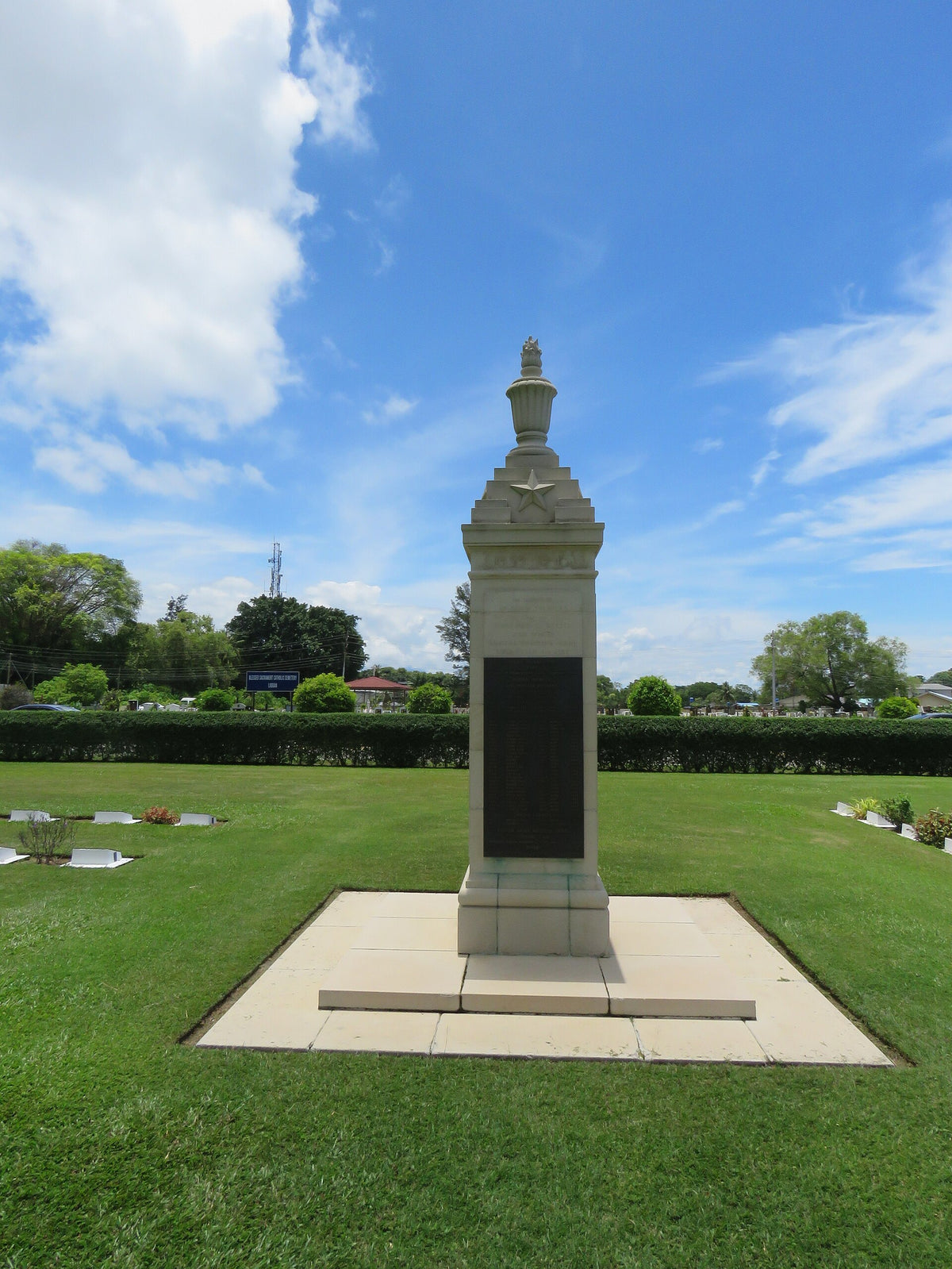
Museums and war memorials add context to the underwater history. The island’s town, beaches and straightforward road access make it possible to build a short land programme around the dive days.
Labuan can also fit into a wider Sabah or Brunei journey, provided transport connections work. It is a particularly good option when the group shares an interest in history; companions looking for a remote beach-resort experience may prefer another part of Borneo.
Getting to Labuan
Fly to Labuan or connect by ferry from Sabah and Brunei.
Choose arrival and departure times around the onward transfer, especially when a boat crossing or a long road journey is involved. Leave space for a relaxed final day ashore and an appropriate interval between the last dive and flying.
Labuan diving questions
What makes Labuan worth a diving trip?
Labuan’s appeal is structural and historical: large wrecks, marine growth and the scale of a ship revealed underwater. It suits divers who enjoy a carefully planned profile and the story behind a site as much as colourful reef scenery.
How should I plan my stay?
Organise the dives with an established local programme and choose wrecks by depth, visibility and training. Three to five diving days can provide a focused visit. Exterior exploration, penetration and technical profiles are different activities and should be planned separately.
When is a useful time to visit?
March to October is the existing planning window for easier sea conditions. Wreck visibility can change considerably, so allow for a different site order and select profiles conservatively. A wreck’s maximum depth is not a recommended depth for every visitor.
Is there enough for non-diving companions?
Museums and war memorials add context to the underwater history. The island’s town, beaches and straightforward road access make it possible to build a short land programme around the dive days.
A closer look at Labuan

Plan your Labuan trip
Tell us the experiences you most want, your preferred dates and how you like to travel. We can bring the destination, accommodation and diving into one coherent itinerary.
Plan my tripPhoto credits
Images are resized for display and may be cropped to fit the page layout.
- Palm tree beside a sandy beach on Labuan Island, Malaysia: Beach 01 (Labuan).jpg — black panther. CC BY 2.0. Web-size image supplied by Wikimedia Commons; no scene edits.
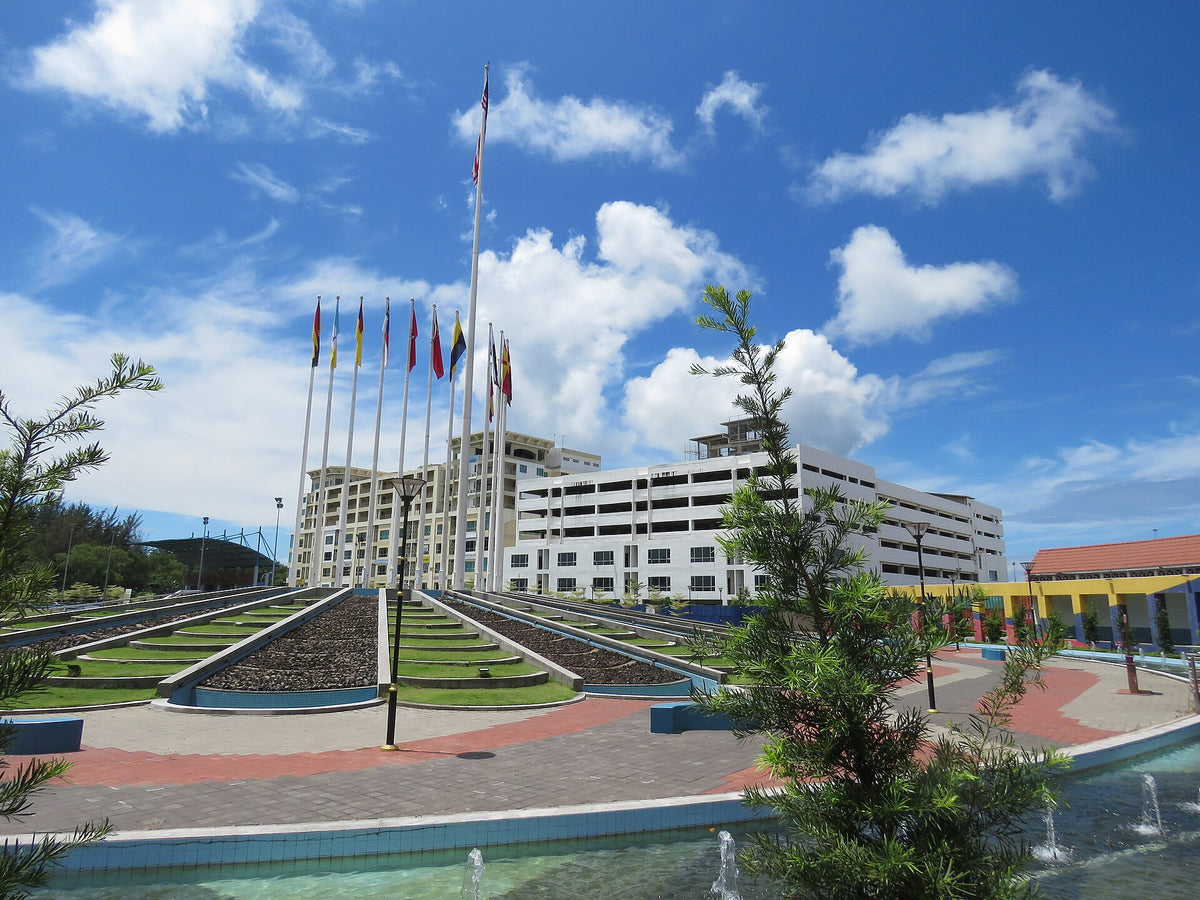
- Flags and waterfront buildings at Labuan Square, Malaysia: Labuan Square (Dataran Labuan), April 2025 02.jpg — Calistemon. CC BY-SA 4.0. Web-size image supplied by Wikimedia Commons; no scene edits.
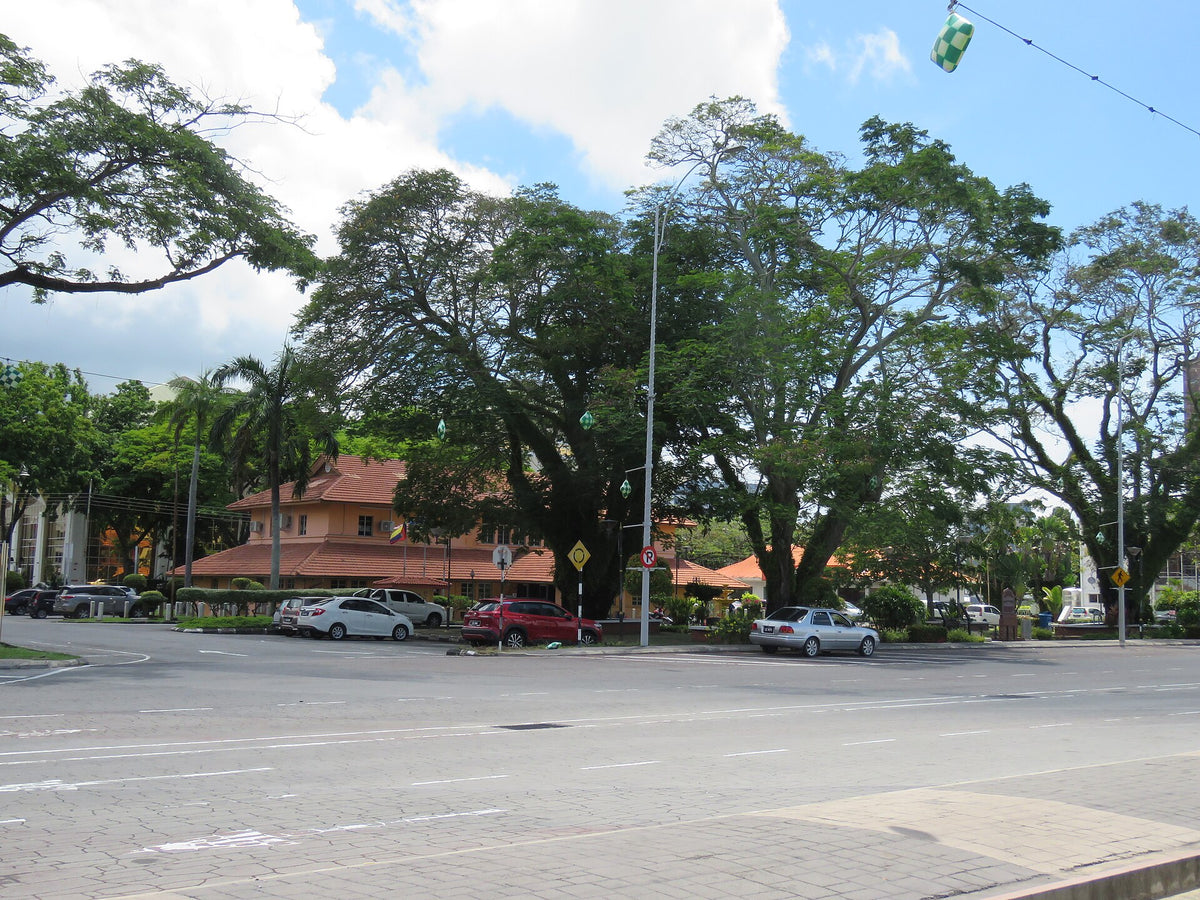
- Labuan Museum beneath mature trees in the island town centre: Labuan Museum, April 2025 01.jpg — Calistemon. CC BY-SA 4.0. Web-size image supplied by Wikimedia Commons; no scene edits.
- Memorial and landscaped grounds at Labuan War Cemetery: Labuan War Cemetery, April 2025 03.jpg — Calistemon. CC BY-SA 4.0. Web-size image supplied by Wikimedia Commons; no scene edits.
.jpg)
,_April_2025_02.jpg)

