

Destination guide · Malaysia
Perhentian Islands Diving
The Perhentians make a diving holiday feel approachable: sandy bays, short boat trips and reef sites with enough variety for both first visits and returning divers. Besar and Kecil share a wider underwater world but offer different places to spend the evenings.
Perhentian Islands at a glance
The Perhentian Islands combine warm shallow reefs, sandy bays, coral gardens and compact boat transfers around Perhentian Besar and Perhentian Kecil. The destination is especially attractive for newer divers because many sites are accessible, while pinnacles, drift sections and deeper profiles give returning divers enough variety for a multi-day stay.
Perhentian is also highly seasonal. The islands’ main tourism and dive season runs through the calmer east-coast months, while the northeast monsoon brings rougher seas and widespread resort closures. Exact opening dates should always be checked with the selected base.
Planning your Perhentian Islands stay
Besar and Kecil both access the wider dive region. Compare the beach atmosphere, dive-centre arrangements and boat access before choosing. Four to six nights can combine training or gentler reefs with suitable pinnacles and wrecks for more experienced divers.
When to dive Perhentian Islands
The main operating season is approximately March to October. Northeast-monsoon weather disrupts boats and closes many businesses outside it. Confirm the opening window and keep a reasonable margin around the Kuala Besut crossing.
Planning window: Season March–October.
What the diving is like
Open Water is suitable for many sites; Advanced experience is useful for deeper wrecks, drift sections and more exposed reefs.
Easy reef diving
Short boat rides and shallow coral sites make Perhentian one of Malaysia’s more approachable dive destinations. It is well suited to courses, first dive trips and groups with mixed certification levels.
Turtles and marine-park life
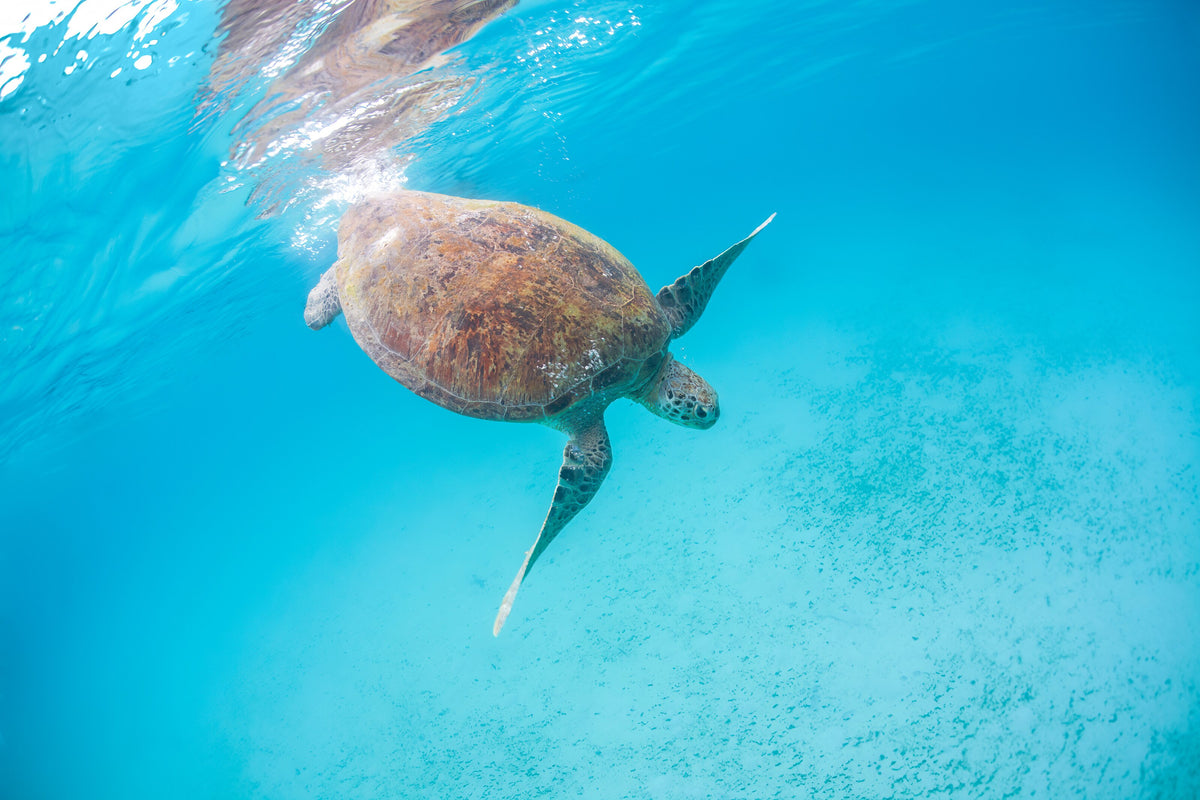
Green turtles are an important part of the Perhentian experience, particularly around suitable feeding and reef areas. Reef fish, rays and occasional sharks add variety without turning the trip into a big-animal-only itinerary.
Pinnacles and drift sections
Sites such as Sail Rock and D’Lagoon add structure and water movement to the programme. These dives can be planned at an easier pace or used to give more experienced guests a livelier profile.
Macro and wreck variety
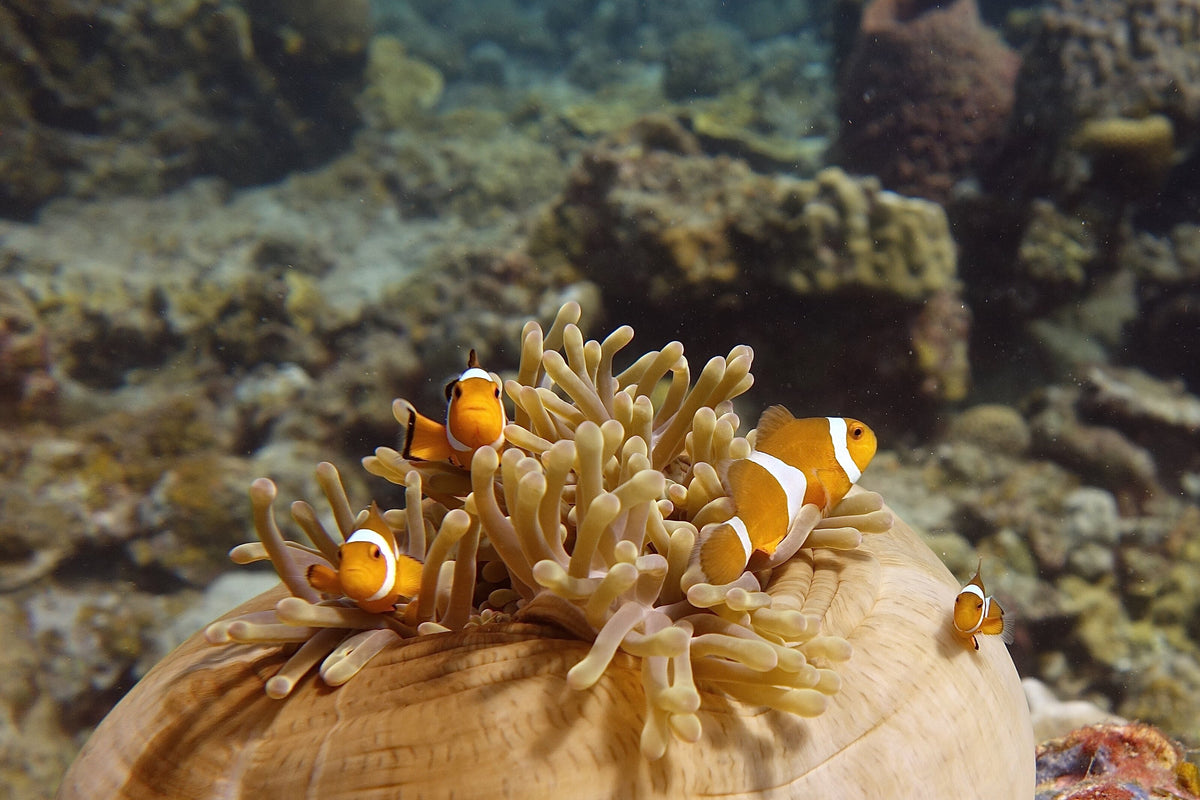
Small reef life, cleaner shrimp, nudibranchs and sandy-bottom subjects complement the wider reef scenes, while local wreck dives can be added when depth and diver qualifications are appropriate.
DIVE SITE GUIDE
Dive sites in Perhentian Islands
Explore the character of individual sites, from the setting and marine life to the diving conditions. Open a card for the full description; site access and the final profile depend on conditions and experience.
ORIENTATION MAP
Where the dive sites are
Use the map to understand how the key sites are spread around the destination. Pins are for trip-planning orientation only; entry points, moorings and the final dive plan are always confirmed by the local operator on the day.
Coordinates are planning references compiled from current dive-site sources. They are not navigation coordinates; entry points, moorings, tide windows and the final dive plan are always confirmed by the local operator on the day.
Wreck · Artificial reef
Sugar Wreck
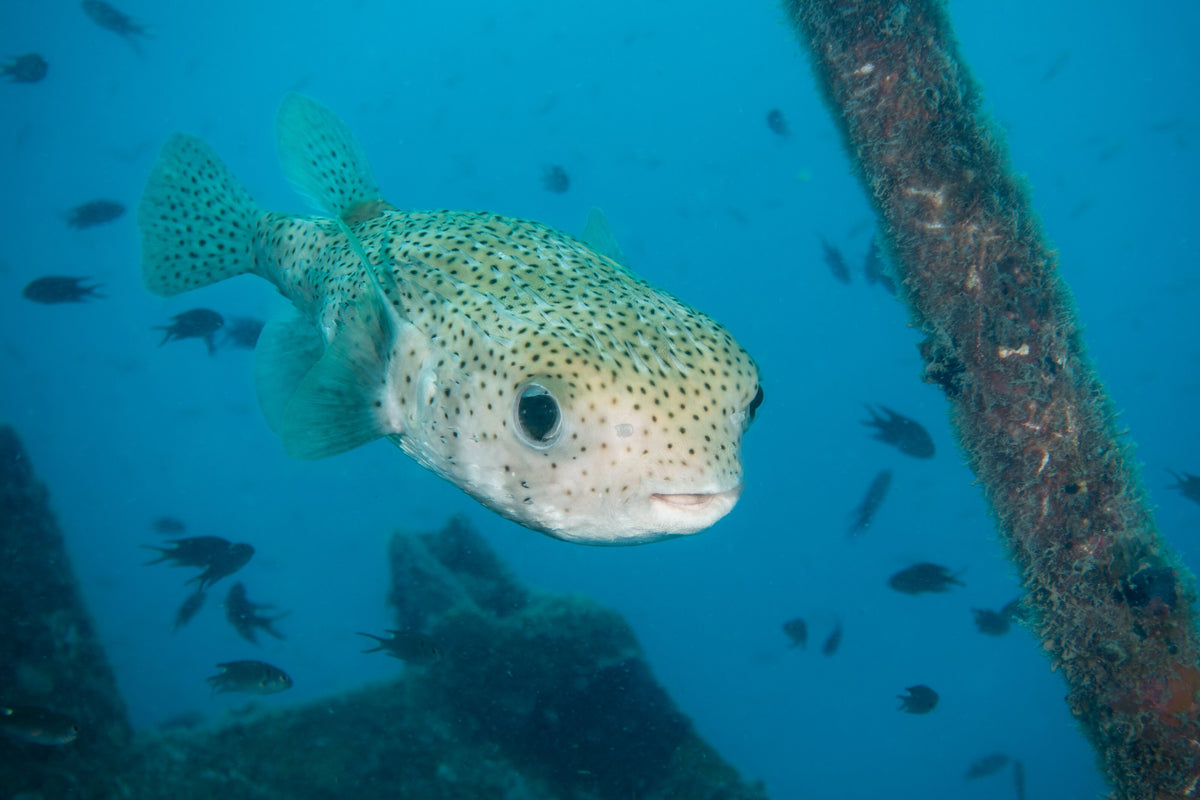
Sugar Wreck is the Perhentians’ best-known wreck: a roughly 90-metre cargo ship resting in open water within recreational depth.
Explore this dive site
- Type
- Wreck · Artificial reef
- Depth
- 10–25 m
- Experience
- Advanced
- Current
- Mild
Sugar Wreck is the Perhentians’ best-known wreck: a roughly 90-metre cargo ship resting in open water within recreational depth. The hull is large enough to spend an entire dive working only one section, while schools of fish and reef growth have turned it into an artificial habitat.
Visibility varies considerably, which makes good buddy discipline important around the structure. External exploration is the default; entering enclosed spaces is a penetration dive and should be reserved for properly wreck-trained divers. Its 10–25 metre range gives more bottom time than a deep wreck, but the size of the ship still demands a planned route rather than wandering.
Look for: ~90 m cargo ship · 10–25 m · Wreck photography · Penetration requires training
Best for: Large wreck · Fish schools · Wreck photography
Artificial wrecks · Reef
Police Wreck
Police Wreck is a cluster of three decommissioned police boats sunk together as an artificial reef.
Explore this dive site
- Type
- Artificial wrecks · Reef
- Depth
- 14–19 m
- Experience
- Beginner–Intermediate
- Current
- Mild
Police Wreck is a cluster of three decommissioned police boats sunk together as an artificial reef. Their shallow 14–19 metre depth and compact layout make the site ideal for wreck-specialty training and for divers who want a recognizable structure without a demanding deep profile.
Fish schools, rays and bamboo sharks are among the animals associated with the wrecks, while night dives can reveal turtles, octopus and smaller life around the hulls. Exterior routes provide plenty to see. Any entry into enclosed parts of the vessels should remain within training and the operator’s current assessment of structural safety.
Look for: Three wrecks · 14–19 m · Training friendly · Night-dive potential
Best for: Wreck training · Bamboo sharks · Night diving
Pinnacle · Tunnels · Reef
Tokong Laut / Temple of the Sea
Tokong Laut is a compact pinnacle with a sandy bottom around 19 metres and multiple tunnels or small cave-like openings through the rock.
Explore this dive site
- Type
- Pinnacle · Tunnels · Reef
- Depth
- 10–19 m
- Experience
- Advanced
- Current
- Mild
Tokong Laut is a compact pinnacle with a sandy bottom around 19 metres and multiple tunnels or small cave-like openings through the rock. Turtles, bamboo sharks, scorpionfish and cuttlefish can all occur around the structure, but the topography is the real reason to dive it.
Some gaps are genuine overhead environments rather than simple open swim-throughs, so divers should not enter anything beyond their training. The mild current and moderate depth give plenty of time to circle the rock outside. A slow circuit followed by a shallow finish on top of the pinnacle makes the site both safe and visually rewarding.
Look for: Pinnacle · Tunnels · Bamboo sharks possible · Advanced topography
Best for: Pinnacle · Turtles · Bamboo sharks · Topography
Offshore rocks · Swim-throughs
Terumbu Tiga / T3
Terumbu Tiga — the Three Brothers — is a group of large offshore rocks cut by gaps, swim-throughs and small caves.
Explore this dive site
- Type
- Offshore rocks · Swim-throughs
- Depth
- 10–25 m
- Experience
- Advanced
- Current
- Mild
Terumbu Tiga — the Three Brothers — is a group of large offshore rocks cut by gaps, swim-throughs and small caves. Clear water often lets divers see from one structure to the next, while blacktip sharks, barracuda and trevally may patrol the outer edges.
The overhead features are optional; the rock exteriors and fish life already make a complete dive. Depth extends to around 25 metres, so a sensible route uses the deeper gaps first and saves the rock tops for the end. Divers entering any true cave section need the appropriate certification rather than treating every opening as a casual swim-through.
Look for: Three offshore rocks · Blacktip sharks possible · Swim-throughs · Clear water
Best for: Blacktip sharks · Barracuda · Rock topography
Boulders · Deep reef · Current
Tanjung Basi
Tanjung Basi is the Perhentians’ primary deeper reef dive, set on the exposed northern tip of Perhentian Besar.
Explore this dive site
- Type
- Boulders · Deep reef · Current
- Depth
- 15–20 m
- Experience
- Advanced
- Current
- Moderate–Strong
Tanjung Basi is the Perhentians’ primary deeper reef dive, set on the exposed northern tip of Perhentian Besar. Massive boulders create overhangs and swim-throughs between roughly 15 and 20 metres, while current can strengthen around the point.
The correct plan is to descend promptly onto the rock, work into the current first where possible and use the boulders for shelter. Although the depth is modest by advanced standards, the exposure and overhead-style gaps make the site less suitable for newly certified divers. It is a structure-and-water-movement dive rather than a simple coral garden.
Look for: Northern tip · Boulder topography · Strong current possible · Advanced dive
Best for: Deep reef · Boulder topography · Current
Boulders · Swim-throughs
Batu Chaping
Batu Chaping lies on the uninhabited east face of Perhentian Besar and is built from large boulders stacked into overhangs and swim-throughs.
Explore this dive site
- Type
- Boulders · Swim-throughs
- Depth
- 18–20 m
- Experience
- Intermediate
- Current
- Mild
Batu Chaping lies on the uninhabited east face of Perhentian Besar and is built from large boulders stacked into overhangs and swim-throughs. The site bottoms out on sand around 18–20 metres, which keeps the entire dive within a straightforward recreational profile.
Daisy coral and reef life occupy the shaded sections, while the boulder geometry gives photographers strong wide-angle compositions. Current is usually mild, so the main skill requirement is precise buoyancy around the rock. Divers can skip the tighter gaps and remain outside without losing the essence of the site.
Look for: Boulder swim-throughs · 18–20 m · Mild current · Wide-angle topography
Best for: Topography · Daisy coral · Photography
Coral garden · Reef
Batu Layar
Batu Layar is one of the Perhentians’ strongest beginner-friendly coral sites.
Explore this dive site
- Type
- Coral garden · Reef
- Depth
- 5–18 m
- Experience
- Beginner
- Current
- Mild
Batu Layar is one of the Perhentians’ strongest beginner-friendly coral sites. Staghorn thickets and broad table corals cover the reef down to a sandy bottom around 18 metres, while current is typically mild and visibility is often good.
There is no complicated route to learn: the reef itself is the dive, which makes the site ideal for newer divers, long photo sessions and an easy second or third dive. Because the entire profile sits inside Open Water limits, the guide can focus the group on buoyancy and reef observation rather than depth management. The site is also a good benchmark for local coral condition.
Look for: Staghorn coral · Table coral · Beginner friendly · Clear water
Best for: Staghorn coral · Table coral · Clear water
Wreck · Deep recreational
Vietnamese Wreck
The Vietnamese Wreck, also called the Pasir Tani Wreck, is a former troop transport lying around 24 metres off Perhentian Kecil.
Explore this dive site
- Type
- Wreck · Deep recreational
- Depth
- 18–24 m
- Experience
- Advanced
- Current
- Mild–Moderate
The Vietnamese Wreck, also called the Pasir Tani Wreck, is a former troop transport lying around 24 metres off Perhentian Kecil. Its history gives the site a very different character from the intentionally sunk Police Wrecks, while the deeper profile leaves less bottom time and demands more deliberate gas planning.
Exterior exploration is suitable for experienced recreational divers; penetration is an overhead activity and should be reserved for wreck-trained teams. Visibility can vary, so a clear route and lost-buddy procedure matter. The site works best when treated as a historical wreck first and a penetration opportunity only for those specifically qualified.
Look for: Historic troop transport · ~24 m · Advanced wreck · Penetration requires training
Best for: Historic wreck · Deep photography · Wreck training
Underwater photography
At Sugar Wreck, large wreck, Fish schools, Wreck photography give an idea of the photographic possibilities. Choose the camera setup for the planned sites, then leave time to observe the scene before making the image. Repeating a productive dive often creates better opportunities than constantly searching for a different location. For reef scenes, use the shape of the reef and the available light to give the image depth. A diver at a respectful distance can provide scale without crowding an animal.
Beyond diving: Perhentian Islands above the surface
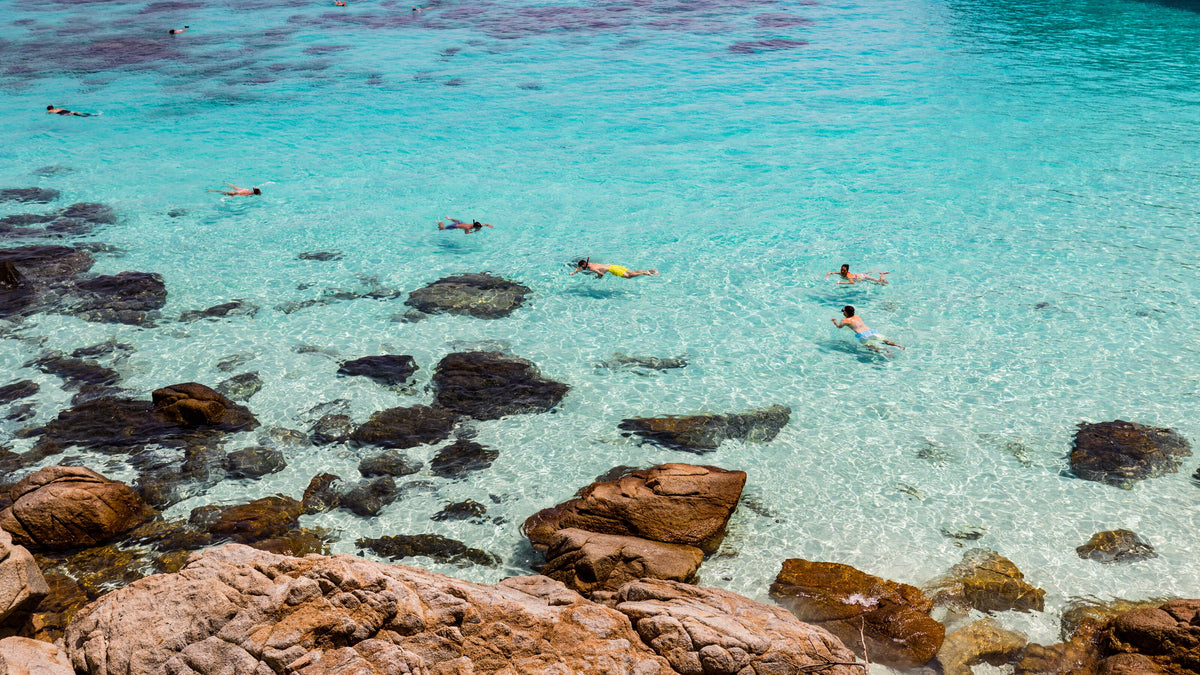
Snorkelling, kayaking, beach walks and small boat excursions give non-divers plenty of reasons to enjoy the islands. A day can be as simple as a swim, a shaded lunch and an afternoon looking across the bay.
Choose the particular beach, not just the island name. Accommodation style, evening activity and access to neighbouring bays vary considerably. The right base lets everyone enjoy the holiday whether they dive twice a day or prefer to stay near the shore.
Getting to Perhentian Islands
Fly to Kota Bharu (KBR) or use an overland route to Kuala Besut, then continue by scheduled or resort-arranged boat to Perhentian Besar or Kecil. Ferry times and weather buffers should be checked for the actual date.
Choose arrival and departure times around the onward transfer, especially when a boat crossing or a long road journey is involved. Leave space for a relaxed final day ashore and an appropriate interval between the last dive and flying.
Perhentian Islands diving questions
What makes Perhentian Islands worth a diving trip?
The Perhentians make a diving holiday feel approachable: sandy bays, short boat trips and reef sites with enough variety for both first visits and returning divers. Besar and Kecil share a wider underwater world but offer different places to spend the evenings.
How should I plan my stay?
Besar and Kecil both access the wider dive region. Compare the beach atmosphere, dive-centre arrangements and boat access before choosing. Four to six nights can combine training or gentler reefs with suitable pinnacles and wrecks for more experienced divers.
When is a useful time to visit?
The main operating season is approximately March to October. Northeast-monsoon weather disrupts boats and closes many businesses outside it. Confirm the opening window and keep a reasonable margin around the Kuala Besut crossing.
Is there enough for non-diving companions?
Snorkelling, kayaking, beach walks and small boat excursions give non-divers plenty of reasons to enjoy the islands. A day can be as simple as a swim, a shaded lunch and an afternoon looking across the bay.
A closer look at Perhentian Islands



Plan your Perhentian Islands trip
Tell us the experiences you most want, your preferred dates and how you like to travel. We can bring the destination, accommodation and diving into one coherent itinerary.
Plan my tripPhoto credits
Images are resized for display and may be cropped to fit the page layout.
- Palm-lined white sand beach on Perhentian Kecil, Malaysia: Perhentian Kecil Island, Malaysia, Beach.jpg — Vyacheslav Argenberg. CC BY 4.0. Web-size image supplied by Wikimedia Commons; no scene edits.
- Juvenile blacktip reef shark surrounded by small fish in the Perhentian Islands: Juvenile Blacktip Reef Shark Carcharhinus Melanopterus (225695111).jpeg — Kris Mikael Krister. CC BY 3.0. Web-size image supplied by Wikimedia Commons; no scene edits.
- Jetty and clear water off the western beach of Perhentian Besar: Perhentian Besar, Malaysia, West beach 2.jpg — Vyacheslav Argenberg. CC BY 4.0. Web-size image supplied by Wikimedia Commons; no scene edits.
- Small boats at dawn in the Perhentian Islands: Beach at dawn, Perhentian Islands.jpg — Chamberlain of Nilai. CC BY-SA 4.0. Web-size image supplied by Wikimedia Commons; no scene edits.
- Sheltered beach backed by forest in the Perhentian Islands: Perhentine island beach, Malesia.jpg — Susant purohit. CC0. Web-size image supplied by Wikimedia Commons; no scene edits.

.jpeg)


