

Destination guide · Palau
Palau Diving
Palau’s channels and reef corners are shaped by tide: fish gather, sharks patrol and a wall can suddenly fill with movement. Caverns, wrecks and the Rock Islands make the destination much broader than one celebrated drift dive.
Palau at a glance
Palau is a high-energy Pacific dive destination built around tidal channels, steep walls, coral plateaus and exceptionally fish-rich reef edges. Blue Corner, German Channel and Ulong Channel each deliver a different expression of current diving, while caverns, soft-coral walls and WWII wrecks broaden the itinerary.
The destination rewards experience and patience with tide planning. Sharks, mantas, turtles and schooling fish are common reasons divers travel to Palau, but every encounter remains natural. A strong trip should be sold around the quality and diversity of the sites, not around promises of a specific animal on a specific dive.
Planning your Palau stay
Stay around Koror for shore flexibility and day-boat diving, or choose a liveaboard for more time close to the outer sites. Compare the actual itinerary and tender journeys. Seven to ten nights is a useful framework for a varied first visit, particularly if you want both diving and island exploration.
Liveaboard routes for this destination
Explore the routes that visit this region. Compare ships and itineraries, then open a route to see its sailing dates, cabins and the areas it covers.
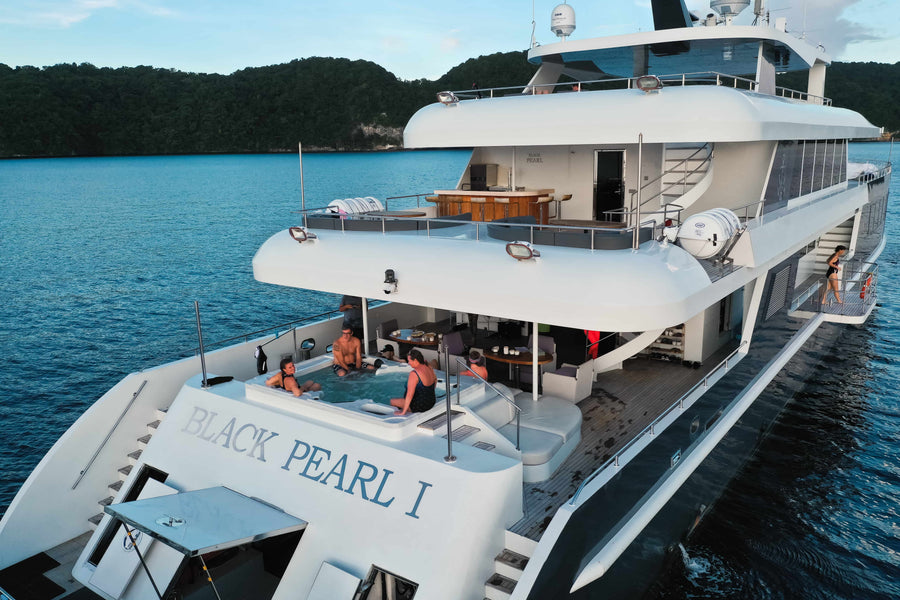
M/Y Black Pearl
Best of Palau Experience
- Indicative duration
- 5 nights
- Embarkation
- Malakal, Palau
- Disembarkation
- Malakal, Palau
M/Y Black Pearl
Best of Palau
- Indicative duration
- 7 nights
- Embarkation
- Malakal, Palau
- Disembarkation
- Malakal, Palau
M/Y Black Pearl
Bumphead Spawning
- Indicative duration
- 7 nights
- Embarkation
- Malakal, Palau
- Disembarkation
- Malakal, Palau
M/Y Black Pearl
Palau Spawning Special
- Indicative duration
- 10 nights
- Embarkation
- Malakal, Palau
- Disembarkation
- Malakal, Palau
M/Y Black Pearl
Snapper Spawning
- Indicative duration
- 7 nights
- Embarkation
- Malakal, Palau
- Disembarkation
- Malakal, Palau

Palau Aggressor II
Palau (10 nights)
- Indicative duration
- 10 nights
- Embarkation
- Koror
- Disembarkation
- Koror
Palau Aggressor II
Palau (7 nights)
- Indicative duration
- 7 nights
- Embarkation
- Koror
- Disembarkation
- Koror

Palau Siren
Full Moon Spawning
- Indicative duration
- 10 nights
- Embarkation
- Koror / Malakal
- Disembarkation
- Koror / Malakal
Palau Siren
Full Moon Spawning
- Indicative duration
- 7 nights
- Embarkation
- Koror / Malakal
- Disembarkation
- Koror / Malakal
Palau Siren
New Moon Spawning
- Indicative duration
- 10 nights
- Embarkation
- Koror / Malakal
- Disembarkation
- Koror / Malakal
Palau Siren
New Moon Spawning
- Indicative duration
- 7 nights
- Embarkation
- Koror / Malakal
- Disembarkation
- Koror / Malakal
Palau Siren
Palau Islands
- Indicative duration
- 10 nights
- Embarkation
- Koror / Malakal
- Disembarkation
- Koror / Malakal
Palau Siren
Palau Islands
- Indicative duration
- 7 nights
- Embarkation
- Koror / Malakal
- Disembarkation
- Koror / Malakal

Solitude Gaia Palau
Palau 10N - (SG)
- Indicative duration
- 10 nights
- Embarkation
- Malakal Palau
- Disembarkation
- Malakal Palau
Solitude Gaia Palau
Palau 12N (SG)
- Indicative duration
- 12 nights
- Embarkation
- Malakal Palau
- Disembarkation
- Malakal Palau
Solitude Gaia Palau
Palau 7N - (SG)
- Indicative duration
- 7 nights
- Embarkation
- Malakal Palau
- Disembarkation
- Malakal Palau
Solitude Gaia Palau
Palau NM/FM
- Indicative duration
- 21 nights
- Embarkation
- Malakal Palau
- Disembarkation
- Malakal Palau
Solitude Gaia Palau
Palau Northern Itinerary (SG)
- Indicative duration
- 10 nights
- Embarkation
- Malakal Palau
- Disembarkation
- Malakal Palau
No routes match this search. Try another vessel or clear your search.
When to dive Palau
Diving is available throughout the year. November to April is commonly a drier starting window, but tides remain central to channel and corner dives. A particular animal encounter should never be treated as an automatic result of choosing the right month.
Planning window: Best November–May.
What the diving is like
Advanced Open Water and current-diving confidence are strongly recommended for many signature sites; some sheltered dives are easier.
Blue Corner
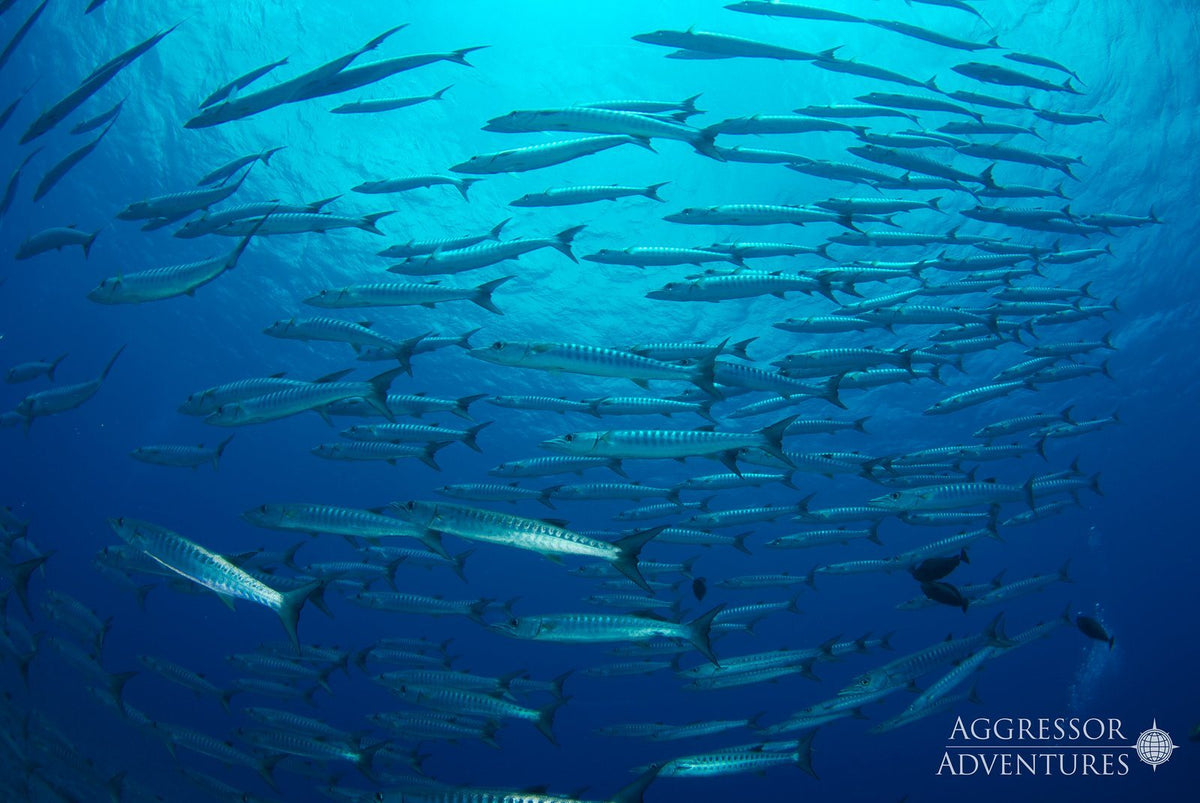
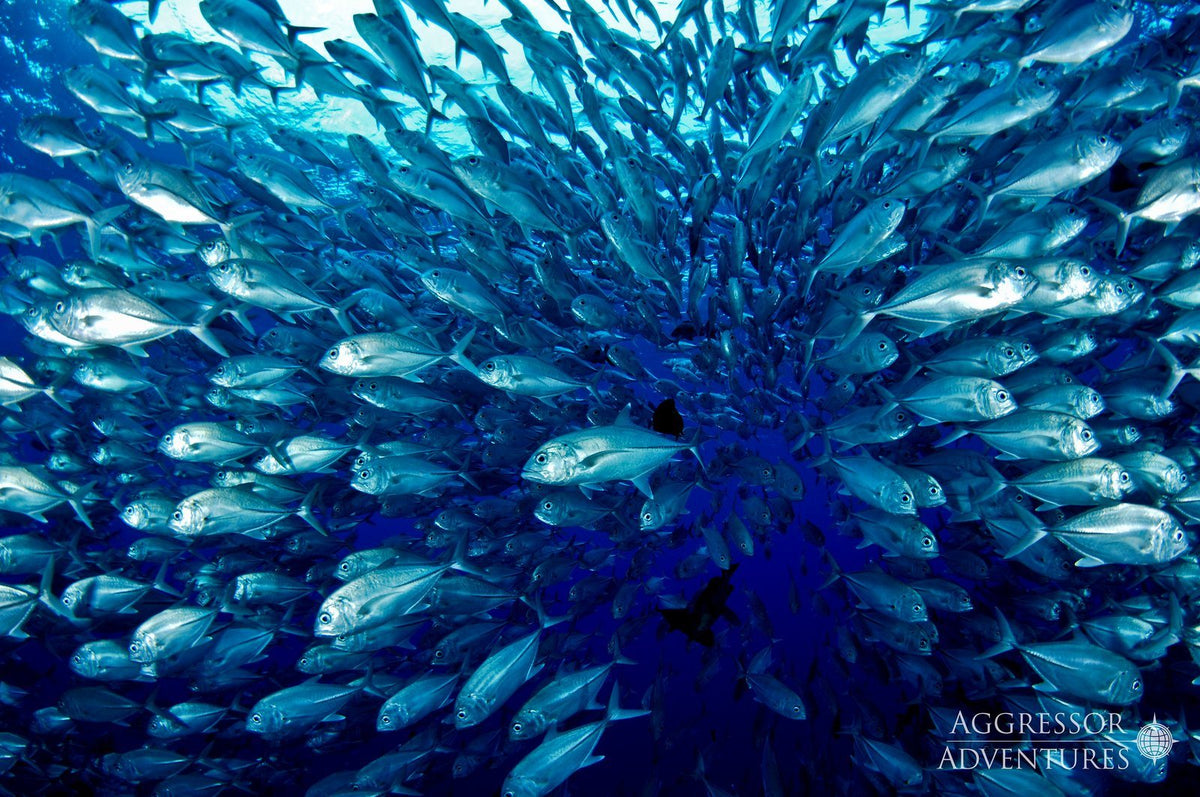
Strong tidal flow sweeps across a reef plateau where grey reef sharks, jacks, barracuda and other large fish may gather. The dive can be fast and demanding, making tide choice, controlled descent and group discipline essential.
German Channel
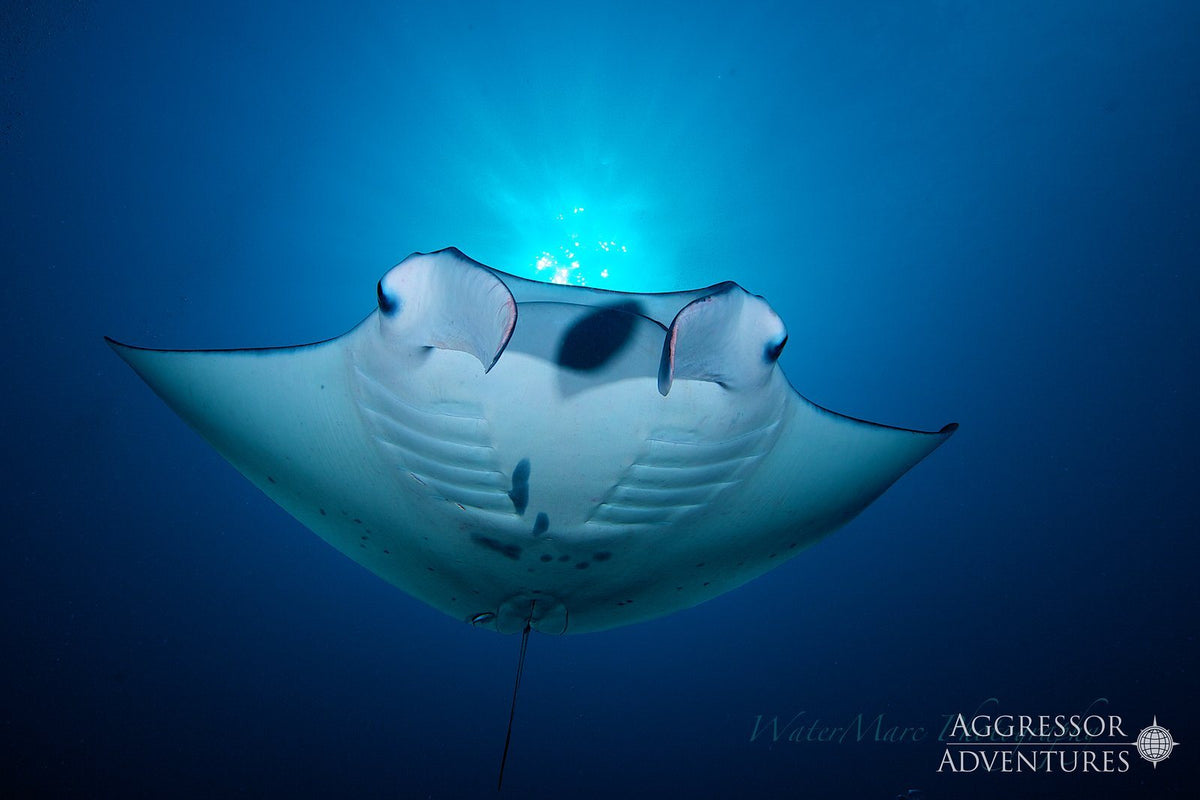
This channel mouth is one of Palau’s best-known manta areas, with cleaning-station behaviour possible alongside reef sharks and schooling fish. Visibility and animal activity change with the tide, and divers get better encounters by settling calmly rather than chasing wildlife.
Ulong Channel
A natural channel through the barrier reef creates a classic drift through sandy bottom, coral slopes and large lettuce-coral formations. Current can accelerate considerably, so divers need solid trim and awareness even though much of the profile is relatively shallow.
WWII wrecks and caverns
Palau adds numerous wartime wrecks and dramatic sites such as Blue Holes to its current-diving reputation. Wreck depth and cavern/overhead profiles must be chosen according to certification and the operator’s procedures.
DIVE SITE GUIDE
Dive sites in Palau
Explore the character of individual sites, from the setting and marine life to the diving conditions. Open a card for the full description; site access and the final profile depend on conditions and experience.
ORIENTATION MAP
Where the dive sites are
Use the map to understand how the key sites are spread around the destination. Pins are for trip-planning orientation only; entry points, moorings and the final dive plan are always confirmed by the local operator on the day.
Coordinates are planning references compiled from current dive-site sources. They are not navigation coordinates; entry points, moorings, tide windows and the final dive plan are always confirmed by the local operator on the day.
Drift · Reef hook point · Pelagic
Blue Corner
Blue Corner is Palau’s benchmark high-energy dive.
Explore this dive site
- Type
- Drift · Reef hook point · Pelagic
- Depth
- 10–30 m
- Experience
- Advanced
- Current
- Strong
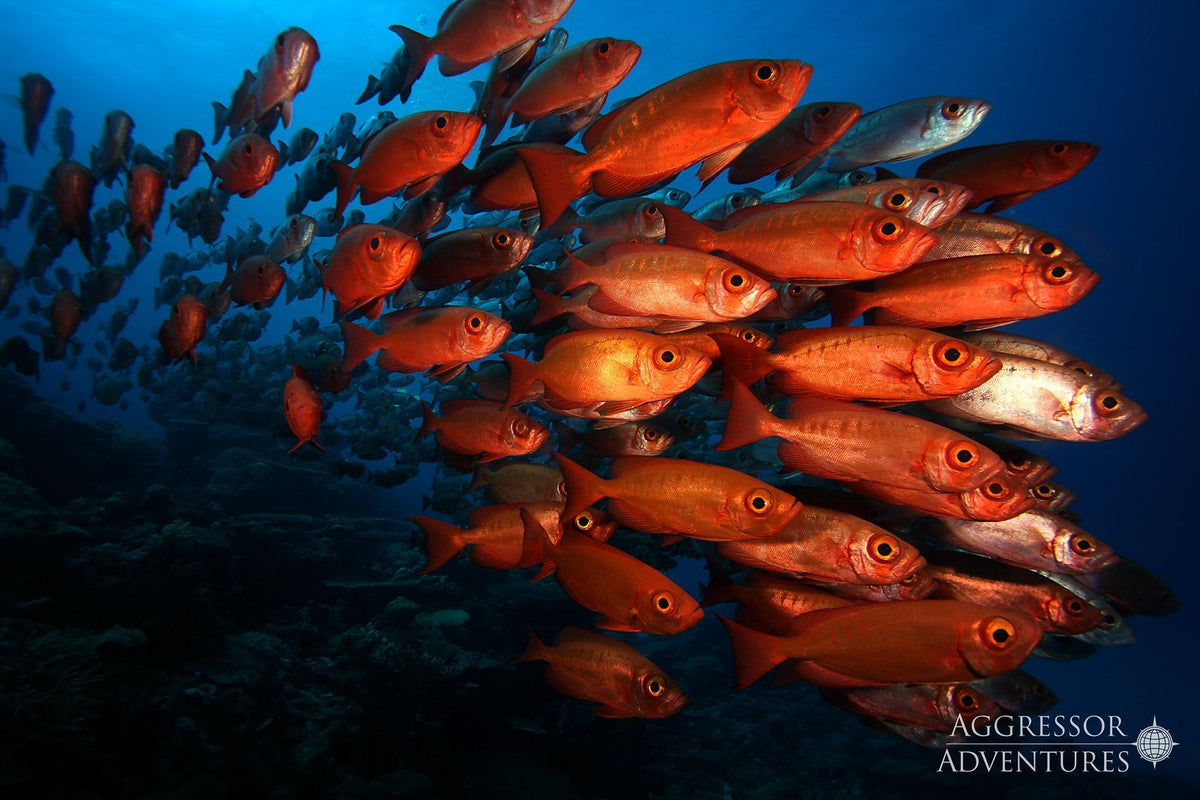
Blue Corner is Palau’s benchmark high-energy dive. Divers drift toward a reef plateau where current concentrates fish and predators, then settle in a controlled position near the reef edge to watch grey reef sharks, jacks, barracuda, Napoleon wrasse and other large fish move through the flow.
The exact experience changes completely with tide; the same site can be manageable or extremely demanding within hours. Reef hooks may be used where local procedures allow and only on suitable non-living substrate. The dive is best for experienced current divers who can descend quickly, stay compact as a group and manage an open-water ascent if required.
Look for: World-famous current dive · Grey reef sharks · Schooling fish · Advanced only
Best for: Grey reef sharks · Jacks · Barracuda · Current diving
Channel · Cleaning station · Drift
German Channel
German Channel is Palau’s most famous manta site, but the animals are only one part of a dynamic tidal system.
Explore this dive site
- Type
- Channel · Cleaning station · Drift
- Depth
- 5–40 m
- Experience
- Intermediate
- Current
- Variable / strong
German Channel is Palau’s most famous manta site, but the animals are only one part of a dynamic tidal system. The dive usually takes place near the channel mouth rather than inside the boat channel itself, with sandy slopes and cleaning stations used by mantas and reef sharks.
Incoming tide often improves visibility while outgoing water can carry more plankton and feeding activity. Divers get better encounters by settling near the cleaning area and letting mantas approach naturally rather than swimming after them. Current varies enough that the guide’s tide timing is central to the dive.
Look for: Manta cleaning station · Reef sharks · Tidal visibility changes · Wildlife etiquette
Best for: Mantas · Reef sharks · Cleaning station
Channel · Drift · Coral
Ulong Channel
Ulong Channel is a classic tidal drift through a natural passage in the western barrier reef.
Explore this dive site
- Type
- Channel · Drift · Coral
- Depth
- 3–20 m
- Experience
- Intermediate–Advanced
- Current
- Moderate–Strong
Ulong Channel is a classic tidal drift through a natural passage in the western barrier reef. Sandy bottom, coral heads and large lettuce-coral formations create a visually rich route while current carries divers through the channel.
Sharks, triggerfish and groupers use the current line, and the dive can become fast enough that good trim and group spacing are essential. The strongest plan follows the tide rather than fighting it, with the boat collecting the group after the channel exit. It is shallower than many Palau sites but can be more demanding because of speed.
Look for: Channel drift · Sharks possible · Lettuce coral · Strong current
Best for: Fast drift · Sharks · Coral channel · Groupers
Cavern · Wall · Sinkholes
Blue Holes
Blue Holes is a system of four vertical openings in the reef plateau just south of Blue Corner.
Explore this dive site
- Type
- Cavern · Wall · Sinkholes
- Depth
- 5–35 m
- Experience
- Intermediate–Advanced
- Current
- Mild–Moderate
Blue Holes is a system of four vertical openings in the reef plateau just south of Blue Corner. Divers descend through shafts of blue light into a large cavern space, then can exit toward the outer wall.
The site is visually dramatic without requiring deep technical penetration, but overhead awareness and excellent buoyancy are still important. Divers uncomfortable with enclosed space can remain near the open shafts and wall. Current is usually calmer than at Blue Corner, which makes Blue Holes a useful topographic dive before moving on to the more energetic nearby sites.
Look for: Four sinkholes · Cavern light · 5–35 m · Near Blue Corner
Best for: Light shafts · Cavern · Wall photography
Cavern · Air chambers · Halocline
Chandelier Cave
Chandelier Cave is a shallow limestone cavern system close to Koror, with several connected chambers and air pockets decorated by stalactites and stalagmites.
Explore this dive site
- Type
- Cavern · Air chambers · Halocline
- Depth
- 3–18 m
- Experience
- Intermediate / Cavern awareness
- Current
- None–Mild
Chandelier Cave is a shallow limestone cavern system close to Koror, with several connected chambers and air pockets decorated by stalactites and stalagmites. The dive is physically easy because current is minimal and depth is modest, but overhead-environment judgement is still essential.
Divers should enter only with a guide who knows the route and should never exceed the light, gas or comfort limits appropriate to cavern diving. The halocline and reflections inside the chambers create a very different experience from Palau’s open-ocean shark dives, making it an excellent contrast within the same trip.
Look for: Five chambers · Air pockets · Stalactites · Shallow cavern
Best for: Stalactites · Air pockets · Unique geology
Wall · Drift · Pelagic
Peleliu Wall
Peleliu Wall is one of Palau’s most exposed southern dives, where a coral plateau drops into deep blue water and strong current can bring sharks, tuna and other pelagics along the edge.
Explore this dive site
- Type
- Wall · Drift · Pelagic
- Depth
- 7–40 m
- Experience
- Advanced
- Current
- Moderate–Strong
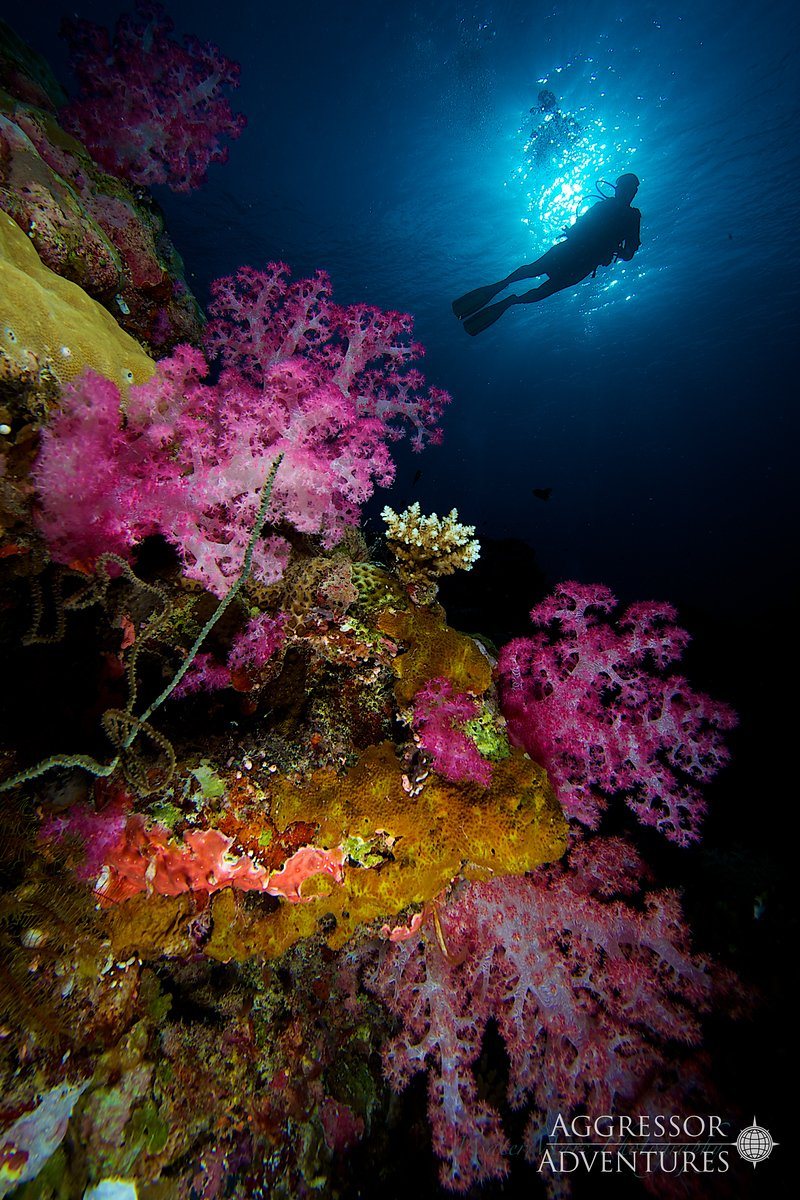
Peleliu Wall is one of Palau’s most exposed southern dives, where a coral plateau drops into deep blue water and strong current can bring sharks, tuna and other pelagics along the edge. The wall is covered in soft coral, black coral and sea fans, so the reef remains impressive even when larger animals stay distant.
Depth and current combine to make this an advanced profile. Divers need to keep close to the wall, monitor depth carefully and follow the guide’s exit plan rather than allowing the current to pull the group into open ocean.
Look for: Deep wall · Pelagic potential · Strong current · Advanced profile
Best for: Pelagics · Wall · Strong current · Wide angle
WWII wreck · Reef growth
Helmet Wreck
Helmet Wreck is one of Palau’s most accessible WWII wrecks, beginning around 10 metres at the stern and descending toward roughly 30 metres at the bow.
Explore this dive site
- Type
- WWII wreck · Reef growth
- Depth
- 10–30 m
- Experience
- Intermediate–Advanced
- Current
- Mild
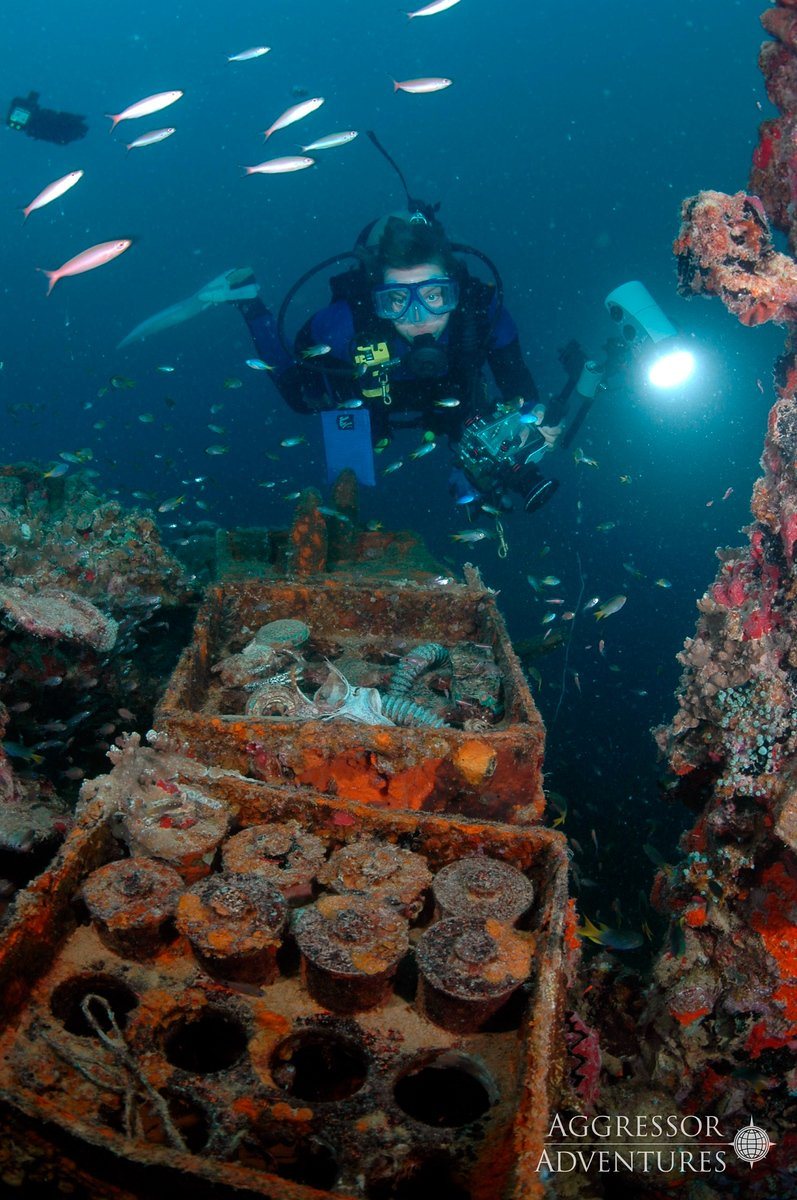
Helmet Wreck is one of Palau’s most accessible WWII wrecks, beginning around 10 metres at the stern and descending toward roughly 30 metres at the bow. Ammunition, rifles, helmets and other wartime remnants are part of the site’s historical appeal, while decades underwater have added coral and fish life to the structure.
The wreck is upright enough to be easy to understand from the outside, so penetration is not necessary for a rewarding dive. Divers should treat artifacts as protected history and avoid touching or moving anything. The exact mooring is operator-managed near Koror.
Look for: WWII wreck · 10–30 m · Historic artifacts · Accessible wreck
Best for: WWII wreck · Artifacts · Photography
Wall · Current point · Pelagic
New Drop Off
New Drop Off lies only a few kilometres from Blue Corner and shares many of the same ingredients: clear oceanic water, a steep wall and current that attracts sharks and schooling fish.
Explore this dive site
- Type
- Wall · Current point · Pelagic
- Depth
- 10–35 m
- Experience
- Advanced
- Current
- Moderate–Strong
New Drop Off lies only a few kilometres from Blue Corner and shares many of the same ingredients: clear oceanic water, a steep wall and current that attracts sharks and schooling fish. The site often feels slightly less intense than Blue Corner but still demands solid current skills.
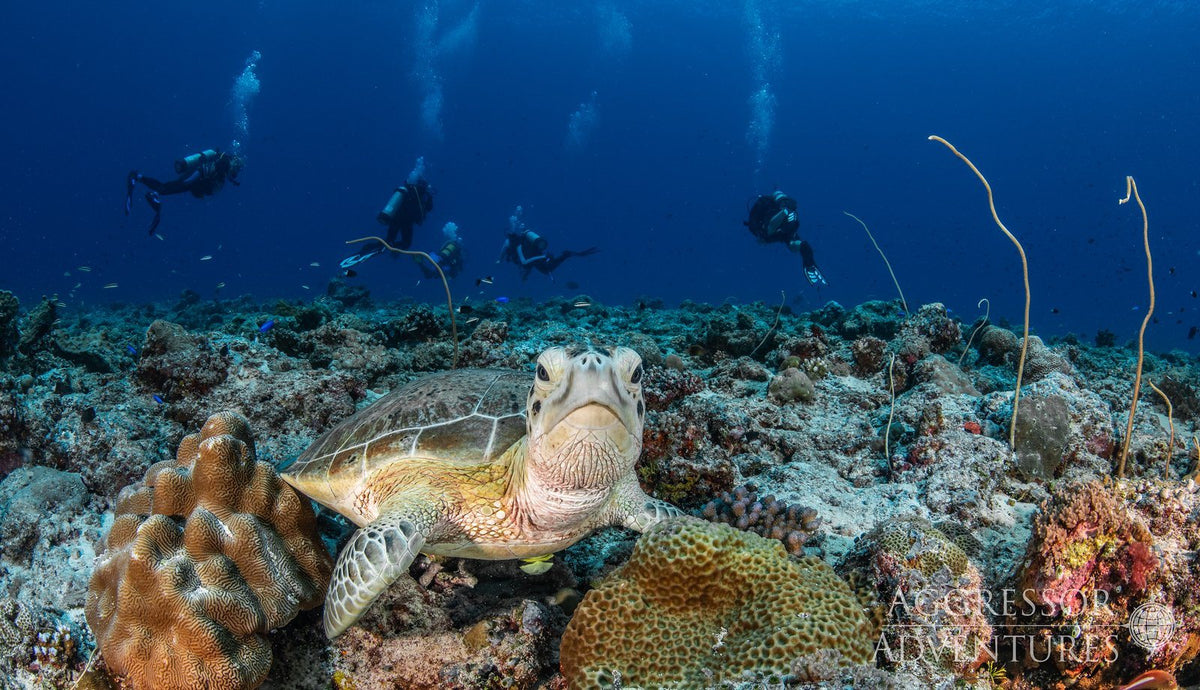
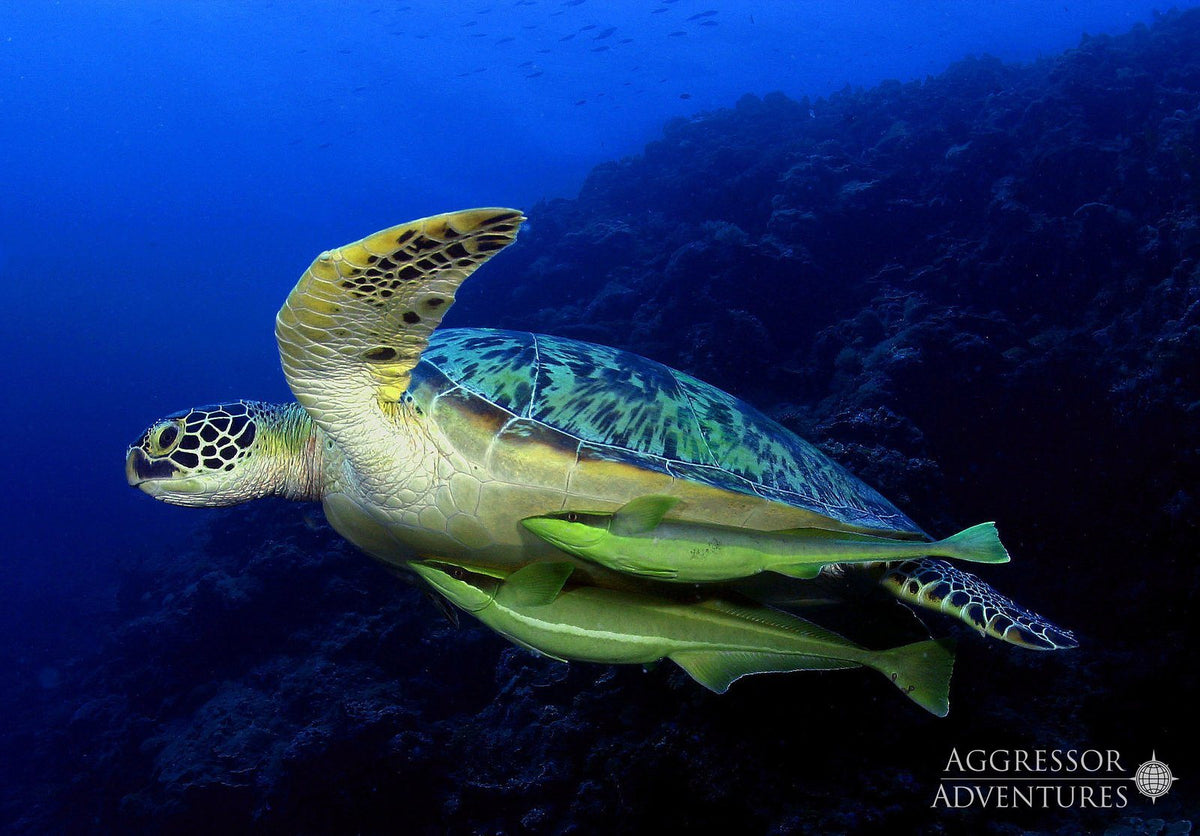
Grey reef sharks, turtles, barracuda and reef fish move along the edge, while the wall provides excellent wide-angle scenery. The dive plan depends on tide and may involve drifting along the wall before settling near a corner. The public exact coordinate varies between operators, so the map uses an approximate outer-reef anchor.
Look for: Wall + current point · Grey reef sharks · Clear water · Advanced drift
Best for: Grey reef sharks · Turtles · Wall · Clear water
Underwater photography
At Blue Corner, grey reef sharks, Jacks, Barracuda, Current diving give an idea of the photographic possibilities. Choose the camera setup for the planned sites, then leave time to observe the scene before making the image. Repeating a productive dive often creates better opportunities than constantly searching for a different location. For reef scenes, use the shape of the reef and the available light to give the image depth. A diver at a respectful distance can provide scale without crowding an animal.
Beyond diving: Palau above the surface
The Rock Islands offer a distinctive landscape for kayaking, boat exploration and suitable snorkelling. Cultural and WWII history add interest on land, with Koror providing a convenient base for evenings and day tours.
Nature sites may have specific access rules and permits. Plan the experiences you most want as explicit parts of the itinerary, especially for non-divers. A resort stay usually offers more flexibility for separate land activities than a cruise with a concentrated diving schedule.
Getting to Palau
Fly to Roman Tmetuchl International Airport (ROR) and transfer to Koror/Malakal. From there, choose land-based day boats or a liveaboard according to preferred dive volume, budget and itinerary style.
Choose arrival and departure times around the onward transfer, especially when a boat crossing or a long road journey is involved. Leave space for a relaxed final day ashore and an appropriate interval between the last dive and flying.
Palau diving questions
What makes Palau worth a diving trip?
Palau’s channels and reef corners are shaped by tide: fish gather, sharks patrol and a wall can suddenly fill with movement. Caverns, wrecks and the Rock Islands make the destination much broader than one celebrated drift dive.
How should I plan my stay?
Stay around Koror for shore flexibility and day-boat diving, or choose a liveaboard for more time close to the outer sites. Compare the actual itinerary and tender journeys. Seven to ten nights is a useful framework for a varied first visit, particularly if you want both diving and island exploration.
When is a useful time to visit?
Diving is available throughout the year. November to April is commonly a drier starting window, but tides remain central to channel and corner dives. A particular animal encounter should never be treated as an automatic result of choosing the right month.
Is there enough for non-diving companions?
The Rock Islands offer a distinctive landscape for kayaking, boat exploration and suitable snorkelling. Cultural and WWII history add interest on land, with Koror providing a convenient base for evenings and day tours.
A closer look at Palau



Plan your Palau trip
Tell us the experiences you most want, your preferred dates and how you like to travel. We can bring the destination, accommodation and diving into one coherent itinerary.
Plan my trip