

Destination guide · Papua New Guinea
Kimbe Bay Diving
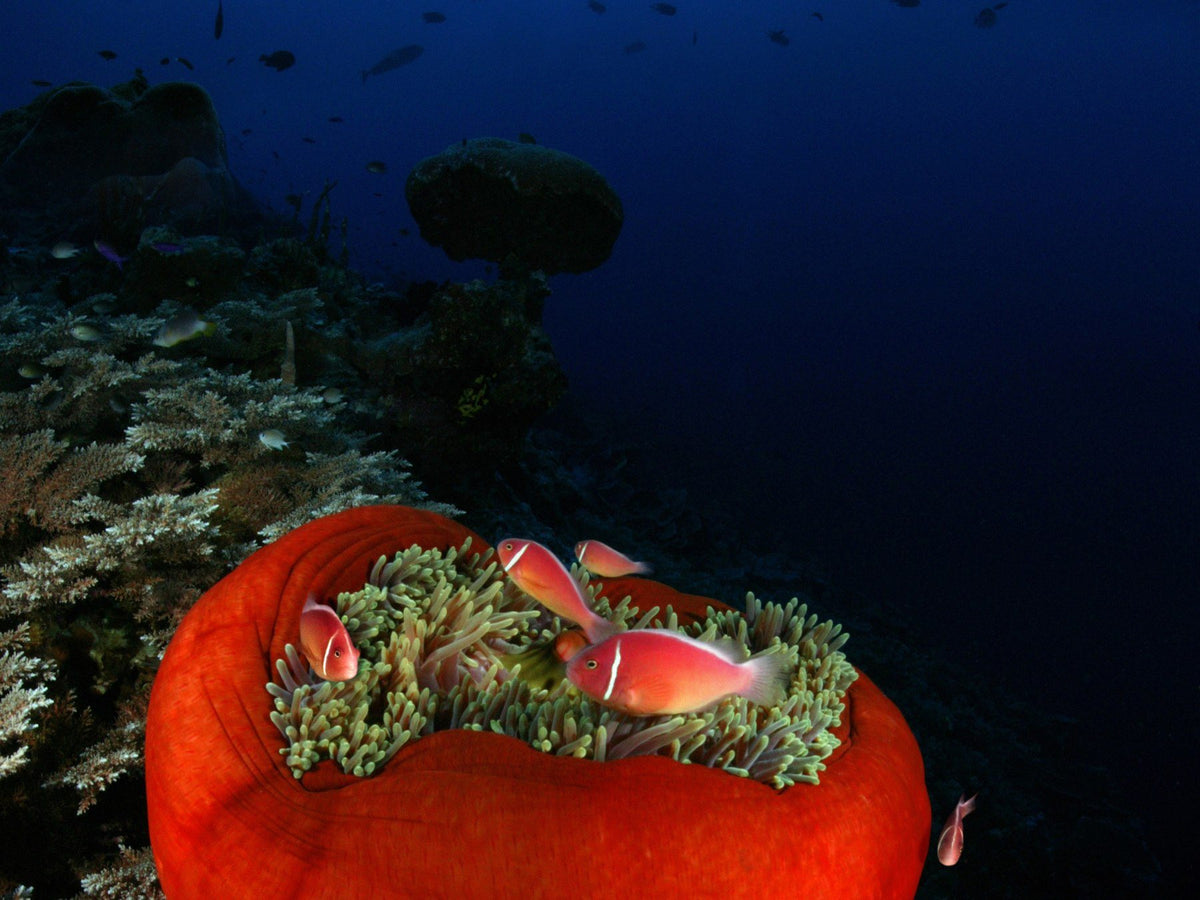
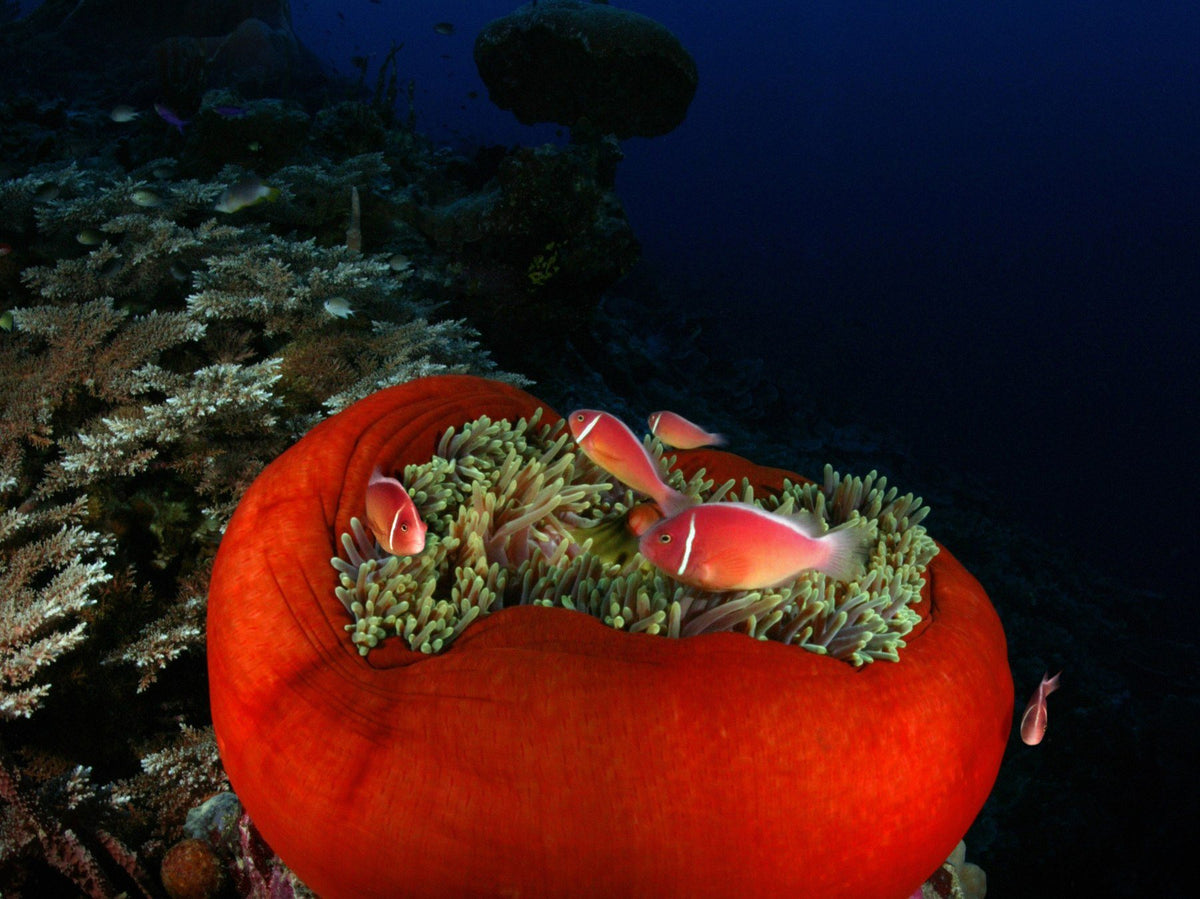
Kimbe Bay is a landscape of reefs beneath volcanoes. Coral-covered seamounts rise into fish-filled water, while island reefs and quieter sites reveal the detail that makes a photographic stay so rewarding.
Kimbe Bay at a glance
Kimbe Bay is celebrated for coral seamounts, offshore reefs and exceptional marine biodiversity framed by the volcanic landscapes of New Britain. Schooling fish and pelagic possibilities complement richly developed coral systems.
A land-based lodge provides access to both local reefs and longer-range sites, with weather and boat logistics determining the daily plan. The destination suits photographers and experienced reef divers, while nature, birding and cultural excursions broaden its appeal above water.
Planning your Kimbe Bay stay
A lodge stay focuses on Kimbe Bay’s local and offshore reefs; a liveaboard may reach farther regions and should be assessed by its actual itinerary. Six to eight nights is a useful framework for a first bay visit, with repeated access to favourite photographic sites.

Walindi Plantation Resort
A long-established Kimbe Bay dive resort combining full-board tropical accommodation with coral reefs, walls and seamount diving.
When to dive Kimbe Bay
Diving is available through the year, while exposed offshore sites are more sensitive to wind and sea conditions. Transition-season periods are often useful for broader exploration. The available boat programme and the specific area covered matter more than one label for all of New Britain.
Planning window: Year-round diving.
What the diving is like
Advanced experience is useful for offshore seamounts; sheltered reefs suit intermediate divers.
Coral seamounts
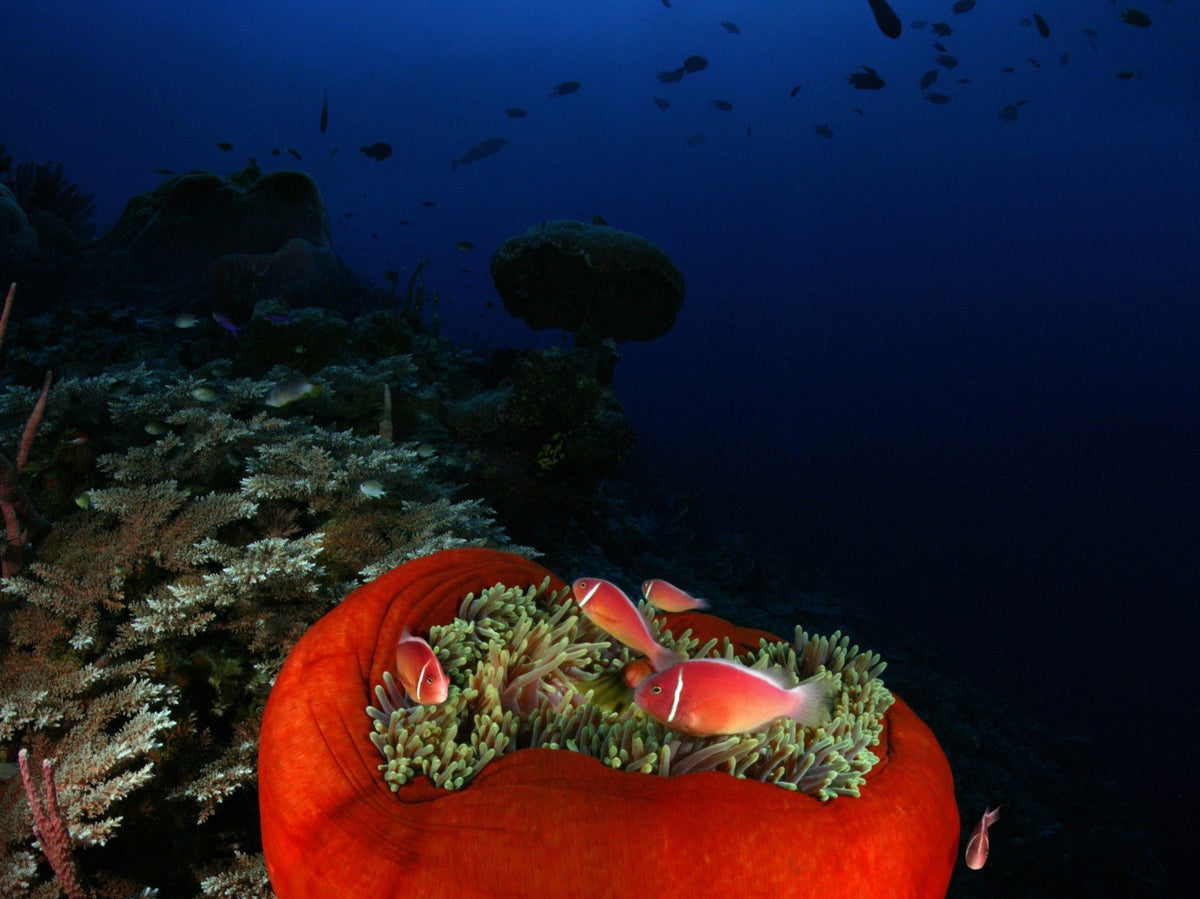
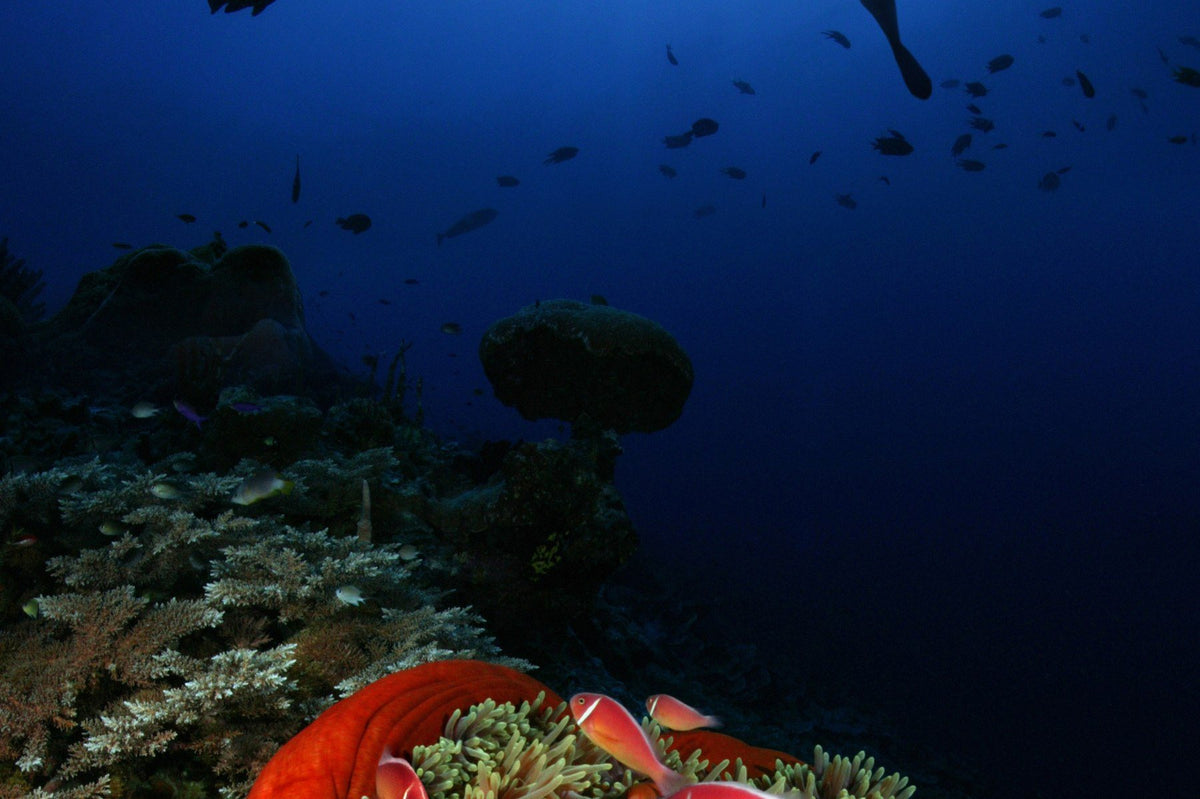
Kimbe Bay is shaped by isolated reefs and seamounts rising from deep water, many of them covered in hard coral, sea fans, sponges and anemones. Offshore pinnacles create a useful mix of reef scenery and blue-water fish action, with the final site choice determined by current and daily sea conditions.
Schooling fish
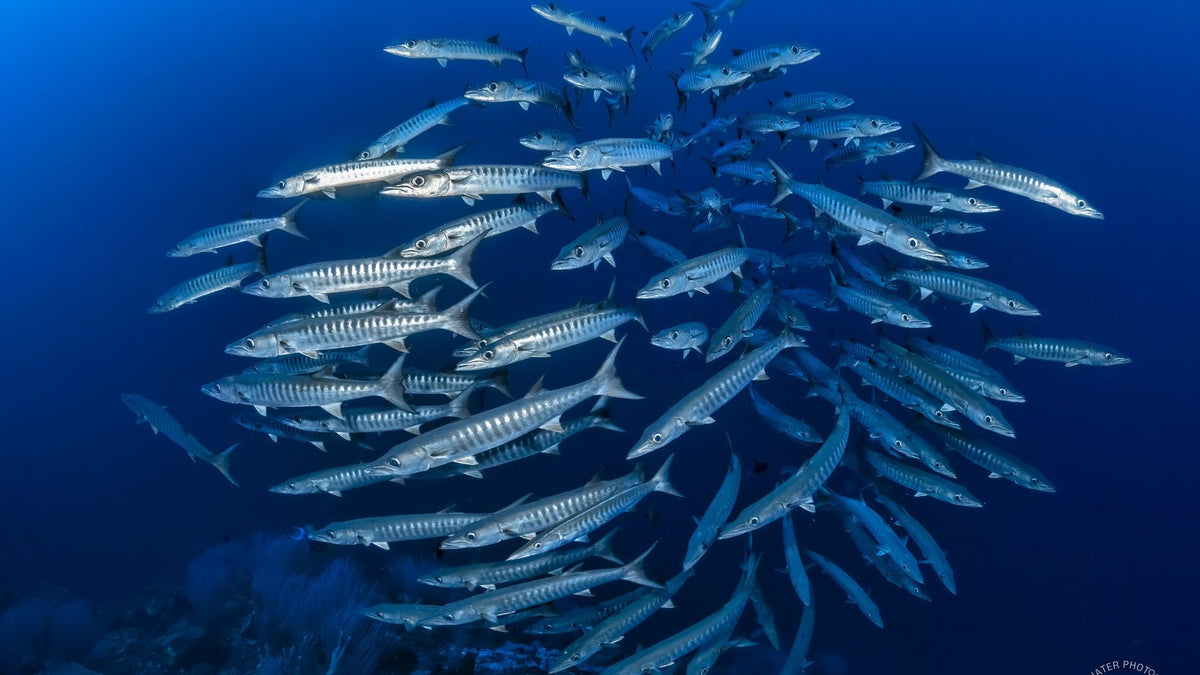
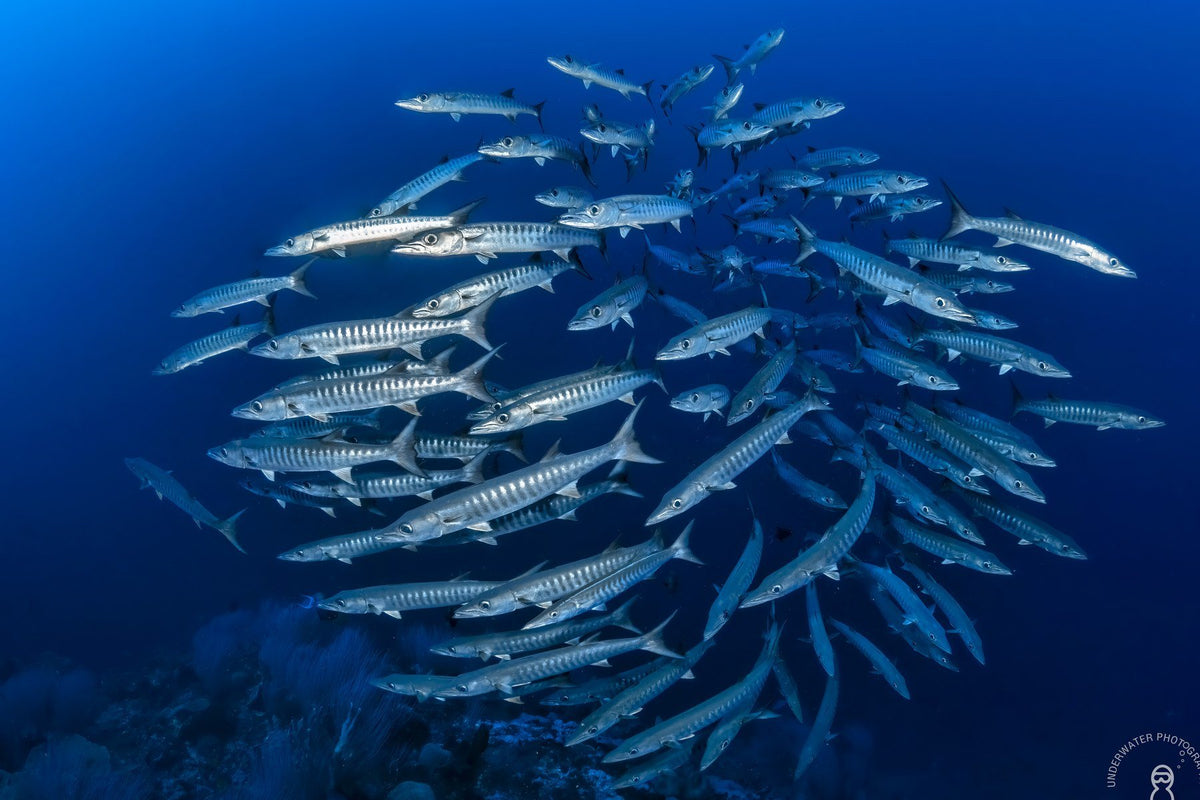
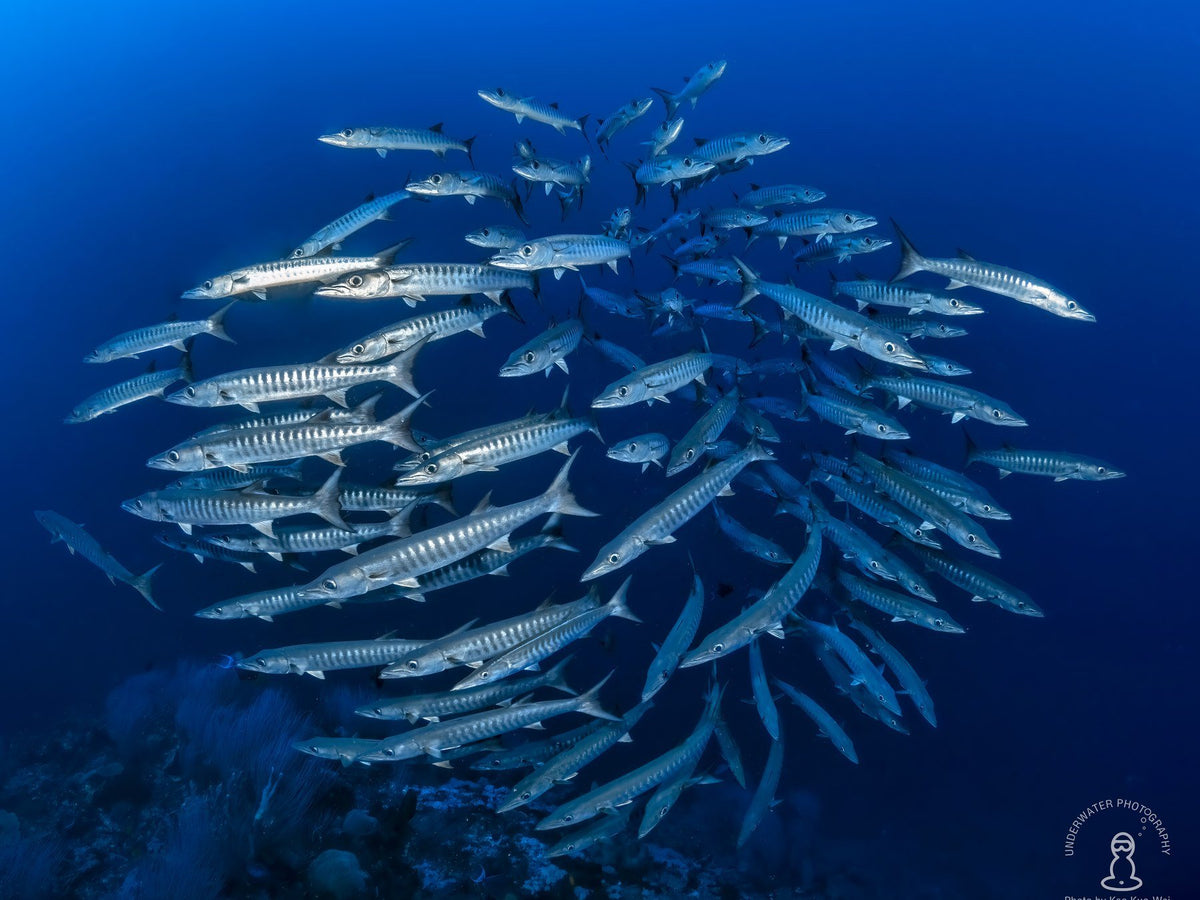
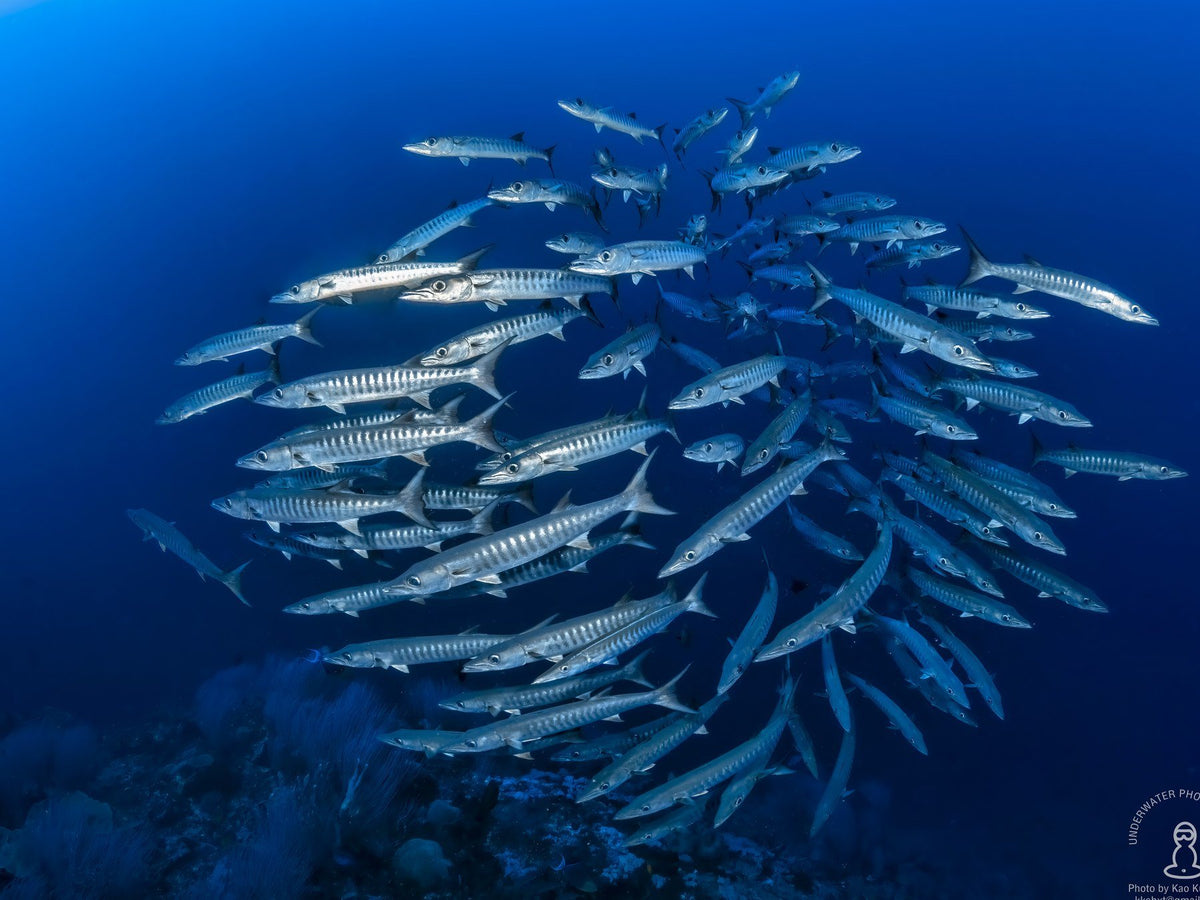
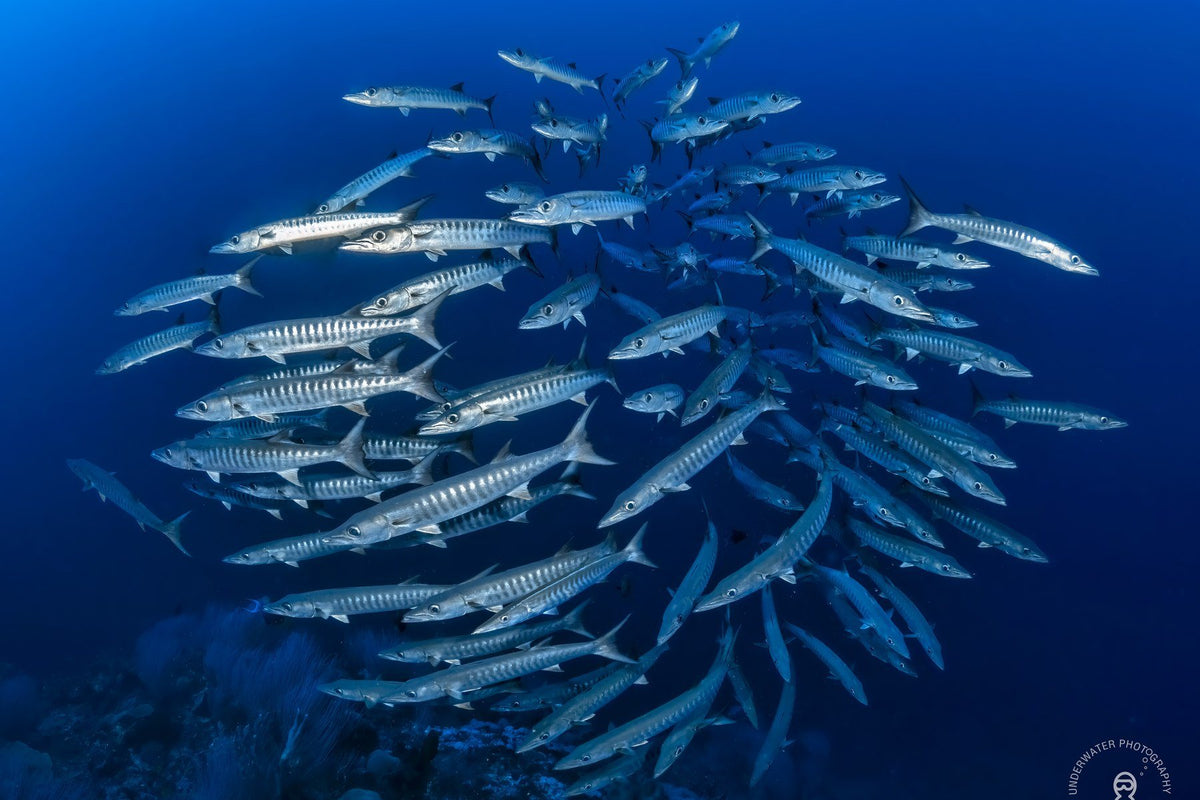
Barracuda, trevally, fusiliers, tuna and other schooling fish are a recurring feature of Kimbe Bay’s offshore reefs. The strongest aggregations often gather where current moves across a seamount or point, so guides time the dive to find fish action without pushing the group beyond an appropriate current level.
Shark and pelagic potential
Grey reef sharks are regularly reported on the offshore reefs, with hammerheads and other large visitors possible but less predictable. Dolphins are also seen in the bay, while rarer pelagic encounters remain opportunistic. Kimbe is most rewarding when you take in the complete reef ecosystem, from small reef life to passing fish.
World-class reef scenery
The bay’s strength is the combination of coral diversity and contrasting reef structures: sheer walls, submerged shoals, coral gardens, sea fans and sheltered island sites can all fit into one programme. That variety gives both wide-angle and macro photographers useful options without relying on a single signature animal.
DIVE SITE GUIDE
Dive sites in Kimbe Bay
Explore the character of individual sites, from the setting and marine life to the diving conditions. Open a card for the full description; site access and the final profile depend on conditions and experience.
ORIENTATION MAP
Where the dive sites are
Use the map to understand how the key sites are spread around the destination. Pins are for trip-planning orientation only; entry points, moorings and the final dive plan are always confirmed by the local operator on the day.
Coordinates are planning references compiled from current dive-site sources. They are not navigation coordinates; entry points, moorings, tide windows and the final dive plan are always confirmed by the local operator on the day.
Seamount · Pelagic · Wall
Bradford Shoal
Bradford Shoal is one of Kimbe Bay’s signature offshore seamounts.
Explore this dive site
- Type
- Seamount · Pelagic · Wall
- Depth
- 20–27 m
- Experience
- Advanced
- Current
- Moderate
Bradford Shoal is one of Kimbe Bay’s signature offshore seamounts. Twin summits rise from deep water to around 20 metres before the reef drops steeply away, creating a compact area where schooling barracuda, trevally and tuna can build above flat hard coral and leather coral.
Reef sharks are possible around the edge, and the open-water setting gives the dive a much larger sense of scale than the inshore reefs. Because the top is already relatively deep, the whole dive needs disciplined gas and no-decompression planning. The best profile spends the deeper section early, then uses the seamount top rather than open blue water for the ascent and safety stop.
Look for: Offshore seamount · Barracuda schools · Reef sharks possible · 20 m summit
Best for: Barracuda · Trevally · Reef sharks · Blue-water diving
Seamount · Reef · Pelagic
Inglis Shoal
Inglis Shoal rises from deep Kimbe Bay water to a summit around the mid-teens, then falls through steep reef toward open blue.
Explore this dive site
- Type
- Seamount · Reef · Pelagic
- Depth
- 14–30 m
- Experience
- Advanced
- Current
- Moderate
Inglis Shoal rises from deep Kimbe Bay water to a summit around the mid-teens, then falls through steep reef toward open blue. That shape concentrates schooling barracuda, batfish, trevally, fusiliers and unicornfish above the structure while grey reef sharks and occasional hammerheads may patrol farther out.
The site is a strong wide-angle dive because the seamount, fish schools and blue-water visitors can all share the same scene. Current can strengthen across the summit, so the guide chooses the entry and keeps the group close enough to the reef to avoid drifting away. A multilevel profile gives more time than simply remaining at the deepest part.
Look for: 14 m summit · Schooling fish · Grey reef sharks possible · Wide angle
Best for: Schooling fish · Sharks · Deep reef
Reef · Sand flats · Macro
Restorf Island
Restorf Island packs several habitats into a single dive area.
Explore this dive site
- Type
- Reef · Sand flats · Macro
- Depth
- 3–30 m
- Experience
- Beginner–Intermediate
- Current
- Mild
Restorf Island packs several habitats into a single dive area. Near the beach, sand flats hold garden eels, shrimp gobies and burrowing fish; farther around the island, hard coral gives way to black coral trees, gorgonian fans, barrel sponges and loosely connected bommies.
That variety makes the site ideal for mixed-interest groups because a photographer can search for small animals while another diver enjoys larger reef scenery during the same dive. Current is usually gentle and the useful depth range is broad, so the site works well for less-experienced divers. It is one of Kimbe Bay’s best examples of biodiversity without relying on a pelagic encounter.
Look for: Multiple habitats · Garden eels · Gorgonians · Beginner friendly
Best for: Garden eels · Gobies · Gorgonians · Macro + reef
Reef · Wall · Coral garden
Susan’s Reef
Susan’s Reef has one of the most distinctive visual signatures in Kimbe Bay: dense red whip gorgonians tangled with colorful crinoids.
Explore this dive site
- Type
- Reef · Wall · Coral garden
- Depth
- 10–25 m
- Experience
- Intermediate
- Current
- Mild
Susan’s Reef has one of the most distinctive visual signatures in Kimbe Bay: dense red whip gorgonians tangled with colorful crinoids. A saddle links the reef toward Vanessa’s, while one side drops as a wall and the other slopes into hard-coral garden. Large sea fans, hawkfish, anemones and small reef subjects make it a particularly strong photography site.
The deeper saddle around 25 metres is best visited first, followed by a gradual ascent through the whip corals to the shallow staghorn zone. Current is generally mild, so the dive feels deliberate rather than rushed. The exact mooring is operator-managed; the map pin represents the reef area.
Look for: Red whip gorgonians · Crinoids · Sea fans · Excellent macro photography
Best for: Red whip gorgonians · Crinoids · Macro photography
Pinnacle · Seamount
South Emma
South Emma is a classic Kimbe Bay offshore pinnacle rising from deep water toward a top around the low teens.
Explore this dive site
- Type
- Pinnacle · Seamount
- Depth
- 10–30 m
- Experience
- Intermediate–Advanced
- Current
- Moderate
South Emma is a classic Kimbe Bay offshore pinnacle rising from deep water toward a top around the low teens. Hard and soft coral, large sponges and reef fish cover the structure, while current can draw schooling fish and larger visitors around the outer edge.
Because the site is isolated, visibility and blue-water scenery can be excellent, but the same exposure means the guide must read wind and current before committing to the dive. The profile is straightforward when conditions are favorable: deeper section first, then a slow spiral upward around the pinnacle. It is especially strong for wide-angle photography because coral structure and open-water fish action are concentrated into one compact site.
Look for: Offshore pinnacle · Coral density · Schooling fish · Wide-angle photography
Best for: Coral pinnacle · Schooling fish · Wide angle
Reef shoulder · Coral garden
Vanessa’s Reef
Vanessa’s Reef is a shallow, unhurried dive built around a submerged shoulder between roughly 15 and 18 metres.
Explore this dive site
- Type
- Reef shoulder · Coral garden
- Depth
- 15–18 m
- Experience
- Beginner–Intermediate
- Current
- Mild
Vanessa’s Reef is a shallow, unhurried dive built around a submerged shoulder between roughly 15 and 18 metres. Giant dark-red gorgonian sea fans — some several metres across — are the visual highlight, while bright orange sponge mounds and crinoids create a second distinct habitat along the reef. The shallow working depth gives generous bottom time and makes the site approachable for Open Water divers.
Photographers can move between wide-angle fan compositions and close-up subjects such as hawkfish and commensal shrimp without changing the overall profile. Current is typically mild. The precise mooring is local operator knowledge, so the pin is an orientation point for the reef sector rather than a navigation coordinate.
Look for: Giant red sea fans · Orange sponge garden · Shallow profile · Photographer favorite
Best for: Huge red sea fans · Sponges · Photography
Fringing reef · Coral slope
Christine’s Reef
Christine’s Reef is one of Walindi’s midshore reefs and represents the quieter, coral-focused side of Kimbe Bay.
Explore this dive site
- Type
- Fringing reef · Coral slope
- Depth
- 5–30 m
- Experience
- Beginner–Intermediate
- Current
- Mild
Christine’s Reef is one of Walindi’s midshore reefs and represents the quieter, coral-focused side of Kimbe Bay. A continuous reef slope carries hard coral through a broad depth range, with reef fish and smaller subjects spread across the structure rather than concentrated around one deep pinnacle.
That makes the site useful for mixed-experience groups and photographers who want time to study the reef rather than wait for pelagics. Scientific work in Kimbe Bay has also used Christine’s as a representative coral habitat, reflecting the quality and continuity of the reef. The dive can be kept shallow or extended deeper according to certification, with the operator choosing the best section and mooring.
Look for: Continuous coral slope · Mixed-experience friendly · Reef research site · Macro + wide angle
Best for: Coral cover · Reef fish · Research site
Aircraft wreck · Sand
Zero Fighter Wreck
Kimbe Bay’s Zero wreck is an almost intact Japanese fighter resting upright on soft sand in a sheltered bay.
Explore this dive site
- Type
- Aircraft wreck · Sand
- Depth
- 14–17 m
- Experience
- Beginner–Intermediate
- Current
- Usually mild
Kimbe Bay’s Zero wreck is an almost intact Japanese fighter resting upright on soft sand in a sheltered bay. At roughly 14–17 metres, it is far more accessible than many historic wrecks and can be appreciated without penetration. The recognizable wings, propeller and cockpit make the aircraft a powerful photographic subject, while sponges, coral growth and small fish have transformed the machine into habitat.
Fine silt means buoyancy control is critical: one careless fin kick can reduce visibility around the entire wreck. Because the site lies close to shore, recent rain can also affect water clarity. The combination of WWII history, shallow depth and unusual preservation makes it one of Kimbe Bay’s most distinctive dives.
Look for: Intact WWII aircraft · 14–17 m · No penetration needed · Fine-silt bottom
Best for: WWII aircraft · Photography · Shallow wreck
Underwater photography
At Bradford Shoal, barracuda, Trevally, Reef sharks, Blue-water diving give an idea of the photographic possibilities. Choose the camera setup for the planned sites, then leave time to observe the scene before making the image. Repeating a productive dive often creates better opportunities than constantly searching for a different location. For reef scenes, use the shape of the reef and the available light to give the image depth. A diver at a respectful distance can provide scale without crowding an animal.
Beyond diving: Kimbe Bay above the surface
New Britain’s volcanic scenery is part of the journey even before entering the water. Birding, nature outings and village visits can deepen a stay, with the chosen lodge acting as the base for both sea and land experiences.
Allow a dedicated day for inland interests rather than trying to fit them around offshore boat trips. Non-divers who enjoy natural history and a peaceful setting can find a satisfying programme, particularly when their interests are considered when the accommodation is selected.
Getting to Kimbe Bay
Fly to Hoskins and use resort-arranged road and boat transfers.
Choose arrival and departure times around the onward transfer, especially when a boat crossing or a long road journey is involved. Leave space for a relaxed final day ashore and an appropriate interval between the last dive and flying.
Kimbe Bay diving questions
What makes Kimbe Bay worth a diving trip?
Kimbe Bay is a landscape of reefs beneath volcanoes. Coral-covered seamounts rise into fish-filled water, while island reefs and quieter sites reveal the detail that makes a photographic stay so rewarding.
How should I plan my stay?
A lodge stay focuses on Kimbe Bay’s local and offshore reefs; a liveaboard may reach farther regions and should be assessed by its actual itinerary. Six to eight nights is a useful framework for a first bay visit, with repeated access to favourite photographic sites.
When is a useful time to visit?
Diving is available through the year, while exposed offshore sites are more sensitive to wind and sea conditions. Transition-season periods are often useful for broader exploration. The available boat programme and the specific area covered matter more than one label for all of New Britain.
Is there enough for non-diving companions?
New Britain’s volcanic scenery is part of the journey even before entering the water. Birding, nature outings and village visits can deepen a stay, with the chosen lodge acting as the base for both sea and land experiences.
A closer look at Kimbe Bay


Plan your Kimbe Bay trip
Tell us the experiences you most want, your preferred dates and how you like to travel. We can bring the destination, accommodation and diving into one coherent itinerary.
Plan my trip