

Destination guide · Papua New Guinea
Kavieng Diving
Kavieng’s diving follows moving water: passages, reef edges and fish life shaped by the meeting of seas. WWII aircraft and quieter island reefs add a different tempo, making the region more varied than a single famous drift dive.
Kavieng at a glance
Kavieng, at the northern end of New Ireland, is shaped by tidal water moving between the Bismarck Sea and the open Pacific. The result is a dive region of passages, drift dives, drop-offs, coral gardens and WWII aircraft or wreck sites rather than one single signature reef.
The destination works best for divers who accept tide-led scheduling. Albatross Passage can change from manageable to high-energy as the incoming tide strengthens, while quieter reefs and the Lissenung house reef add macro, night diving and relaxed profiles between the more demanding dives.
Planning your Kavieng stay
Choose a base with access to both passages and sheltered reefs. Six to eight nights gives time for tide-led sites, wrecks and slower photographic dives. A flexible daily plan is especially useful because the character of Albatross Passage can change sharply with the water movement.

Lissenung Island Resort
A small private-island dive resort near Kavieng with intimate bungalows, free daytime house-reef diving and varied PNG sites.
When to dive Kavieng
April–June and September–December are the existing planning windows. Tide and visibility still determine the best site on a particular day. Allow generous margins around Port Moresby and Kavieng connections so the diving programme does not depend on a tight flight sequence.
Planning window: Best April–June and September–December.
What the diving is like
Advanced Open Water and current-diving confidence are recommended for the signature passages; calmer reef dives are available when conditions suit.
Albatross Passage
On a well-timed incoming tide, Albatross Passage can concentrate eagle rays, reef sharks, tuna, jacks and barracuda around a coral-covered channel wall. It is a tide-dependent dive, so the operator’s timing determines whether it becomes the trip highlight.
WWII aircraft and wreck history
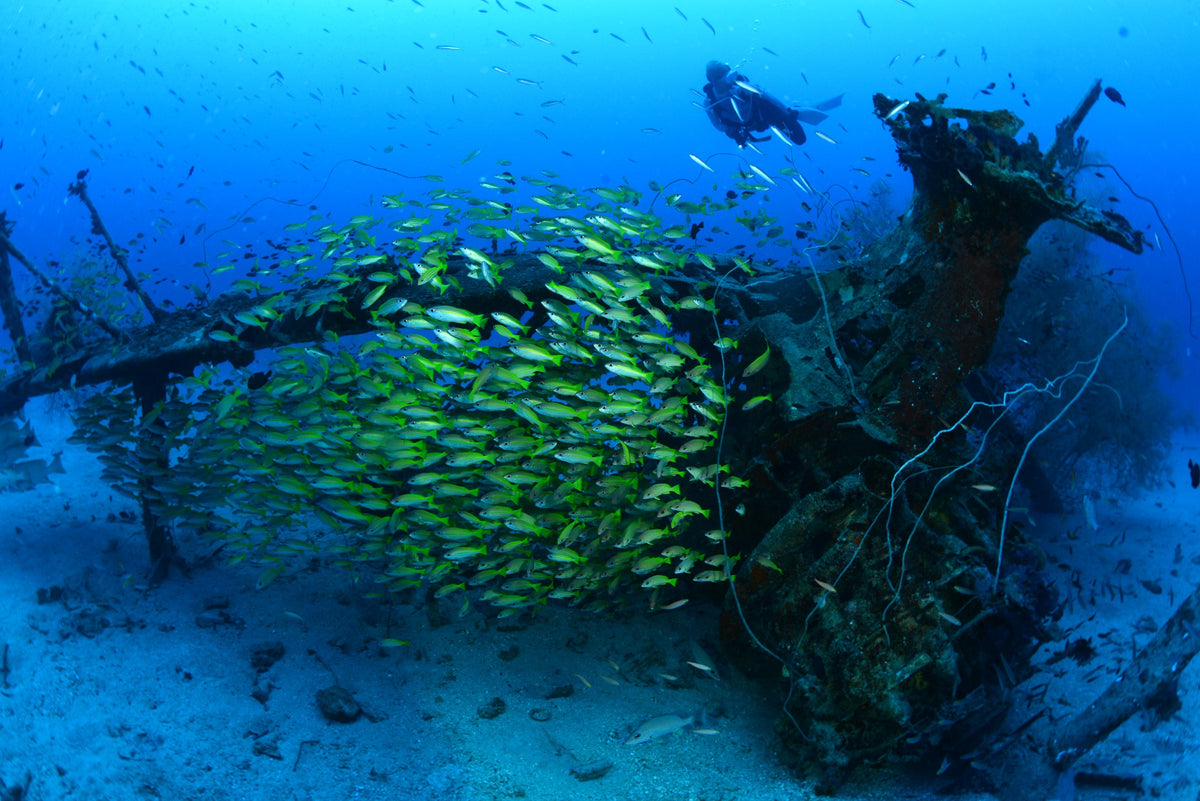
Japanese floatplanes and other wartime remains add a strong historical layer. Depths vary widely, so each site must be matched to certification, gas planning and the group’s experience.
Outer reefs and drop-offs
Kavieng’s offshore reefs add clear-water coral, schooling fish and blue-water exposure beyond the passages. These sites broaden the itinerary when tide or current makes a channel dive unsuitable.
House-reef macro and night diving
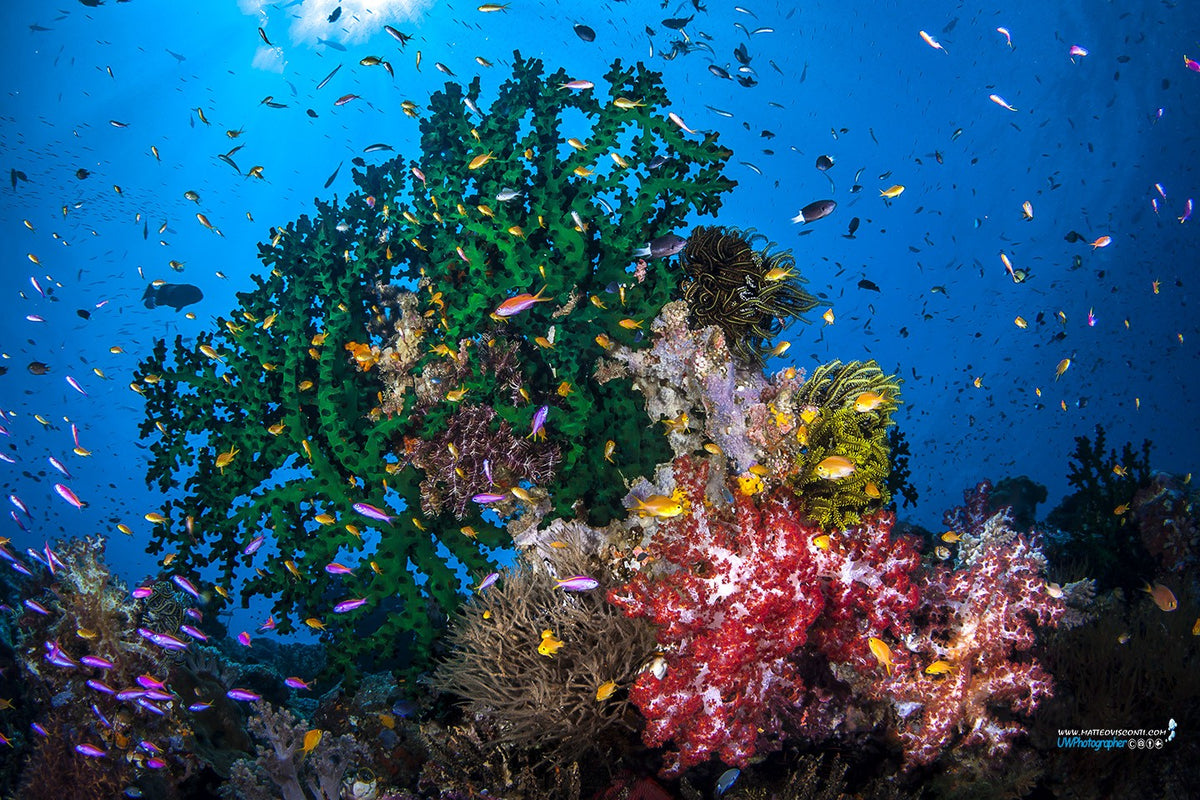
Lissenung’s shallow reef and other calmer habitats bring seahorses, clownfish, nudibranchs and small reef subjects into a destination otherwise known for wide-angle action.
DIVE SITE GUIDE
Dive sites in Kavieng
Explore the character of individual sites, from the setting and marine life to the diving conditions. Open a card for the full description; site access and the final profile depend on conditions and experience.
ORIENTATION MAP
Where the dive sites are
Use the map to understand how the key sites are spread around the destination. Pins are for trip-planning orientation only; entry points, moorings and the final dive plan are always confirmed by the local operator on the day.
Coordinates are planning references compiled from current dive-site sources. They are not navigation coordinates; entry points, moorings, tide windows and the final dive plan are always confirmed by the local operator on the day.
House reef · Coral garden · Night
Lissenung Island Reef
Lissenung’s house reef is the calm side of Kavieng and a useful introduction to the region before tackling the fast channels.
Explore this dive site
- Type
- House reef · Coral garden · Night
- Depth
- 2–10 m
- Experience
- Beginner
- Current
- Mild
Lissenung’s house reef is the calm side of Kavieng and a useful introduction to the region before tackling the fast channels. Coral starts almost from the shoreline, with reef fish and a surprisingly broad range of macro life packed into a shallow profile.
The modest depth makes it ideal for long photography dives, check dives and night dives, when crustaceans and nocturnal animals emerge from the coral. Because the site is accessible directly from the island, divers can repeat it and follow recent critter sightings without spending boat time. It is also a reminder that Kavieng is not only an advanced-current destination: some of its richest biodiversity can be explored in less than ten metres of water.
Look for: House reef · Very shallow · Macro · Excellent night dive
Best for: Macro · Night diving · Coral · Easy shore access
Channel · Drift · Pelagic
Albatross Passage
Albatross Passage is Kavieng’s signature high-energy dive.
Explore this dive site
- Type
- Channel · Drift · Pelagic
- Depth
- 12–40 m
- Experience
- Advanced
- Current
- Very strong
Albatross Passage is Kavieng’s signature high-energy dive. On an incoming tide, water funnels through the passage and brings sharks, tuna, barracuda and rays into the channel.
The dive is deliberately timed around current, and the plan can include a fast drift, a controlled position near the channel edge or a shallower exit depending on conditions. This is not a site for divers still learning to manage moving water: entries need to be efficient, depth changes can happen quickly and the group must stay compact. When the tide is right, the passage feels alive from the moment the divers descend, with blue-water action occurring against a reef that remains healthy enough to reward attention even between pelagic encounters.
Look for: Very strong current · Sharks · Tuna & barracuda · Advanced drift
Best for: Sharks · Tuna · Barracuda · Rays · Current diving
Aircraft wreck · Deep sand
Deep Pete Floatplane
Deep Pete is a Japanese floatplane resting upright at around 40 metres, making it one of Kavieng’s most striking but depth-limited historical dives.
Explore this dive site
- Type
- Aircraft wreck · Deep sand
- Depth
- 39–40 m
- Experience
- Advanced / Deep
- Current
- Usually mild
Deep Pete is a Japanese floatplane resting upright at around 40 metres, making it one of Kavieng’s most striking but depth-limited historical dives. The aircraft is compact enough to see in one visit, with recognizable wings and fuselage creating a strong photographic subject against the sand.
Marine growth and fish life have turned the wreck into habitat, but depth rather than penetration is the main technical issue. No-decompression time is short and gas consumption is high, so divers need an efficient descent, disciplined bottom time and an ascent plan agreed before entering the water. The dive suits experienced deep-certified divers who want WWII history without needing to enter a shipwreck or overhead environment.
Look for: WWII floatplane · ~40 m · Deep certification · No penetration required
Best for: WWII history · Aircraft wreck · Photography
Reef ridge · Current · Pelagic
Echuca Patch
Echuca Patch is a submerged ridge rising from deep water to a reef top around the low teens.
Explore this dive site
- Type
- Reef ridge · Current · Pelagic
- Depth
- 12–45 m
- Experience
- Advanced
- Current
- Moderate–Strong
Echuca Patch is a submerged ridge rising from deep water to a reef top around the low teens. The structure concentrates schooling barracuda and jacks when current is moving, while reef sharks and other larger fish can appear around the edge.
The site drops quickly into deeper water, so divers need to choose a depth band and resist the temptation to follow animals down the slope. Current can make the ridge a dynamic drift rather than a stationary dive, and the guide’s tide selection is central to the experience. A well-planned profile uses the deeper reef early, then returns to the summit where the ascent remains visually interesting and blue-water fish can still pass overhead.
Look for: Submerged ridge · Schooling fish · Reef sharks possible · Advanced current skills
Best for: Barracuda · Jacks · Reef sharks · Deep ridge
Shipwreck · Reef growth
Der Yang Wreck
Der Yang is a shipwreck in recreational depth that has developed into a substantial artificial reef.
Explore this dive site
- Type
- Shipwreck · Reef growth
- Depth
- 18–30 m
- Experience
- Advanced
- Current
- Mild–Moderate
Der Yang is a shipwreck in recreational depth that has developed into a substantial artificial reef. The structure supports coral growth and fish life, with grouper, gobies and smaller reef animals using the wreck for shelter.
The working depth is significantly easier than Deep Pete, allowing divers more bottom time to explore the exterior and photograph the hull rather than rushing through a short deep profile. Any penetration should remain within wreck training and local operator procedures; there is plenty to see outside. The published position should be treated as approximate because local wreck coordinates can vary between sources, and the actual descent line is set by the operator on the day.
Look for: Recreational-depth wreck · Artificial reef · Photography · Penetration only with training
Best for: Wreck photography · Grouper · Gobies · Coral growth
Aircraft wreck · Shallow reef
Stubborn Hellion B-25
Stubborn Hellion is an unusually accessible WWII aircraft wreck, a B-25 bomber lying at roughly 12 metres.
Explore this dive site
- Type
- Aircraft wreck · Shallow reef
- Depth
- 12 m
- Experience
- Open Water–Intermediate
- Current
- Variable
Stubborn Hellion is an unusually accessible WWII aircraft wreck, a B-25 bomber lying at roughly 12 metres. The modest depth means divers can spend far more time studying the aircraft than on Kavieng’s deeper wrecks, making it a good choice for history-focused divers who do not have deep certification. Coral and fish have begun to claim the structure, but the recognizable aircraft shape remains the centerpiece.
Current can vary, so the guide still controls the descent and position over the wreck. There is no need for penetration; the exterior provides the historical story and the best photographs. Its shallow depth also makes the site practical as a second dive after a deeper morning profile.
Look for: B-25 aircraft · ~12 m · WWII history · Accessible wreck dive
Best for: WWII history · Shallow aircraft · Photography
Coral garden · Sand · Macro
Ral Island
Ral Island provides a relaxed alternative to Kavieng’s channels and wrecks.
Explore this dive site
- Type
- Coral garden · Sand · Macro
- Depth
- 5–15 m
- Experience
- Beginner
- Current
- Mild
Ral Island provides a relaxed alternative to Kavieng’s channels and wrecks. One side offers coral-garden diving in generally calm water, while sandy areas and quieter habitat on the other side support macro life and critter hunting. The shallow depth makes the site ideal for long dives, photographers and mixed-experience groups.
Because there is little need to descend deep, natural light remains strong and gas consumption is rarely the limiting factor. The area also works well for a night dive when smaller animals leave cover. The map position marks the published Ral Island area rather than a single permanent dive mooring; local guides choose the exact entry according to wind and conditions.
Look for: Shallow coral garden · Macro · Beginner friendly · Calmer conditions
Best for: Coral garden · Muck-style macro · Easy diving
Wall · Swim-throughs · Deep drop
Baudisson Bay Wall
Baudisson Bay offers a dramatic wall that falls away into very deep water, with swim-throughs, crevices and reef structure creating both wide-angle and macro opportunities.
Explore this dive site
- Type
- Wall · Swim-throughs · Deep drop
- Depth
- 5–40+ m
- Experience
- Advanced
- Current
- Moderate
Baudisson Bay offers a dramatic wall that falls away into very deep water, with swim-throughs, crevices and reef structure creating both wide-angle and macro opportunities. Sharks and larger fish may patrol the blue, while nudibranchs and smaller subjects occupy the wall close to the rock.
The depth of the drop-off makes disciplined buoyancy essential; there is no reason to approach the wall’s true maximum depth to experience its scale. Divers uncomfortable with enclosed features can stay outside and follow the wall without using any swim-through. The map pin represents the published Baudisson Bay locality rather than a surveyed mooring, so the operator’s actual entry point and route take precedence.
Look for: Deep wall · Swim-throughs · Sharks possible · Macro + wide angle
Best for: Vertical wall · Sharks · Nudibranchs · Topography
Underwater photography
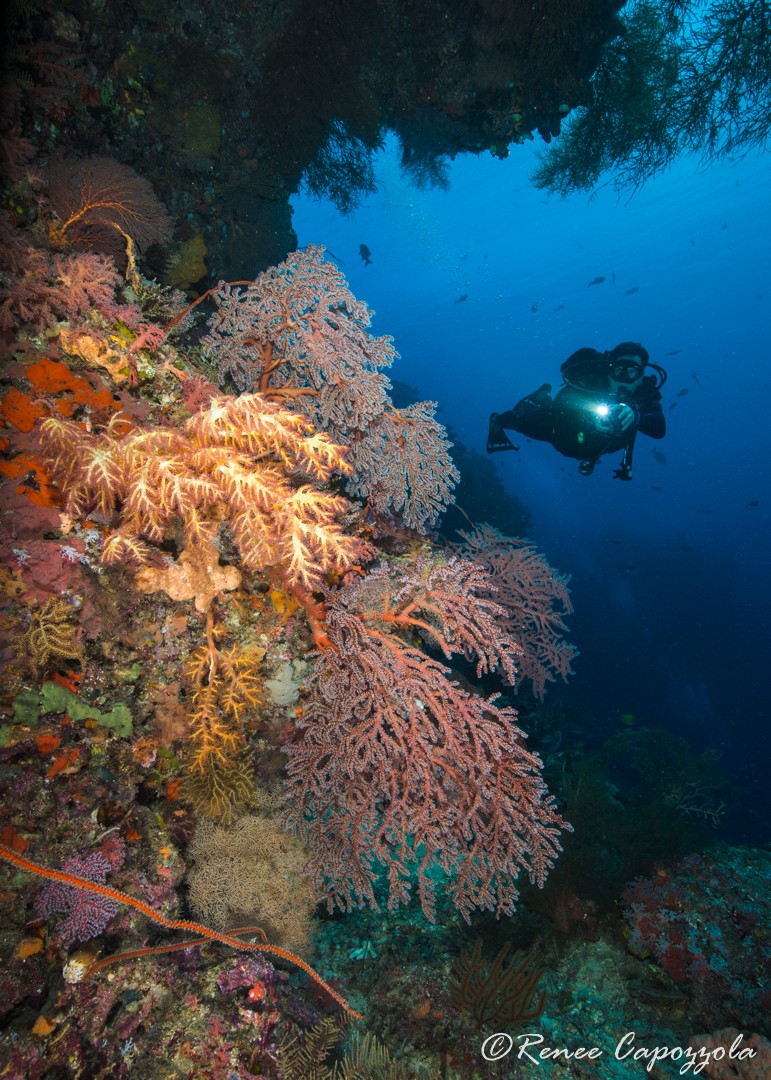
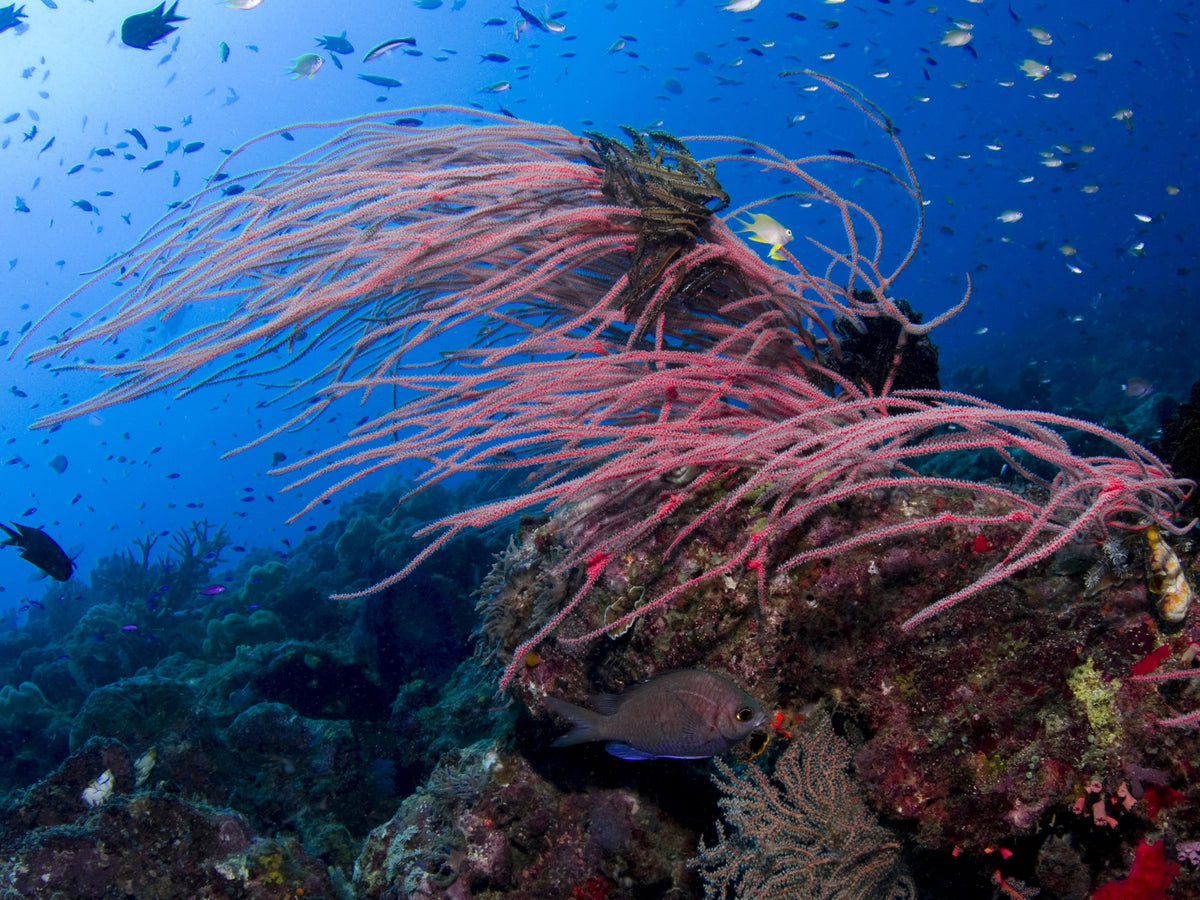
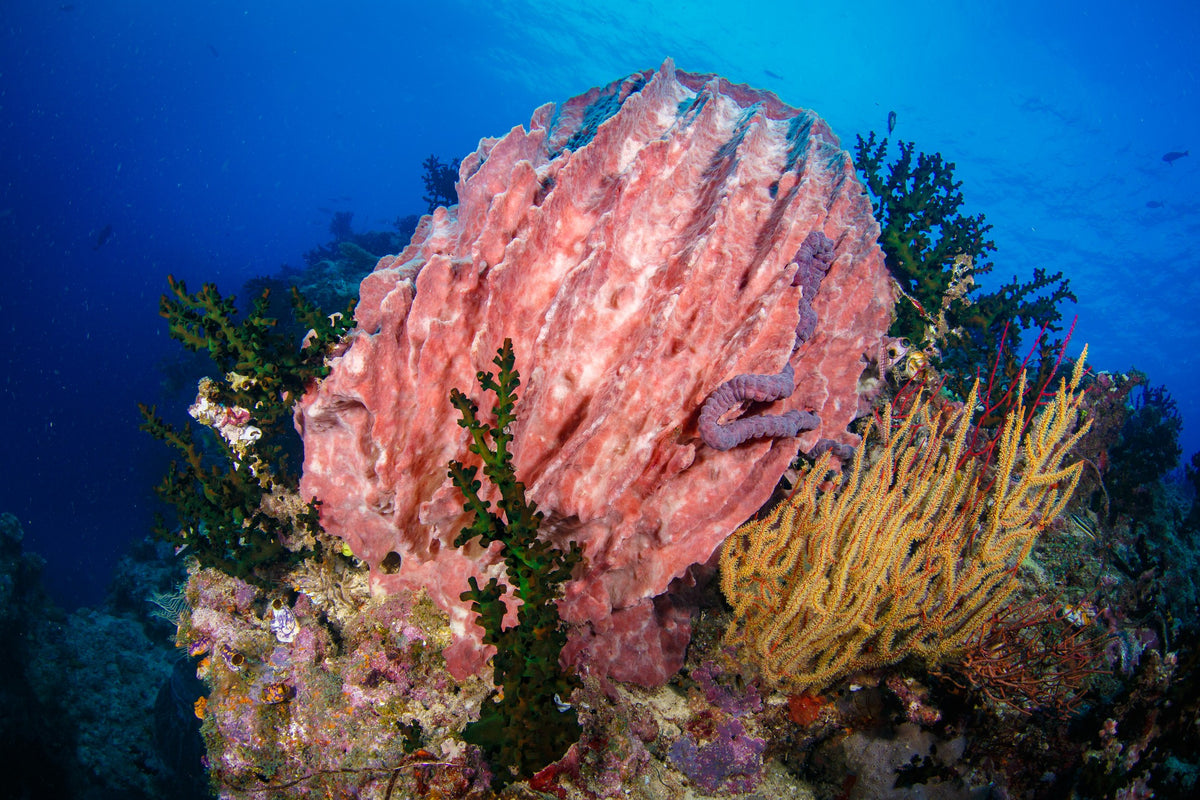
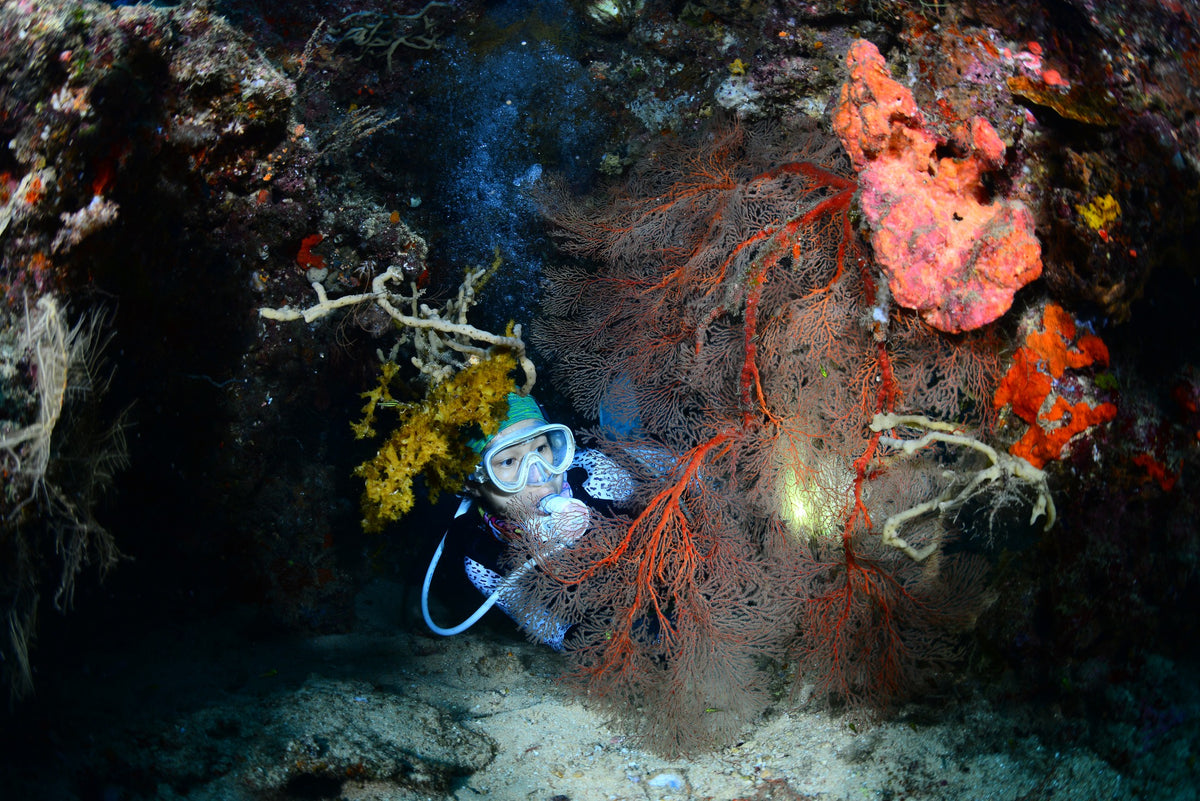
At Lissenung Island Reef, macro, Night diving, Coral, Easy shore access give an idea of the photographic possibilities. Choose the camera setup for the planned sites, then leave time to observe the scene before making the image. Repeating a productive dive often creates better opportunities than constantly searching for a different location. For reef scenes, use the shape of the reef and the available light to give the image depth. A diver at a respectful distance can provide scale without crowding an animal.
Beyond diving: Kavieng above the surface
Island walks, snorkelling and village visits give a Kavieng stay a strong connection to New Ireland. Conservation activities and local history can add interest where the selected base has an established programme.
The experience is remote and nature-focused. Choose the resort setting carefully for non-divers, and leave time to enjoy it. A quiet beach or a good house reef can be more valuable here than a long list of excursions requiring extra transfers.
Getting to Kavieng
Fly internationally to Papua New Guinea and connect through Port Moresby (POM) to Kavieng (KVG). Continue by road and/or small boat to the selected base. Domestic-flight buffers are strongly recommended.
Choose arrival and departure times around the onward transfer, especially when a boat crossing or a long road journey is involved. Leave space for a relaxed final day ashore and an appropriate interval between the last dive and flying.
Kavieng diving questions
What makes Kavieng worth a diving trip?
Kavieng’s diving follows moving water: passages, reef edges and fish life shaped by the meeting of seas. WWII aircraft and quieter island reefs add a different tempo, making the region more varied than a single famous drift dive.
How should I plan my stay?
Choose a base with access to both passages and sheltered reefs. Six to eight nights gives time for tide-led sites, wrecks and slower photographic dives. A flexible daily plan is especially useful because the character of Albatross Passage can change sharply with the water movement.
When is a useful time to visit?
April–June and September–December are the existing planning windows. Tide and visibility still determine the best site on a particular day. Allow generous margins around Port Moresby and Kavieng connections so the diving programme does not depend on a tight flight sequence.
Is there enough for non-diving companions?
Island walks, snorkelling and village visits give a Kavieng stay a strong connection to New Ireland. Conservation activities and local history can add interest where the selected base has an established programme.
A closer look at Kavieng


Plan your Kavieng trip
Tell us the experiences you most want, your preferred dates and how you like to travel. We can bring the destination, accommodation and diving into one coherent itinerary.
Plan my trip